Whether you are navigating the white-capped swells of coastal British Columbia, running technical multi-day river drops in Patagonia, or simply embarking on an afternoon paddleboard excursion, safeguarding your gear is non-negotiable. For paddlers—spanning canoeists, kayakers, and stand-up paddleboarders (SUP)—the humble dry bag is not merely a convenience item meant to guarantee a warm change of dry socks at camp. It is a critical piece of safety equipment. When an unexpected capsize, rogue wave, or sudden squall compromises your vessel, keeping electronic key fobs, emergency communication devices, sleeping systems, and spare thermal layers bone-dry can mean the difference between a minor inconvenience and a survival scenario.
The contemporary dry bag market has blossomed into a crowded, highly technical landscape. Products now range wildly in volume from compact 3-liter pouches to cavernous 117-liter portage packs, utilizing everything from splash-resistant fabrics to totally submersible, hermetically sealed chambers. Differences in price points, material durability, closure systems, and specialized features can overwhelm even seasoned outdoor enthusiasts.
To cut through the marketing noise, the Paddling Magazine editorial team spent years conducting rigorous, real-world field tests across diverse environments, from the tidal currents of the Pacific Northwest to the arid beaches of Baja and the alpine rivers of the American West. Many of the dry bags featured in this review are pulled directly from our editors’ personal kits—gear that has endured years of physical abuse, multiple purchases, and generational upgrades. Above all else, the equipment featured below had to meet a single, non-negotiable threshold: absolute reliability.
Below is our definitive guide to the best dry bags on the market today, categorized by application, along with an authoritative buying framework to help you choose the right gear for how and where you paddle.
Detailed Chronology & Field-Testing Methodology
To understand how these dry bags perform under duress, one must examine the grueling testing chronology executed by our editorial staff. Unlike laboratory environments that rely on static pressure tests, Paddling Magazine’s evaluation process spans years of dynamic, high-exposure expeditions.
The Evolution of Our Field Trials
Phase One: Coastal Sea Kayaking (British Columbia & Pacific Northwest): Editors deployed smaller 10-liter and 20-liter bags inside notoriously leaky kayak hatches over multi-week expeditions. This testing phase specifically targeted resistance to repeated saltwater exposure, abrasive sand intrusion, and the constant micro-vibrations of hull storage.
Phase Two: Technical River Rafting & Canoeing (Deschutes & Willamette Rivers): Medium-to-large capacity duffels and portage packs were strapped tightly to raft frames and canoe thwarts, enduring relentless sun, heavy friction against aluminum frames, and deliberate submersions through technical class III and IV rapids.
Phase Three: Bikepacking & Packrafting Integration (Patagonia & Baja): Ultralight dry sacks were subjected to compression systems, lashed to handlebars, and crammed into tight bikepacking panniers to measure tear resistance, seam integrity under tension, and overall compressibility.
Through this multi-year evaluation, we identified which brands engineered genuine longevity and which products suffered from premature tape delamination, zipper failure, or fabric breakdown under UV stress.
The Top-Tier Contenders: Best Dry Bags by Category
1. Best Overall: Sea to Summit Big River Bag (20L)
Price: $54.95 USD
Key Specs: Available in 5L, 8L, 13L, 20L, 35L, and 65L; TPU-laminated high-density nylon.
Why We Love It
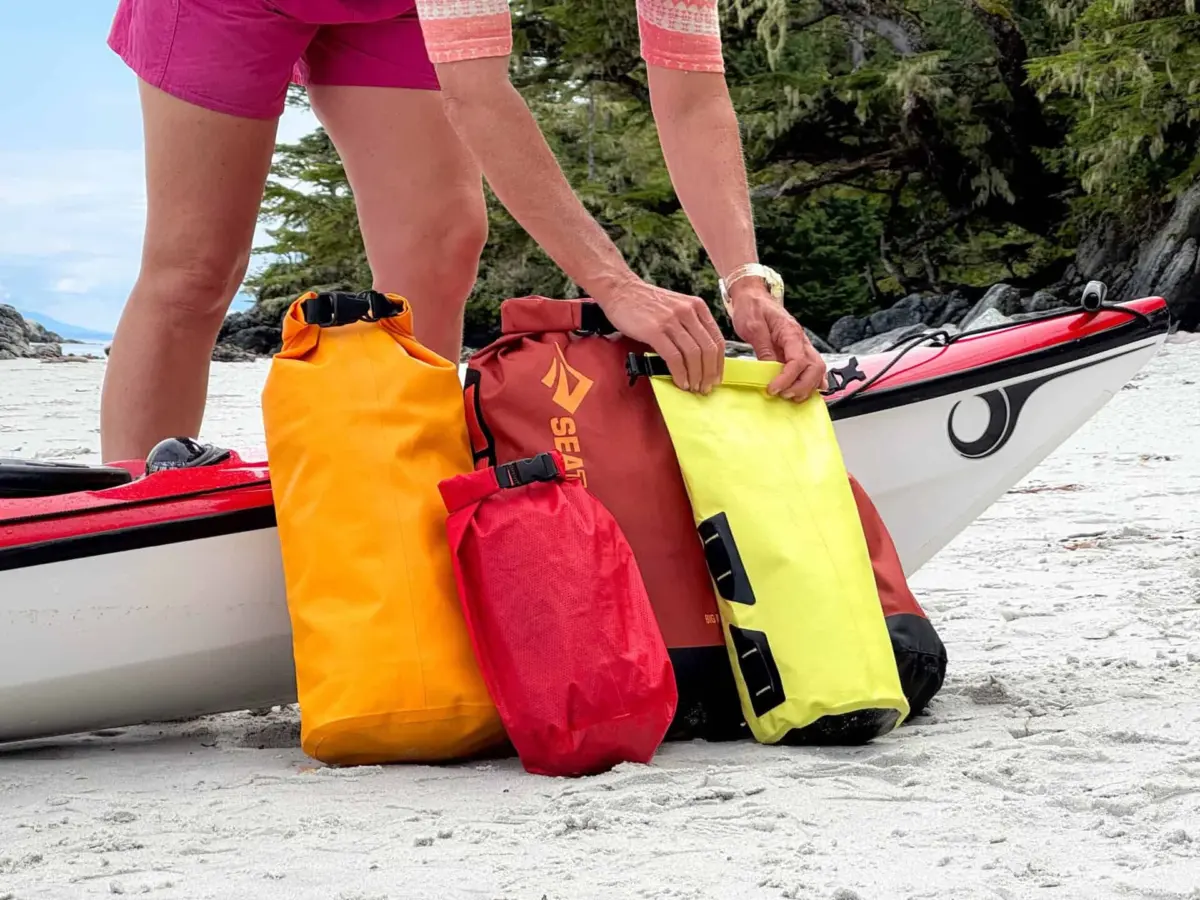
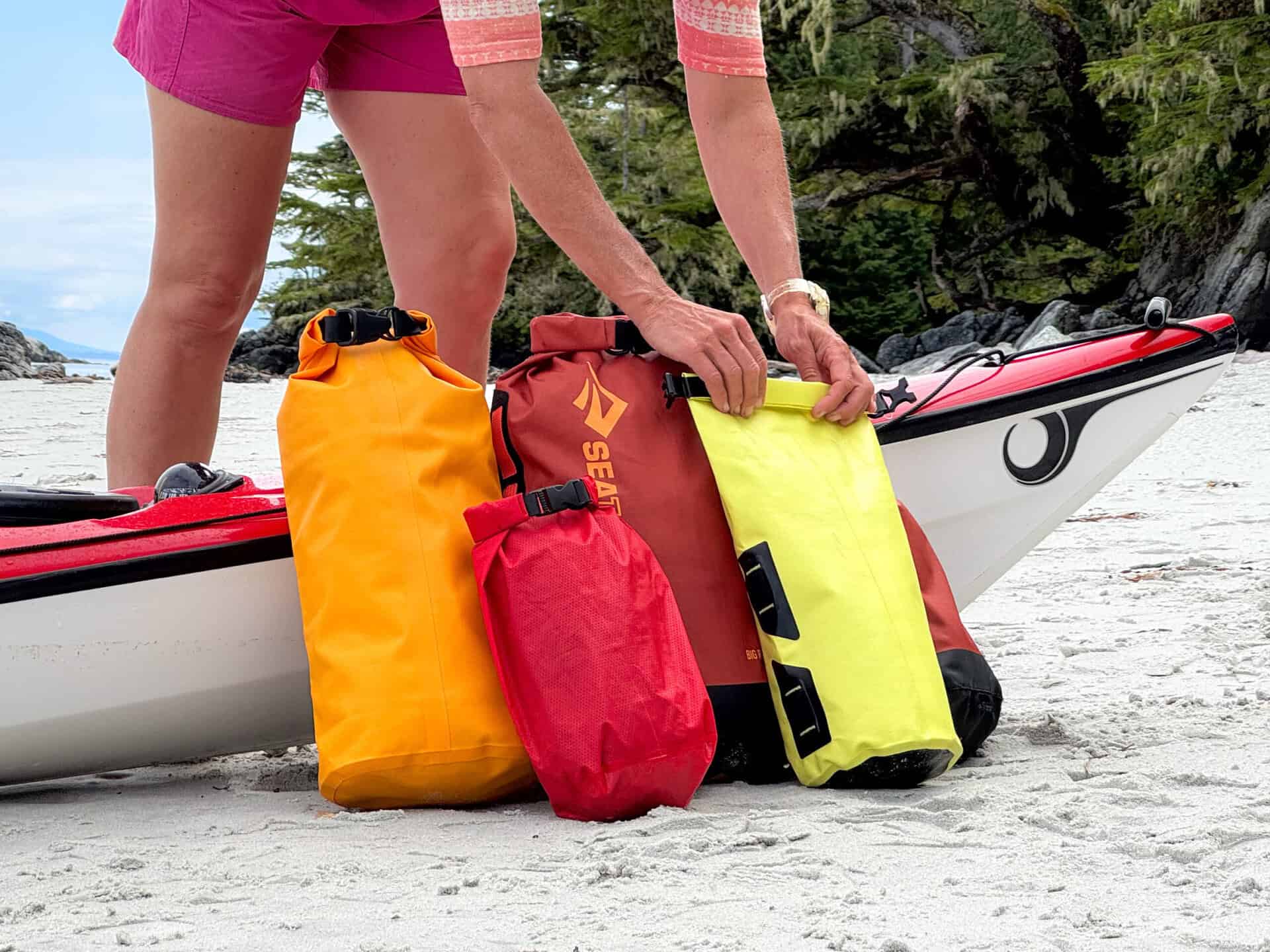
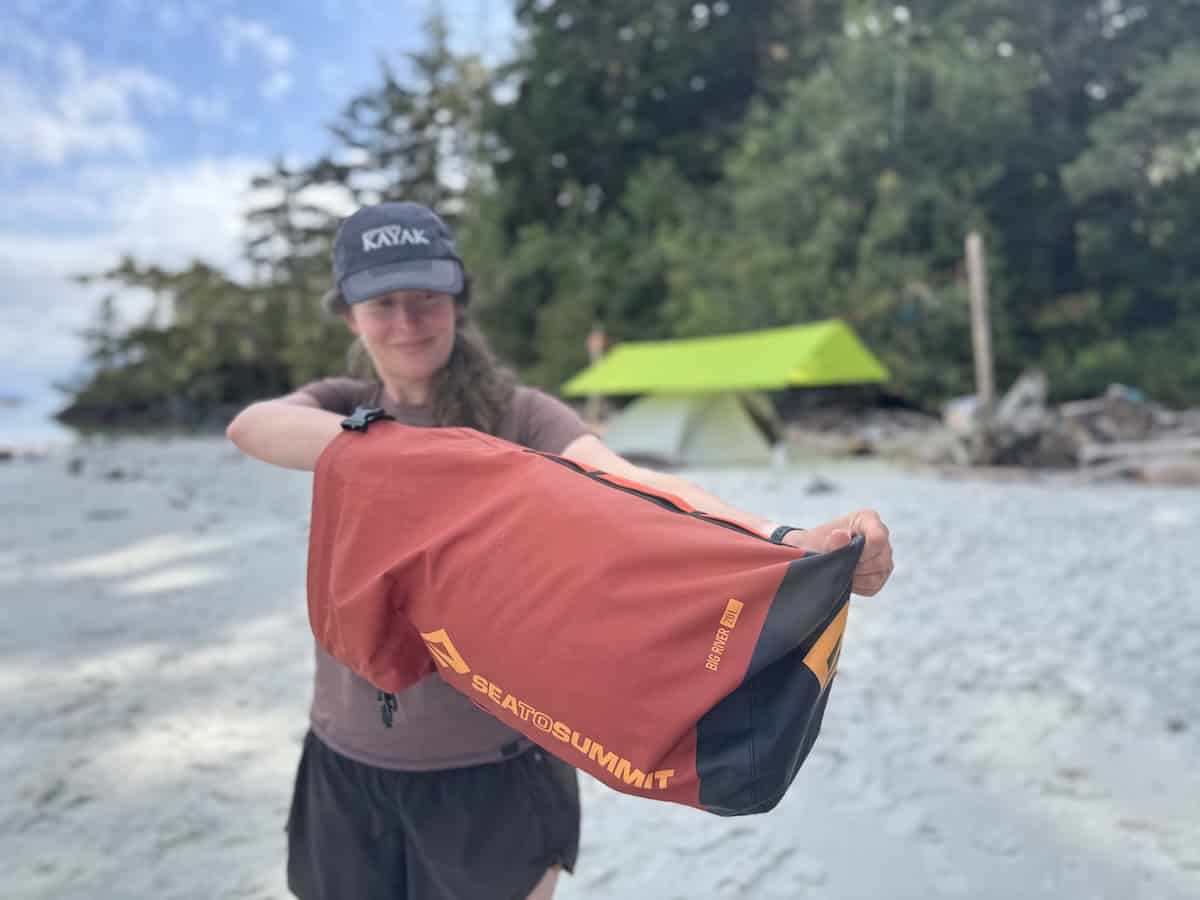
Striking the ideal balance between bombproof durability and pliable flexibility, the Sea to Summit Big River Dry Bag is an exceptional all-around performer. During a recent two-week coastal sea kayaking expedition featuring notoriously leaky hatches, our lead tester stuffed a 20-liter model with a zero-degree synthetic sleeping bag and a 10-liter version with clothing layers. Despite enduring constant moisture, everything remained bone-dry.
Unique design choices elevate the Big River above its competitors. The mouth of the bag is fractionally wider than the base, making it significantly easier to stuff bulky items. Furthermore, the brilliant white interior polyurethane coating dramatically brightens the dark interior cavity, allowing users to locate small items quickly. Beefy, low-profile lash loops provide secure anchor points for mounting to kayaks, rafts, and motorcycles.
Consider another if: You are an ultralight backpacker; the heavy-duty fabric makes the Big River overbuilt for land-only travel. Note that Sea to Summit advises against prolonged submersion, as water can eventually wick through any standard roll-top closure under extended pressure.
2. Best Value for Kayakers: SealLine Discovery Dry Bag (10L)
Price: $39.95 USD
Key Specs: Available in 5L, 10L, 20L, and 30L; polyurethane-coated polyester with fully welded seams.
Why We Love It
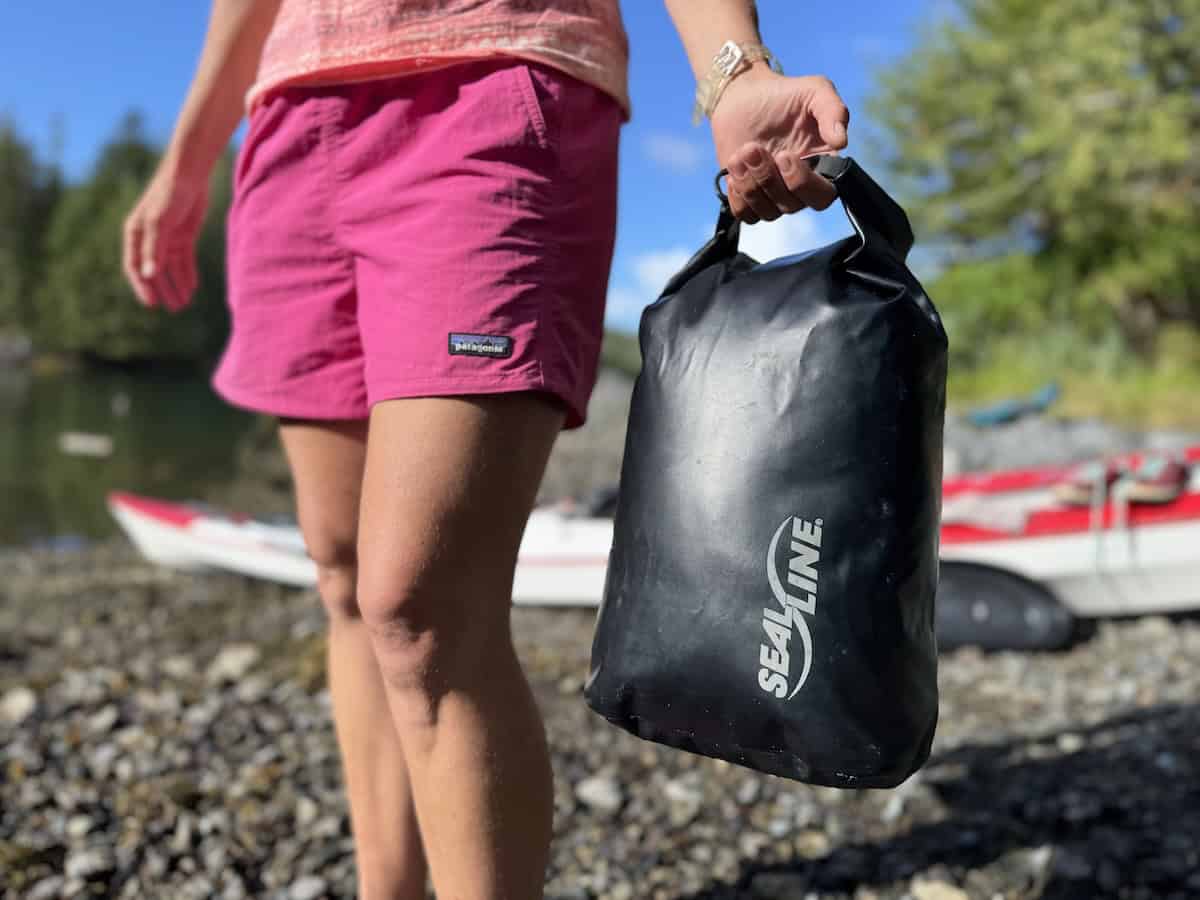
At under $40 for a 10-liter capacity, the SealLine Discovery offers legendary waterproof protection at an accessible price point. SealLine has long been a gold standard in marine dry storage, and the Discovery has remained a staple in our editors’ kits through multiple product generations.
Constructed from robust polyurethane-coated polyester with fully welded seams, the Discovery is unapologetically minimalist. It features zero extraneous frills or pockets, focusing entirely on structural integrity and watertight performance. The 5-liter and 10-liter variations feature a streamlined profile that easily slides into tight, round composite kayak hatches where boxier bags fail.
Bottom Line: While lighter or cheaper alternatives exist on the market, the Discovery hits the exact intersection of long-term durability, reliable performance, and exceptional economic value.
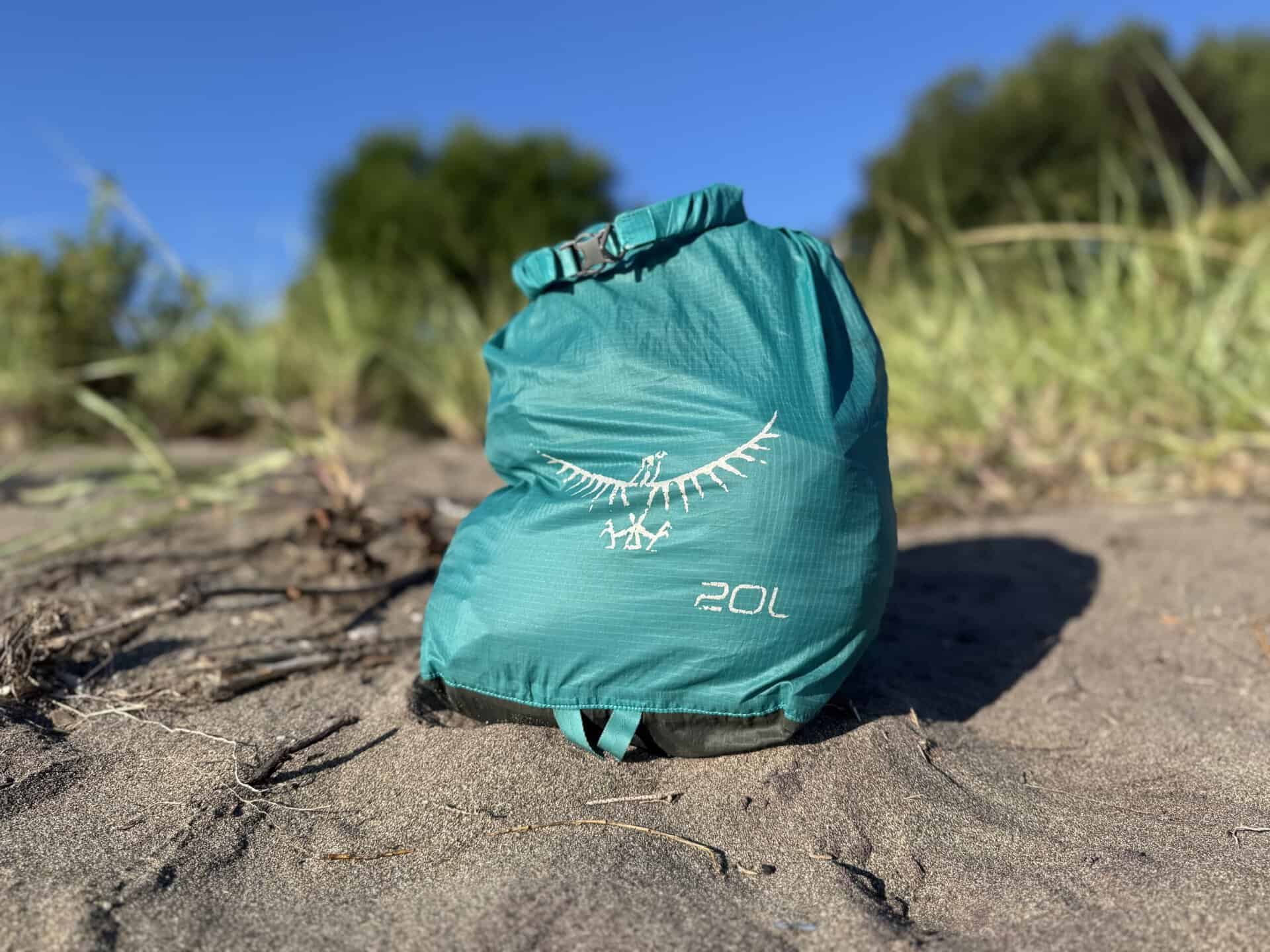
3. Best Ultralight Dry Sack: Osprey Ultralight Dry Sack (20L)
Price: $30.00 USD
Key Specs: Available in 3L, 6L, 12L, 20L, and 35L; siliconized nylon (sil-nylon), IPX5 water-resistance rating.
Why We Love It
Weighing an astonishingly airy 1.6 ounces, the Osprey Ultralight Dry Sack lives up to its moniker. Fabricated from thin sil-nylon, this bag is designed explicitly for systemic use rather than standalone marine exposure. It serves as a secondary protective layer when nested inside a primary waterproof shell—such as a MEC Slogg, an NRS Bill’s Bag, or a backcountry hiking backpack.
Sporting an IPX5 water-resistance rating, it is engineered to deflect heavy rain and persistent deck spray rather than survive a deep-water dunking. However, do not mistake its featherlight weight for fragility; our editors have relied on these sacks for years to organize apparel on multi-week canoe and bikepacking trips. The flat-bottomed rectangular geometry makes stacking multiple sacks inside a larger pack remarkably efficient.
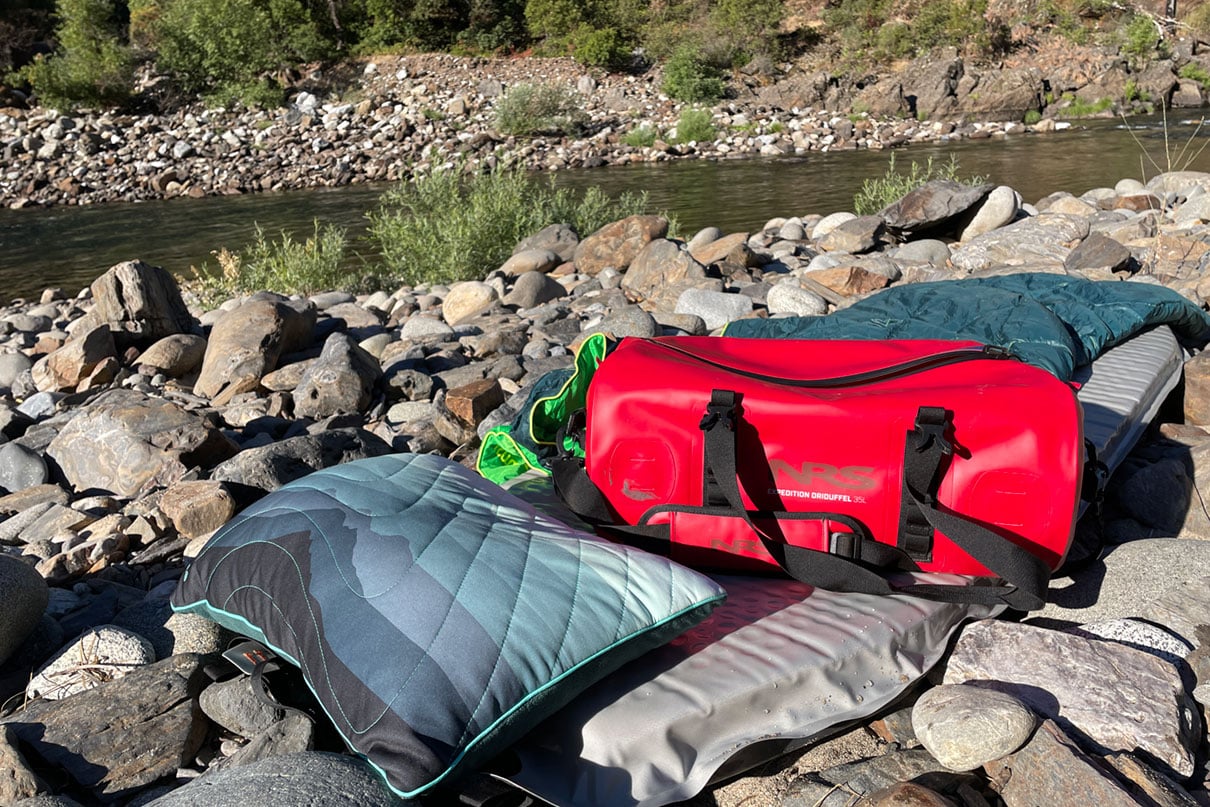
4. Best Duffel Dry Bag: NRS Expedition DriDuffel (35L)
Price: $299.95 USD
Key Specs: 12" x 20" fully submersible architecture; TRU Zip waterproof zipper; TPU-coated nylon.
Why We Love It
Engineered explicitly for multi-day river expeditions, the NRS Expedition DriDuffel is a heavy-duty, fully submersible fortress. Editor Joe Potoczak praises its wide-mouth access and innovative TRU Zip waterproof zipper system, which replaces traditional awkward roll-tops with a smooth, toothless zip closure.
"The DriDuffel fits enough personal gear to easily serve as the only bag I need on a single-night summer trip," Potoczak notes. "Its elongated shape is tailor-made for stuffing into the stern of a whitewater kayak or packing into an oar rig." Integrated webbing chains offer endless tie-down options, complemented by dual haul handles and a comfortable shoulder strap.
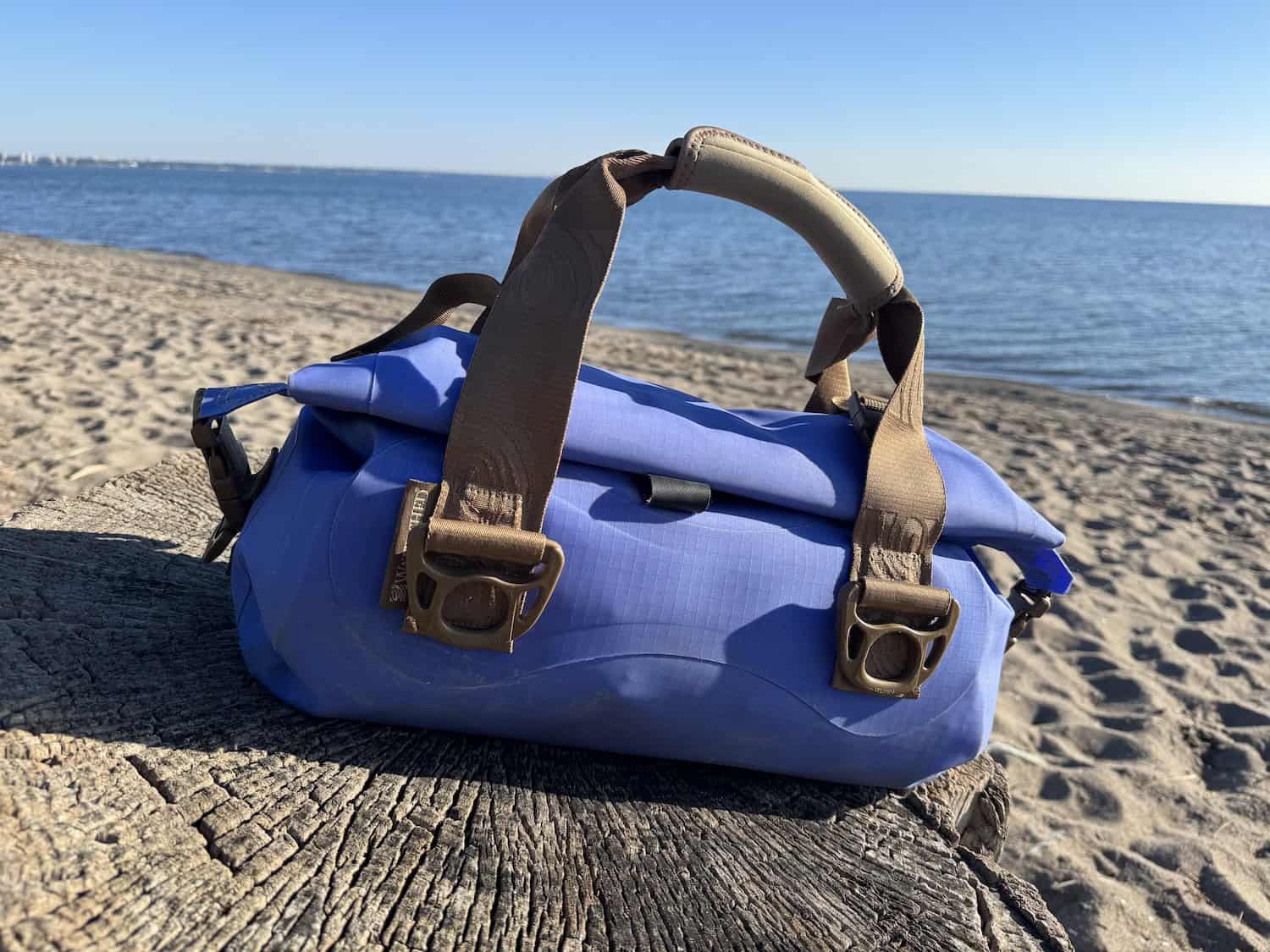
5. Best for Paddling Photographers: Watershed Ocoee
Price: $167.00 USD
Key Specs: 10.5-liter volume; ZipDry seal closure; optional purge valve and padded camera inserts.
Why We Love It
For professional and amateur photographers braving high-consequence aquatic environments, the Watershed Ocoee is legendary. Weighing just over a pound, this stout 10.5-liter bag utilizes a proprietary ZipDry seal—operating much like an industrial-scale Ziploc freezer lock—to guarantee 100-percent waterproof, submersible performance.
The Ocoee fits neatly beneath canoe thwarts, inside kayak cockpits, or tucked into raft footwells. While the ZipDry closure requires deliberate two-handed operation, the resulting airtight seal is completely infallible when properly engaged. Paddlers can further upgrade the bag with an optional purge valve and specialized padded internal dividers to cradle fragile camera bodies and telephoto lenses.
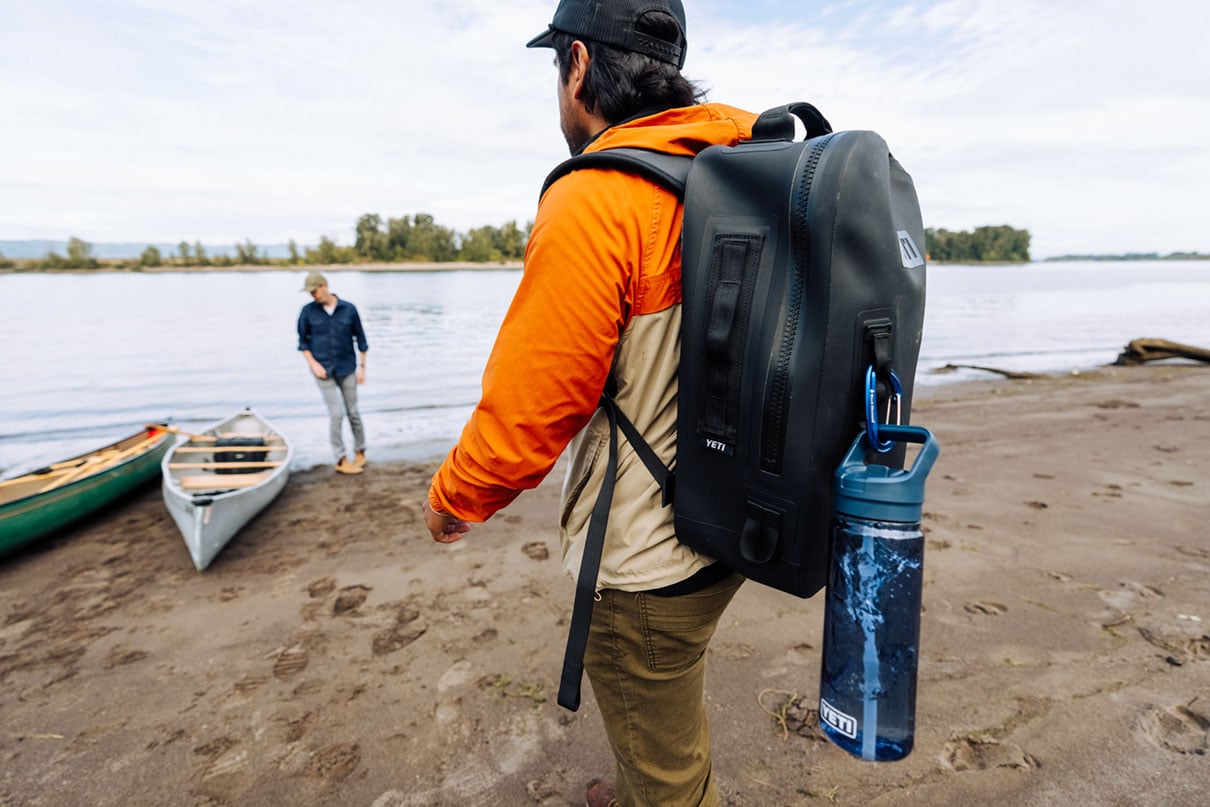
6. Best Dry Bag Backpack: Yeti Panga (28L)
Price: $325.00 USD
Key Specs: ThickSkin shell, HydroLok waterproof zipper, EVA molded back panel.
Why We Love It
For adventurers who demand uncompromising performance that transitions seamlessly from airport overhead bins to Class IV rapids, the Yeti Panga 28 is the ultimate waterproof backpack. Built like a floating armored vault, it features a heavy-duty HydroLok zipper that seals out moisture entirely.
Inside, you will find a massive main compartment, an internal laptop sleeve, and zippered mesh organization pockets. Ergonomic EVA foam shoulder straps, a sternum strap, and a removable waist belt ensure comfortable hauling on portage trails. Weighing four pounds empty, it is undeniably heavy, but its cross-functional utility is peerless.
7. Best for Canoe Tripping: MEC Slogg HD (70L)
Price: $299.95 CAD
Key Specs: Available in 35L, 70L, and 115L; heavy-duty PVC-free waterproof fabric with ergonomic harness.
Why We Love It
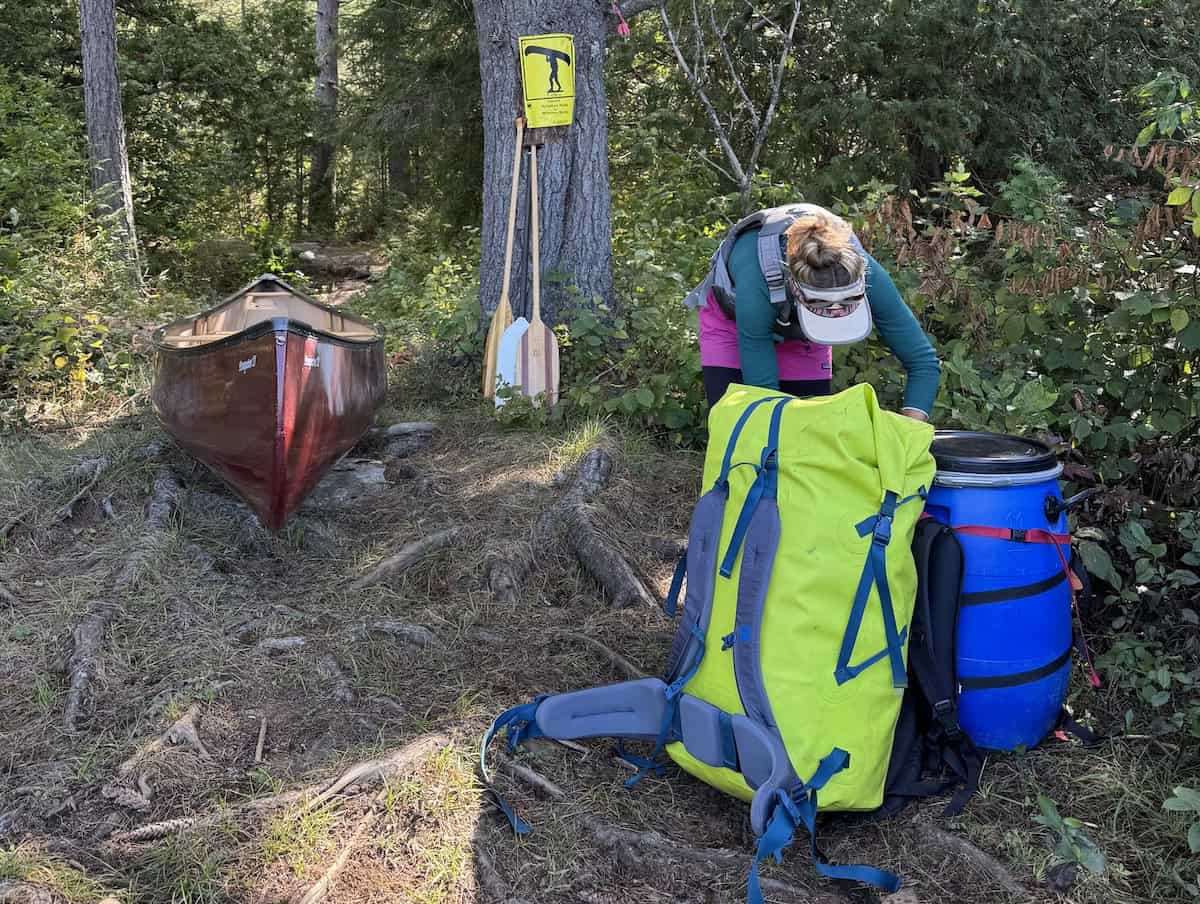
A beloved staple of northern canoe tripping culture, the MEC Slogg is designed to swallow an entire camp kitchen, tent, and sleep system in a single cavernous compartment, then comfortably haul that load across brutal portage trails.
Unlike traditional floppy dry bags, the Slogg’s rigid construction allows it to stand completely upright when empty, streamlining the camp packing process. Angled side grab handles make loading and unloading watercraft effortless while serving as secure anchor points for canoe lashings.
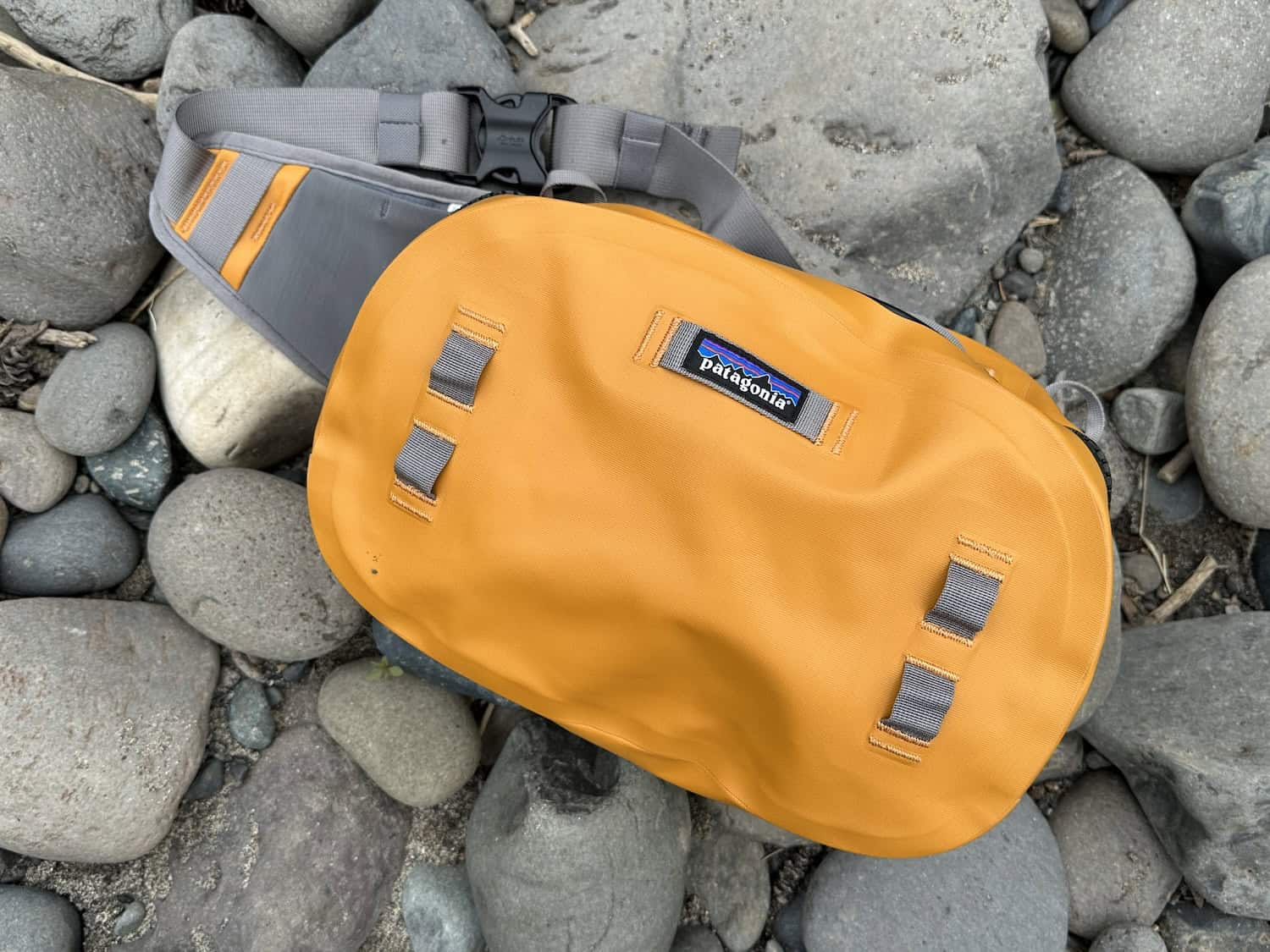
8. Best Dry Fanny Pack: Patagonia Guidewater Hip Pack (9L)
Originally designed for fly-fishing anglers wading swift rivers, the Patagonia Guidewater Hip Pack has quickly become a favorite among guides and sea kayakers. Utilizing the same industrial waterproof zipper technology found in high-end drysuits, the Guidewater keeps maps, communication devices, and emergency gear bone-dry while remaining instantly accessible around the waist.
Supporting Context & Technical Metrics
When purchasing a dry bag, consumers must look beyond marketing terms and evaluate objective performance indicators.
Understanding IPX Ratings
Manufacturers communicate waterproof integrity through International Protection Marking (IPX) standards:
IPX0 to IPX3: Splash-resistant only; suitable for light mist or dew.
IPX4 to IPX5: Water-resistant against driving rain, heavy deck spray, and temporary splashes.
IPX6 to IPX8: Fully submersible standards. Bags rated IPX7 can withstand complete underwater immersion up to specified depths and durations without moisture ingress.
Closure Systems Compared
Roll-Top Closures: The industry standard. Requires folding the stiffened top hem down 3 to 4 times and clipping the buckle. While affordable and durable, they are rarely rated for prolonged submersion because water can wick through the fabric folds under sustained hydrostatic pressure.
Waterproof Zippers (e.g., TRU Zip, HydroLok): Offer true submersible performance and easy single-handed or zipper-pull access, but require regular lubrication and meticulous cleaning to prevent sand and grit jamming the teeth.
Ziploc-Style Compression Seals (e.g., Watershed ZipDry): Impenetrable when locked correctly, offering absolute security for high-value electronics, though they often require deliberate two-handed effort to open and close.
Official Industry Insights & Buying Advice
According to Kaydi Pyette, Editor-in-Chief of Paddling Magazine, selecting the right dry bag requires a calculated risk assessment:
"To determine the best dry bag for your next adventure, consider the type of boat you are paddling, where the bag will sit on the water, what is inside, and how catastrophic failure would be. Sleeping bags, emergency layers, and satellite communicators carry a high consequence if wet and demand true submersible protection."
Size Selection Matrix
3 to 10 Liters: Ideal for compact essentials, first-aid kits, electronics, and toiletries.
10 to 20 Liters: The sweet spot for personal apparel and sleeping bags inside kayak hatches.
70 Liters and Above: Dedicated portage packs and duffels designed to carry multi-day group or solo expedition loads.
Future Outlook
As material sciences advance, the dry bag market is trending toward lighter, more eco-conscious fabrics that refuse to compromise on puncture resistance. Manufacturers are increasingly utilizing TPU (Thermoplastic Polyurethane) laminates that phase out harmful PVC coatings while improving cold-weather flexibility—ensuring that even in sub-zero alpine conditions, dry bags remain supple enough to pack and seal effectively.
Whether you opt for the budget-friendly reliability of the SealLine Discovery or the bombproof investment of a Watershed duffel, investing in quality dry storage is the single most important equipment decision a paddler can make to ensure a safe, comfortable, and dry return to shore.