







Executive Overview
For three decades, Ottawa-based paddlesports brand Level Six has built its reputation on technical apparel, rash guards, board shorts, and expedition-grade gear designed by paddlers, for paddlers. Now, the company is preparing to make its most ambitious leap yet. Entering the highly regulated personal flotation device (PFD) market in a seismic way, Level Six has certified a staggering 24 new life jacket models. The rollout will begin in earnest when the first 10 models ship to retailers in March 2027, with the remaining 14 designs slated for introduction over the subsequent few years.
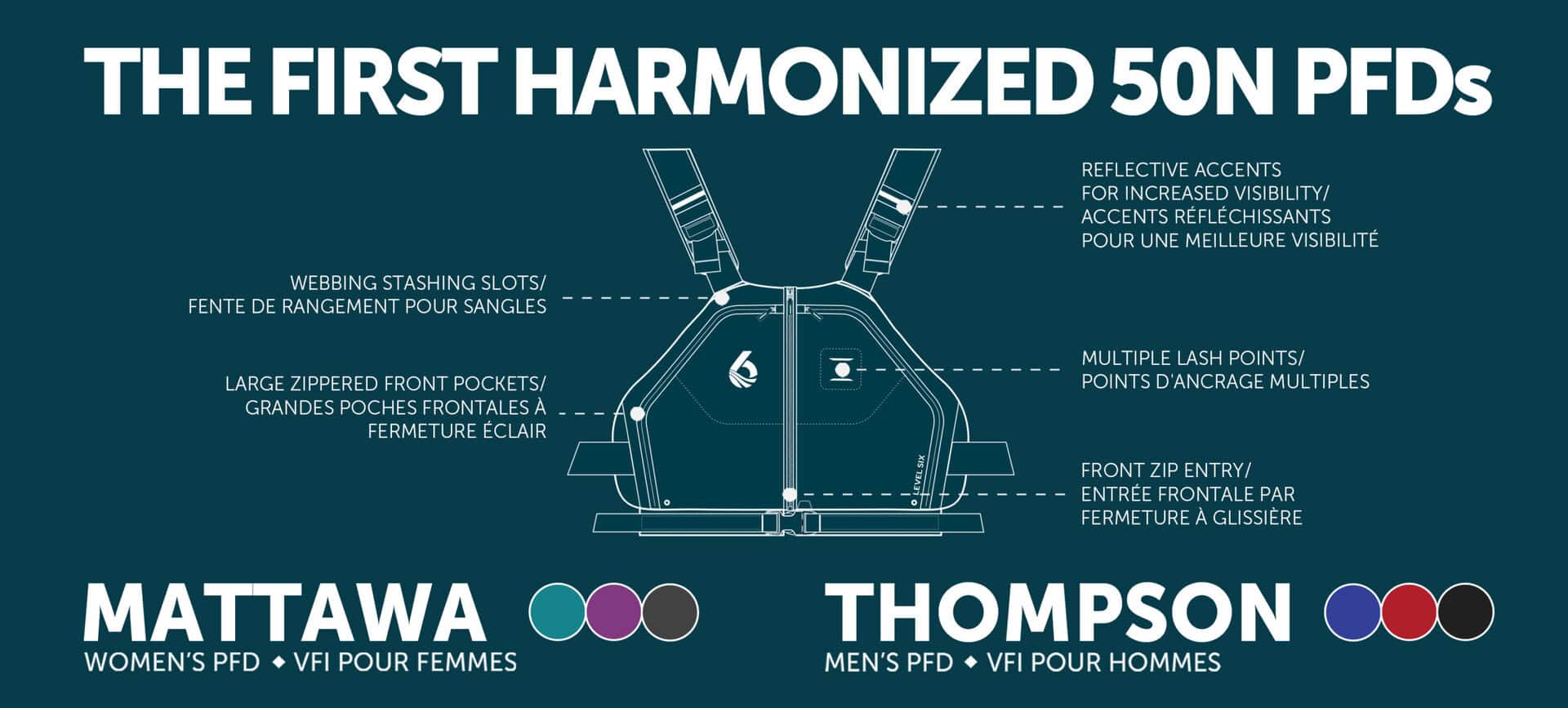
This market entry is more than a simple category extension; it represents a watershed moment for the paddlesports industry. Among its many milestones, Level Six is introducing the very first low-profile 50-newton buoyancy aids approved simultaneously for the North American market by both the U.S. Coast Guard (USCG) and Transport Canada.
Arriving just in time to mark the brand’s 30th anniversary in 2027, this massive product launch capitalizes on the newly minted Level 50 standard. By bridging the gap between rigorous regulatory compliance and the modern paddler’s demand for unencumbered mobility, Level Six is placing a massive bet on a simple core philosophy: An 11-pound buoyancy aid worn comfortably on your body is infinitely safer than a 16-pound traditional life jacket clipped uselessly to your boat seat.
Detailed Chronology: From Costa Rica Vans to Regulatory Gambles
To understand how Level Six arrived at this defining moment, one must look back at the company’s improbable origins and the calculated risks woven into its corporate DNA.
The Genesis: 1997–2020
The brand’s story began in the winter of 1997 during a training trip to Costa Rica. Stig Larsson, then representing Canada on the international World Cup whitewater slalom circuit, noticed a stark disconnect. While local surf breaks brimmed with style, functionality, and modern aesthetics, paddlesports apparel back home felt stale and uninspired.
That spring, Larsson returned to Ottawa, where he began designing rash guards and lightweight paddling garments. Armed with a sewing machine and a vision, he sold his early inventory straight out of the back of his van at races. What started as localized grassroots hustle eventually caught on, securing a handful of regional retail accounts before blossoming into a global distribution network touching more than 450 specialty stores worldwide.
The Pandemic Pause and the Pivot
Larsson had long harbored ambitions of expanding into the life jacket category. In fact, Level Six came dangerously close to submitting designs for USCG approval just before the global COVID-19 pandemic struck. However, widespread supply-chain disruptions forced the company to hit the brakes.

Rather than abandoning the dream, Larsson used the delay to recalibrate the company’s strategy. Observing the explosive growth of women’s participation in paddlesports, he made a critical executive decision: Level Six would not merely adapt men’s designs for female consumers. Instead, they would engineer a dedicated, custom-tailored women’s counterpart for every single men’s model in the catalog.
The Whitewater Mindset: Read and Run
When the U.S. Coast Guard began adopting the Level 50 standard, corporate risk-management teams at larger companies likely advised caution, especially since Transport Canada had yet to ratify its own matching guidelines. But Larsson—drawing directly on his background as a former World Cup slalom racer—treated the regulatory uncertainty the way a paddler treats a complex whitewater rapid.
In slalom racing, survival and victory depend on "read and run." Getting down a river safely is easy, but winning requires committing fully to the fastest, riskiest line. Trusting his instincts, Larsson refused to wait.
Level Six first completed development on the tried-and-true Level 70 (Type III equivalent) standard. Once those foundational designs were locked in, the design team pivoted aggressively to Level 50, anticipating what Transport Canada’s final guidelines would require. They built prototypes based on an educated guess of the regulatory finish line.
It was a massive gamble. Certification processes are notoriously expensive, and once a foam package is officially approved by safety authorities, designers lose all freedom to alter its shape or volume.
The gamble paid off. When Canadian approval officially landed in early March 2026, Level Six found itself roughly eight months ahead of any potential competitors. This proactive gamble positioned the brand to be first out of the gate in North America, establishing an undeniable competitive edge.
Supporting Context & Metrics: Decoding the Level 50 Revolution
To fully appreciate the engineering feat achieved by Level Six, it is necessary to examine the regulatory shift that made these new designs possible.
Understanding the Numbers: Level 50 vs. Level 70
For decades, North American paddlers have relied on Type III life jackets, which fall under the international Level 70 standard. These traditional jackets provide a minimum of 15 to 16 pounds (approx. 70 newtons) of static flotation. While effective at keeping heads above water, this level of foam volume introduces significant drawbacks:
- Bulk and Mobility: Thick foam panels restrict rotational torso movement, making efficient forward paddling, rolling, and self-rescues exhausting.
- Heat Retention: Heavy, multi-layered fabrics and massive foam blocks trap body heat, contributing to fatigue and heat exhaustion during warm-weather paddling.
- Compliance Failure: Because traditional vests are bulky and uncomfortable, many recreational boaters—particularly stand-up paddleboarders (SUP) and casual kayakers—stow them under deck bungees or clip them to boat seats rather than wearing them.
By contrast, Level 50 buoyancy aids provide a minimum of 50 newtons—roughly 11 pounds—of flotation. While this is a numerical step down from traditional life jackets, it yields revolutionary gains in ergonomics. The drastically reduced volume allows industrial designers to craft ultra-low-profile products that contour naturally to the human body, delivering superior mobility and drastically reduced heat retention.
The "Grand Bargain" of Safety
This transition represents a foundational philosophical shift embraced by safety regulators on both sides of the border. Scott Szczepaniak, a recreational boating safety specialist with the USCG and former owner of Sea Kayak Carolina, describes this shift as a "grand bargain."
"Fit and comfort are two of the top things a paddler looks for in a life jacket," Szczepaniak explains. "If you have an orange Type II horse-collar from a big box store, it’s going to float you. But you’re not going to wear it. It’s just not comfortable."
Regulators ultimately realized that an 11-pound buoyancy aid actually worn by a paddler offers infinitely more protection than a 16-pound life jacket stowed out of reach.
However, this convenience comes with strict regulatory stipulations. To count toward legal USCG carriage requirements, Level 50 buoyancy aids must be worn; simply tossing one under a deck bungee does not satisfy the law. Furthermore, safety experts emphasize that Level 50 PFDs are explicitly intended for competent swimmers operating in relatively protected waters where immediate help is nearby. They are not recommended for non-swimmers, poor swimmers, or those venturing into remote, extreme, or offshore marine environments.
Official Statements and Design Philosophy
Behind Level Six’s massive rollout is an intense, hands-on design process executed at the company’s Ottawa headquarters.
Inside the Design Room
Developing 24 distinct models required immense human capital. Two of Level Six’s three full-time industrial designers dedicated themselves almost exclusively to the life-jacket project for months. Working iteratively, they shaped, shaved, and tested marine-grade foam blocks by hand—adding or removing mere millimeters of material at a time to optimize how a jacket wraps around the human ribcage and over the shoulders.
Stig Larsson notes that comfort and unrestricted range of motion were treated as non-negotiable prerequisites throughout the process:
"Across the whole range, we wanted to go for comfort and full range of movement first. You’ve got to want to wear it."
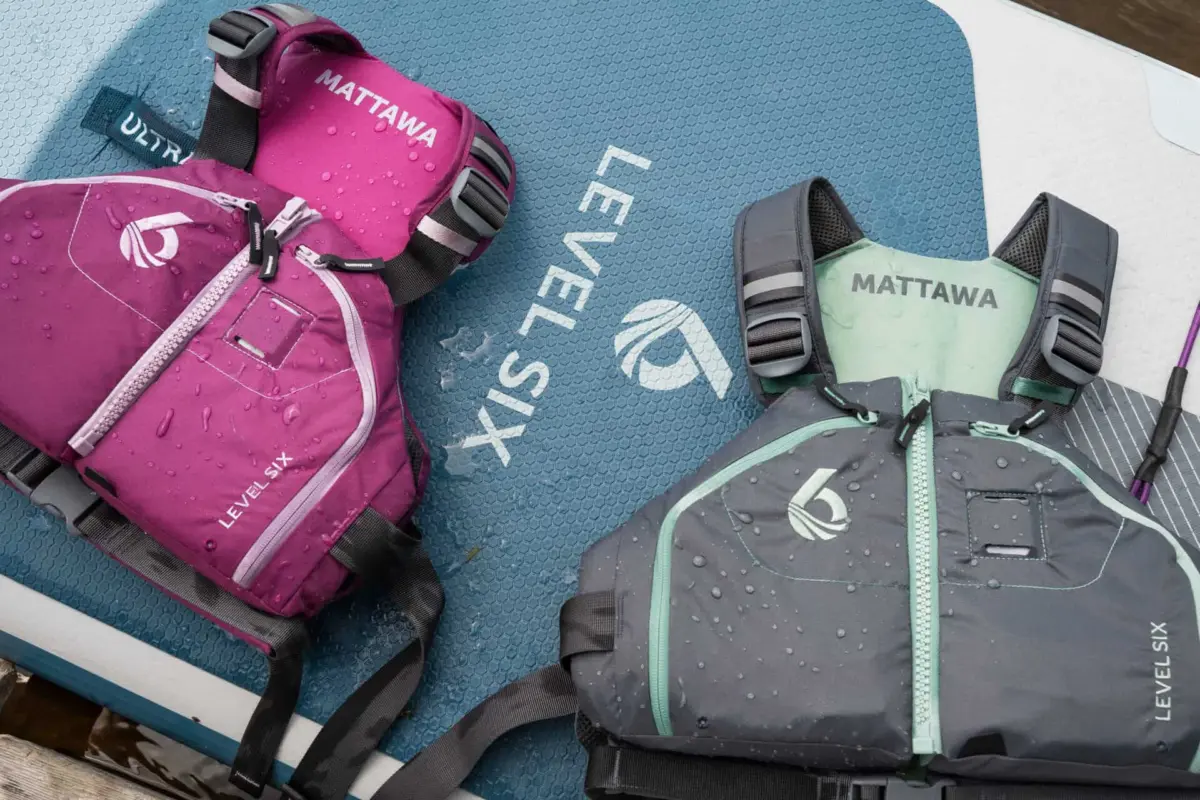
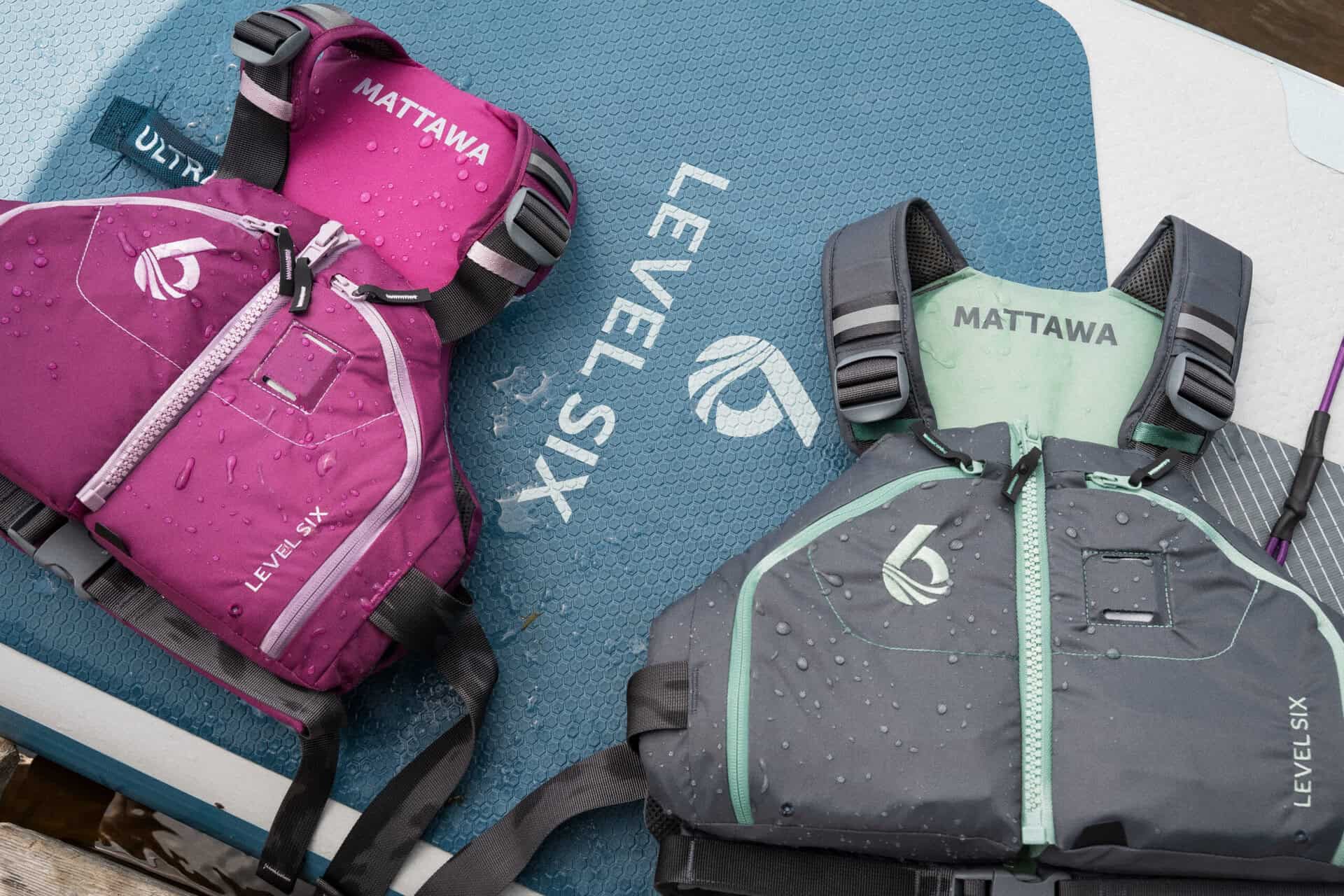
This ethos is clearly embodied in flagship products like the ultra-low-profile Mattawa series. Larsson compares the on-water sensation of wearing these new buoyancy aids directly to the minimalist racing vests he wore during his competitive whitewater slalom days, noting, "You can barely feel it when you’re paddling."
Rejecting "Shrink It and Pink It"
Addressing the industry’s historical tendency to treat women’s gear as an afterthought, Larsson emphasized that Level Six invested heavily in dedicated female ergonomics. Every single model in the new lineup will feature a dedicated men’s and women’s version.
Crucially, these are not cosmetic variants. While names differ, the underlying materials, structural safety features, and build qualities remain identical across genders.
"We’re not shrinking and pinking it," Larsson asserts.
Future Outlook: Industry Impact and Specialty Retailer Opportunities
As Level Six approaches its 30th anniversary in 2027, the launch of its 24-model PFD collection fundamentally changes the company’s trajectory. Eschewing the cautious calculus of private equity firms—which Larsson notes would have likely killed the project on a spreadsheet due to high regulatory risks and certification costs—Level Six has leveraged its independence to push the envelope.
A New Era for Specialty Retailers
For paddlesports dealers and specialty retailers, this regulatory evolution presents both a golden sales opportunity and a profound educational responsibility. Retailers will now need to actively guide consumers through a more nuanced buying process, helping them select the appropriate performance level (Level 50 versus Level 70) while emphasizing the core truth of modern water safety: comfort only saves lives if the gear is actually worn.
Sustainable Engineering
Beyond ergonomics and regulatory compliance, Level Six has ensured its new lineup looks toward the future of manufacturing. The entire collection integrates sustainable materials, including recycled textiles, PFC-free water-repellent treatments, and PVC-free buoyancy foam. Following their groundbreaking North American clearance, Level Six plans to pursue international certifications, opening global markets to their low-profile innovations.
Ultimately, Level Six’s massive gamble is a testament to founder-led intuition. By marrying high-performance paddlesports credibility with cutting-edge ergonomic engineering, the brand is not only setting a new benchmark for safety compliance in the United States and Canada—it is inspiring a cultural shift that will keep more paddlers comfortable, safe, and on the water for decades to come.