







Executive Overview
When travelers conjure images of Canada’s majestic great outdoors, the snow-capped peaks and turquoise waters of Banff National Park almost invariably dominate the imagination. As the nation’s oldest and most famous national reserve, Banff holds a legendary status in global tourism. However, its immense popularity comes with a heavy toll: bumper-to-bumper traffic, crowded trails, and fierce competition for accommodations. For travelers seeking a pristine wilderness escape unmarred by commercial over-tourism, the solution requires looking eastward rather than westward.
Tucked into the rolling hills of the Laurentian Mountains in the province of Québec, La Mauricie National Park stands as one of Canada’s best-kept ecological secrets. Spanning over 500 square miles of dense boreal forest, mirror-like waterways, and rugged Precambrian shields, this protected sanctuary offers a wild yet accessible alternative to the overcrowded destinations of the Canadian Rockies.
Established in 1970, La Mauricie bridges the gap between raw backcountry adventure and serene leisure. Boasting over 150 crystal-clear lakes, dramatic waterfall hikes, and an abundance of indigenous wildlife—ranging from the elusive eastern wolf to the rare wood turtle—the park delivers a masterclass in Canadian wilderness preservation. Situated strategically midway between the vibrant urban centers of Montreal and Quebec City, La Mauricie offers a seamless transition from city life to deep-woods tranquility.
Detailed Chronology and Historical Development
To understand the unique ecological and recreational fabric of La Mauricie National Park, one must trace its journey from an industrial logging zone to a protected federal sanctuary.
The Era of Extraction (Late 19th Century to Mid-20th Century)
Before its designation as a national park, the landscape of what is now La Mauricie was heavily shaped by human industry. Throughout the late 1800s and early 1900s, the region was the pulsing heart of Québec’s burgeoning timber and pulp-and-paper industries. Loggers navigated the turbulent rivers and interconnected lakes, floating massive timber stocks downstream to mills. Private hunting and fishing clubs also carved out exclusive enclaves within the territory, restricting general public access and altering parts of the native ecosystem.
Park Designation and Ecological Recovery (1970)
Recognizing the urgent need to protect the transitional zone where the southern deciduous forests meet the northern boreal forests, the federal government established La Mauricie National Park in 1970. This legislative act marked a pivotal turning point: an industrial working forest was handed back to nature. Over the subsequent decades, strict conservation policies allowed the second-growth forests to mature, water quality to rebound, and native fauna to re-establish stable populations.
Modern Evolution and Infrastructure (2000s–Present)
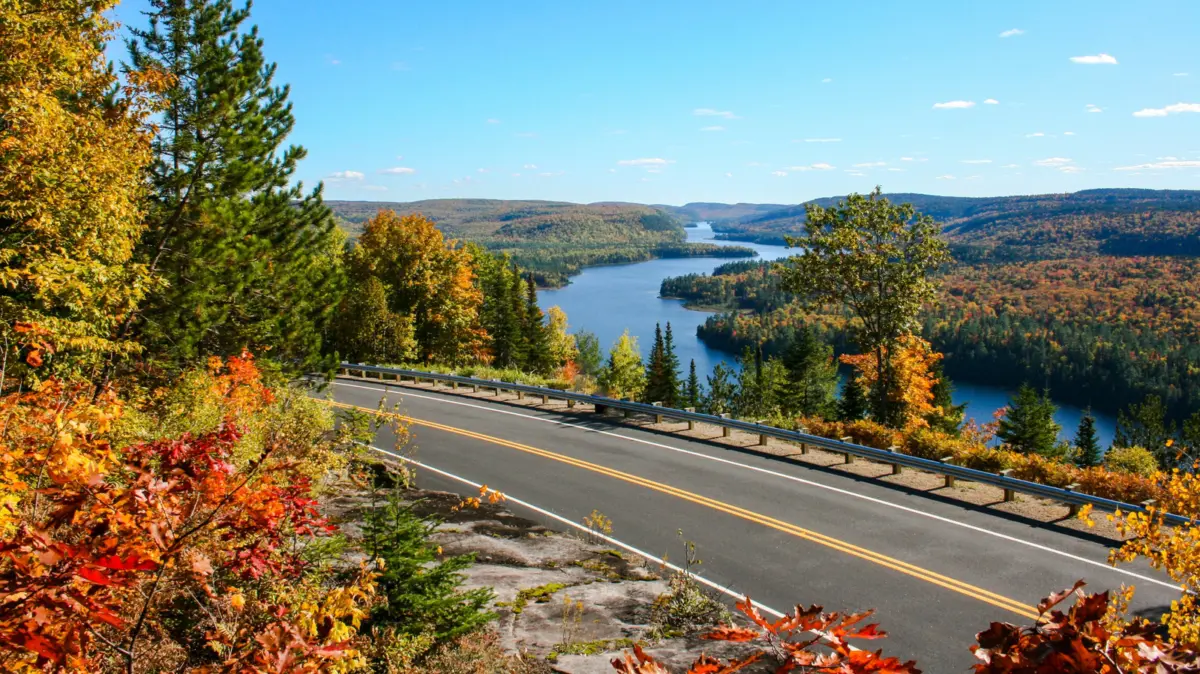
Entering the 21st century, Parks Canada focused on sustainable tourism initiatives within La Mauricie. The development of iconic infrastructure—such as the 39-mile scenic parkway, the introduction of innovative "oTENTik" glamping units, and the meticulous maintenance of backcountry portage routes—has transformed the park into a world-class recreational hub. Today, it attracts hundreds of thousands of annual visitors who come not just to witness its natural beauty, but to participate in a living laboratory of forest and watershed conservation.

Supporting Context & Metrics: Navigating the Park
La Mauricie National Park is a massive and diverse playground for outdoor enthusiasts. Understanding its scale, geography, and logistical framework is essential for crafting an unforgettable itinerary.
Geographical and Logistical Snapshot
- Total Area: Over 500 square miles (approx. 536 square kilometers) on the southern edge of the Canadian Shield.
- Location: Centrally positioned in Québec, roughly a two-hour drive from both Montreal and Quebec City via major regional highways.
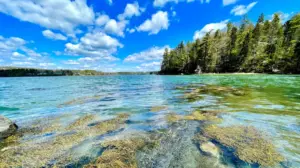
- Water Bodies: Home to more than 150 named lakes, making it a premier destination for paddlers and aquatic explorers.
- Visitor Ratings: Maintains an elite 4.8-star rating across thousands of verified visitor reviews, lauded particularly for its cleanliness, lack of overcrowding, and immersive natural silence.
The Crown Jewels: Waterfall Trails
A defining feature of La Mauricie is its network of scenic hiking trails that lead adventurers to dramatic geological cascades.
- Waber Falls (Chutes Waber):
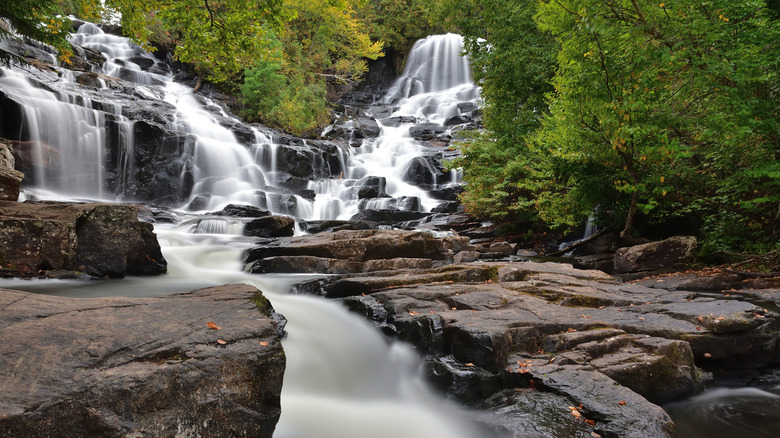
Widely considered the park’s signature excursion, conquering Waber Falls is an all-day adventure. The journey begins at the Wapizagonke Picnic Area, where visitors embark on a scenic 3-mile paddle across the length of Lake Wapizagonke. Upon docking, hikers transition to a 2.5-mile trek winding through lush, ancient woodlands. The payoff is a breathtaking 90-foot multi-tiered cascade spilling over smooth rock slabs into a pristine, ice-cold pool—ideal for a refreshing post-hike swim. - Les Cascades Trail:
For those seeking a more accessible route, the 2.2-mile Les Cascades trail offers gentle terrain framed by intricate wooden boardwalks. Beginning near the Shewenegan Picnic Area, this path leads to sloping waterfalls where visitors can wade in the shallows. The trailhead also features a boat launch, swimming beach, and a local pizzeria serving wood-fired meals. - Parker Falls:
Spanning a 5.7-mile out-and-back route, Parker Falls treats hikers to a wide, tiered cascade plunging over massive granite blocks. The trail rolls through mixed deciduous and coniferous forests, offering sweeping lake vistas. (Pro-tip: Experienced hikers heavily advise packing reliable insect repellent to manage regional black flies and mosquitoes during peak summer months).
Aquatic Exploration and Backcountry Paddling
With its labyrinthine network of lakes, La Mauricie is a paradise for canoeists and kayakers. The park features meticulously maintained portage routes that test the stamina of experienced trippers. For overnight journeys, backcountry canoe campsites are scattered across 12 distinct lakes, requiring advance reservations through Parks Canada. Navigating these glass-like waters offers a profound sense of solitude, punctuated only by the rhythmic splash of a paddle and the haunting, melodic call of a common loon.
Official Statements and Conservation Perspectives
Park authorities and wildlife conservationists emphasize that La Mauricie’s appeal lies as much in its biodiversity as its scenic vistas.
"La Mauricie National Park represents a critical ecological crossroads," explains regional conservation director Marc-André Tremblay in park documentation. "Here, we see the merging of the northern coniferous forest and the southern hardwood forest. This convergence creates a unique habitat capable of supporting species that struggle to find undisturbed footholds elsewhere in eastern Canada."
Wildlife monitoring programs within the park have noted stable or recovering populations of several key indicator species:
- Eastern Wolves (Canis lycaon): Often elusive, these apex predators play an essential role in maintaining the health of the park’s ungulate populations.
- Wood Turtles (Glyptemys insculpta): Listed as a species at risk nationally, the sandy riverbanks and clean waters of La Mauricie provide critical nesting and foraging grounds, which are actively monitored and protected by park rangers.
- Black Bears and Moose: Frequent sightings along remote waterways and forest margins underscore the wild, untamed nature of the reserve.
Furthermore, tourism boards in Québec champion the park as a model for sustainable regional development. By channeling visitors away from over-capacitated western icons and toward the Laurentians, parks management ensures that local economies thrive without compromising the delicate balance of local ecosystems.
Future Outlook: Seasonal Planning and Sustainable Tourism
As global travel trends shift toward sustainable, nature-based, and crowd-averse destinations, La Mauricie National Park is poised for steady growth. Managing this future influx while maintaining the park’s signature tranquility remains the primary directive for Parks Canada administrators.
Choosing the Right Season
- Late Spring to Early Fall (Mid-May to October): This is the prime operational window. Balmy weather, fully open visitor centers, accessible boat rentals, and vibrant green canopies make summer ideal for family camping, swimming, and multi-day canoeing.
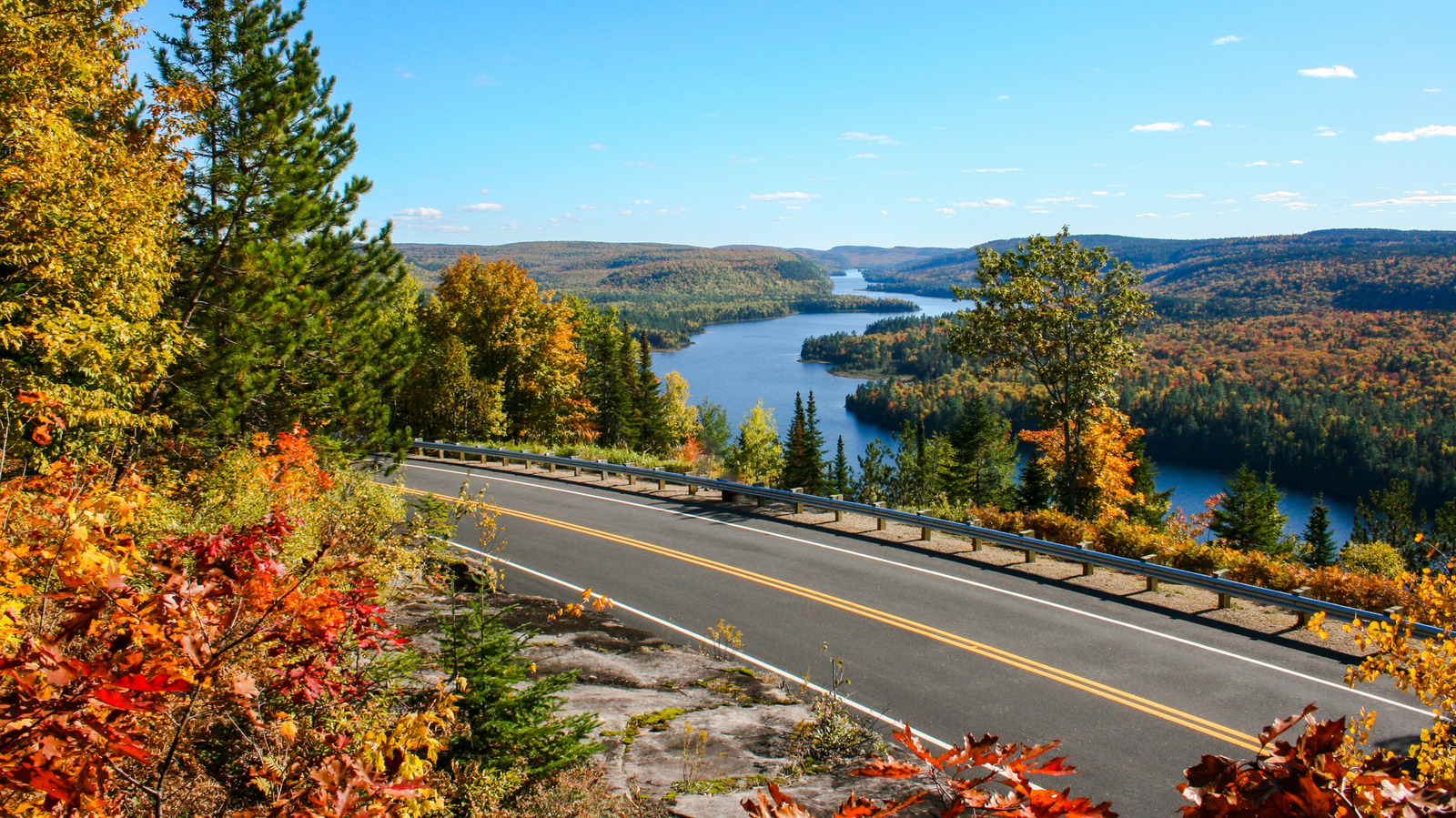
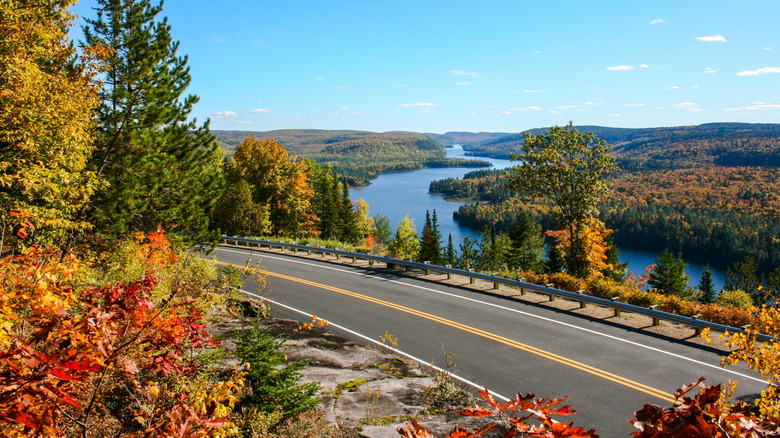
- The Autumn Spectacle (Late September to Early October): During this brief window, the Laurentian landscape undergoes a dramatic transformation. The mixed boreal and deciduous forests ignite in brilliant shades of amber, crimson, and gold, offering some of the most spectacular fall foliage viewing in North America.
- Winter Wonderland: While winter brings a quiet, snow-draped majesty to the park—ideal for cross-country skiing, snowshoeing, and winter camping—visitors must prepare for reduced services, closed parkways, and sub-zero temperatures.
Accommodations: From Roughing It to Glamping
La Mauricie accommodates a wide spectrum of comfort preferences. For traditionalists, the park operates over 500 front-country campsites across three primary campgrounds equipped with modern sanitation facilities and electric hookups.
For visitors seeking a balance between nature and creature comforts, the park features oTENTik units—a hybrid structure combining the communal feel of a tent with the structural security and cozy bedding of a cabin. Additionally, rustic cabins and lodge-style accommodations are available for booking via the official Parks Canada reservation portal.
Final Takeaway
While Banff will always hold its historical place as the pioneer of Canada’s national parks, modern travelers looking for authenticity, tranquility, and untamed natural beauty are increasingly turning their gaze eastward. La Mauricie National Park delivers an unforgettable Canadian wilderness experience—one where crystal-clear lakes, roaring waterfalls, and silent forests whisper a timeless invitation to explore.