Executive Overview
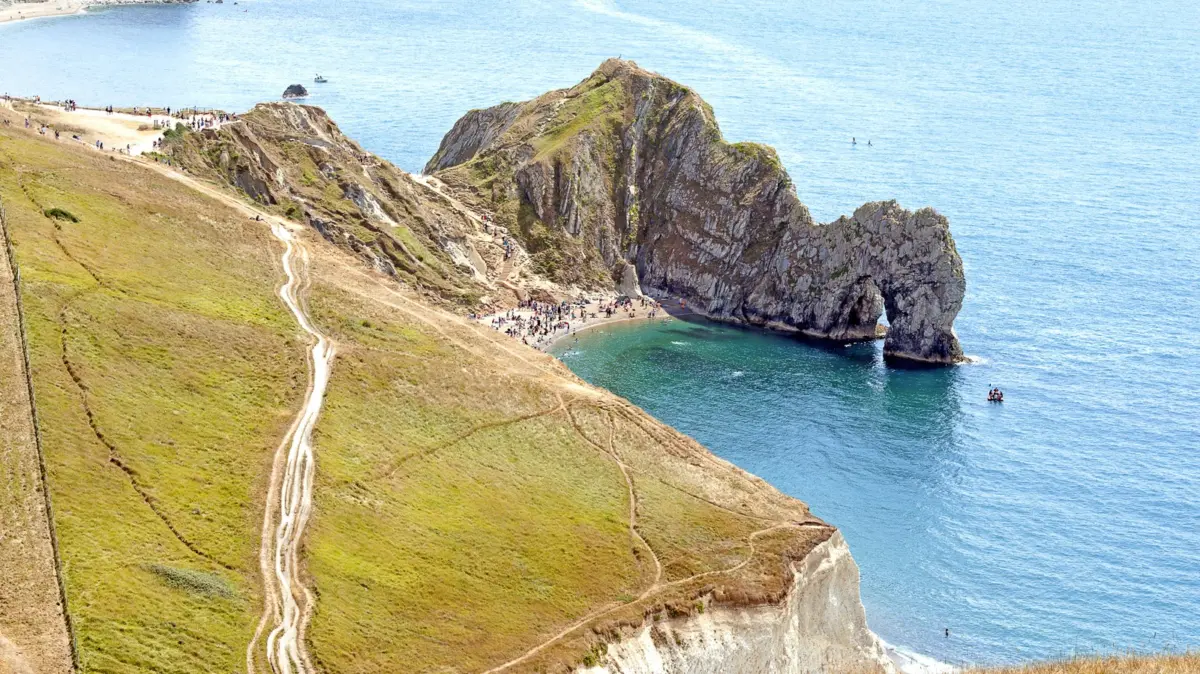
Just a short, scenic drive east from the maritime hub of Portsmouth lies one of the most photographed and universally acclaimed natural spectacles in the United Kingdom. Durdle Door—a soaring, 10,000-year-old limestone arch carved relentlessly by the English Channel—serves as the crown jewel of Dorset’s shoreline. Hailed by National Geographic as one of the finest beaches on the globe and routinely crowned by Coast Magazine as one of the U.K.’s most Instagram-worthy coastal destinations, this striking geological formation attracts hundreds of thousands of visitors each year.
Yet beneath its postcard-perfect veneer of turquoise waters, pebble-strewn shores, and sheer chalk cliffs lies a complex landscape. Situated along the UNESCO World Heritage-designated Jurassic Coast, Durdle Door is a dynamic environment shaped by millennia of erosion, marine activity, and shifting tectonic histories. As domestic tourism surges—prompted in part by changing travel trends and a growing desire for accessible British coastal getaways—local authorities, environmental agencies, and safety advocates face mounting challenges. Balancing heavy visitor footfall with the preservation of a fragile ecosystem, alongside managing severe natural hazards like sudden cliff collapses and treacherous rip currents, has become a critical operational priority for the region.
This report provides a comprehensive examination of Durdle Door, exploring its prehistoric origins, its modern status as a premier tourist hotspot, the logistical realities of accessing and hiking the surrounding coastline, and the essential safety considerations required to navigate one of England’s most breathtaking natural landmarks safely.

Detailed Chronology and Geological Formation
To truly understand Durdle Door, one must look far beyond human history into deep geological time, tracing a narrative that spans over 180 million years.
The Prehistoric Genesis (185 Million to 65 Million Years Ago)
The foundation of the Jurassic Coast was laid during the Mesozoic Era, a vast expanse of time encompassing the Triassic, Jurassic, and Cretaceous periods. During the Jurassic period, the area that is now Dorset lay submerged beneath a warm, shallow tropical sea. Over millions of years, the skeletal remains of countless marine organisms, plankton, and shells accumulated on the seabed. Combined with terrestrial sediments washing down from nearby landmasses, these materials underwent immense compaction and lithification, eventually forming thick strata of limestone, chalk, clay, and mudstone.
During the subsequent Cretaceous period, rising sea levels deposited vast layers of white chalk across southern England. The dramatic folding and faulting of these rock layers occurred approximately 30 to 40 million years ago during the Alpine Orogeny—a major mountain-building event caused by the collision of the African and Eurasian tectonic plates. This immense pressure buckled the horizontal strata into near-vertical or steeply tilted positions, creating the unique geological "dip" characteristic of the Dorset coast.
The Carving of the Arch (Holocene Epoch to Present)
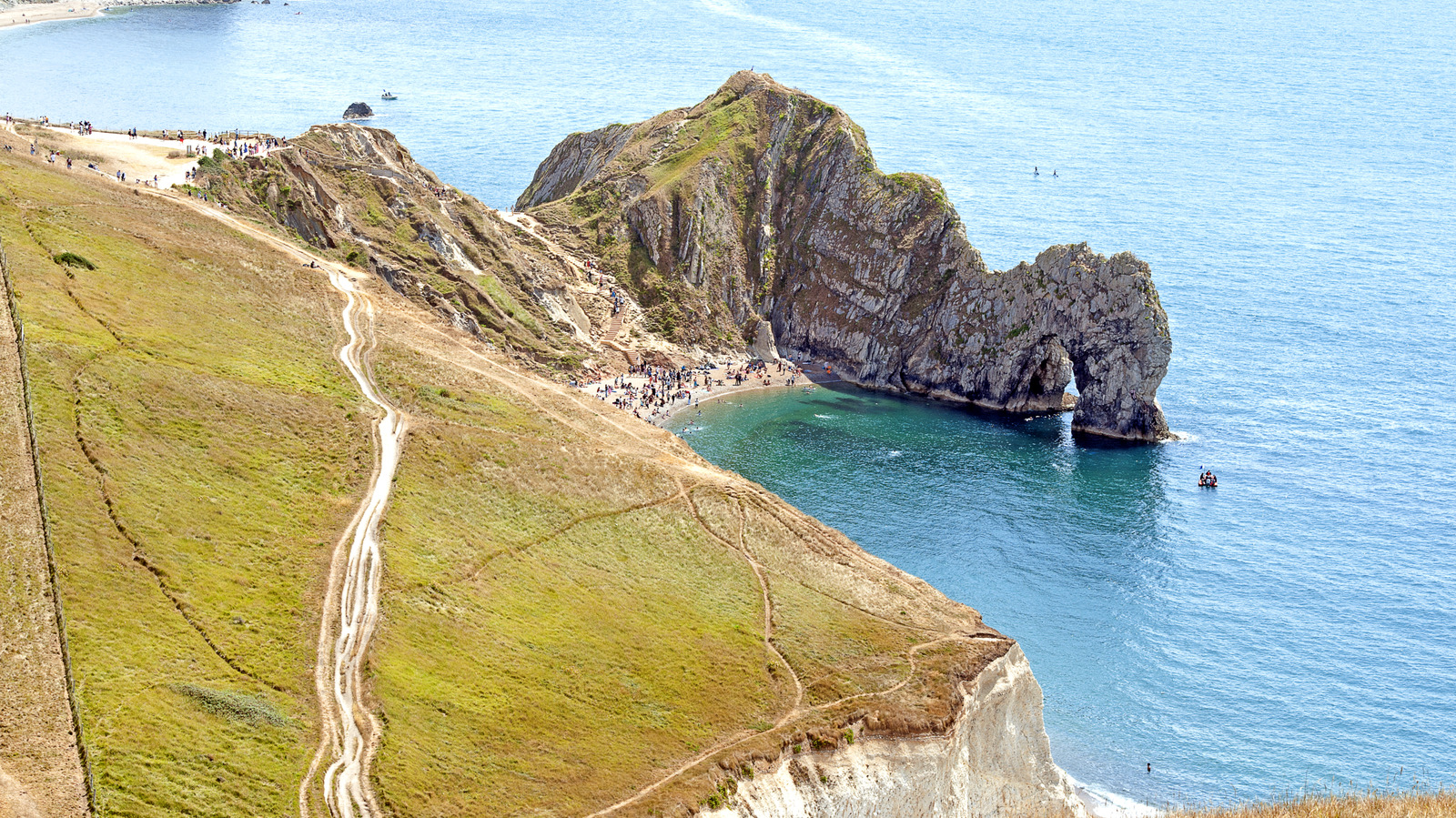
The iconic limestone arch of Durdle Door itself is a relatively recent feature in geological terms, formed during the Holocene Epoch roughly 10,000 years ago, following the end of the last Ice Age. As global sea levels rose, marine waves relentlessly pounded against the Portland limestone headland protruding into the English Channel.

Because the headland consisted of alternating bands of hard and soft rock strata, the sea eroded the less resistant layers of Purbeck limestone and Wealden clays at a much faster rate. Once the aggressive wave action broke entirely through the narrow neck of the Portland limestone barrier, a marine arch was born. Over millennia, continuous hydraulic action, salt weathering, and structural collapse will eventually cause the arch to succumb to gravity, transforming the landmark into an isolated sea stack—much like the famous Old Harry Rocks further down the coast.
Modern Tourism and Conservation (Late 20th Century to Present)
For generations, Durdle Door and the surrounding Lulworth Estate remained a quiet, agrarian landscape known primarily to geologists, local fishermen, and intrepid hikers. However, the late 20th and early 21st centuries marked a dramatic shift.
- 2001: The entire 95-mile stretch of the Dorset and East Devon coastline was officially inscribed as a UNESCO World Heritage Site, designated the "Jurassic Coast" in recognition of its outstanding geological significance, exceptional fossil record, and continuous exposure of rock formations spanning 185 million years of Earth’s history.
- 2010s–Present: With the advent of social media platforms like Instagram, visual landmarks saw exponential surges in visitor numbers. Durdle Door transitioned from a regional beauty spot into a major international and domestic tourism magnet.
- Recent Years: The post-pandemic travel landscape accelerated domestic UK tourism ("staycations"), putting unprecedented pressure on local infrastructure, parking facilities, and visitor management teams overseeing the fragile coastal paths and beaches.
Supporting Context, Geography, and Metrics
Reaching Durdle Door requires navigating the transport corridors of southern England. Situated in Dorset, the site is exceptionally accessible for travelers originating from major regional transport hubs.
Travel Metrics and Access Points
- From Portsmouth: Striking east from Portsmouth—one of England’s primary maritime and ferry gateways—takes approximately 1 hour and 30 minutes to 1 hour and 45 minutes by car, covering roughly 70 miles via the A31 and A352.
- From Bournemouth: Recognized as an increasingly prominent hub for coastal trips, Bournemouth is located approximately a 1-hour drive west of Durdle Door. Bournemouth Airport (BOH) serves as the closest international and domestic aviation gateway for visitors traveling from further afield.
- From Southampton: Positioned approximately 1 hour and 15 minutes to the east, Southampton provides robust rail and road connections into the heart of Dorset.
On-Site Infrastructure and Topography
Upon arriving at the designated parking areas managed by the Lulworth Estate, visitors encounter a mandatory paid parking facility. From the parking plateau, access to the beach requires navigating a challenging descent:
- Distance to Shoreline: Just over half a mile of rough, uneven, and unpaved terrain.
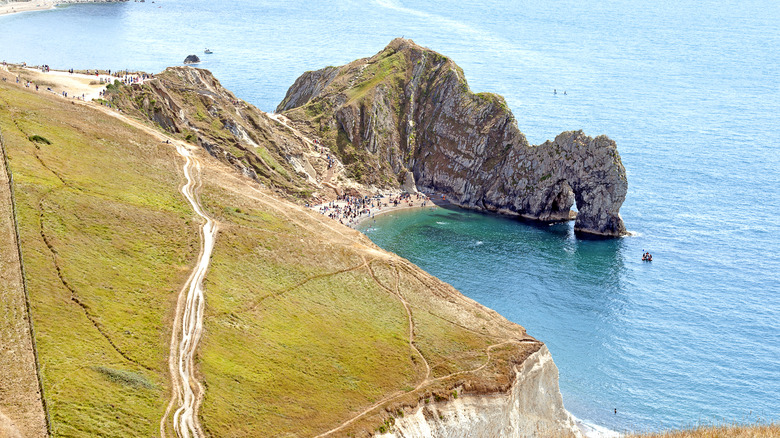
- Topographical Descent: The path drops steeply from the clifftop car park before transitioning into a long, fabricated staircase that cuts down the sheer cliff face to the pebble-and-sand beach below.
- Beach Composition: The beachfront features a wide, sweeping crescent of shingle and fine sand, bounded sharply on its eastern extremity by the imposing limestone arch and dramatic white chalk bluffs.
Official Statements, Environmental Data, and Safety Warnings
While the visual splendor of Durdle Door draws immense praise from global media outlets, environmental and safety authorities issue continuous warnings regarding the inherent physical risks of the location.
Water Quality and Marine Ecosystems
According to ongoing monitoring assessments by the U.K. Environment Agency, the coastal waters bathing Durdle Door and Lulworth Cove consistently achieve an "Excellent" water quality rating. This pristine classification contributes directly to the bay’s striking, luminous turquoise hue during the summer months.
Beneath the surface, the clear waters reveal thriving reef gardens and kelp forests. These marine habitats make the bay an exceptional destination for snorkelers seeking to observe native marine flora and fauna during calm weather windows.
Safety Hazards: Currents, Tides, and Cliff Collapses
Despite its tranquil appearance on calm summer days, Durdle Door is a hazardous maritime and terrestrial environment:
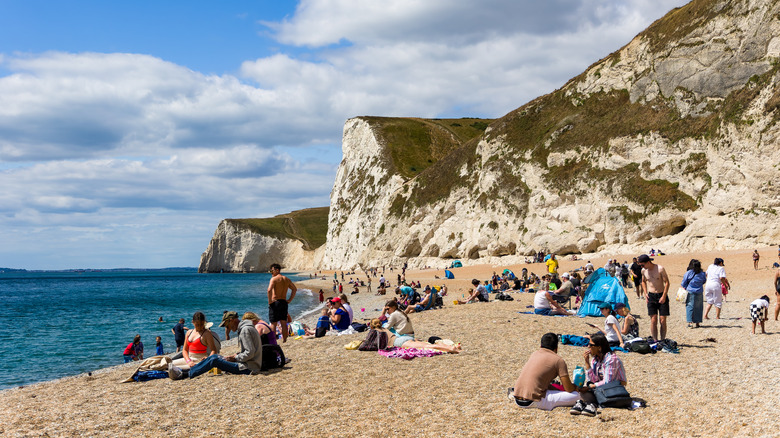
- Lack of Lifeguard Supervision: There are no permanent or seasonal lifeguard services patrolling the beach at Durdle Door. Swimmers are entirely on their own.
- Severe Rip Currents and Drop-Offs: The U.K. Coastguard and local rescue services frequently respond to emergency incidents involving swimmers caught in powerful rip currents. The near-shore seabed features sudden, precipitous drop-offs, making wading hazardous even for strong swimmers. Notably, regional news outlets such as Swanage News have documented incidents where experienced swimming groups were caught unawares by aggressive tidal movements and underwater undertows.
- Geological Instability and Rockfalls: The chalk and limestone cliffs comprising the Jurassic Coast are inherently unstable. Continuous weathering, freeze-thaw cycles, and heavy rainfall cause sudden rockfalls and cliff face collapses. Walking directly beneath the cliffs or scaling unauthorized routes is strongly discouraged by local safety officials.
Future Outlook: Managing Sustainability and Preservation
As Durdle Door enters a new era of mass global tourism, the primary challenge facing the Lulworth Estate, Dorset Council, and environmental stewards is achieving a delicate equilibrium between public access and environmental conservation.
Mitigating Over-Tourism and Infrastructure Strain
The sheer volume of vehicular traffic during peak summer holidays and warm weekends regularly stretches local infrastructure to its limits. Narrow rural lanes leading to Lulworth and Durdle Door experience severe congestion, impacting emergency vehicle access and disrupting local communities. Future infrastructure planning focuses on expanding park-and-ride schemes, enhancing public transport links from major hubs like Weymouth and Bournemouth, and implementing advanced digital parking reservation systems to regulate visitor flow.
Preserving the UNESCO Heritage Status
Protecting the geological integrity of the Jurassic Coast requires proactive land management. Conservationists are actively working to repair trail erosion along the South West Coast Path, prevent unauthorized scrambling on fragile cliff faces, and educate the public on Leave-No-Trace principles.
Ultimately, Durdle Door remains a testament to the raw, unbridled power of natural geological processes. Whether viewed from the deck of a passing vessel, experienced via a challenging 10-mile coastal trek from Weymouth, or admired from the clifftops along the South West Coast Path, this 10,000-year-old limestone arch stands as an irreplaceable monument to Earth’s deep history—demanding both the admiration and the cautious respect of every traveler who visits its shores.