







Executive Overview
In the world of contemporary yacht design, an insatiable appetite for hyper-futuristic styling and ever-increasing horsepower has often distanced the boating experience from the natural environment it seeks to celebrate. However, a quiet revolution is taking shape along the sun-drenched coastlines of the Balearic Islands. Mallorca-based startup SAMAR Yachts has disrupted the conventional design paradigm with its debut vessel, the SAMAR 50.
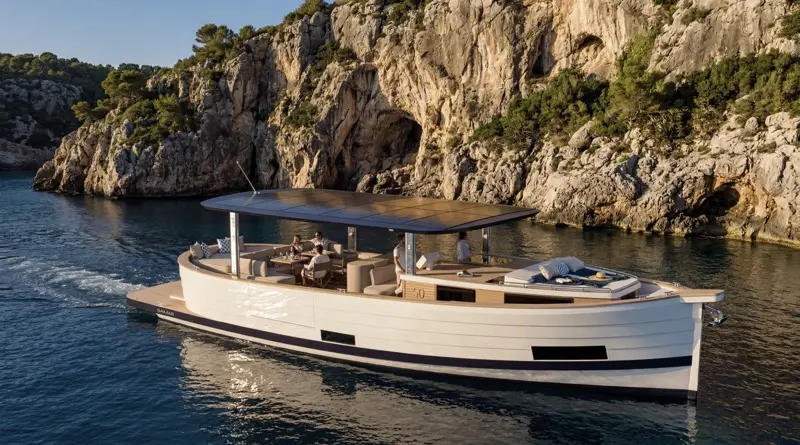
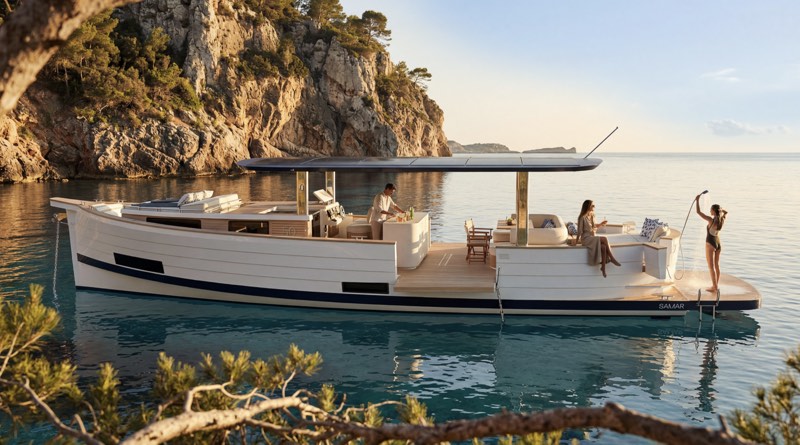
Measuring 15.8 meters (50 feet), the SAMAR 50 is a sophisticated solar-electric yacht that marries a centuries-old hull archetype—the traditional Mediterranean llaut—with advanced zero-emission propulsion and modern luxury. Derived from the local Mallorcan phrase "Sa Mar" ("The Sea"), the brand’s core philosophy is uncompromisingly clear: to strip away the industrial complexity of modern yachting and return the maritime experience to its most elemental, tranquil state.
By taking a hull design proven over hundreds of years of rugged Mediterranean service and outfitting it with modular hybrid-electric architectures, high-capacity lithium energy storage, and an integrated solar roof array, SAMAR Yachts has engineered a watercraft that redefines sustainable luxury. For modern leisure boaters seeking a slower, more profound connection to the ocean, the SAMAR 50 represents a masterclass in heritage-infused innovation.
Detailed Chronology: From Medieval Workhorses to Modern Luxury
To truly appreciate the engineering and aesthetic triumph of the SAMAR 50, one must look back across the centuries to trace the lineage of its muse: the llaut.
The Heritage of the Balearic llaut
So culturally and historically significant to the Balearic Islands is the llaut that it has officially been designated an "Asset of Cultural Interest" by regional authorities, celebrated in maritime museums across Mallorca, Menorca, Ibiza, and Formentera.
The origins of the llaut trace back to the Middle Ages. Originally conceived as a sturdy, multi-purpose wooden sailing and rowing vessel, the llaut quickly became the lifeblood of coastal communities. Over subsequent centuries, these craft were painstakingly fashioned for virtually every conceivable maritime application. They served as rugged fishing boats, commercial cargo carriers, diplomatic transport for consuls and high-ranking dignitaries, and—during more turbulent eras—vessels for naval combat and nocturnal smuggling.
The secret to the llaut’s enduring legacy lies entirely within its hull form. Unmatched for navigating the capricious seas, sudden squalls, and persistent winds of the Mediterranean basin, the traditional llaut features a distinctive laurel-leaf or teardrop profile when viewed from above. Historically constructed by master carpenters known as mestres d’aixa, the creation of a llaut was once a ritualistic endeavor. These master craftsmen would journey deep into the local oak and pine forests to select the ideal timber, occasionally timing the felling of the trees to specific phases of the moon to ensure optimum wood density and longevity.

Reimagining a Classic for the 21st Century
Throughout history, llauts have been built in lengths ranging from modest 4-meter fishing dinghies up to stately 60-meter (200-foot) vessels. Yet, the foundational DNA has remained remarkably consistent: a low-profile silhouette, gentle curves, low gunwales to facilitate easy water access, and in many configurations, a central opening known as a cossia.

Recognizing the unmatched hydrodynamic efficiency and timeless aesthetic of this regional icon, SAMAR Yachts spent years conceptualizing a modern interpretation tailored specifically for today’s eco-conscious leisure boater. Rather than reinventing the wheel, the design team chose to refine a shape that had already been perfected by centuries of empirical testing at sea.
The resulting SAMAR 50 translates the utility of the historic workboat into a high-end luxury cruiser. Features that once served purely utilitarian purposes—such as low gunwales for hauling fishing nets or boarding dignitaries—have been brilliantly re-engineered to provide modern passengers with seamless, unhindered access to the water. The historic cossia has been modernized into deployable "hull wings," transforming the aft section into a sprawling, floating backyard deck that completely blurs the boundary between the vessel and the sea.
Supporting Context & Metrics: Architecture and Performance
Beneath its classically inspired exterior lies an ultra-modern engineering suite designed to maximize energy efficiency, operational flexibility, and passenger comfort.
Propulsion Configurations
SAMAR Yachts offers two distinct propulsion architectures for the 50, allowing owners to tailor the vessel’s capabilities to their specific cruising profiles:

- Serial Hybrid System: Designed primarily for silent, emission-free operation, this setup features twin 40 kW (55 hp) electric motors, delivering a combined total of 80 kW (110 hp). Energy is drawn from a massive 139 kWh lithium battery bank. Using a standard rule-of-thumb calculation, this battery capacity allows the electric motors to run at full continuous output for approximately one hour and three-quarters ($139text kWh div 80text kW = 1.75text hours$). Under electric power, the vessel achieves a clean, whisper-quiet top speed of roughly 10 to 11 knots. A diesel generator acts as a range extender when navigating beyond battery limits.
- Parallel Hybrid System: For owners requiring higher transit speeds, this configuration combines twin 80 kW (220 hp total) diesel engines with two 30 kW (80 hp total) electric motors. This hybrid setup pushes the yacht’s top speed to an impressive 14 to 15 knots. While the higher speed capability is useful for quickly reaching remote archipelagos or outpacing changing weather, maritime purists note that the true essence of the SAMAR 50 is best experienced at a relaxed, unhurried pace.
Energy Independence and Deck Layout
Complementing the electric propulsion is an integrated hardtop solar array capable of generating up to 5.4 kWp (kilowatts-peak) of clean solar energy. Under typical Mediterranean conditions, this solar canopy continuously tops off the service batteries, significantly reducing reliance on shore power or fossil fuels during extended periods at anchor.
The deck architecture is meticulously planned to encourage open-air socializing. Passengers can lounge on the expansive sunbeds at the bow, dine al fresco in the sheltered cockpit, or unwind in the banquette-style aft lounge. When at anchor, opening the hull wings transforms the stern into an expansive swimming and diving platform.
Furthermore, SAMAR Yachts has embraced modern sustainability directives in its material selections. While classical llauts relied entirely on old-growth timber, the SAMAR 50 incorporates recycled and recyclable marine-grade aluminum. This choice reflects a rigorous lifecycle philosophy centered on structural durability, ease of maintenance, and minimal environmental footprint.
Technical Specifications Matrix
| Feature / Metric | Specification Details |
|---|---|
| Length Overall (LOA) | 15.8 m / 50 ft |
| Beam (Width) | 14.2 m / [Configurable Beam] |
| Draft | 0.9 m / ~3 ft |
| Displacement | 14 metric tonnes |
| Propulsion (Serial Hybrid) | 2 x 40 kW electric motors + 11 kW generator |
| Serial Hybrid Top Speed | ~10–11 knots |
| Propulsion (Parallel Hybrid) | 2 x 80 kW diesel engines + 2 x 30 kW electric motors |
| Parallel Hybrid Top Speed | 14–15 knots |
| Battery Capacity | 139 kWh |
| Solar Array Generation | Up to 5.4 kWp |
| Passenger Capacity | Up to 12 guests + crew |
Official Statements and Industry Vision
The founding ethos of SAMAR Yachts is rooted in authenticity and a desire to simplify the yachting experience. In official corporate commentary, company leadership has repeatedly emphasized a philosophy of subtraction rather than addition.

"This project started with a very clear idea—to create a yacht that allows people to experience the sea in a quieter, more natural way," explains Miguel Rigo, CEO of SAMAR Yachts. "We are not trying to add more complexity, but to remove it. The result is a boat that feels intuitive, efficient, and truly connected to its surroundings."
Industry analysts have praised the company’s localized approach. By establishing its roots in Mallorca—where the maritime heritage of the llaut remains deeply embedded in the cultural fabric—SAMAR Yachts has created a vessel that carries genuine narrative weight. Rather than imposing a generic global template onto a local market, the company has honored the topography and meteorological realities of the Balearic Sea.
In corporate literature detailing the vessel’s operational profile, SAMAR highlights the synergy between its deck layout and hybrid drivetrain: "This configuration enables extended periods of silent and emission-free cruising under typical Mediterranean conditions, while significantly reducing reliance on conventional energy sources." This commitment to quiet cruising strikes a chord with modern regulators and environmentally conscious yacht owners who face mounting restrictions on noise and emissions in fragile marine sanctuaries and protected coastal bays.
Future Outlook: Setting a New Standard for Regional Cruising
As the global maritime industry navigates the complex transition toward decarbonization, the launch of the SAMAR 50 marks a pivotal milestone. It proves that zero-emission luxury does not require abandoning cultural heritage or adopting sterile, sci-fi aesthetics. Instead, it demonstrates that traditional boatbuilding wisdom—when cross-pollinated with cutting-edge battery chemistry and solar technology—can yield solutions that are both ecologically responsible and profoundly elegant.

For those eager to witness this technological and cultural crossover firsthand, the waiting period is over. The very first hull of the SAMAR 50 has officially been completed and is now available for private charter out of the prestigious Club de Mar in Palma, Mallorca.
As charter guests and prospective buyers step aboard to glide silently across the turquoise waters of the Balearic Sea, they will not merely be testing a new model of yacht; they will be participating in the revival of a centuries-old maritime tradition, propelled peacefully into a sustainable future.