








Executive Overview
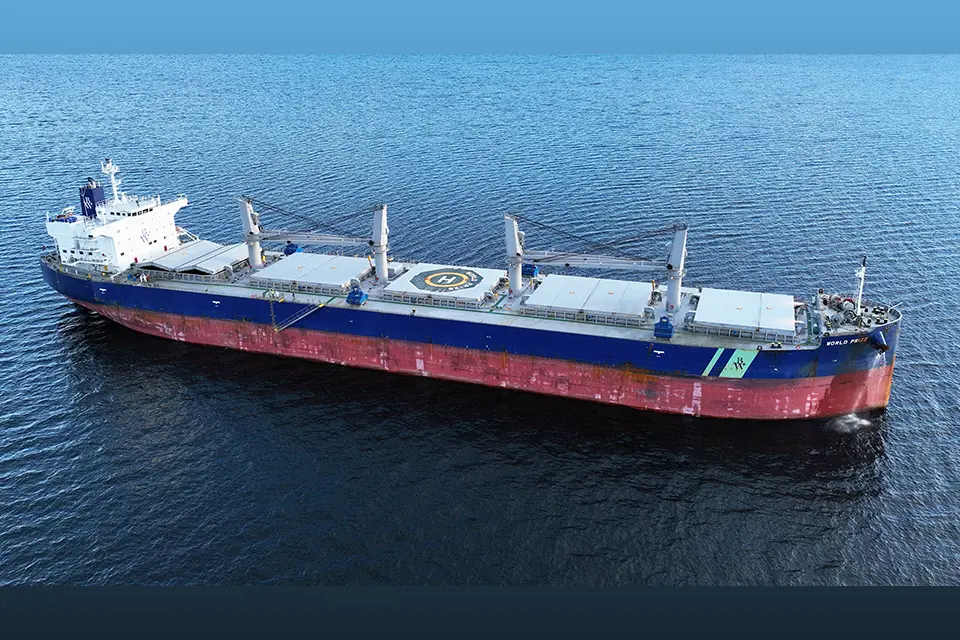
The United Kingdom’s Marine Accident Investigation Branch (MAIB) has officially published its comprehensive accident investigation report regarding a fatal man overboard incident that claimed the life of a crew member aboard the Isle of Man-registered bulk carrier World Prize. The tragic event occurred on 14 October 2025, sending shockwaves through the international maritime community and reigniting critical discussions surrounding safety protocols, working at height, deck operations, and emergency response readiness on deep-sea commercial vessels.
The formal release of the report marks the culmination of a rigorous, multi-week investigative process conducted by maritime safety experts. Operating on behalf of the Isle of Man Maritime Administration, the MAIB led the inquiry pursuant to the established Memorandum of Understanding (MoU) between the MAIB and the Red Ensign Group Category 1 registries—which includes the Isle of Man, the Cayman Islands, Bermuda, and Gibraltar. This cooperative framework ensures that independent, highly competent accident investigations are carried out for vessels flying these flags, upholding the gold standard of global maritime safety governance.
The published documentation outlines the precise sequence of events leading up to the crew member entering the water, evaluates the environmental and operational factors at play, and scrutinizes the shipboard safety management systems (SMS) in place at the time. Furthermore, the report details the immediate search and rescue (SAR) efforts mounted by the vessel’s crew and external authorities, alongside the subsequent safety actions taken by the ship managers and the flag administration in the wake of the tragedy.
As the global maritime sector continues to grapple with the persistent hazard of personnel falling from height or slipping overboard—historically one of the leading causes of fatalities in commercial shipping—the findings of the World Prize investigation serve as both a sobering reminder of the inherent risks of life at sea and an essential blueprint for preventing similar catastrophes in the future.
Detailed Chronology of Events
While the full technical mechanics and minute-by-minute timeline are meticulously documented in the official MAIB report, the overarching narrative of the incident on 14 October 2025 highlights the rapid, unforgiving nature of maritime emergencies.
Operational Context Leading Up to the Incident
On the day of the incident, the World Prize was operating on the high seas under routine commercial transit conditions. Bulk carriers of this class routinely require continuous deck maintenance, cargo gear checks, and structural inspections to comply with classification society standards and international conventions. On 14 October, deck operations were underway, requiring personnel to operate in specific weather and sea state conditions.
Maritime investigators meticulously reconstructed the hours leading up to the casualty. Crew scheduling, rest hours (verified against the Maritime Labour Convention guidelines), and pre-task risk assessments were subjected to intense scrutiny. The MAIB investigation evaluated whether fatigue, time pressure, or procedural shortcuts played a contributing role in the positioning of the crew member prior to the fall.

The Critical Moment: Man Overboard
The incident occurred during daylight hours under circumstances that quickly transitioned from routine maritime operations to a critical emergency. According to the investigation findings, the crew member entered the water unexpectedly from an exposed area of the vessel. The precise mechanics of how the individual lost their footing, slipped, or breached safety barriers form a core component of the MAIB’s failure analysis.
In high-sided commercial vessels such as bulk carriers, a fall from height or directly from the main deck into open water presents immediate, multi-layered hazards. Aside from the traumatic impact of the fall itself—depending on the height and point of entry—victims face treacherous sea states, the formidable wake of a moving vessel, and the near-impossibility of self-recovery without immediate assistance.
Immediate Emergency Response and SAR Operations
The alarm was raised almost immediately upon the crew member entering the water. The instantaneous reaction of the bridge team and shipboard personnel is critical in any man overboard (MOB) scenario. The World Prize crew initiated standard emergency protocols, which included:
- Sounding the general alarm and calling away the emergency muster.
- Releasing the bridge wing lifebuoy equipped with a self-igniting light and smoke signal to mark the position in the water.
- Executing immediate helm maneuvers (such as the Williamson turn or standard man overboard recovery turns) to bring the vessel back toward the datum.
- Posting dedicated lookouts equipped with binoculars to maintain visual contact with the person in the water.
- Preparing rescue boats and recovery equipment for deployment.
Despite the prompt execution of shipboard emergency procedures and subsequent coordination with external maritime rescue coordination centres (MRCC), the operation tragically transitioned from a rescue mission to a recovery operation. Environmental conditions, the temperature of the water, and the time elapsed before the casualty could be safely retrieved from the sea proved insurmountable barriers to survival. The loss of life underscores the stark reality that standard recovery maneuvers, even when executed flawlessly, often face severe limitations when dealing with open-ocean environments and high-freeboard vessels.
Supporting Context & Metrics: The Shadow of MOB Incidents in Global Shipping
To fully grasp the significance of the MAIB report on the World Prize, the incident must be contextualized within the broader framework of occupational safety in the global maritime industry.
Understanding the Man Overboard Hazard
Man overboard incidents remain one of the most feared and lethal categories of maritime accidents. Unlike land-based industrial accidents where emergency medical services can arrive within minutes, a person falling overboard in the middle of an ocean relies entirely on immediate shipboard intervention. Key risk factors consistently identified by maritime safety bodies include:
- Working at Height and Over-Side Operations: Maintenance of hulls, cargo holds, and superstructure frequently requires personnel to utilize scaffolding, staging, Bosun’s chairs, or personal fall arrest systems. Any failure in equipment integrity or adherence to permit-to-work systems can prove fatal.
- Environmental Conditions: High winds, heavy rolling and pitching, sea spray, and reduced visibility severely compromise footing and heighten the risk of slips, trips, and falls.
- Fatigue and Human Factors: Long working hours, watchkeeping schedules, and the relentless pressure to maintain tight vessel turnaround times can erode situational awareness and cognitive sharpness.
- Inadequate Barriers and Railings: Corrosion, wear-and-tear, or temporarily removed safety chains and guardrails create hidden traps for unsuspecting crew members.
Regulatory Framework and Flag State Responsibilities
Under international maritime law—governed primarily by the International Maritime Organization (IMO) conventions such as SOLAS (Safety of Life at Sea) and STCW (Standards of Training, Certification and Watchkeeping)—shipowners and operators are legally mandated to maintain robust Safety Management Systems (SMS).
When a vessel is registered under a flag state administration—such as the Isle of Man—that administration delegates technical oversight to recognized organizations while retaining ultimate responsibility for regulatory compliance and safety investigations. Through the Red Ensign Group, the Isle of Man ensures that serious marine casualties are investigated with absolute impartiality.
The MAIB, renowned globally for its rigorous, independent, and non-blame-oriented investigative methodology, was tasked with uncovering the systemic root causes of the World Prize tragedy. By looking beyond simple human error and examining organizational culture, safety oversight, training standards, and equipment design, the MAIB report provides invaluable data that feeds into international safety databases, ultimately influencing future regulatory amendments and industry best practices.
Official Statements and Accessing the Full Report
The formal publication of the accident investigation report is a vital step toward transparency, accountability, and continuous safety improvement within the maritime sector.
Availability of the Investigation Report
The complete, unedited MAIB report into the fatal man overboard from the World Prize has been made publicly available to shipowners, operators, naval architects, safety officers, and maritime professionals worldwide. Interested parties can access, read, and download the full documentation directly via the official government portal:
👉 Read the official MAIB report on the man overboard from the bulk carrier World Prize
The report contains a detailed breakdown of the factual information gathered during the investigation, including forensic analysis of equipment, witness testimonies, meteorological data, safety management audits, and the specific safety recommendations issued to the relevant stakeholders.
Institutional Collaboration
The successful completion of this complex investigation underscores the robust operational framework governing the Red Ensign Group Category 1 registries. The collaborative agreement—formalized via the Memorandum of Understanding between the MAIB and the registries of the Isle of Man, the Cayman Islands, Bermuda, and Gibraltar—guarantees that independent investigative expertise is readily deployable to safeguard international shipping standards. This cooperative arrangement ensures that lessons learned from maritime casualties are disseminated globally, protecting seafarers regardless of the flag under which their vessel sails.
Official Media Contact Information
For journalists, maritime industry analysts, and media outlets seeking further commentary or clarification regarding the report, the MAIB has established dedicated communication channels. Media enquiries should be directed through the following official telephone lines:
- Office Hours Media Enquiries: 01932 440015 (Available during standard business hours)
- Out-of-Hours Media Enquiries: 0300 7777878 (Reserved for urgent, breaking media requirements outside normal working hours)
Future Outlook: Lessons Learned and Industry Recommendations
An accident investigation report holds true value only to the extent that its findings are absorbed, acted upon, and translated into meaningful operational changes. The publication of the World Prize report initiates a critical phase of industry-wide reflection and remediation.
Key Takeaways for Ship Managers and Operators
Maritime safety experts emphasize that ship managers, designated persons ashore (DPAs), and Masters must carefully review the MAIB findings and cross-reference them with their own fleets’ safety management systems. Essential focus areas moving forward include:
- Re-evaluating Risk Assessments: Ensuring that dynamic, task-specific risk assessments are genuinely executed before any deck operation or working-at-height evolution commences, rather than being treated as mere administrative box-ticking exercises.
- Enhancing Personal Protective Equipment (PPE): Emphasizing the mandatory, correct utilization of personal fall-prevention equipment, including harnesses, lifelines, and dedicated anchor points.
- Drill Realism and MOB Readiness: Upgrading the frequency, realism, and complexity of man overboard drills. Crews must practice recovery procedures under varying weather conditions, utilizing fast-rescue boats and mechanical recovery systems to bridge the gap between theory and execution.
- Fostering a Just Safety Culture: Encouraging an onboard environment where seafarers feel entirely empowered to halt any operation they perceive as unsafe, without fear of commercial repercussion or reprimand.
The Ongoing Quest for Zero Fatalities
As the global shipping industry navigates complex economic pressures, digitalization, and evolving environmental regulations, the human element remains its most irreplaceable asset. The tragic loss of life aboard the World Prize on 14 October 2025 serves as a solemn reminder that safety can never be compromised for operational efficiency.
Through the meticulous investigative work of the MAIB and the proactive safety actions taken by the Isle of Man Maritime Administration and ship managers, the hard lessons of this tragedy will resonate across oceans. By embracing the recommendations set forth in the report, the international maritime community takes another vital step toward fulfilling its ultimate obligation: ensuring that every seafarer returns home safely from the sea.