







Executive Overview
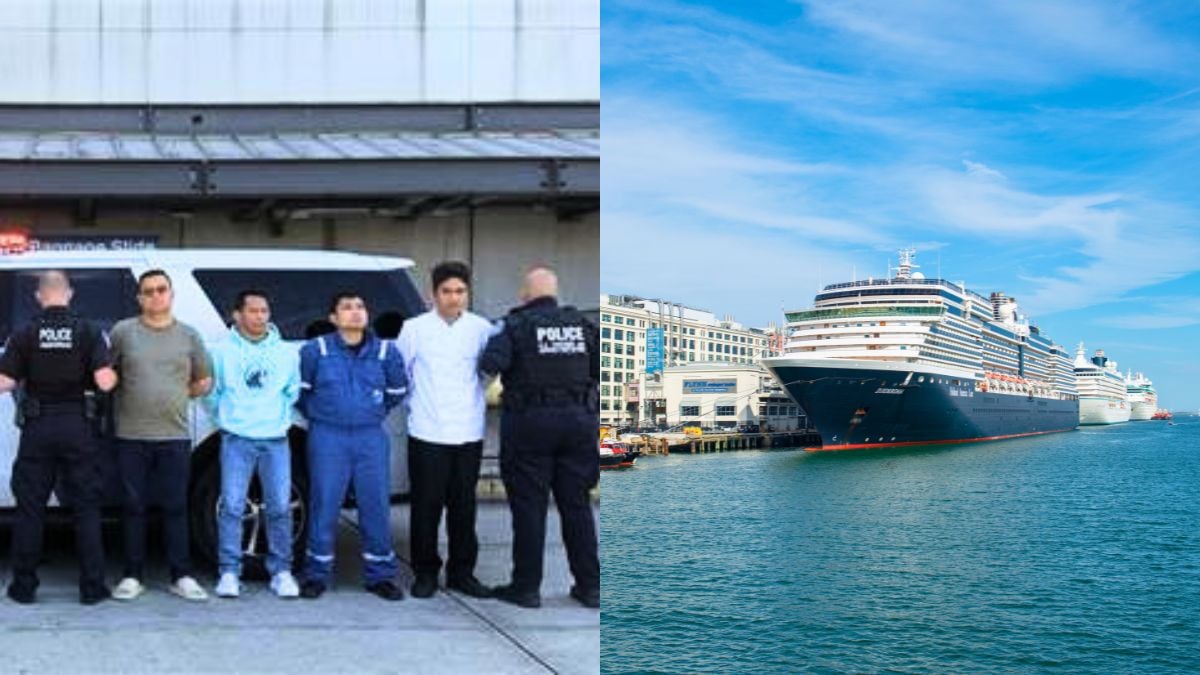
In a sweeping multi-agency law enforcement operation targeting transnational crimes against children, federal authorities arrested 11 foreign national crew members at the Port of Boston. The operation, codenamed "Operation Tidal Wave," unfolded between August 14 and 16, 2026, and focused on individuals accused of receiving, possessing, and distributing child sexual abuse and exploitation material (CSAE).
The coordinated sting was executed by U.S. Customs and Border Protection (CBP) in close partnership with Homeland Security Investigations (HSI) Boston, HSI Fort Lauderdale, and the CBP Fort Lauderdale Human Trafficking Unit. The targeted suspects were serving aboard two prominent cruise liners currently operating out of New England: Holland America Line’s Volendam and Norwegian Cruise Line’s Norwegian Breakaway.
While the arrests underscore the grim reality of illicit digital networks infiltrating the maritime industry, federal officials confirmed that cruise operations experienced zero disruptions. The ships adhered to their scheduled itineraries, and subsequent voyages departed without delay. However, the enforcement action marks another significant milestone in a broader, nationwide federal campaign designed to cleanse the commercial cruise sector of individuals involved in the exploitation of minors.
The 11 suspects—comprising nine nationals from the Philippines, one from Nicaragua, and one from Indonesia—have already been processed for administrative removal from the United States under the Immigration and Nationality Act. They face deportation back to their home countries for committing "crimes involving moral turpitude," following exhaustive digital forensics examinations and inter-agency legal consultations.
Detailed Chronology and Vessel Operations
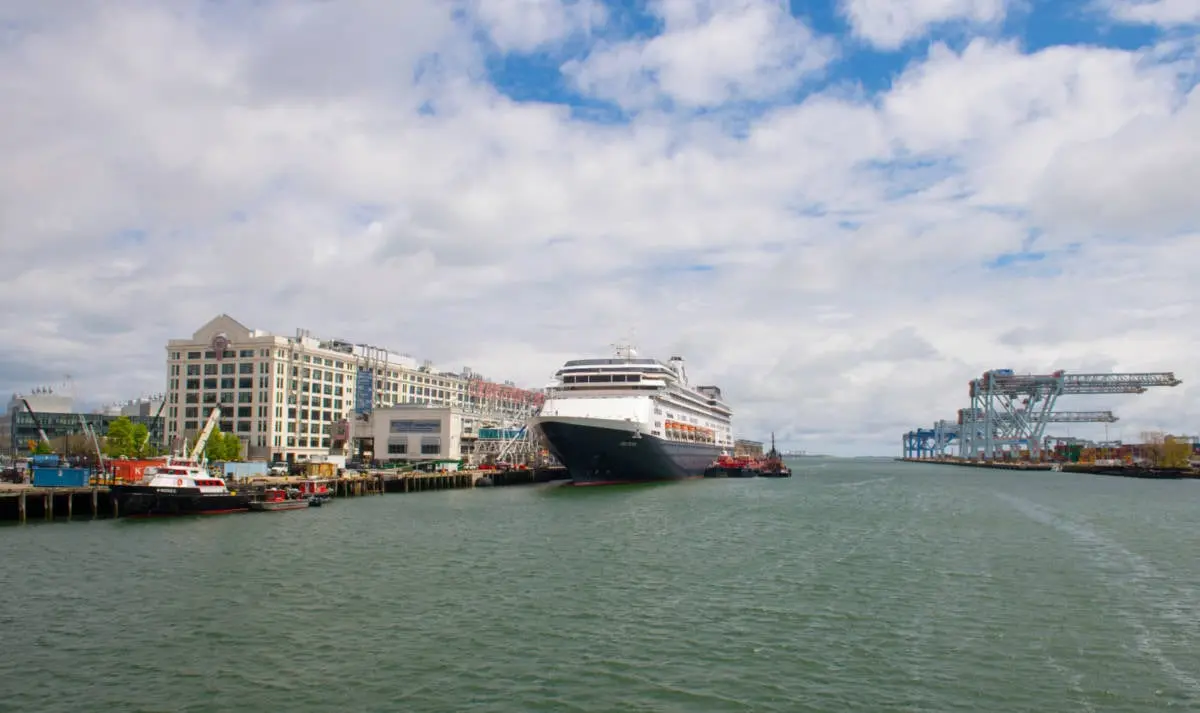
Operation Tidal Wave’s Boston phase was executed with meticulous timing to intercept the suspects as their respective vessels docked at the Port of Boston. Federal agents boarded the ships, conducted targeted searches of crew quarters, seized and analyzed electronic devices, and took the suspects into custody without incident.
The Holland America Line Interception (Volendam)
On August 15, 2026, federal agents targeted the 1,837-guest cruise ship Volendam, operated by Holland America Line. The vessel was docked in Boston following an eight-day itinerary that had departed from Montreal, Canada, on August 8. The voyage included multiple scenic port calls across Atlantic Canada, as well as a stop in Portland, Maine, before concluding its northbound-southbound rotation in Boston.
Following the removal of the targeted crew members, the Volendam continued its operational schedule seamlessly. The ship remains deployed on regional itineraries offering departures from both Montreal and Boston, highlighting the seamless coordination between law enforcement and cruise line management to ensure passenger safety without causing undue logistical bottlenecks.

The Norwegian Cruise Line Interception (Norwegian Breakaway)
The second phase of the Boston sweep took place on August 16, 2026, onboard the Norwegian Breakaway. A larger vessel with a guest capacity of 3,903, the Norwegian Breakaway arrived in Boston following an eight-day roundtrip voyage that featured calls in Halifax, Nova Scotia, and King’s Wharf, Bermuda.
The ship is homeported in Boston through early November 2026, serving as a major economic driver for regional tourism. Much like the Volendam, the enforcement action aboard the Norwegian Breakaway was conducted discreetly. Passengers on board reported minimal disruption, and the vessel’s subsequent departures proceeded precisely as scheduled.
Processing and Legal Dispositions
Prior to making the physical arrests, law enforcement officers executed comprehensive inspections of crew living quarters and seized personal electronic devices, including smartphones, laptops, and external storage drives. These items underwent immediate preliminary triage by digital forensics experts attached to the Internet Crimes Against Children (ICAC) Task Force.
Following the digital searches, prosecutors from the U.S. Attorney’s Office were consulted. Rather than pursuing prolonged criminal indictments in U.S. federal courts—which can sometimes trigger complex jurisdictional and extradition hurdles with foreign nations—authorities exercised their administrative immigration authorities. All 11 individuals were formally determined to be inadmissible under U.S. immigration law due to convictions or admissions of conduct constituting crimes involving moral turpitude. They were subsequently stripped of their crew visas and placed into removal proceedings for swift deportation to the Philippines, Nicaragua, and Indonesia.
Supporting Context & Metrics: The Anatomy of Operation Tidal Wave
Operation Tidal Wave is not an isolated enforcement action; rather, it represents the tip of the spear in an aggressive, highly coordinated national strategy directed by CBP, HSI, and specialized ICAC task forces. The initiative specifically targets maritime personnel who leverage their employment aboard cruise ships—floating cities that frequently cross international maritime borders—to traffic, trade, or store illicit material involving the sexual abuse of children.
The scale of Operation Tidal Wave has expanded rapidly across 2026, resulting in the identification and apprehension of more than 40 crew members across nine different cruise ships spanning multiple major U.S. homeports.
Phase One: San Diego, California (April 2026)
The inaugural phase of Operation Tidal Wave kicked off in April 2026 at the Port of San Diego. In a massive coordinated sweep, federal agents arrested 27 crew members across six different cruise ships operating along the Pacific Coast.
This phase captured widespread public attention when stunned passengers watched from the decks as law enforcement personnel boarded vessels—including the Disney Magic—and escorted crew members off the ships in handcuffs. The high-visibility nature of the San Diego operation sent shockwaves through the global cruise industry, signaling that federal agencies were turning a magnifying glass toward maritime personnel backgrounds. All 27 suspects from the first phase were swiftly processed and repatriated to their home countries.
Phase Two: San Juan, Puerto Rico (June–July 2026)
Following the success on the West Coast, Operation Tidal Wave shifted its focus to the Caribbean hub of San Juan, Puerto Rico, throughout June and July 2026. During this second phase, federal task force members boarded vessels arriving from various Caribbean itineraries, resulting in the removal of 14 crew members from three different ships.
Significantly, the San Juan phase escalated beyond administrative deportations: at least one crew member was formally charged for federal criminal prosecution, signaling that federal prosecutors are willing to utilize the full weight of the U.S. criminal justice system depending on the severity and domestic nexus of the offender’s digital footprint.
Cumulative Impact Across the Industry
With the addition of the 11 arrests in Boston during Phase Three, Operation Tidal Wave has successfully removed over 40 predatory individuals from the maritime workforce in less than eight months. Given the hyper-mobile nature of cruise ship employment—where workers frequently rotate between vessels, cruise lines, and international jurisdictions—law enforcement officials emphasize that such multi-agency sweeps are vital to closing security gaps that criminals might otherwise exploit.
Official Statements and Leadership Perspectives
The sheer scope and inter-agency nature of Operation Tidal Wave reflect a unified zero-tolerance policy among American law enforcement and border security agencies regarding child exploitation within the tourism and travel sectors.
Julio Caravia, Acting Director of Field Operations for CBP’s Boston Field Office, emphasized the foundational duty of border security personnel in safeguarding vulnerable populations:
"Protecting children from exploitation is among our highest priorities, and this operation demonstrates the critical role CBP officers play in identifying and stopping individuals who pose a threat to public safety."
Echoing these sentiments, Jeffrey Grimming, Acting Special Agent in Charge for HSI New England, underscored the global reach and unwavering resolve of federal investigators:
"HSI is proud to stand with our colleagues at CBP to reaffirm our message: Anyone who possesses or transports child sexual abuse material is not welcome in the United States and will face serious consequences. Together, we leverage our unique authorities to seek justice for children victimized and exploited across the globe."
Industry stakeholders, including major cruise conglomerates like Carnival Corporation (parent of Holland America Line) and Norwegian Cruise Line Holdings, have maintained a cooperative posture with federal authorities. While neither cruise line released extensive public commentary regarding the individual identities of the arrested crew members, maritime operators have consistently reiterated their commitment to rigorous background screening, zero-tolerance internal policies, and full cooperation with federal law enforcement agencies to ensure the safety of both guests and fellow crew.
Future Outlook: The Evolving Landscape of Maritime Security
As Operation Tidal Wave continues to evolve, federal law enforcement agencies are signaling that the campaign against child exploitation in the travel sector is far from over. The intersection of global maritime commerce and digital crime presents unique challenges, requiring continuous intelligence sharing between international police organizations, domestic task forces, and private-sector corporate security teams.
Several key trends and future developments are expected to shape maritime security and regulatory compliance moving forward:
- Enhanced Vetting and Digital Forensics: Cruise lines are expected to face mounting pressure from lawmakers and advocacy groups to enhance pre-employment background checks, potentially incorporating more rigorous digital footprint evaluations and periodic device audits for crew members who have access to shipboard networks.
- Expansion of ICAC Port Partnerships: The Internet Crimes Against Children Task Force is likely to expand its footprint to additional regional cruise hubs along the Gulf Coast, the Pacific Northwest, and the Eastern Seaboard, ensuring that no major homeport remains unmonitored.
- Technological Integration: CBP and HSI are increasingly utilizing advanced data analytics and real-time threat-detection protocols to flag suspicious digital traffic originating from vessels at sea, allowing federal agents to prepare intervention strategies long before a ship pulls pier-side.
Ultimately, the successful execution of Operation Tidal Wave in Boston—and its preceding phases in San Diego and San Juan—sends an unmistakable message to transnational offenders. The maritime industry, long viewed by some criminals as a transient grey area where identities and illicit digital files could be easily concealed, is now the subject of intense, coordinated, and uncompromising federal scrutiny.