








Executive Overview
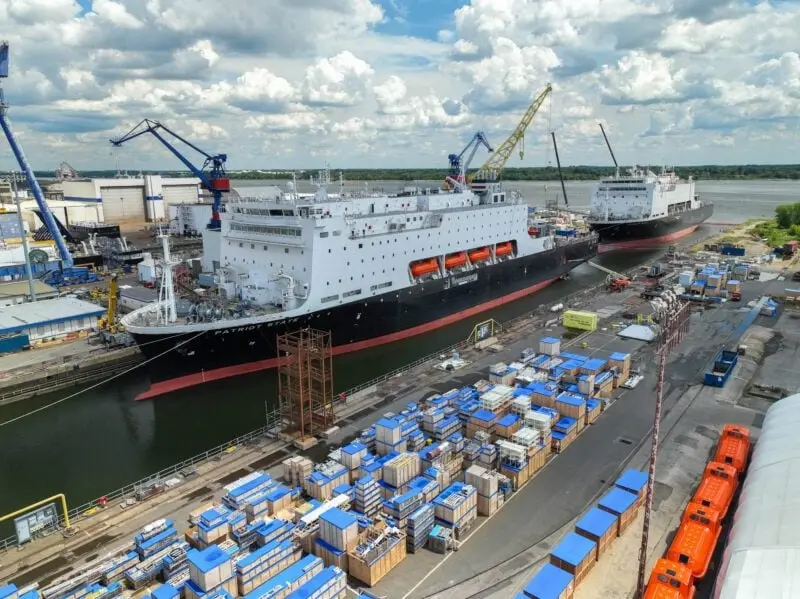
In a high-profile demonstration of the changing dynamics within the United States defense industrial base, Acting Secretary of the Navy Hung Cao recently toured the Hanwha Philly Shipyard in Pennsylvania. The visit, which included high-level meetings with executives from Hanwha Defense USA and local political leaders, highlighted a critical strategic pivot: the integration of advanced South Korean shipbuilding capital, technology, and manufacturing processes into the domestic American defense sector.
Facing an acute shipbuilding crisis characterized by prolonged maintenance backlogs, labor shortages, and a widening naval capacity gap with China, the U.S. Navy is increasingly looking toward allied nations to bolster its domestic production capacity. South Korea’s Hanwha Group, which completed its acquisition of the former Philly Shipyard in late 2024, has positioned itself at the vanguard of this transformation.
By leveraging its deep commercial expertise and massive capital reserves, Hanwha aims to revive the historic Philadelphia Navy Yard as a powerhouse of naval and commercial construction. This transition is supported by a rapidly expanding workforce, which has more than doubled to approximately 2,500 employees since the acquisition, and a diverse order book that bridges the gap between commercial viability and national security requirements.

Detailed Chronology: Hanwha’s Rapid American Expansion
[Late 2024] Acquisition of Philly Shipyard completed by Hanwha Group
       │
[July 2024]* Selection for MDA's Next-Gen Missile Range Instrumentation Vessels (Golden Defender)
       │
[August 2024] Presidential Memorandum opens path for allied tech transfer & co-production
       │
[Present] Workforce doubles to 2,500; Matson, Hanwha Shipping, & MR Tanker orders secured through 2029
       │
[Future (2030)] Scheduled delivery of the Golden Defender; pending $1.2B acquisition bid for Austal USA
*Note: The MDA contract selection occurred in July, preceding the final corporate acquisition wrap-up in late 2024, signaling Hanwha’s pre-acquisition strategic positioning in the U.S. market.
The Late 2024 Acquisition: A New Era for Philly Shipyard
For decades, the Philly Shipyard—occupying 115 acres of the historic Philadelphia Navy Yard—operated primarily as a commercial shipbuilder, specializing in Jones Act-compliant vessels. While highly successful in this niche, the yard faced cyclical demand and limited access to lucrative government defense contracts.
In late 2024, South Korea’s Hanwha Group finalized its acquisition of the facility. This acquisition was not merely a corporate transaction; it represented a structural shift in U.S. maritime policy. By permitting a major South Korean defense conglomerate to acquire a vital domestic shipyard, federal regulators and defense officials signaled their willingness to integrate allied industrial capabilities directly into the American homeland.
The Immediate Workforce and Infrastructure Capitalization
Upon taking ownership, Hanwha launched an aggressive revitalization campaign. The company focused on two primary pillars: infrastructure modernization and human capital development.
- Workforce Expansion: Since the late 2024 acquisition, Hanwha has more than doubled the shipyard’s workforce, growing the payroll to nearly 2,500 employees.
- Training Initiatives: Hanwha has imported advanced South Korean training methodologies and manufacturing technologies to upskill local American workers, aiming to bridge the productivity gap that has plagued domestic shipyards for decades.
Breaking into the Defense Sector: The Missile Defense Agency Contract
The strategic wisdom of Hanwha’s acquisition became clear when the shipyard, in partnership with TOTE Services, was selected to construct the Missile Defense Agency’s (MDA) next-generation Missile Range Instrumentation Vessels. This program includes the construction of the future Golden Defender, scheduled for delivery in 2030.
The vessel is designed to play a critical role in supporting the "Golden Dome" missile defense initiative, a high-priority strategic defense project. This contract marked Hanwha Philly Shipyard’s official transition from a commercial builder to a critical asset in the U.S. national security infrastructure.
The $1.2 Billion Bid for Austal USA
Hanwha’s ambitions extend far beyond the Delaware River. The company has made a preliminary offer valued at up to $1.2 billion to acquire Austal USA, a major defense contractor based in Mobile, Alabama. Austal USA is a primary builder of the Navy’s Independence-class Littoral Combat Ships (LCS) and Expeditionary Fast Transports (EPF), as well as Coast Guard Heritage-class cutters.
If approved, this acquisition would give Hanwha control over another critical American naval shipbuilder, cementing its status as one of the most influential players in the U.S. naval construction market.
Supporting Context & Metrics: The Geopolitical and Industrial Reality
To understand the significance of Hanwha’s entry into the U.S. market, one must examine the stark industrial realities facing the United States Navy relative to its primary geopolitical rival, China.
The U.S.–China Shipbuilding Imbalance
According to unclassified Office of Naval Intelligence (ONI) estimates, China’s shipbuilding capacity is more than 200 times greater than that of the United States. While the U.S. Navy struggles to maintain a fleet of approximately 290 deployable battle force ships, the People’s Liberation Army Navy (PLAN) has already surpassed 370 ships and is on track to reach 440 by 2030.
The primary bottleneck for the United States is not a lack of funding, but a severe deficit in industrial capacity, drydock space, and skilled labor. By integrating South Korean conglomerates like Hanwha—which operate some of the most automated, highly efficient, and technologically advanced shipyards in the world—the U.S. hopes to rapidly scale its domestic production without waiting decades to rebuild its native industrial base from scratch.
Philly Shipyard’s Physical Assets and Industrial Footprint
The Hanwha Philly Shipyard possesses several unique physical advantages that make it an ideal candidate for naval expansion:
| Metric / Asset | Description |
|---|---|
| Total Area | 115 acres at the confluence of the Delaware and Schuylkill rivers. |
| Drydocks | Two of the largest graving docks on the East Coast of the United States, capable of accommodating massive commercial and military hulls. |
| Historical Output | Responsible for building approximately 50% of all large, oceangoing Jones Act vessels delivered in the U.S. since 2000. |
| Current Workforce | ~2,500 employees (more than doubled since late 2024). |
Commercial Backlog: Sustaining the Industrial Engine
While Hanwha’s long-term goal is to secure high-margin U.S. Navy construction contracts, a shipyard cannot survive on government work alone. A robust commercial backlog is essential to maintain steady employment levels, optimize supply chains, and absorb overhead costs.
Hanwha Philly Shipyard has secured a robust commercial backlog stretching through at least 2029, which includes:
- Matson Containerships: Three LNG-powered containerships.
- Hanwha Shipping: Two LNG carriers, demonstrating internal synergy within the broader Hanwha corporate group.
- MR Tankers: Four firm Medium Range (MR) product tanker orders, with options for six additional vessels.
The National Security Multi-Mission Vessel (NSMV) Program
The shipyard is currently completing the Maritime Administration’s (MARAD) five-ship NSMV program, designed to provide state-of-the-art training platforms for state maritime academies while serving as humanitarian aid and disaster relief vessels.
- Deliveries: Four of the five planned NSMVs have already been delivered. The fifth and final vessel is scheduled for delivery next year.
- Operational Proof of Concept: The lead ship of the class, the Empire State, was activated by MARAD for a federal mission supporting the U.S. Navy in the Indo-Pacific. This deployment underscores how commercial and auxiliary vessels built in Philadelphia are directly supporting active-duty military operations in critical theaters of tension.
Official Statements and Political Alignment
The integration of foreign defense firms into the U.S. industrial base is a politically sensitive issue, but Hanwha’s initiatives have received strong bipartisan support and high-level military endorsement.
Executive and Military Endorsements
During his visit to the Philadelphia facility, Acting Secretary of the Navy Hung Cao emphasized the critical relationship between industrial capacity and national defense:
"America’s maritime strength depends on our ability to build ships at the speed and scale our nation requires. Today’s visit highlighted opportunities to expand domestic shipbuilding capacity, strengthen our workforce, and ultimately put more ships to sea."
— Hung Cao, Acting Secretary of the Navy
Michael Coulter, CEO of Hanwha Defense USA, highlighted the company’s commitment to honoring the shipyard’s historical legacy while modernizing it for future conflicts:
"As Hanwha looks to build ships for the U.S. Navy, we appreciate Secretary Cao visiting our Philly Shipyard to see the progress made since we acquired the shipyard in 2024. We want to revive the Philadelphia Navy Yard’s long history of naval construction and help the Navy increase fleet capacity."
— Michael Coulter, CEO of Hanwha Defense USA
David Kim, CEO of Hanwha Philly Shipyard, focused on the transfer of advanced manufacturing technology:
"As a premier global shipbuilder, Hanwha is bringing its advanced technology and training to the U.S. to expand shipbuilding capacity and help meet U.S. demand."
— David Kim, CEO of Hanwha Philly Shipyard
Congressional and Regional Support
The visit was also attended by regional political leaders, including Senator Chris Coons (D-DE) and Representative Madeleine Dean (D-PA). Their presence highlighted the economic and geopolitical importance of the shipyard’s expansion.
Senator Coons explicitly linked the expansion of the Philadelphia yard to the broader geopolitical competition with the People’s Republic of China:
"Increasing the number of Navy ships built by the Philly shipyard will be transformative for our region. It will also transform our military, allowing us to keep pace with China’s new shipbuilding efforts that threaten a free and open Indo-Pacific and shipping lanes around the world."
— Sen. Chris Coons (D-DE)
Future Outlook: Challenges and Strategic Projections
As Hanwha seeks to establish itself as a cornerstone of the U.S. naval industrial base, several key challenges and strategic opportunities lie ahead.
                  [ HANWHA'S U.S. STRATEGY ]
                              │
         ┌────────────────────┴────────────────────┐
         ▼                                         ▼
[ Opportunities ]                           [ Challenges ]
 ├─ Tech transfer & automation               ├─ CFIUS & regulatory scrutiny
 ├─ Expanded Navy/USCG market share          ├─ High domestic labor costs
 └─ Bipartisan political backing             └─ Integrating union workforces
Navigating Regulatory and Security Hurdles
The proposed $1.2 billion acquisition of Austal USA represents a major test for Hanwha. Because Austal USA is heavily integrated into sensitive U.S. Navy programs, the transaction must pass rigorous reviews by the Committee on Foreign Investment in the United States (CFIUS) and defense security agencies.
While South Korea is a treaty ally, federal regulators remain cautious about foreign ownership of prime defense contractors. Hanwha must demonstrate that its corporate governance structures prevent unauthorized technology transfer while maintaining strict compliance with U.S. National Industrial Security Program (NISP) requirements.
Implementing the Allied Co-Production Model
Hanwha’s expansion aligns with a key policy shift formalized in a presidential memorandum. This directive established a pathway for foreign shipbuilders from allied nations to initially construct certain ship components or hulls overseas before shifting final production, assembly, and outfitting to the United States.
To utilize this pathway, foreign firms must commit to:
- Investing heavily in domestic U.S. facilities.
- Training and expanding the American maritime workforce.
- Transferring proprietary, high-efficiency shipbuilding technology to U.S. soil.
The success of the Hanwha Philly Shipyard will serve as a test case for this allied co-production model. If Hanwha can successfully combine South Korean engineering, automation, and supply chain management with American labor at the Philly Shipyard, it could establish a blueprint for other allied defense giants (such as Japan’s Mitsubishi or South Korea’s HD Hyundai) to invest in the U.S. maritime sector.
Long-Term Market Positioning
By 2030, the delivery of the MDA’s Golden Defender will likely serve as a benchmark for Hanwha’s ability to execute complex, high-specification military programs on time and within budget—a feat that has eluded many domestic shipbuilders in recent years. If the Austal USA acquisition is finalized, Hanwha will control a dual-coast shipbuilding empire, giving it the scale to compete directly with established defense giants like General Dynamics (NASSCO, Bath Iron Works) and Huntington Ingalls Industries (Ingalls Shipbuilding, Newport News Shipbuilding).
Ultimately, Hanwha’s aggressive entry into the United States maritime sector represents a pragmatically driven evolution of American defense policy. Confronted by structural industrial decline and an assertive naval rival in the Pacific, the United States is choosing to leverage the industrial strength of its closest East Asian ally to rebuild its naval capacity. The transformation of the Hanwha Philly Shipyard is the first major step in this high-stakes effort to secure American dominance on the high seas.