








Executive Overview
The luxury yachting landscape has long been defined by a constant tension between performance and comfort, raw unadulterated speed and refined interior volume. For decades, traditional open-yachts—particularly those hailing from the storied shipyards of Italy—have leaned heavily into the former. They offered aggressive profiles, low-slung windshields, and wind-in-your-hair exhilaration at the expense of livable deck space and volumetric interior layouts. Today, that paradigm is shifting.
Entering the fray with unapologetic flair is the new Itama 70, a vessel that boldly bridges the gap between classic Mediterranean open-yacht DNA and contemporary multi-day cruising demands. Unveiled to considerable industry acclaim at the prestigious Cannes Yachting Festival, the Itama 70 serves as the second major milestone in the comprehensive brand-wide renewal strategy orchestrated by the Ferretti Group.
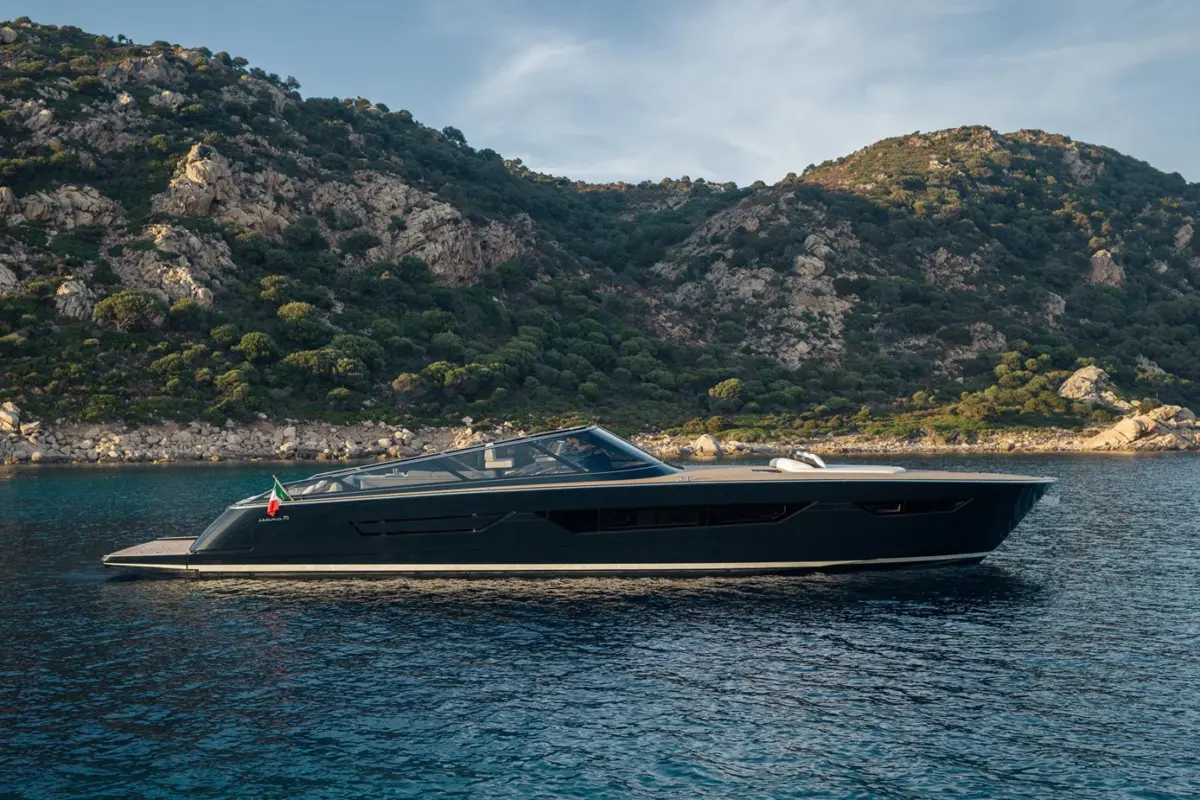
Measuring 70 feet in overall length, this striking open cruiser effortlessly marries the aggressive, sporty lines that have defined the Itama marque for generations with radically expanded outdoor living spaces and a remarkably voluminous three-stateroom interior layout. Underpinned by exterior styling courtesy of Vallicelli Design and interior architectural direction by IdeaeItalia, the Itama 70 is not merely an aesthetic exercise; it is an engineering marvel. Propelled by standard twin MAN V12 diesels rated at 1,400 horsepower each, the yacht approaches the coveted 40-knot threshold, delivering a blistering top speed of 37 knots and a swift, effortless cruising clip of 33 knots. For owners demanding even more adrenaline, an optional 1,550-hp configuration pushes those preliminary figures to a staggering 39-knot top speed and a 35-knot cruise.
By meticulously reshaping the hull-to-deck junction, rethinking ergonomic flows, and integrating state-of-the-art marine technology from bow to stern, Itama has crafted a vessel that honors its heritage while decisively claiming the future of high-performance open yachting.
Detailed Chronology: From Concept to Cannes
The genesis of the Itama 70 is deeply rooted in a deliberate, multi-year strategic roadmap designed to revitalize one of Italy’s most cherished nautical brands. To fully understand the significance of the 70’s debut, one must trace the chronological steps that brought this high-performance thoroughbred from initial design schematics to its triumphant global unveiling on the French Riviera.
The Brand Renewal Blueprint
The story of the Itama 70 truly begins with the overarching revitalization initiative led by its parent organization, the Ferretti Group. Recognizing that consumer demands were shifting toward vessels that offered both high-speed thrills and extended cruising comfort, shipyard leadership commissioned a complete overhaul of the product portfolio. The goal was clear: preserve the timeless, minimalist elegance and unmistakable deep-V hull performance that purists expected from Itama, while injecting modern living solutions, advanced digital helm interfaces, and enhanced structural volumes.
As the second model in this strategic range renewal, the Itama 70 bore the immense weight of expectation. It had to validate the design language established by its predecessor while proving that the shipyard could scale its innovations up to a larger, more sophisticated platform.
Design Collaborations and Architectural Synergy
The conceptualization phase brought together two heavyweights of contemporary Italian yacht design: Vallicelli Design for the exterior styling and naval architecture insights, and IdeaeItalia for the interior environments.
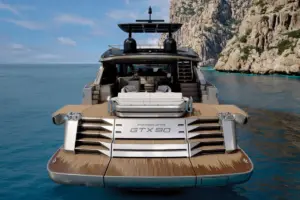
- Vallicelli Design focused heavily on preserving the aggressive, low-profile silhouette that characterizes Itama yachts, ensuring that the sheerline remained clean, taut, and instantly recognizable. However, the studio was also tasked with solving a persistent open-yacht dilemma: how to maximize usable deck space without compromising the vessel’s predatory stance. Their solution—a meticulously engineered, reshaped hull-to-deck junction—proved to be the masterstroke of the project.
- IdeaeItalia, meanwhile, tackled the challenge of the belowdecks spaces. Tasked with crafting a three-stateroom, three-head layout within a sleek open-yacht envelope, the interior design team utilized natural light, neutral luxury finishes, and intelligent spatial zoning to create an ambiance more commonly associated with a displacement cruiser than a 40-knot speedster.
The Italian Launch and Global Debut
Prior to its international spotlight at the Cannes Yachting Festival, the very first hull of the Itama 70 quietly slipped into the waters of the Tyrrhenian Sea for its initial sea trials. These rigorous testing sessions in Italian coastal waters were designed to push the twin MAN powerplants, evaluate the Xenta steering and trim systems, and fine-tune the hydrodynamic efficiency of the deep-V hull.
The successful completion of these trials set the stage for its official public debut at Cannes. Industry experts, prospective buyers, and nautical journalists gathered on the Riviera to witness firsthand how the Itama 70 translated theoretical design concepts into on-water reality. The reception was overwhelmingly positive, cementing the yacht’s status as a tour de force in the competitive 70-foot open segment.
Supporting Context & Metrics
To appreciate the engineering sophistication of the Itama 70, one must examine the hard metrics, layout innovations, and technological integrations that govern its design. Every square inch of the vessel has been optimized to deliver an uncompromised blend of recreation, luxury, and high-speed transit.
Deck Innovations and Exterior Living
Open-yachts live or die by their exterior spaces. Owners who gravitate toward this style of vessel expect seamless integration with the marine environment, ample sunbathing zones, and alfresco dining capabilities that rival land-based luxury villas. The Itama 70 delivers on these fronts through several key spatial interventions:
- The Reshaped Hull-to-Deck Junction: By subtly altering the transition point where the hull meets the superstructure, designers reclaimed vital inches of usable deck width. This structural adjustment is most acutely felt in the foredeck area, which now hosts an expansive sunpad large enough for multiple guests to lounge comfortably while underway or anchored in a secluded cove.
- Aft Social Hub: Moving aft, the cockpit transitions into a protected sanctuary centered around a robust U-shaped dining area. Opposite this dining arrangement sits a fully equipped wet bar that can be custom-configured with an electric grill, a cooktop, or an ice maker, transforming the aft deck into an ideal staging ground for sunset cocktails or casual lunches.
- Weather Mitigation: Recognizing that intense Mediterranean sun or unexpected squalls can interrupt a day on the water, Itama equipped the cockpit with an integrated electric bimini system. At the touch of a button, shade can be deployed over the primary social zones without interrupting the clean lines of the yacht’s profile.
- The Ergonomic Helm Station: Positioned forward in the cockpit, the helm station is designed for the captain who loves to drive. Featuring triple-wide seating, the console accommodates the pilot and two companions comfortably. The standard dash configuration features twin 12-inch Simrad multifunction displays, providing instant access to navigation, engine telemetry, and vessel monitoring systems. For captains desiring an even more commanding digital interface, upgraded 16-inch screens are available as an option.
Interior Accommodations and Belowdecks Luxury
Stepping down the companionway reveals an interior that defies the traditional spatial constraints of sporty open-yachts. IdeaeItalia has orchestrated a layout that balances privacy, natural illumination, and high-end Italian craftsmanship.
- Stateroom Layout: The Itama 70 features a highly functional three-stateroom, three-head layout. The master stateroom is strategically positioned aft, maximizing the full beam of the hull to create a private owner’s sanctuary characterized by generous floor space, ample storage, and an en-suite head. Additional guest accommodations forward and midships ensure that family and friends enjoy hotel-like comfort during extended cruising trips.
- Culinary and Social Spaces: An amidships galley sits adjacent to an L-shaped dinette, creating an interior social zone that serves as an alternative dining or lounging area when weather conditions dictate indoor living.
- Natural Illumination: One of the historic criticisms of open-yacht interiors has been a lack of natural light. The Itama 70 shatters this limitation via large, beautifully integrated hull windows that flood the staterooms and living areas with daylight, offering panoramic views of the water even while sitting belowdecks.
- Crew Accommodation: For owners who prefer professional operational support during longer passages, a separate crew cabin complete with its own dedicated head is available as an option, ensuring total privacy for both owner and crew.
Propulsion, Performance, and Handling
At its core, Itama is a brand built on performance. The rhythmic roar of twin diesel engines and the sensation of slicing through open blue water at high speeds are central to the brand’s identity. The Itama 70 does not disappoint.
+------------------------+-------------------+------------------+
| Engine Configuration   | Top Speed         | Cruising Speed   |
+------------------------+-------------------+------------------+
| Standard (Twin MAN V12 |                   |                  |
| rated at 1,400 hp)     | 37 Knots          | 33 Knots         |
+------------------------+-------------------+------------------+
| Optional (Twin MAN V12 |                   |                  |
| rated at 1,550 hp)     | 39 Knots (Prelim) | 35 Knots         |
+------------------------+-------------------+------------------+- Powerplants: In its standard specification, the yacht is driven by twin MAN V12 diesel engines, each punching out 1,400 horsepower. This robust mechanical heart propels the Itama 70 to a reported top speed of 37 knots, while allowing for an exceptionally efficient and comfortable cruising speed of 33 knots. For those demanding peak velocity, the optional 1,550-hp engine package elevates these performance metrics to a preliminary 39-knot top speed and a blistering 35-knot cruise.
- Control and Stability: High-speed handling requires precision engineering. To ensure the yacht tracks true and maneuvers with absolute predictability, Xenta steering and trim systems are fitted as standard equipment. Furthermore, to eradicate roll while anchored in rolling swell or underway in choppy seas, an optional Seakeeper NG14 gyrostabilizer can be integrated into the specification, ensuring uncompromised comfort regardless of sea state.
Official Statements and Industry Insights
The rollout of the Itama 70 has generated significant commentary from the architects, designers, and corporate leadership who brought the project to fruition. Their insights shed light on the design philosophy and strategic intent driving the vessel’s market entry.
Ferretti Group executives emphasized that the Itama 70 represents a vital evolution in their multi-brand strategy. During the unveiling at Cannes, leadership noted that while the market is flooded with voluminous flybridge motor yachts and displacement trawlers, there remains a fiercely loyal demographic of purists who demand the visceral thrill of an open sport cruiser. However, modern buyers refuse to sacrifice contemporary creature comforts. The Itama 70 was engineered precisely to capture this discerning segment by refusing to compromise on either front.
Marco Vallicelli of Vallicelli Design elaborated on the exterior architectural challenges:
"Our primary directive was to honor the legendary heritage of Itama—characterized by clean, aggressive, uncompromisingly sporty lines—while drastically improving the livability of the deck spaces. By rethinking the hull-to-deck junction, we were able to carve out crucial square footage, particularly in the forward social zones, without ever disrupting the taut, predatory silhouette that makes an Itama instantly recognizable on any horizon."
Meanwhile, representatives from IdeaeItalia discussed the interior spatial dynamics:
"Translating the open-yacht ethos into a comfortable three-stateroom cruising environment required a delicate balance of materials, lighting, and layout geometry. By introducing oversized hull windows and utilizing a sophisticated palette of neutral, high-end Italian finishes, we ensured that the belowdecks spaces feel open, airy, and deeply luxurious, providing a serene sanctuary after a high-speed day on the water."
Nautical journalists and sea-trial testers who experienced the yacht firsthand have universally praised its handling characteristics. Reviewers noted that despite its substantial 70-foot footprint and voluminous interior, the yacht retains the nimble, responsive reflexes of a much smaller sportboat. The transition onto plane is remarkably flat, and the deep-V hull cuts through chop with an authoritative, reassuring solidity.
Future Outlook: The Next Chapter for Itama
As the Itama 70 transitions from its celebratory debut season into active global service, its impact on the luxury marine market is already coming into sharp focus. This vessel is much more than a standalone product launch; it is a clear indicator of where the legendary Italian builder is heading in the coming decade.
The success of the brand renewal strategy—anchored by the seamless integration of Vallicelli exterior styling and IdeaeItalia interiors—proves that classic shipyards can successfully modernize their fleets without alienating their core base of purists. By embracing advanced digital helm architecture, cutting-edge stabilization technology like the Seakeeper NG14, and optimized hydrodynamic propulsion packages, Itama has future-proofed its portfolio against shifting consumer expectations.
Looking ahead, industry analysts anticipate that the engineering breakthroughs and spatial design innovations pioneered on the Itama 70 will influence upcoming models in the pipeline. As owners increasingly seek vessels capable of both rapid weekend getaways and extended coastal cruising in absolute luxury, the blueprint established by the Itama 70 sets a formidable benchmark.
For those eager to witness the physical reality of this engineering triumph, the maritime community continues to review the spectacular imagery and video documentation of the Itama 70’s recent launch in Italy. As hulls continue to hit the water and find homes with discerning owners across the globe, the Itama 70 stands tall as a triumphant celebration of Italian design, high-speed performance, and uncompromising maritime luxury.