








Executive Overview
American household budgets are facing an unprecedented squeeze at the gas pump, driven by a volatile cocktail of geopolitical conflict, surging global fuel prices, and a deeply entrenched national infrastructure built almost exclusively around the automobile. According to a comprehensive new analysis published by the Urban Institute, the financial burden of fueling a vehicle has skyrocketed over the past year. Drivers of America’s most popular vehicle, the Ford F-150, are now shelling out an extra $85 every month compared to the previous year. In transit-poor states like Alabama, Kansas, and Kentucky, that monthly premium balloons to a staggering $110.
While owners of large pickup trucks and gas-guzzling SUVs bear the brunt of these escalating costs, motorists who opted for smaller passenger cars are far from immune. The average American driver is now spending an additional $65 a month simply to maintain their daily commute and basic mobility, compared to just a year ago. This nationwide financial strain follows the onset of the Trump administration’s military and economic conflict with Iran, which triggered severe disruptions in global petroleum markets and a dramatic, immediate spike in fuel prices.
Crucially, the Urban Institute’s findings reveal that this crisis is not merely a temporary energy market fluctuation; it is a structural indictment of America’s hyper-car-dependent landscape. With the vast majority of U.S. cities and towns offering little to no viable public transportation, walking infrastructure, or protected bike lanes, ordinary citizens have zero elasticity in their daily travel habits. They have no choice but to pay whatever price is demanded at the pump.
Transportation experts and urban planners argue that mitigating future household financial crises requires a fundamental reimagining of American transit policy. Rather than pouring billions of dollars into endless highway expansions that lock communities deeper into car dependency, policymakers at all levels of government must redirect funding toward robust public transit networks, walkable neighborhoods, and safe cycling infrastructure. Only by offering genuine alternatives to driving can policymakers insulate working families from the compounding costs of fuel inflation, vehicle maintenance, and insurance.
Detailed Chronology: The Escalation of the Fuel and Transit Crisis
To understand how American households arrived at this precarious financial juncture, it is essential to trace the compounding political, economic, and industrial developments that have shaped the nation’s transportation landscape over the past decade.
The Shift Toward Light Trucks and Regulatory Loopholes
The foundation for today’s vulnerability was laid long before the current spike in oil prices. For decades, consumer preferences shifted steadily away from sedans and compact cars toward larger vehicles, a trend heavily accelerated by structural forces within the automotive industry. Light trucks—a broad regulatory category encompassing both pickup trucks and sport utility vehicles (SUVs)—gained immense popularity.
This shift was not entirely organic. Automakers heavily marketed larger vehicles because regulatory loopholes, particularly Corporate Average Fuel Economy (CAFE) standards that historically treated light trucks differently than passenger cars, allowed manufacturers to enjoy significantly higher profit margins on SUVs and trucks. The turning point arrived in 2018, when U.S. production of light-duty trucks officially surpassed the production of traditional passenger cars for the first time in history.
In the years that followed, domestic automakers systematically phased out sedans altogether. Today, only four U.S. automakers continue to produce a sedan for the domestic market. For the American consumer, buying a smaller, more fuel-efficient car has become increasingly difficult, leaving buyers with little choice but to purchase larger, heavier, and more gas-intensive vehicles.
The Geopolitical Shock of 2025–2026
The latent vulnerability of an automotive fleet dominated by light trucks was brutally exposed by recent international events. Following the outbreak of the Trump administration’s conflict with Iran, global crude oil supply chains experienced severe shocks. The resulting instability sent shockwaves through international energy markets, causing fuel prices to surge across the United States.
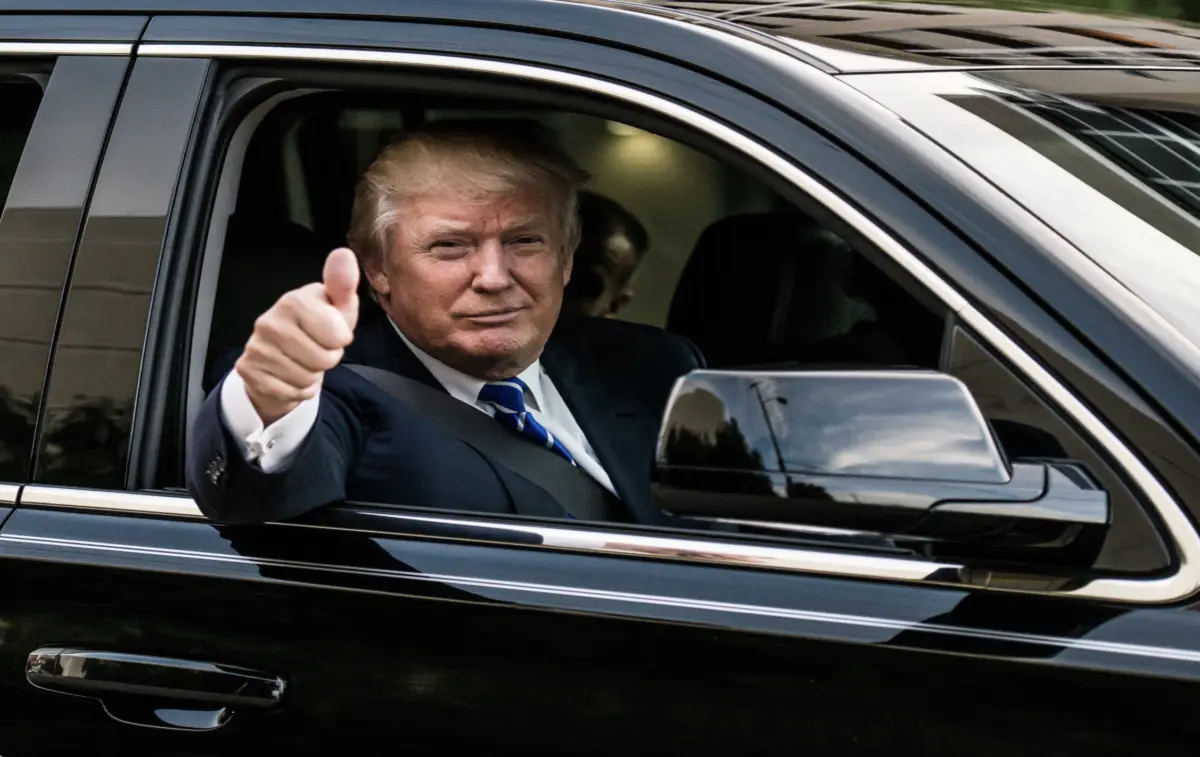
While the political rhetoric surrounding the administration often championed affordable domestic energy independence, the reality on the ground told a starkly different story. "Trump’s freedom means affordable cars" rings hollow to millions of motorists who watched gas prices climb week after week. Because the average American vehicle on the road is a heavy light truck or SUV, these soaring per-gallon costs translated into an immediate, punishing tax on household budgets.
The Legislative Pushback and Federal Funding Cuts
As local communities and transit advocates looked to federal leadership for relief and long-term solutions, Washington moved in the opposite direction. In a controversial legislative maneuver, Congress enacted a sweeping purge of federal transit funding, dealing a severe blow to cash-strapped regional transit agencies.
This short-term budget cutting jeopardized ongoing expansion projects, forced service reductions, and delayed the modernization of aging bus and rail networks across the country. Transportation analysts warned at the time that slashing transit funding would only entrench long-term reliance on personal automobiles, leaving families completely exposed to the next inevitable spike in global oil prices.
Supporting Context & Metrics: The Anatomy of Car Dependency
The Urban Institute’s analysis provides a granular look at how geography, vehicle choice, and local infrastructure interact to determine a household’s vulnerability to rising fuel costs. The data paints a complex picture of regional disparities across the United States.
The Heavy Toll on Transit-Poor States
The financial impact of surging gas prices is distributed unevenly across the country, punishing states that lack robust alternative transportation networks. In transit-poor states like Alabama, Kansas, and Kentucky, motorists driving popular vehicles like the Ford F-150 are paying an extra $110 per month just to cover their baseline fuel needs compared to the previous year.
Even in states where per-gallon fuel prices hover near the national average, total household transportation expenditures can reach staggering heights due to extreme distances and a complete lack of transit options. Consider the state of Wyoming, where residents pay an average of $4.51 per gallon—a figure nearly identical to the national average. However, because Wyoming features vast geographic expanses, sparse population centers, and virtually zero public transit, its residents spend more overall on gasoline than those in any other state, averaging a punishing $347 per month on fuel alone.
The California Paradox: High Prices vs. Lower Volume
Conversely, states with high per-gallon fuel prices do not necessarily impose the highest monthly household transportation budgets, provided they offer viable alternatives to driving.
In California, where premium fuel taxes and market conditions drive prices up to an average of $6.37 per gallon, residents face severe sticker shock at the pump. Yet, the average California motorist spends roughly $266 per month on gas—significantly less than their Wyoming counterparts. This counterintuitive metric is explained by urban form and mobility choices: Californians living in metropolitan areas with functioning public transit networks, pedestrian pathways, and bike lanes are able to substitute a substantial portion of their daily driving with alternative modes of travel. They purchase fewer gallons overall, insulating their household budgets from the worst effects of high per-gallon prices.
The True Cost of Vehicle Ownership Beyond the Pump
While electric vehicle (EV) owners have largely managed to dodge the immediate volatility of gas prices, transportation researchers emphasize that fuel is only one component of the total cost of car ownership. Households that rely exclusively on automobiles continue to shoulder immense financial burdens driven by vehicle financing, mandatory insurance premiums, routine maintenance, and rapid depreciation.
As Yonah Freemark, the researcher behind the Urban Institute analysis, noted: "Driving is inevitably going to be super expensive. It’s not like there’s a great way out of it." Even without high gas prices, maintaining a fleet of private motor vehicles consumes a massive share of the average American family’s disposable income.
Official Statements and Expert Perspectives
The findings from the Urban Institute have reignited a fierce national debate among urban planners, economists, and transportation advocates regarding the structural flaws of American infrastructure and the policy pathways required to achieve financial relief for working families.
The Danger of the "SUV Arms Race"
Transportation reform advocates have long criticized the proliferation of oversized pickup trucks and SUVs on American roads, pointing not only to their catastrophic environmental and fuel-consumption impacts but also to their severe safety hazards. Studies consistently show that high-riding light trucks are disproportionately lethal to pedestrians and cyclists in urban collisions.
Yet, experts stress that consumers are locked into purchasing these vehicles due to the "SUV arms race"—a cultural and industrial phenomenon where buyers feel compelled to purchase larger vehicles simply because everyone else is doing so, combined with automakers’ deliberate phase-out of affordable, fuel-efficient sedans.
When fuel prices spike, the consequences of this industrial shift fall squarely on the consumer. "A bigger car is just going to end up consuming a lot more gas over time, and that means people are going to end up spending more money as a result," explained Yonah Freemark during a briefing on the report’s findings.
The Necessity of Multi-Modal Infrastructure
Rather than viewing high gas prices in isolation, experts argue they should serve as a wake-up call for federal, state, and local policymakers. The current economic model—which forces families to absorb every shock in the global oil market—is unsustainable.
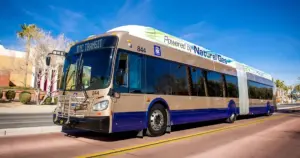
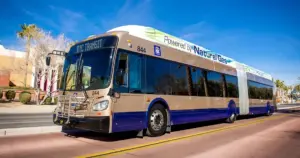
Advocates point out that making it easier and safer for Americans to walk, bike, and utilize public transportation could unlock massive, recurring cost savings for households. However, achieving this requires a fundamental pivot in public spending. Rather than allocating the lion’s share of federal and state transportation budgets to costly highway expansions and lane-widening projects, governments must prioritize funding for transit operations, bus rapid transit (BRT) lines, continuous sidewalks, and protected bike networks.
"Transportation is such a high share of many people’s daily expenses," Freemark emphasized. "People have to have alternatives in order to save money." Without those alternatives, government efforts to ease cost-of-living pressures will remain fundamentally incomplete.
Future Outlook: Navigating the Road Ahead
As the United States looks toward the remainder of the decade, the intersection of energy volatility, household economics, and transportation policy will remain a critical battleground for lawmakers and communities alike.
The immediate outlook for drivers remains challenging. With global oil markets remaining sensitive to geopolitical tensions, and domestic automakers showing little inclination to revive the production of affordable, high-mileage sedans, American motorists will likely continue to experience high baseline transportation costs. For households in transit-poor rural and suburban areas, every geopolitical flare-up abroad will translate directly into tighter household budgets at home.
However, the crisis also presents a historic opportunity for policy reform. Municipalities that are aggressively investing in micro-mobility, expanding light rail networks, and redesigning streets to prioritize pedestrians are discovering a path toward greater economic resilience. By decoupling personal mobility from the internal combustion engine—and from the financial obligation of owning multiple private vehicles—forward-thinking cities are shielding their residents from the vagaries of global energy markets.
Ultimately, the Urban Institute’s analysis serves as a stark reminder that car dependency is not just an urban planning preference; it is an immense financial liability. Whether federal and state policymakers heed these warnings by restoring transit funding and rebalancing infrastructure investments will determine whether future generations of Americans remain trapped at the mercy of the gas pump, or empowered by a truly multimodal transportation system.