










Executive Overview
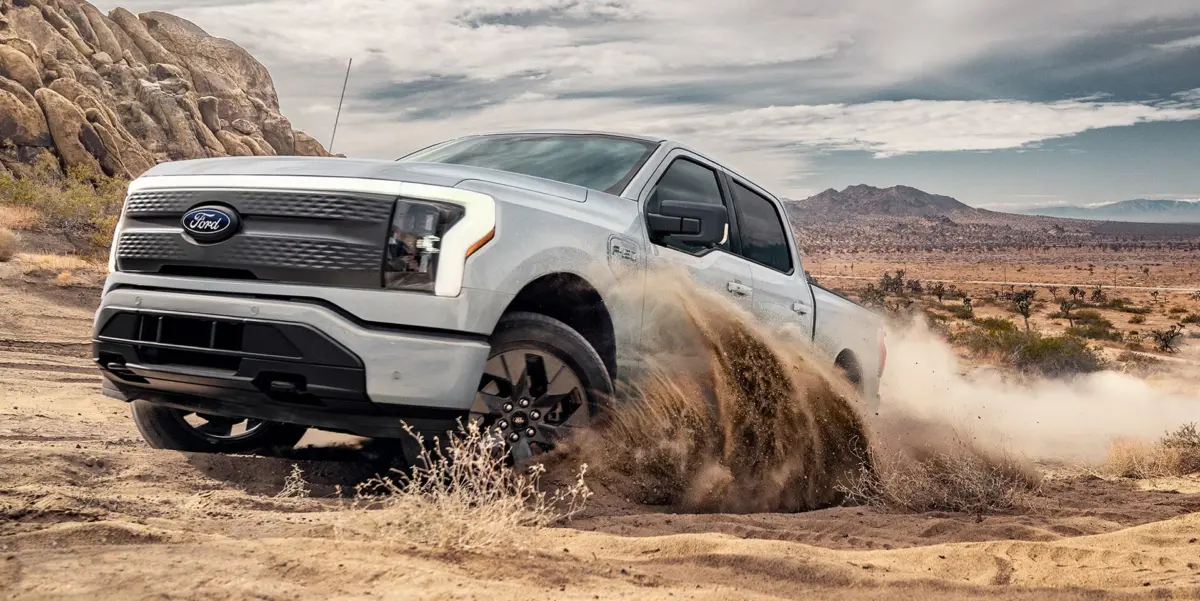
The global automotive landscape is undergoing its most radical transformation since the invention of the assembly line. While international markets surge ahead with rapid vehicle electrification—driven by hyper-competitive manufacturing, aggressive policy frameworks, and shifting consumer demands—the United States finds itself increasingly isolated. This divergence is no longer merely a matter of domestic policy hesitation; it has materialized into a severe structural retreat, symbolized most acutely by the withdrawal of flagship domestic electric vehicles, such as the fully electric Ford F-150 Lightning, from the domestic auto market.
Once a pioneer in modern electric vehicle (EV) innovation through early regulatory frameworks in California and trailblazing platforms from Tesla and legacy American automakers, the U.S. now lags dramatically behind other major economic blocks. Pure battery-electric vehicle (BEV) adoption rates in the U.S. stagnated at a modest 5.9% during the first half of 2026. In stark contrast, developing and developed markets alike are posting staggering numbers: Uruguay recently shattered records with a 50% BEV market share, China crossed 45% by August 2026, and European nations hovered around 26% mid-year.
Compounding this domestic slowdown is extreme economic protectionism. By erecting high tariff walls and regulatory barriers to block low-cost, highly capable Chinese electric vehicles, the U.S. has effectively insulated its domestic legacy automakers from true global competition. While countries in South America, Asia, Europe, and even Canada gradually open their doors to affordable global EV technology to bolster local economies and cut oil dependence, the U.S. market risks becoming an isolated sanctuary for internal combustion engines—potentially earning the dubious distinction of being the very last major nation to fully electrify its light-duty vehicle fleet.

Detailed Chronology: The Rise, Stall, and Retreat of American Electrification
To understand how the United States arrived at this precarious crossroads, one must examine the shifting trajectory of domestic EV development over the past two decades.
- The Early Vanguard (Late 1990s–2010s): The U.S. initially positioned itself at the forefront of the electric mobility movement. From the experimental deployment of the GM EV1 to the commercial breakthroughs of the Chevy Volt, the Chevy Bolt, and Tesla’s early revolutionary models, American engineers proved that battery-powered transit was viable. State-level initiatives, particularly California’s Zero-Emission Vehicle (ZEV) mandates, served as the crucible for global EV regulations.
- The Commercialization Wave (2020–2023): Encouraged by federal incentives and shifting corporate strategies, traditional Detroit automakers made grand proclamations about an "all-electric future." Ford, General Motors, and Stellantis invested tens of billions of dollars to retool factories, promising a deluge of battery-powered pickups, SUVs, and crossovers. The introduction of the Ford F-150 Lightning was heralded as a watershed moment—the electrification of America’s best-selling vehicle line.
- The Policy and Market Reversal (2024–2025): As early adopter enthusiasm plateaued and legacy automakers grappled with manufacturing complexities, profitability hurdles, and high interest rates, corporate enthusiasm began to wane. Political shifts further destabilized the market. Shifting federal priorities, combined with fierce lobbying from legacy dealership networks and oil interests, resulted in softened emissions standards and diluted federal purchasing incentives.
- The Capitulation and Market Withdrawal (2026): The culmination of these compounding pressures arrived in 2026. Facing prolonged demand softness, escalating warranty and production costs, and an inability to compete on price with globally optimized competitors, American automakers began quietly canning EV projects. The most striking casualty of this retreat is the formal withdrawal of the fully electric Ford F-150 Lightning from the U.S. auto market—a staggering regression for a product once positioned as the crown jewel of American automotive electrification.
Supporting Context & Metrics: A Global Snapshot of the EV Transition
While the U.S. auto market contracts and recalibrates backward toward fossil fuels, the rest of the world is accelerating. The gap between American adoption metrics and those of international peers highlights a widening chasm in industrial competitiveness.
Global BEV Market Share Comparison (Mid-to-Late 2026 Data)
| Region / Country | Approximate BEV Market Share | Key Market Drivers |
|---|---|---|
| Uruguay | ~50.0% | Rapid fiscal incentives, aggressive municipal planning, and low domestic oil production reliance. |
| China | ~45.0% | Hyper-competitive domestic manufacturing, advanced supply chains, and ultra-affordable consumer options. |
| Europe | ~26.0% | Strict fleet emissions regulations, dense charging infrastructure, and robust consumer subsidies. |
| Brazil | Rapidly Scaling | Influx of advanced Chinese EV models disrupting traditional combustion dominance. |
| United States | ~5.9% (H1 2026) | Heavy protectionist tariffs, legacy automaker retrenchment, and polarized political landscapes. |
The South American and Asian Surge
Recent field reports from international automotive analysts paint a vivid picture of disruption. In Brazil, the rapid influx of Chinese EV brands has fundamentally altered the automotive hierarchy, with pure electric adoption rates rapidly catching up to North American levels. Similarly, Uruguay’s exponential leap to a 50% BEV share demonstrates that smaller nations are capable of leaping past legacy infrastructure hurdles when unburdened by entrenched domestic oil lobbies.

The Chinese Industrial Hegemony
China has cemented its status as the undisputed epicenter of the global electric vehicle industry. By streamlining battery production, securing critical mineral supply chains, and iterating on software-defined vehicle architecture at breakneck speeds, Chinese manufacturers have driven costs down while dramatically enhancing vehicle capability. These vehicles are no longer budget alternatives; they routinely outperform legacy gas- and diesel-powered vehicles in total cost of ownership, technology integration, and consumer desirability.

Consequently, markets across Asia, Australia, and Africa are actively embracing these imports to decouple their economies from volatile global oil pricing. Even nations historically aligned against Western interests, such as Russia, are reportedly pivoting to adopt competitive Chinese EV models to sustain personal mobility sectors.
Official Statements and Industry Perspectives
The policy dissonance within the United States stands in stark contrast to the urgent economic realities voiced by global trade organizations and forward-thinking energy analysts.
Industry watchdogs and clean energy advocates have increasingly pointed out the self-defeating nature of U.S. protectionism. By utilizing sweeping tariffs and regulatory blockades to shut out Chinese competitors, American policymakers have effectively created a cocoon for domestic automakers. Rather than using this protected window to innovate and lower costs, legacy manufacturers have frequently used the breathing room to scale back ambitious electrification targets, citing short-term profitability pressures.
"When you look at countries like Uruguay hitting 50% BEV share, or China sustaining a 45% monthly threshold while upgrading technology by the quarter, the conversation changes entirely," notes automotive market analysis from international tech publications. "The question is no longer whether the world is transitioning to electric mobility—that transition is occurring at warp speed. The real question is whether the United States is intentionally engineering its own obsolescence in the automotive sector."
Conversely, domestic trade associations representing legacy manufacturing and fossil fuel interests have historically defended defensive measures, arguing that American supply chains require extended timelines to decouple from foreign dependencies and achieve domestic raw material processing capabilities. However, critics counter that isolating the U.S. market does nothing to alter global demand dynamics; it simply ensures that American consumers are left paying more for aging, less efficient internal combustion technology while the rest of the world enjoys the economic and environmental benefits of next-generation mobility.

Future Outlook: Will the U.S. Become the World’s Last Combustion Stronghold?
The trajectory of the American automotive industry over the next decade hinges on a dangerous gamble. If current policy stagnation, protectionist roadblocks, and corporate retrenchment continue unabated, the United States faces a grim economic reality.
As international markets fully industrialize around cost-effective, high-performance electric vehicles, American automakers risk losing their export competitiveness entirely. Trapped within a localized market protected by artificial barriers, domestic manufacturers may find themselves unable to compete when global standards inevitably force a reckoning. Furthermore, as Canada progressively opens its borders to international EV imports—differentiating its economic strategy from its southern neighbor—the traditional integration of the North American automotive supply chain is fracturing.
The withdrawal of vehicles like the Ford F-150 Lightning serves as a canary in the coal mine. It signals that without a renewed commitment to industrial innovation, aggressive infrastructure development, and a willingness to face true global competition, the United States is poised to transition from an early automotive pioneer to an isolated laggard.
Whether American policymakers and industrial leaders will heed the warning signs flashing from South America, Europe, and Asia remains to be seen. But unless the nation reverses course, the historic prophecy may well come true: the United States risks becoming dead last in the global race toward vehicle electrification.