








Executive Overview
The intersection of recreational fishing and clean-energy marine technology has reached a thrilling new milestone. For years, the clean, whisper-quiet operation and pinpoint precision of electric motors have captivated kayak anglers seeking to navigate sensitive fisheries without spooking wary catches. Building upon the booming success of its popular eLite outboard, marine innovator ePropulsion has unveiled its latest purpose-built solution: the kLite 750.
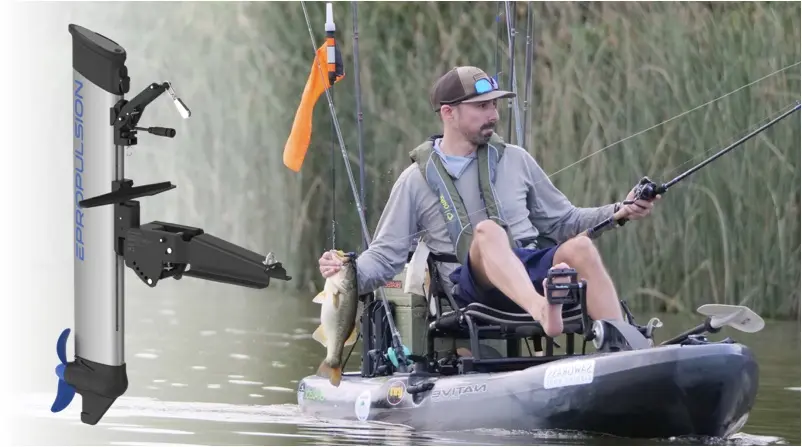
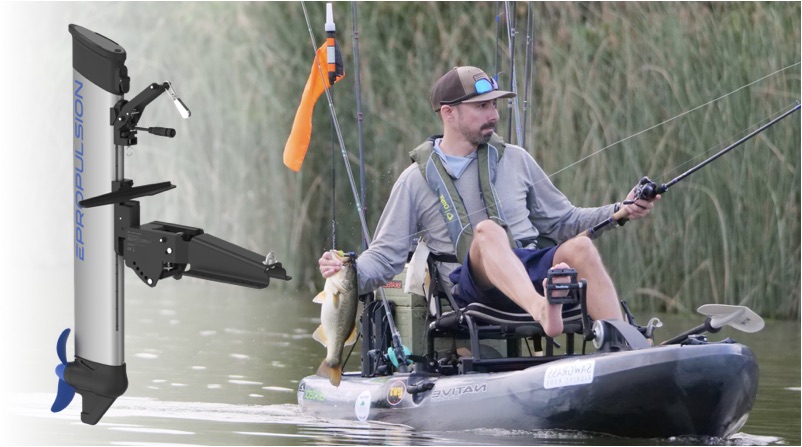
Designed from the ground up for one of the fastest-growing sectors in recreational angling, the kLite 750 is a specialized "rudder-style" electric outboard. By integrating the propulsion unit, steering mechanism, and a high-capacity 378-watt-hour battery into a single, cohesive, wide-tapered shaft, ePropulsion has eliminated the clutter, complex wiring, and heavy external battery packs that have historically plagued motorized kayak setups. Weighing in at an ultralight sub-15 pounds (6.8 kg), the kLite 750 promises to dramatically reduce physical fatigue while opening up previously inaccessible waters to kayak fishers.
This deep-dive report examines the technological blueprint of the kLite 750, evaluates its strategic fit within the rapidly expanding US sportfishing market, chronicles ePropulsion’s impressive trajectory from a university startup to a global powerhouse in marine e-mobility, and analyzes the broader industry implications of zero-emission recreational boating.
Detailed Chronology: From Academic Startup to Market Disrupter
To truly appreciate the engineering significance of the kLite 750, one must look at the foundation upon which ePropulsion was built. The company’s story is a masterclass in translating academic research into commercial reality.
Foundation and Early Breakthroughs (2012–2014)
ePropulsion was founded in 2012 by current CEO Danny Tao, alongside a collective of students, graduates, faculty members, and advisers from the prestigious Hong Kong University of Science and Technology (HKUST). United by a shared vision to decarbonize on-water recreation, the team focused on developing efficient, maintenance-free, direct-drive electric motors.
In 2014, the company made its international debut at the METStrade marine industry trade show in Amsterdam. There, they introduced their flagship motor, the Spirit 1.0. Utilizing cutting-edge brushless, direct-drive technology, the Spirit 1.0 was a market first, offering high efficiency, zero oil leaks, and near-silent operation that immediately distinguished it from traditional internal combustion outboards.
Expanding the Low-Power Portfolio (2015–2021)
Following the success of the Spirit series, ePropulsion built a formidable reputation for value, reliability, and engineering excellence in the low-power (1kW to 6kW, roughly equivalent to 3 to 10 horsepower) market segment. The company expanded its portfolio to include the Navy series of outboards and pod drives. These systems quickly became favored choices for everything from small tenders and sailing dinghies to local workboats and classic runabouts.
Scaling Up: Inboard and High-Power Innovations (2022–2023)
As global demand for zero-emission marine transport accelerated, ePropulsion scaled its technology upward and outward:
- The H-Series (2022): Catering to commercial boatbuilders and larger vessel operators, the H-Series introduced heavy-duty, battery-electric inboard motors ranging from 60kW to 250kW (80 to 350 hp). These systems enabled vessels between 60 and 100 feet (18 to 30 meters) to adopt clean propulsion without sacrificing performance.
- The I-Series (Following the H-Series): Bridging the gap for mid-sized vessels, ePropulsion launched the I-Series—lower-powered inboards ranging from 10kW to 40kW (15 to 55 hp). These were custom-tailored for sailboats, day boats, narrowboats, and canal craft.
- The X-Series (2023): Bringing high-efficiency electric power back to the outboard market, the X-Series introduced advanced 12kW, 20kW, and 40kW (approx. 16, 30, and 55 hp) units designed for modern planing hulls and recreational craft.
The Consumer Breakthrough: The eLite and kLite Era (2024–Present)
In 2024, ePropulsion achieved mainstream consumer acclaim with the introduction of the eLite rudder-style outboard, designed for tenders and small watercraft. Building directly upon this architecture, the newly launched kLite 750 represents the company’s strategic dive into the niche, high-growth sportfishing sector. By tailoring the eLite framework specifically for kayak anglers, ePropulsion has bridged the gap between ultra-light human-powered craft and high-performance electronic navigation.
Supporting Context & Metrics: The Kayak Fishing Boom
The timing of the kLite 750’s launch is no accident. Recreational fishing has undergone a massive demographic shift over the past decade, with kayak fishing emerging as one of its most dynamic sub-sectors.

The Numbers Behind the Angling Revolution
According to data compiled by the American Sportfishing Association (ASA), more than 2.5 million anglers in the United States actively fish from kayaks. This passionate demographic underwrites a massive economic ecosystem:
- Total Market Value: The US kayak fishing gear and vessel market is valued conservatively between $500 million and $600 million (€440 million – €525 million).
- Propulsion Share: Market intelligence firm Ken Research estimates that specialized, kayak-designed electric propulsion systems account for roughly 10% of that total economic footprint, translating to an annual market size of $50 million to $70 million in the US alone.
Engineering for the Angler: What the kLite 750 Offers
For decades, kayak fishers attempting to motorize their craft faced an ergonomic and logistical nightmare. Traditional setups required mounting a heavy trolling motor on the stern or side, wiring it through complex junction boxes, and strapping a heavy, spill-prone 12V lead-acid or bulky lithium battery inside the hull or cargo well.
The kLite 750 fundamentally re-engineers this user experience through several standout features:
- Rudder-Style Integration: The wide, tapered shaft functions simultaneously as the motor mount, the steering rudder, and the housing for the integrated 378Wh lithium-ion battery. There are zero loose cables to tangle with fishing lines and no extra battery boxes to lug down to the shoreline.
- Featherlight Footprint: Weighing under 15 lbs (6.8 kg) in total, the unit can be easily transported, installed, and removed by a single person.
- Versatile Operational Modes: The kLite 750 features a three-mode performance profile easily toggled via a handlebar switch:
- Go Mode: Delivers 500W of continuous power (approx. 0.75 hp), optimized for efficient, long-distance cruising across open water.
- Sport Burst: Unlocks 750W (1 hp) of peak power for up to 60 seconds—an essential safety and performance feature for fighting strong currents, shooting river rapids, or punching through coastal rips.
- Fish Mode: Provides ultra-fine, low-end throttle control, allowing anglers to hold position against wind or tide while maintaining precise casting alignment.
Official Statements and Industry Reception
The industry response to ePropulsion’s latest design has been overwhelmingly positive, highlighted by early previews at major trade exhibitions.
Tom Watson, President of ePropulsion Americas, noted the intense grassroots interest the product generated even before its official commercial rollout:

"When we showed our original prototype at ICAST (the world’s largest sportfishing trade show), the interest was substantial. The eLite has already been revolutionary for tenders and small craft, and we are confident that the kLite is going to take kayak anglers to new and exciting places."
Industry analysts point out that the kLite addresses the core pain point of modern anglers: stealth combined with mobility. Traditional internal combustion engines are far too heavy, loud, and polluting for shallow-water or kayak applications, while standard trolling motors often lack the thrust required to navigate choppy coastal bays or fast-flowing rivers. The kLite 750 hits a sweet spot of power-to-weight ratio that traditional retrofit solutions simply cannot match.
Future Outlook: The Electric Transition on Water
As ePropulsion continues to scale its operations globally, the company’s comprehensive ecosystem—bolstered by its high-density lithium iron phosphate (LiFePO4) E-Series and G-Series batteries and the proprietary eSSA (ePropulsion Smart System Architecture)—positions it at the vanguard of the marine energy transition.
The broader implications of products like the kLite 750 extend far beyond convenience. By making zero-emission marine mobility accessible, intuitive, and lightweight, ePropulsion is actively lowering the barrier to entry for eco-conscious consumers. Whether outfitting a 40-foot catamaran with an H-Series inboard or equipping a solo angler with a sub-15-pound kLite 750, the company’s trajectory signals a definitive future: one where waterways are free from the roar of fossil-fuel engines and the lingering threat of hydrocarbon pollution.
For the modern kayak angler, the message is clear. The days of fighting headwinds with a paddle or wrestling with clumsy DIY motor rigs are coming to an end. With the kLite 750, the future of fishing is silent, clean, precise, and completely untethered.