









Executive Overview
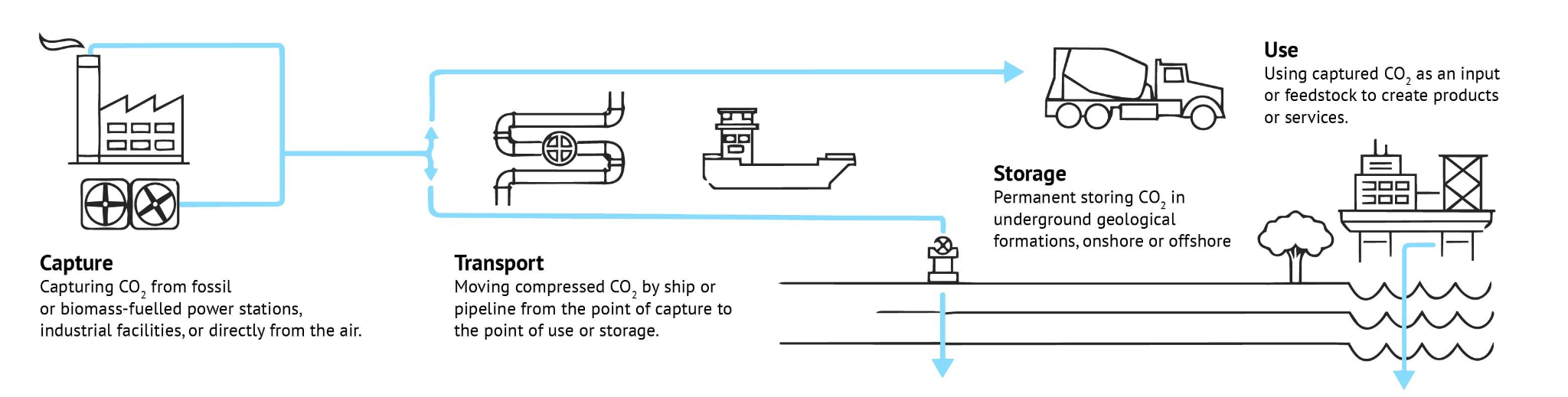
As the global community scrambles to avert the worst impacts of climate change, Carbon Capture and Storage (CCS)—often expanded to CCUS when utilization is involved—occupies a profoundly contentious space in energy policy. At its core, the technology is deceptively simple: capture carbon dioxide ($CO_2$) emissions directly from industrial smokestacks or power plants, compress them into a liquid state, transport them via pipeline or vehicle, and inject them deep underground into permanent geological reservoirs such as depleted oil fields or saline aquifers.
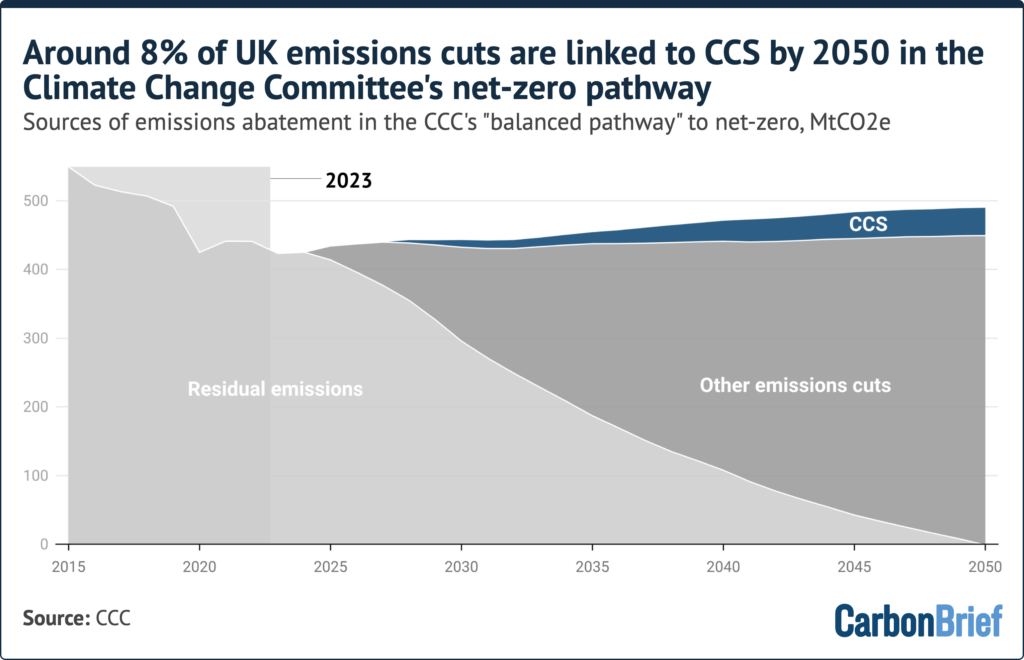
Influential international bodies, including the Intergovernmental Panel on Climate Change (IPCC) and the International Energy Agency (IEA), have historically described CCS as a "critical" mechanism for cutting emissions from hard-to-abate sectors—such as cement and chemical production—and avoiding catastrophic global temperature rises. Nations like the United Kingdom have staked billions of pounds on nurturing domestic CCS industries as central pillars of their net-zero strategies.
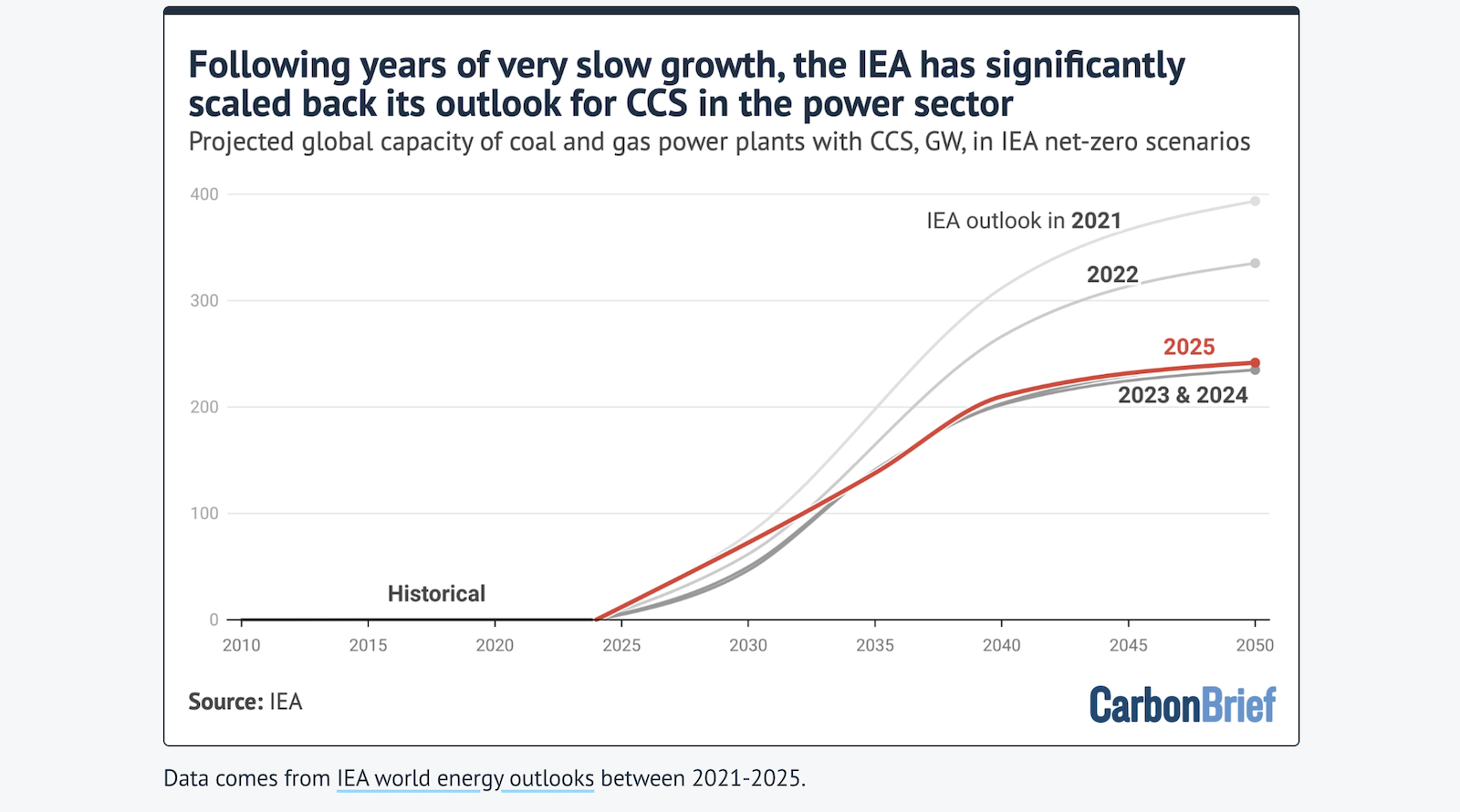
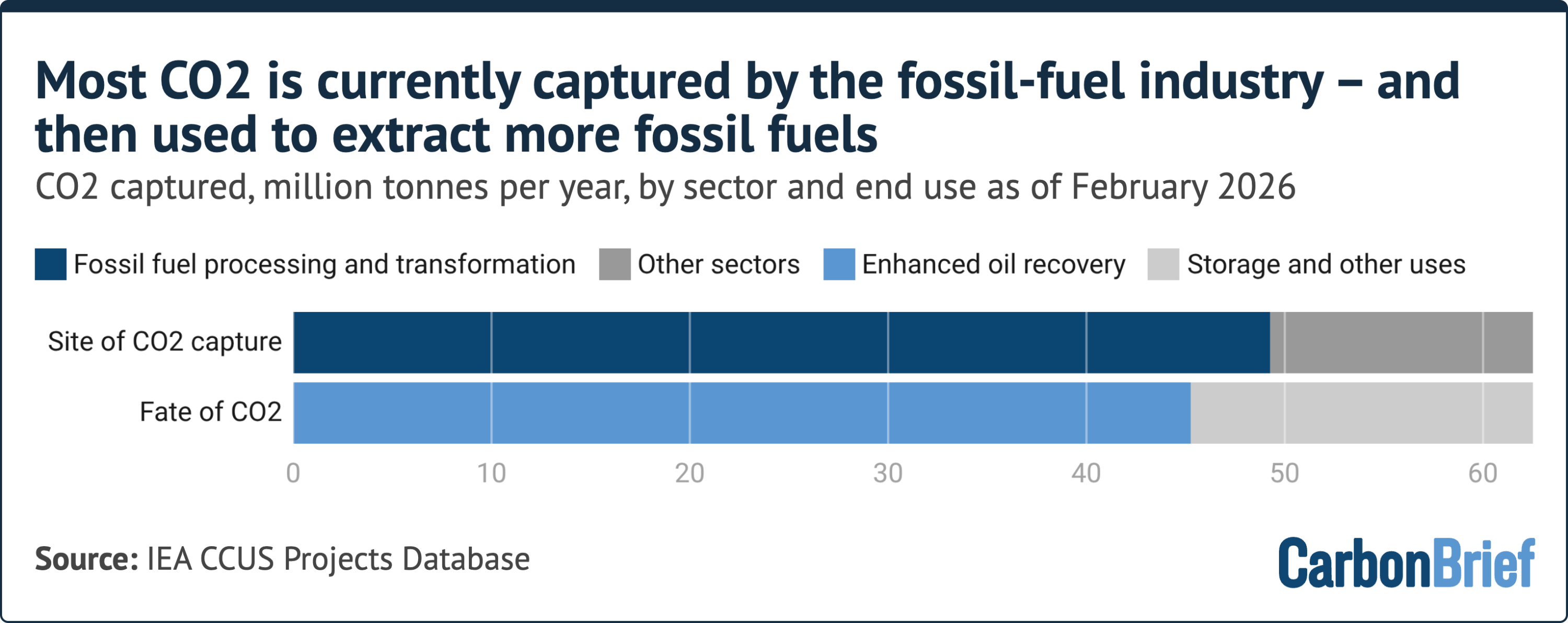
Yet, a fierce backlash has emerged among scientists, economists, and climate advocates. Citing exorbitant costs, deep structural ties to the fossil-fuel industry, and a decades-long history of underperformance, critics increasingly label CCS a "dangerous distraction" or a "false climate solution." Despite decades of optimism, operational capacity remains a tiny fraction of global emissions, and a vast majority of existing projects serve to extract more fossil fuels through Enhanced Oil Recovery (EOR).

This comprehensive investigation explores the history, deployment metrics, economic realities, and intense controversies surrounding CCS, using the UK’s ambitious multi-billion-pound rollout as a prominent case study.
Detailed Chronology: The Evolution of Carbon Capture
To understand where CCS stands today, it is essential to trace its origins and how its purpose has shifted across generations:
- The 1970s (The Oil Patch Era): Carbon capture technology was originally deployed at commercial scale in the United States and Canada during the early 1970s. However, its primary objective was not climate mitigation, but Enhanced Oil Recovery (EOR). Captured $CO_2$ was injected into mature oil wells to force out stubborn hydrocarbons, effectively marrying carbon management with increased fossil fuel extraction. To this day, EOR remains the primary commercial driver for roughly three-quarters of all global $CO_2$ utilization.
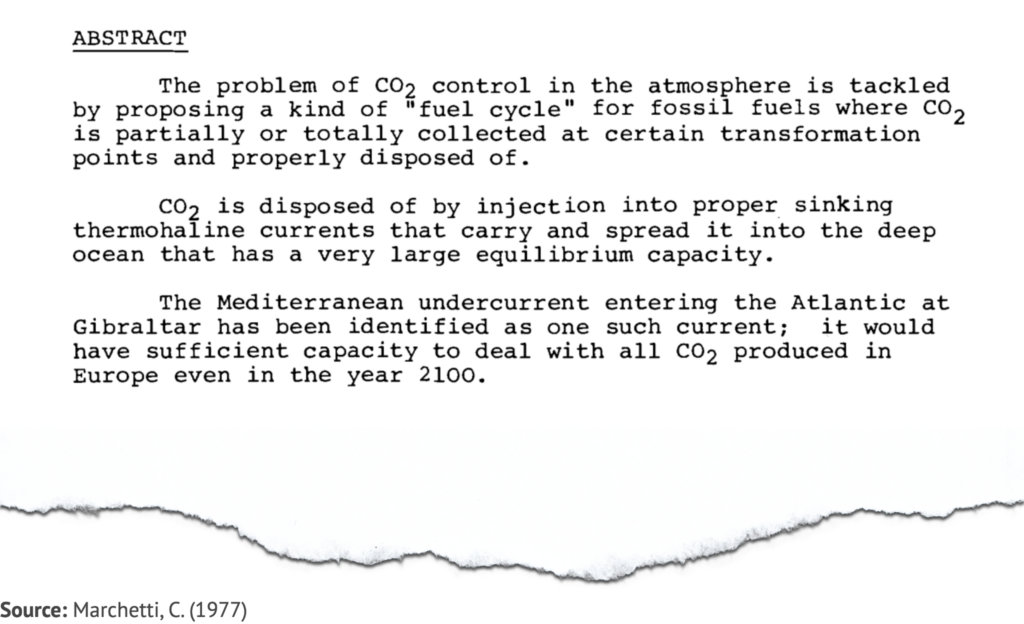
- 1976–1977 (Academic Inception): The concept of utilizing CCS for climate change mitigation first surfaced in academic literature. In a seminal 1976 article, researcher C. Marchetti proposed a "fuel cycle" for fossil fuels where $CO_2$ would be collected at transformation points and disposed of via deep ocean currents, such as the Mediterranean undercurrent entering the Atlantic at Gibraltar.
- The Mid-2000s (The Coal Wave): CCS gained significant political and industrial traction in the early 2000s, driven largely by European and North American nations seeking a way to allow coal-fired power plants to continue operating while lowering emissions. A landmark 2005 IPCC special report cemented its status on the global stage. However, this wave largely petered out as renewable energy costs plummeted, rendering coal-plus-CCS economically unviable. Today, only seven CCS-coal plants operate globally (five in China, one in the US, and one in Canada).
- 2015–Present (The Paris Agreement & Hard-to-Abate Focus): The signing of the Paris Agreement in 2015 and subsequent national net-zero commitments breathed new life into the industry. Recognizing that heavy industries like cement, steel, and chemicals could not easily electrify, global pathways pivoted toward using CCS for "hard-to-abate" sectors, alongside emerging interest in producing "blue hydrogen" from natural gas.
Supporting Context & Metrics: Where Does CCS Stand Today?
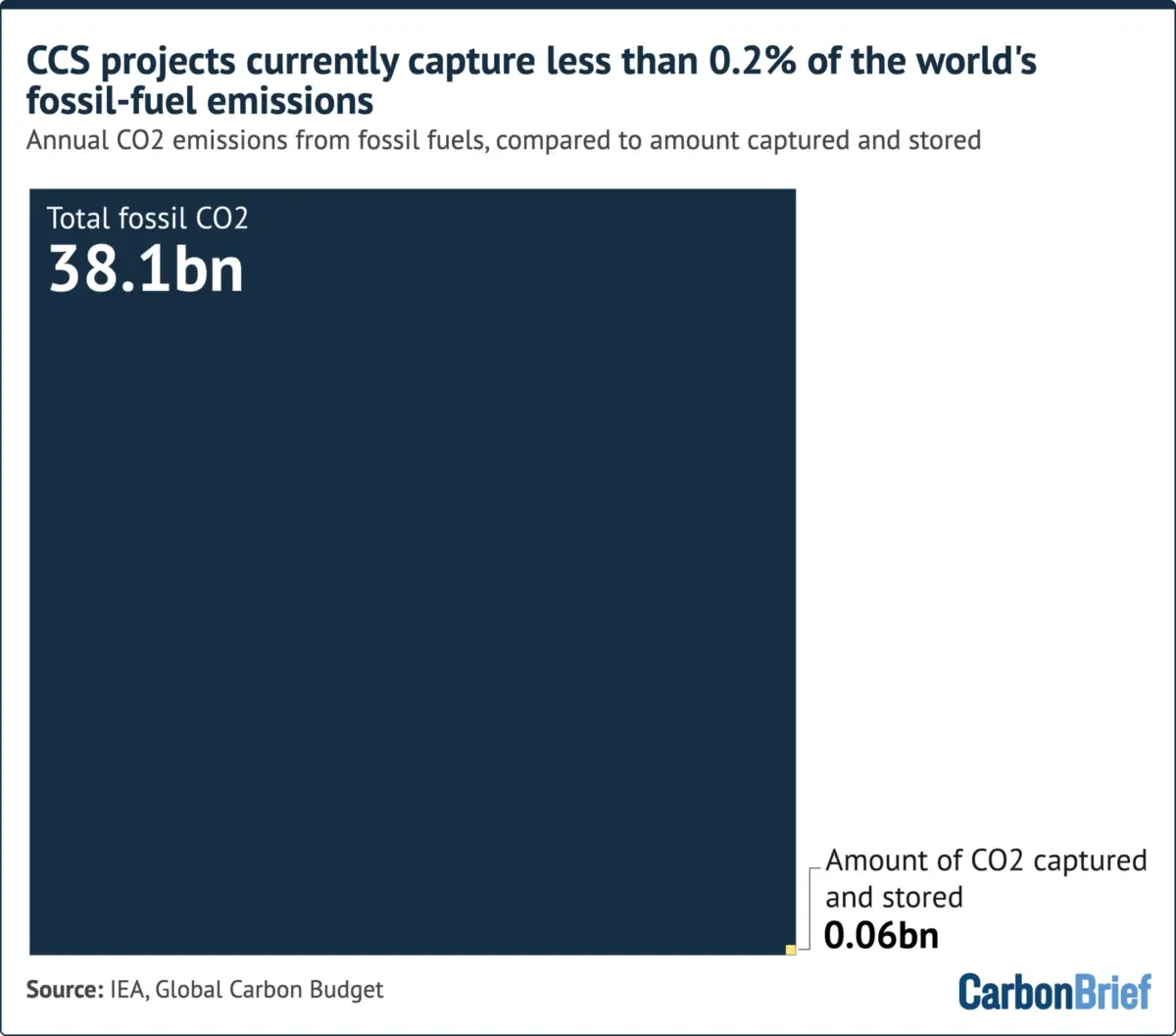
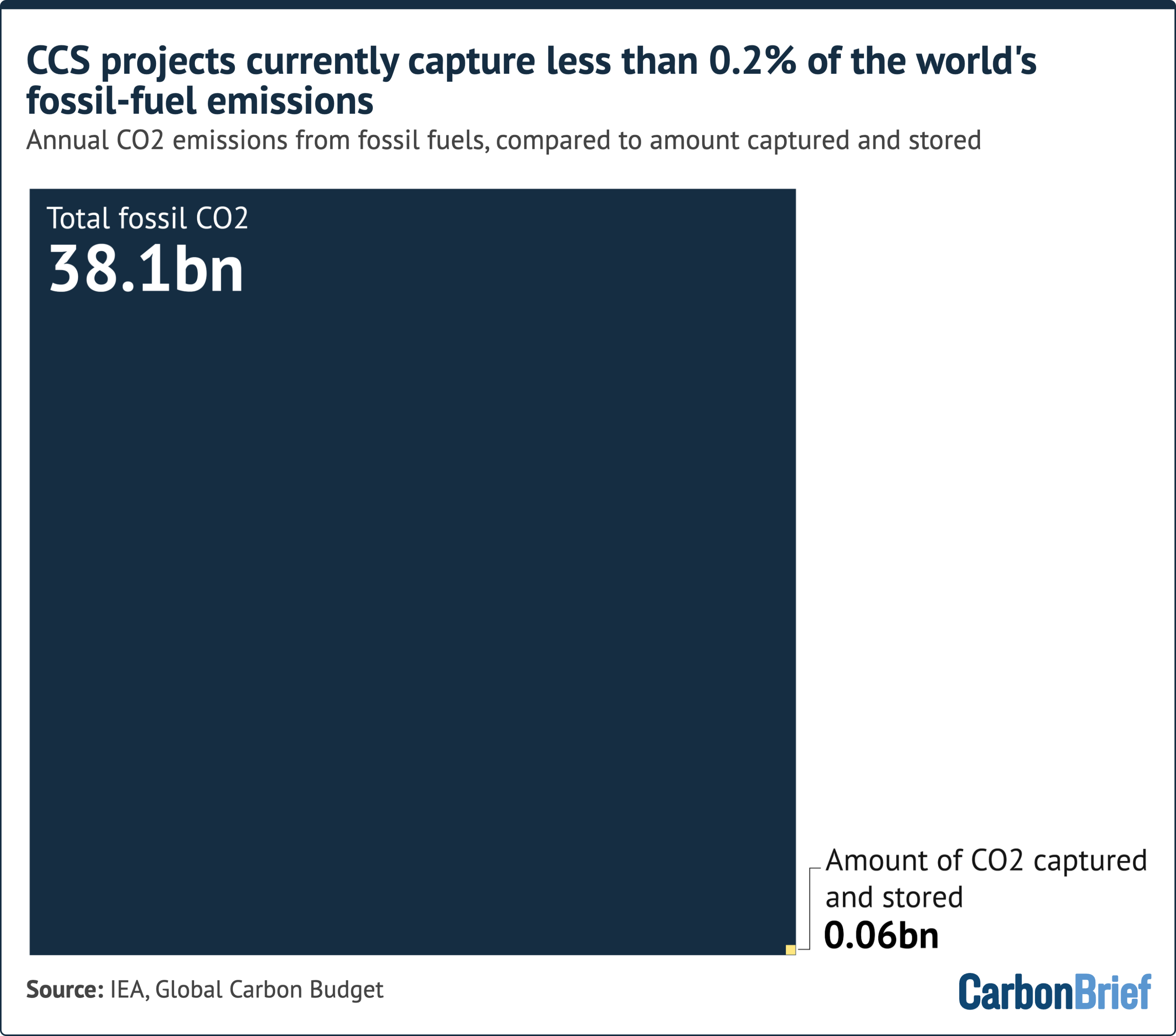
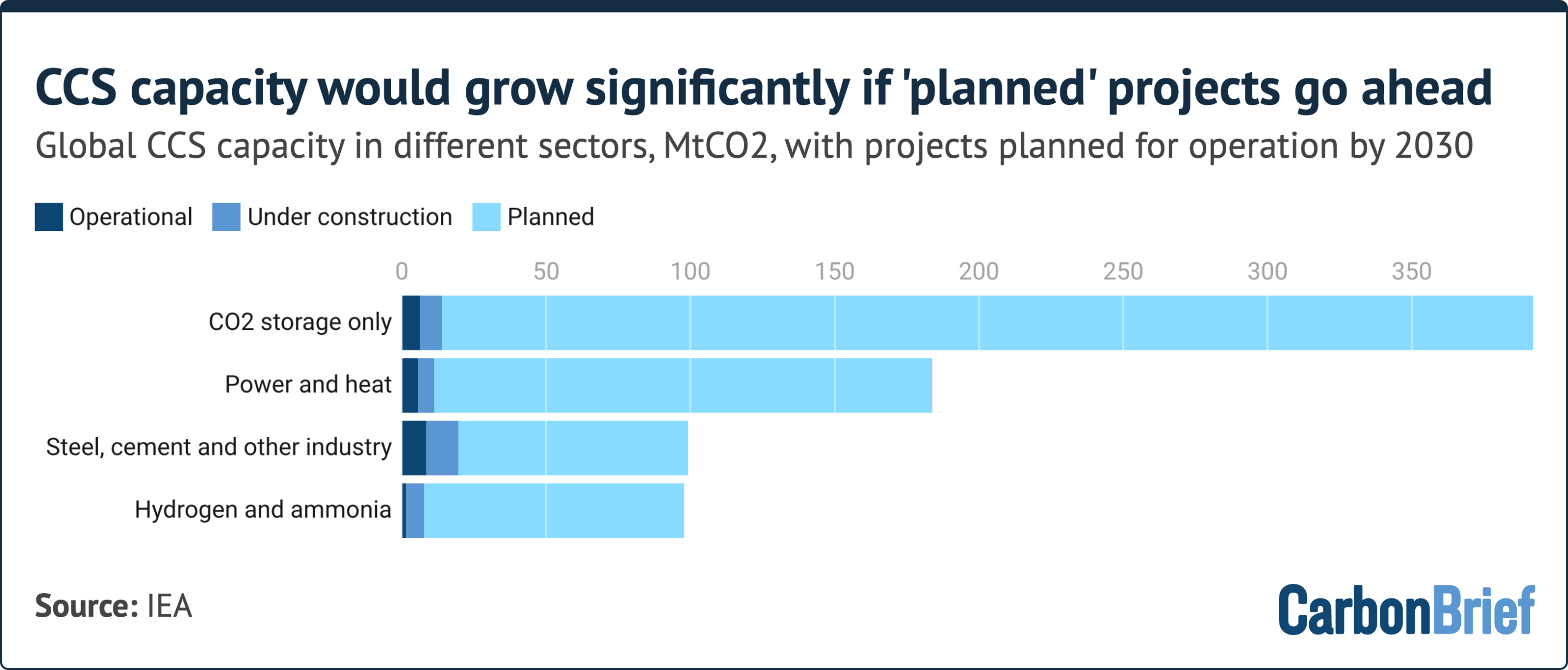
Despite decades of policy blueprints, the deployment of CCS has notoriously lagged behind expectations. As of February 2026, global operational capacity stands at 75 active projects, capturing approximately 62.5 million tonnes of $CO_2$ ($MtCO_2$) annually—an amount roughly equivalent to the total greenhouse gas emissions of Ecuador. When compared against the global total of roughly 38 billion tonnes of annual fossil-fuel emissions, current CCS projects capture less than 0.2% of the world’s carbon output.
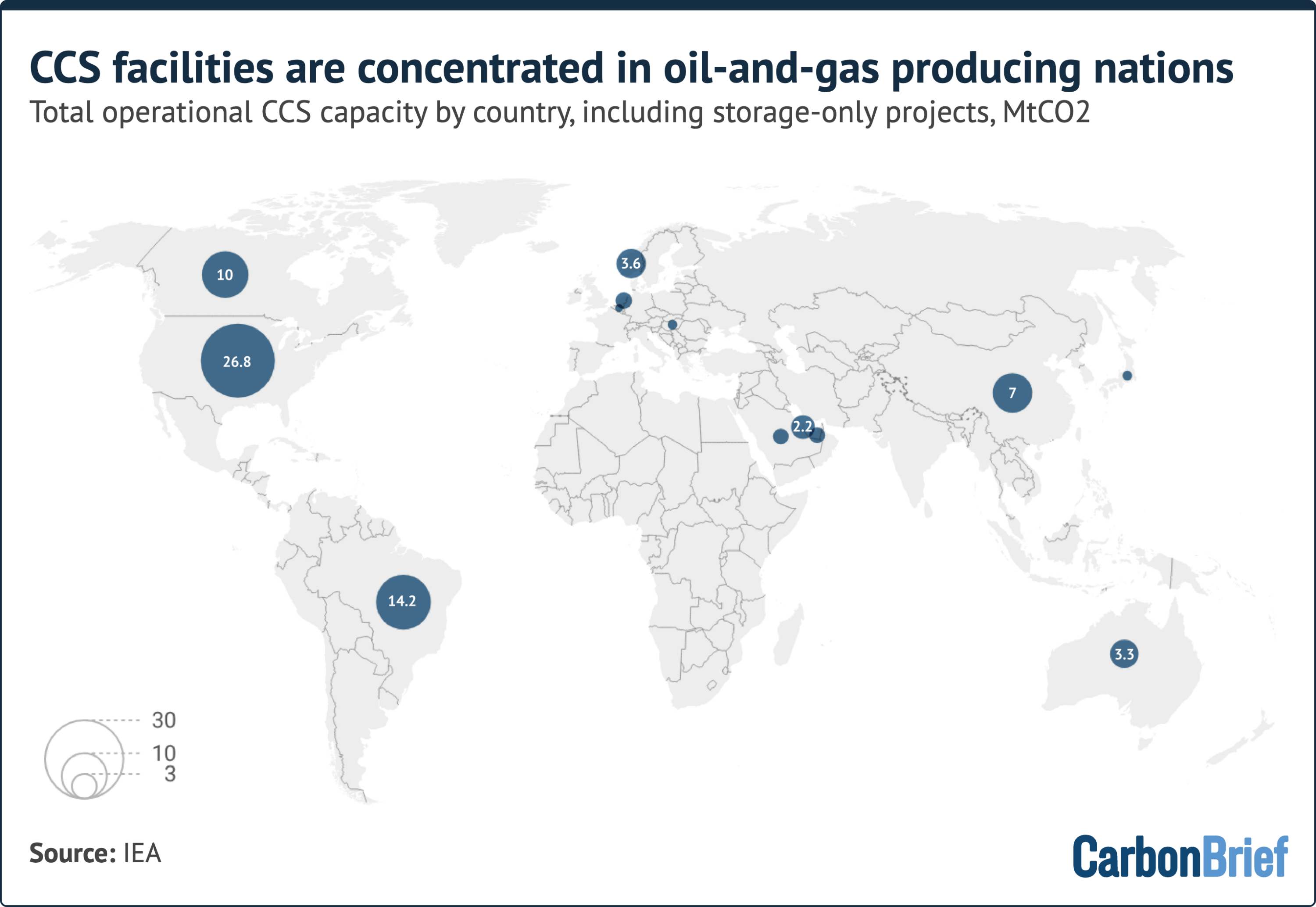
Geographically, existing facilities are heavily concentrated in major oil-and-gas-producing nations. The United States leads global capacity at 26.8 $MtCO_2$, followed by Brazil (14.2 $MtCO_2$), Canada (10 $MtCO_2$), and China (7 $MtCO_2$).

The Performance Gap
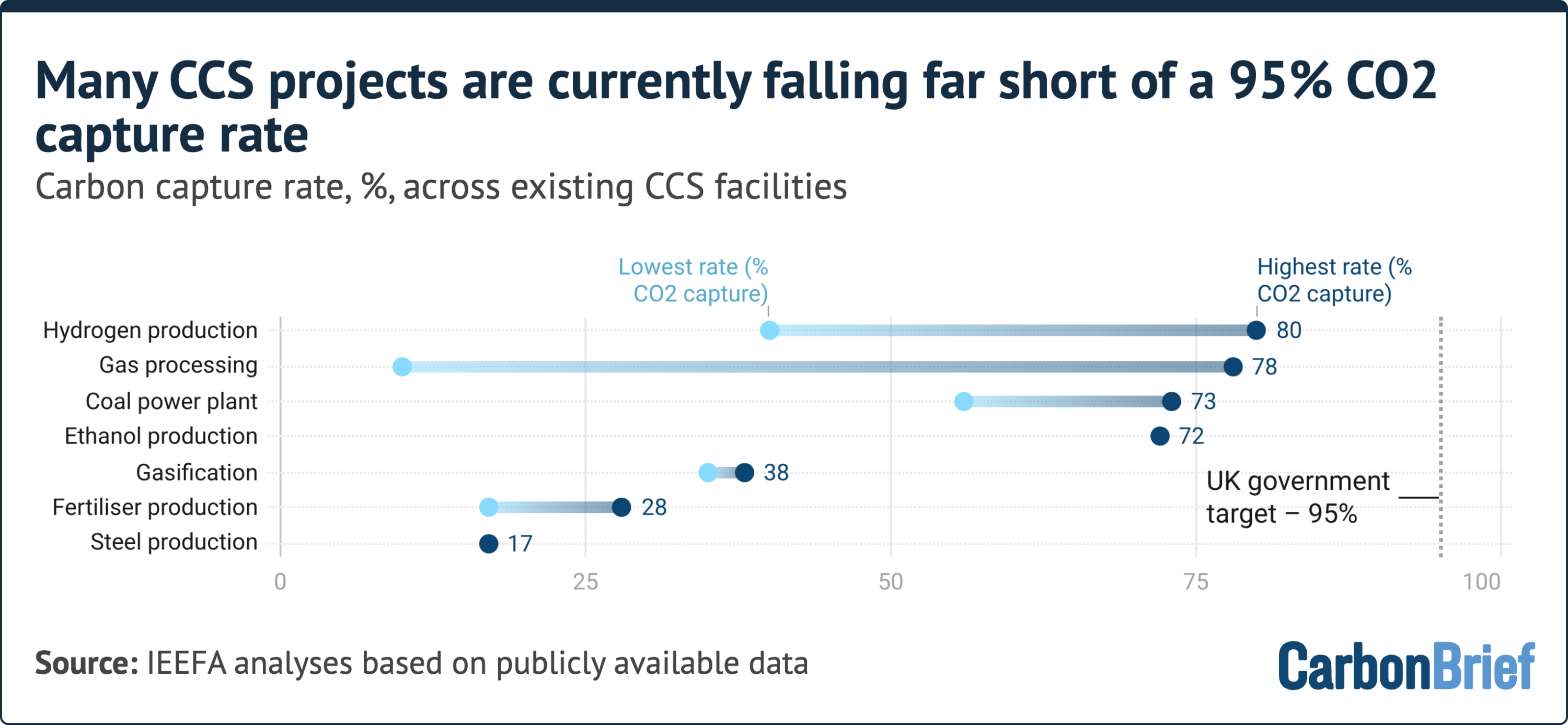
A major point of contention centers on actual capture efficiency. While regulatory guidelines in jurisdictions like the UK target capture rates of 95% (with standard industry goals sitting at 90%), independent audits by organizations such as the Institute for Energy Economics and Financial Analysis (IEEFA) reveal that many operational facilities fall drastically short.
Real-world capture rates across major projects vary wildly:
- Steel production: ~17% capture efficiency
- Coal and gas power/processing: Ranging widely, with many legacy plants averaging near 50%
- Hydrogen production: Up to 80% in optimal conditions
Because capturing $CO_2$ is the most expensive part of the process, underperforming facilities continue to vent substantial volumes of greenhouse gases into the atmosphere while still reaping policy and financial subsidies.
Official Statements and Divergent Perspectives
The debate over CCS is polarized between mainstream energy modelers who view it as indispensable and environmental economists who warn of a technological trap.
The Pro-CCS Argument: Indispensable for Net-Zero
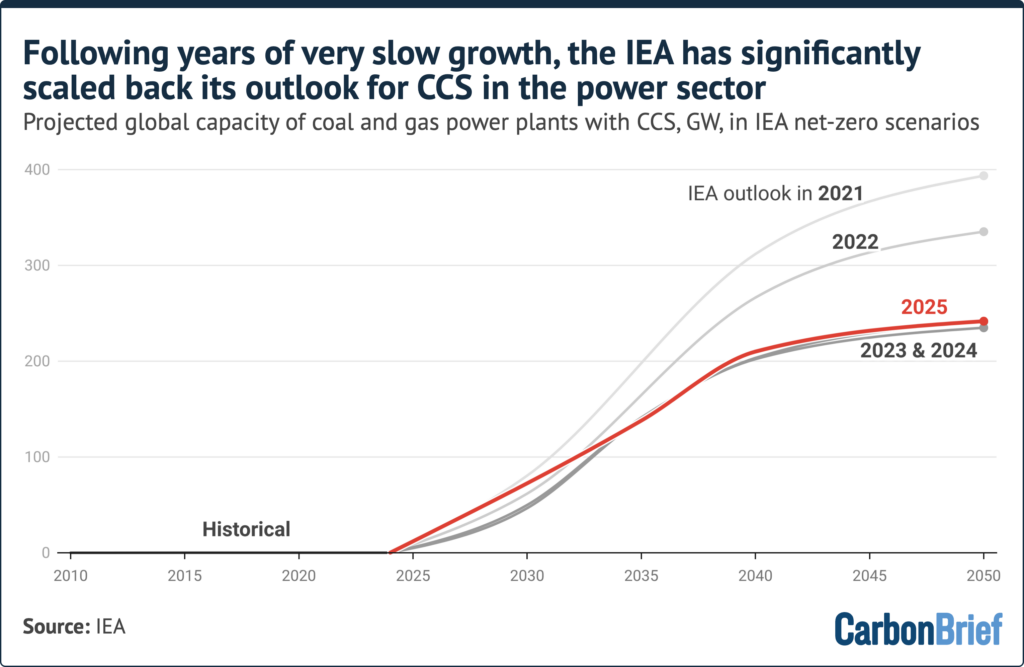
Mainstream institutions maintain that achieving net-zero without CCS is mathematically implausible or economically ruinous. The IEA has repeatedly stated that global net-zero pathways would be "virtually impossible" without scaling up the technology.
Dr. Jennifer Roberts, a researcher at the University of Strathclyde and deputy director of the UK Carbon Capture and Storage Research Centre (UKCCSRC), summarizes the modeling consensus: "From an IPCC climate modelling perspective… reaching net-zero without CCS is far more expensive, disruptive and potentially out of reach."
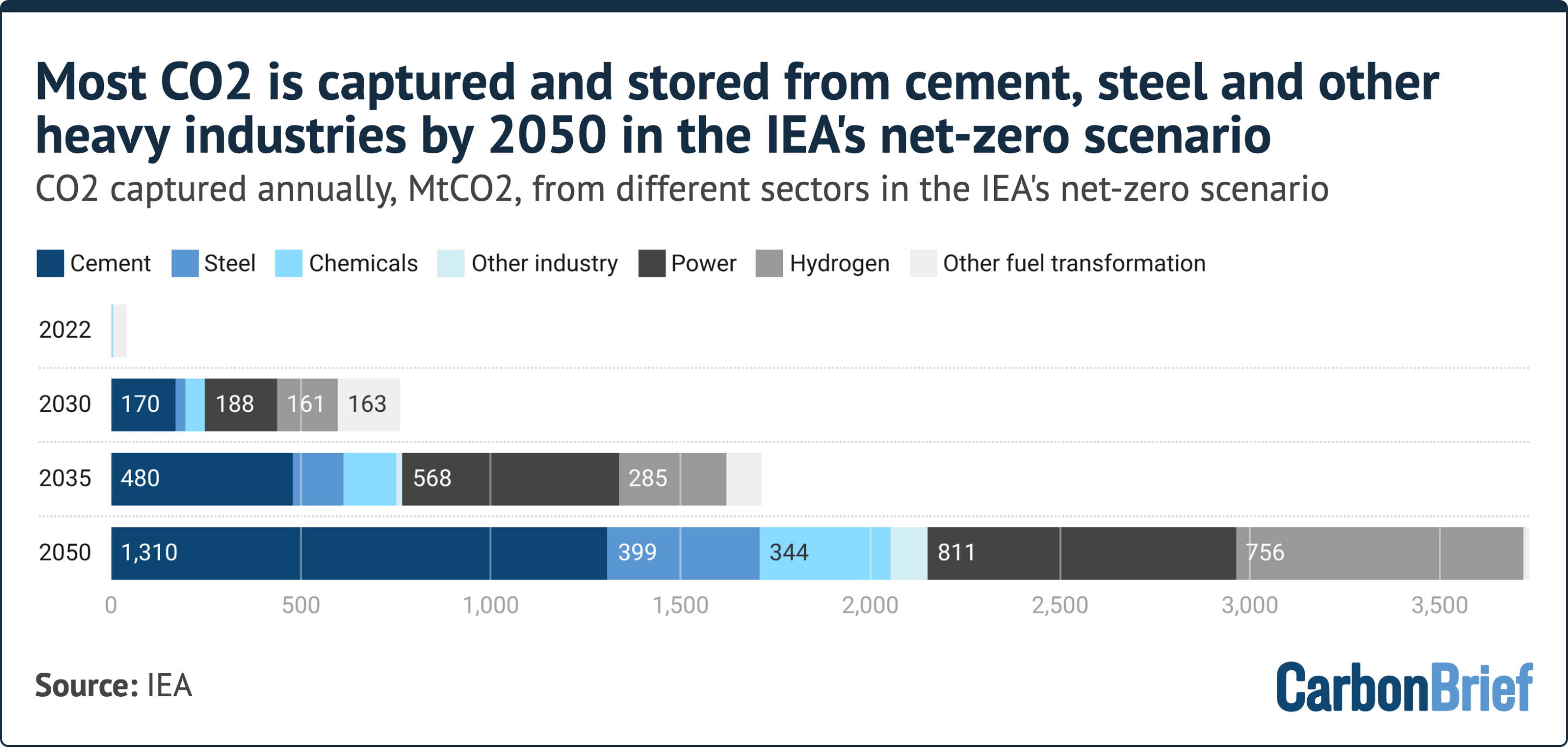
Proponents also emphasize that heavy industries like cement manufacturing release process emissions inherently tied to chemical transformations (such as calcining limestone), meaning electrification alone cannot eliminate their footprint. Furthermore, advocates argue that legacy fossil-fuel companies possess the multi-billion-dollar subsurface engineering expertise required to manage massive geological storage networks safely.
The Anti-CCS Argument: A Dangerous Distraction
Conversely, critics argue that pouring public subsidies into CCS props up the fossil fuel industry and delays the inevitable transition to renewables. A prominent 2023 working paper from the University of Oxford’s Smith School calculated that a "low-CCS" net-zero pathway would cost roughly $1 trillion less per year than a "high-CCS" pathway, citing a striking absence of technological learning and cost-reduction curves for carbon capture over the past several decades.
Andrew Reid, an energy finance analyst at IEEFA, questions the logic of retrofitting fossil fuels: "Is there really any point in trying to decarbonise fossil fuels, which comes with significant technical, timing and additional cost risk? As for cement and chemicals, again, there are alternatives, but these are nascent and expensive. CCS may be a solution here and if investment is going to be made in any area, it most likely should be these."
Further compounding these concerns are lifecycle analyses—such as those by Climate Analytics—which warn that underperforming CCS units paired with high upstream methane leakage from natural gas extraction could inadvertently result in tens of gigatonnes of net-added emissions by 2050.
Future Outlook: The UK Case Study and Global Trajectory
Nowhere is the tension over CCS more palpable than in the United Kingdom, where successive administrations have committed up to £21.7 billion over the coming decades to kickstart a domestic CCS economy centered on regional industrial clusters.
The UK’s strategy relies on four primary clusters deployed in phases:
- The East Coast Cluster (North-East England) and HyNet (North-West England and North Wales), slated for late-2020s deployment.
- Acorn (North-East Scotland) and Viking (The Humber), scheduled for around 2030.
These projects aim to decarbonize industrial hubs, power generation, and blue hydrogen production by pumping captured $CO_2$ into offshore saline aquifers and depleted North Sea gas fields.
However, the strategy has faced fierce legal and political resistance. Critics, including energy analysts and legal challengers who targeted projects like the Net-Zero Teesside power plant, argue that utilizing gas-fed CCS locks the nation into long-term fossil-fuel dependency, creates exposure to volatile international gas imports, and risks high upstream methane emissions that undermine purported climate savings.
Furthermore, reports from parliamentary watchdogs, such as the Public Accounts Committee, have criticized the government’s cluster-based funding model for failing to strictly prioritize hard-to-abate sectors like cement, instead spreading capital across lower-priority gas power initiatives.
Conclusion: Finding the Right Balance
As the world looks toward 2030 and beyond, the future of carbon capture hangs in the balance. While integrated assessment models and international bodies insist that CCS remains a necessary insurance policy against runaway global warming, its real-world implementation must overcome severe credibility hurdles.
If governments and industries fail to enforce strict capture efficiencies, decouple public funds from fossil-fuel extraction, and ruthlessly prioritize CCS applications where no alternative decarbonization pathway exists, the technology risks fulfilling its critics’ darkest predictions: acting as an expensive, life-prolonging respirator for a dying fossil fuel era.