



Executive Overview
From July 8 to July 11, the crystalline waters of Port Hercule in the Principality of Monaco will once again transform into a living laboratory for the future of sustainable maritime transport. The 13th annual Monaco Energy Boat Challenge (MEBC) brings together an unprecedented global coalition of university students, cutting-edge electric boat builders, naval architects, and alternative fuel pioneers. Hosted by the prestigious Yacht Club de Monaco (YCM), this year’s event represents a critical turning point for the recreational and commercial marine sectors as they grapple with the urgent imperatives of decarbonization, onboard energy efficiency, and digital transformation.
Since its inception in 2014, the MEBC has expanded in lockstep with the explosive growth of the electric and alternative-fuel marine market. It has evolved from a niche collegiate engineering competition into the premier international showcase for advanced marine propulsion. To date, the event has welcomed 1,825 innovators from more than 30 countries, spanning every continent except Antarctica.

The 2026 edition pushes these boundaries even further. More than 50 competing teams representing 20 countries across four continents will converge in Monaco. They will test their mettle across four distinct competitive categories: the Energy Class, the Open Sea XPerience, the SeaLab Class, and the Artificial Intelligence (AI) Class.
Yet, the word "Challenge" in the Monaco Energy Boat Challenge carries a dual meaning. While it highlights the high-stakes aquatic competitions, races, and engineering trials, it also issues a stark challenge to the broader global yachting and maritime industry. It demands that shipyards, designers, and suppliers pivot toward planet-first solutions capable of navigating the existential environmental pressures facing our oceans and climate.

Detailed Chronology: Day-by-Day Event Breakdown
Wednesday, July 8: The Grand Parade and E-Boat Rally
The 13th edition commences with immense visual spectacle and technical verification. Wednesday morning features the Grand Parade, bringing together every competing vessel across all four classes in a unified fleet deployment within Port Hercule.
Following the parade, participants in the Open Sea and SeaLab classes take part in the E-Boat Rally. The fleet navigates out of the sheltered harbor into the open Mediterranean Sea, cruising past the iconic Oceanographic Museum of Monaco—a magnificent architectural marvel perched on coastal cliffs near the Prince’s Palace. This opening day serves as a public celebration of zero-emission navigation, offering spectators a rare glimpse of tomorrow’s commercial and recreational marine fleets operating in harmony with the marine environment.

Thursday, July 9: Qualifying, Speed Trials, and Autonomous Precision
The second day shifts the focus to raw performance, precision control, and autonomous capabilities:
- Energy Class Qualifying Laps: Student-designed and built vessels enter the course in Port Hercule to establish their baseline speed, maneuverability, and energy efficiency over timed laps with assigned student pilots at the helm.
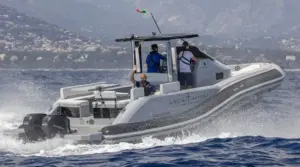
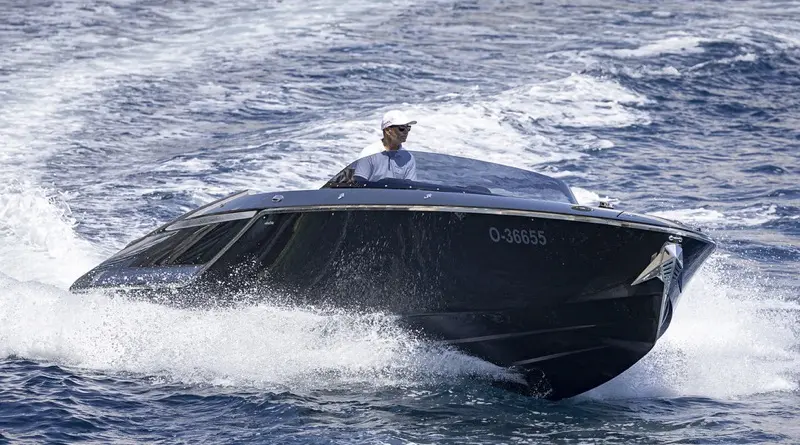
- YCM Speed Record: Widely considered the most visually thrilling spectacle of the week, this high-speed contest takes place off the coast of Monaco along a shoreline course inspired by the historic 1904 international powerboat trials hosted by the YCM. Eligible boats execute two 500-meter sprints, combined into a single official one-kilometer timed result. Last year, the Frauscher × Porsche 850 Fantom—utilizing the exact same electric motor found in the Porsche Macan electric SUV—shattered expectations by clocking an astonishing 49.84 knots (92.3 km/h / 57.35 mph). This year, the newly debuted Frauscher × Porsche 790 Spectre enters the fray, alongside advanced high-performance entries from Explomar, Taiga, Evoy/Vita, WIA Yachts, Weenav, and ZeroJet.
- SeaLab Manoeuvrability: A rigorous technical handling test inside the harbor designed to judge prototype agility, steering responsiveness, and low-speed control.
- AI Class Docking and Fleet Trials: Autonomous vessels face two distinct technological hurdles. In the Docking trial, boats must approach and secure themselves to a dock completely unassisted by human intervention—a supreme test of LiDAR, computer vision, and closed-loop control systems. In the Fleet competition, multiple autonomous boats share the water simultaneously, demonstrating live collaborative navigation and collision avoidance.
Friday, July 10: Endurance, Long-Distance Range, and Path-Planning
While short-duration speed trials capture the public imagination, Friday’s events test the true durability and practical utility of emerging marine powertrains:

- Energy Class Endurance Race: Utilizing the same coastal course as the YCM Speed Record, university teams must complete the maximum number of laps within a strictly allotted timeframe. Crucially, they are restricted to a single electrical charge or hydrogen tank, testing their ability to balance raw speed with hyper-efficient energy management—a critical factor for consumer adoption.
- Open Sea and SeaLab 16-Nautical-Mile Race: Moving beyond short sprints, this punishing long-distance endurance test requires vessels to race from Monaco to Ventimiglia, Italy, and back. It serves as the definitive real-world stress test for range, thermal management, and drivetrain reliability. Last year’s race delivered a heart-stopping finish when an Axopar utility boat outfitted with an Evoy-Vita A/XE powertrain lost a seemingly insurmountable lead in the final moments to the NRGX 6.3 RIB, driven by Explomar’s WAVE 300 (220 kW) electric outboard system. With new entrants taking over these power systems in 2026, the battle for long-distance supremacy remains entirely wide open.
- AI Class Figure-of-8: Autonomous vessels must execute continuous, precise figure-eight patterns, rigorously testing real-time path-planning algorithms, tight turning radii, and obstacle handling.
Saturday, July 11: Championship Finals and Prize Giving
The final day of the MEBC delivers the emotional and competitive climax of the week:
- Open Sea Manoeuvrability & SeaLab Endurance Finals: Prototypes and commercial platforms undergo final evaluations, testing stamina and agility to crown the top all-around performers.
- AI Class Slalom: Autonomous craft navigate a high-speed slalom course through floating buoys, representing the ultimate trial of real-time object detection and rapid-fire reactive steering.
- Energy Class Championship: Undeniably the most electrifying event of the week. All 26 university teams face off in a head-to-head knockout tournament inside the main harbor. Navigating a complex course marked by multiple buoys, the tight racing formats often keep spectators guessing until the final 25 meters. The roar of the engines is matched only by the deafening cheers of student comrades lining the quayside.
When the dust settles, cumulative scores from every trial are tallied to crown the overall champions. Notably, the University of Bologna enters the 2026 event as the undisputed heavyweight of the Energy Class, having claimed victory in four of the past five championship titles.

Supporting Context, Infrastructure, and Technological Metrics
The YCM E-Dock: Setting a Global Benchmark for Marine Fast-Charging
The rapid scaling of electric watercraft at the MEBC is heavily supported by world-class infrastructure. Jutting directly off the quayside is the YCM E-Dock, an installation conceived by the club in 2023 and constructed in strategic partnership with Aqua superPower, the global marine fast-charging network.
The eco-pontoon is a masterclass in sustainable engineering. Its roof is outfitted with flexible, high-efficiency solar panels, while its charging architecture utilizes both AC and DC systems powered by Aqua’s high-power marine infrastructure (Aqua 200 HPC) integrated with Kempower Satellite technology. Capable of fast-charging up to 20 electric boats simultaneously, it stands as the largest public marine fast-charging installation on a single floating pontoon anywhere in the world—eclipsing even the temporary high-power charging facilities deployed by Aqua superPower for the Paris Olympic sailing events.

The Decarbonization Imperative: Conferences and Industry Collaboration
Recognizing that student innovation must be matched by commercial action, the MEBC hosts two high-level professional symposiums for the global yachting and superyacht supply chains:
- Advance Yachting Technology Conference (Thursday, July 9): Focused on how naval architects, luxury yacht builders, and component suppliers must integrate clean propulsion into early-stage design. Discussions center on the inseparable relationship between deep decarbonization, onboard energy efficiency, and digital system integration.
- Alternative Fuels and Sustainable Yachting Conference (Friday, July 10): Entering its seventh year, this seminar series provides rigorous, objective analysis of alternative marine fuels—including hydrogen, green methanol, and advanced synthetic carriers. Industry leaders examine real-world case studies, ongoing laboratory research, and regulatory pathways shaping the future of commercial and luxury maritime transport.
Official Perspectives and Educational Impact
The cultural heartbeat of the Monaco Energy Boat Challenge lies in its vibrant quayside paddock. With the sole exception of the professional industry conferences, all races, exhibitions, and dockside events are entirely open and free to the public. Visitors walking the docks at Port Hercule are immediately enveloped by an infectious atmosphere of youthful idealism and rigorous scientific inquiry.

Hundreds of engineering, naval architecture, and marine systems students from elite institutions worldwide can be seen fine-tuning hydrogen fuel cells, optimizing solar arrays, and calibrating battery management systems down to the millivolt. These young innovators share a singular, unifying motivation: to engineer a cleaner, more sustainable maritime future. Their presence in Monaco bridges the gap between academic theory and industrial reality, frequently leading to direct recruitment by premier shipyards and green-tech startups.
Complete 2026 Competing Teams and Entries Directory
ENERGY CLASS (University Teams)
- WANNSEA – Germany: Technische Universität Berlin
- URPM RACING – Puerto Rico: University of Puerto Rico at Mayaguez
- UNIVERSITY OF BOLOGNA – Italy: Alma Mater Studiorum – University of Bologna
- TEAM SEA SAKTHI – India: Kumaraguru College of Technology
- TAMEO ENSTA – France: École nationale supérieure de techniques avancées Paris
- POLYBOAT NANTES – France: École polytechnique universitaire de Nantes Université
- POLITO H2FLY – Italy: Politecnico di Torino
- PHYSIS POLIMI – Italy: Politecnico di Milano
- NÉRÉIDES UTT – France: Université de Technologie de Troyes
- MESSINA – Italy: Università degli Studi di Messina
- MARINEROB-UPV – Spain: Universitat Politechnica de Valencia
- INNOBOAT BIZKAIA – Spain: Bilbao School of Engineering, University of the Basque Country
- HYDROVINCI – France: École Supérieure d’Ingénieurs Léonard de Vinci
- HYDROGADZ – France: École Nationale Supérieure d’Arts et Métiers
- HAINAN UNIVERSITY – China: Hainan University
- EXOCET POLYTECHNIQUE – Canada: Exocet Polytechnique Montreal
- ELETTRA UNIGE – Italy: Università di Genova
- ELECTRA TIDE – France: EIGSI École d’ingénieurs généralistes, La Rochelle
- DTU FLOAT FORWARD – Denmark: Danmarks Tekniske Universitet
- CAMBRIDGE UNIVERSITY RIVIERA RACING – UK: Cambridge University
- ADRIA RACING – Croatia: Association of Applied Technical Sciences
OpenSea XPerience (Commercial & Prototype Vessels)
- ZEROJET SPARK 330
- ZEROJET SOUTHERN PACIFIC CLUB 590
- ZEROJET OC350
- ZEROJET HIGHFIELD E330
- WNRG TECH
- WIA ELECTRIC YACHTS
- WEENAV
- VITA SEAL
- VALKAMA WATERCRAFTS AAvE
- TAIGA MOTORS
- FRAUSCHER X PORSCHE 790 SPECTRE
- EXPLOMAR POLAND
- EXPLOMAR GERMANY 65
- AS LABRUNA SRL ARCISTRATEGA
- AB ZEROJET
SeaLab Class (Alternative Energy & Foiling Prototypes)
- TU DELFT HYDRO MOTION TEAM: Delft University of Technology – Netherlands
- TECNICO SOLAR BOAT: Instituto Superior Técnico – Portugal
- SWISS SOLAR BOAT: École Polytechnique Fédérale de Lausanne – Switzerland
- SURGE METHANOL FOILING TEAM TWENTE: University of Twente – Netherlands
- RED WAVE UNIVERSITY OF BOLOGNA: Alma Mater Studiorum – University of Bologna – Italy
- HYDROGEN FUEL RACING: University of Glasgow – United Kingdom
- H2-WATT: Heriot-Watt University – United Kingdom
- ALAQUA: Y-H2O (Shenzhen) Technology Co. – China
Artificial Intelligence Class (Autonomous Surface Vehicles)
- WANNSEA – AI CLASS: Technische Universität Berlin (TU Berlin) – Germany
- UGENT SAILING: Ghent University – Belgium
- UANTWERP SOLAR BOAT TEAM: University of Antwerp – Belgium
- TSB: Instituto Superior Técnico – Portugal
- TGM: Technologisches Gewerbemuseum Institute of Technology – Austria
- TAMEO AI: École nationale supérieure de techniques avancées Paris – France
- POWERGOATS: Poznan University of Technology – Poland
- FEUP ACADEMIC SOLAR TEAM: Faculdade de Engenharia da Universidade do Porto – Portugal
- AGH SOLAR BOAT: AGH University of Kraków – Poland
- ADRIA AUTONOMOUS: Association of Applied Technical Sciences – Croatia
Future Outlook
As the 13th Monaco Energy Boat Challenge draws to a close on July 11, its true impact will extend far beyond the podium celebrations and trophy presentations in Port Hercule. The event has cemented its status as the definitive incubator for zero-emission marine technology. By bridging academic brilliance with commercial enterprise—and coupling high-speed competition with serious professional dialogue on hydrogen, methanol, and fast-charging infrastructure—the MEBC is actively shaping the regulatory, engineering, and commercial standards of tomorrow’s maritime world.

The innovations tested in Monaco today will inevitably find their way into the commercial shipyards, recreational marinas, and superyacht fleets of tomorrow, ensuring that our oceans remain vibrant for generations to come.