








Executive Overview
In a move that underscores the long-term global appetite for North American natural gas, Sempra Energy’s subsidiary, Sempra Infrastructure, has officially initiated the federal permitting process for a massive expansion at its Port Arthur liquefied natural gas (LNG) export complex in Southeast Texas. According to a regulatory filing submitted to the Federal Energy Regulatory Commission (FERC), the proposed development—designated as the Port Arthur LNG North Project—aims to add four liquefaction trains capable of producing up to 27 million metric tons per annum (mtpa) of LNG.
This ambitious expansion is positioned to sit adjacent to Sempra’s existing Phase 1 and Phase 2 developments, which already boast a combined planned capacity of 26 mtpa. Should the North Project receive regulatory approval and proceed to a positive Final Investment Decision (FID), the consolidated Port Arthur site would command an extraordinary export capacity of up to 53 mtpa. This would solidify Jefferson County, Texas, as one of the largest single-site LNG hubs on the planet.
The filing comes at a critical juncture for the U.S. energy sector. As the world’s leading LNG exporter, the United States continues to act as a geopolitical energy anchor for both European nations seeking to permanently decouple from Russian pipeline gas and Asian economies transitioning away from coal. However, the project also faces a complex domestic landscape characterized by heightened regulatory scrutiny, evolving environmental standards, and intense competition along the U.S. Gulf Coast. Sempra’s strategic filing, which targets an operational start date in the second half of 2034, represents a bold, multi-decade bet on the enduring relevance of natural gas in the global energy mix.
Detailed Chronology: The Evolution of Sempra’s Port Arthur Hub
The development of the Port Arthur LNG site has progressed through several distinct phases, reflecting the volatile dynamics of global energy markets and the shifting landscape of project finance.
[Phase 1: FID Reached] ---> [Phase 2: Active Development] ---> [North Project: Permitting Initiated]
   (13 MTPA - Under Const.)       (13 MTPA - Engineering)         (27 MTPA - Target Ops: 2034)
1. Phase 1: Foundation and Final Investment Decision (2020–2023)
Sempra’s initial vision for Port Arthur began to materialize during the late 2010s, but global economic headwinds and the COVID-19 pandemic delayed progress. The project gained decisive momentum in March 2023, when Sempra announced a positive FID for Port Arthur LNG Phase 1.
- Capital Expenditure: Worth approximately $13 billion.
- Capacity: Designed for 13 mtpa across two liquefaction trains (Trains 1 and 2).
- Partnerships: Sempra partnered with ConocoPhillips, which acquired a 30% equity stake in Phase 1 and agreed to purchase 5 mtpa of the facility’s output. KKR also secured a significant minority stake.
- EPC Contractor: Bechtel Energy was contracted to perform the engineering, procurement, and construction.
- Current Status: Construction is actively underway, with commercial operations targeted to commence in 2027 and 2028.
2. Phase 2: Expanding the Footprint (2023–Present)
Before the dust could settle on the Phase 1 construction site, Sempra advanced plans for Phase 2 (Trains 3 and 4), designed to add another 13 mtpa of capacity.
- Commercial Momentum: In late 2023 and mid-2024, Sempra secured non-binding heads of agreements (HOAs) with major global players, including Saudi Aramco and Germany’s RWE, to anchor the expansion.
- Regulatory Track: Phase 2 received its FERC authorization, though it continues to navigate the commercialization phase and the evolving Department of Energy (DOE) export authorization landscape.
3. The Port Arthur LNG North Project Filing (Wednesday)
The filing made on Wednesday represents the birth of a new, separate expansion vector. By proposing the "North Project" as a distinct entity rather than a minor modification, Sempra is initiating a comprehensive, multi-year federal review process.
- The Filing: Sempra filed a pre-filing request with FERC, a formal step that initiates environmental scoping and public comment periods.
- Timeline to 2034: Sempra projects that if federal, state, and local approvals are secured, and commercial contracts are finalized, construction could yield first exports in the second half of 2034.
- Land Utilization: Crucially, Sempra indicated that the North Project will be constructed on land already owned by Port Arthur LNG, eliminating the complex hurdle of greenfield land acquisition and minimizing additional localized zoning disputes.
Supporting Context & Technical Metrics
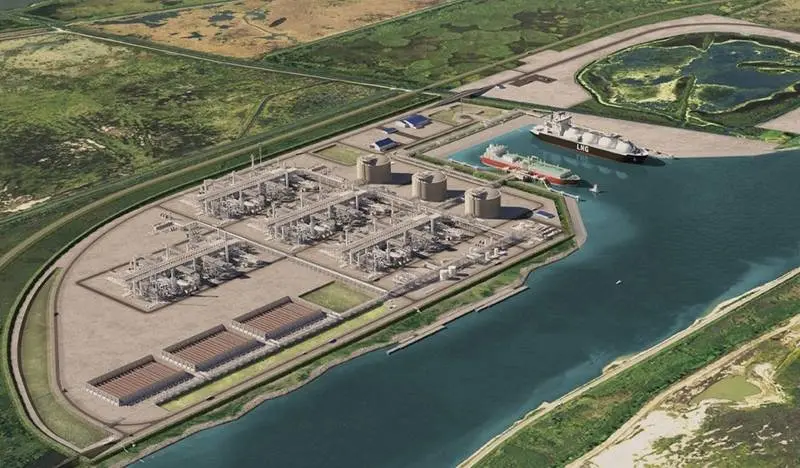
The scale of the Port Arthur LNG North Project is immense, requiring highly specialized engineering and massive capital allocation. Below is a detailed breakdown of the technical specifications, infrastructure requirements, and comparative metrics that define this proposal.
Technical Specifications of the North Project
The North Project is designed to double the physical capacity of Sempra’s current Port Arthur plans:
| Feature | Specification / Capacity |
|---|---|
| Liquefaction Trains | 4 trains, each capable of producing up to 6.73 mtpa |
| Total Nominal Capacity | Up to 27 million metric tons per annum (mtpa) |
| Storage Infrastructure | 3 full-containment LNG storage tanks |
| Marine Infrastructure | Up to 2 dedicated LNG marine berths |
| Land Ownership | Sempra-owned industrial acreage in Southeast Texas |
| Target Operational Date | H2 2034 |
The Mechanics of 6.73 MTPA Trains
Each of the four proposed trains for the North Project is designed to produce 6.73 mtpa under optimal operating conditions. In LNG engineering, "optimal conditions" refer to cooler ambient temperatures (which improve gas turbine efficiency) and steady, high-pressure feed gas streams. To achieve this high output, Sempra is expected to utilize state-of-the-art refrigeration technology, likely employing heavy-duty frame gas turbines or high-horsepower electric motor drives (e-drives) to compress and cool the natural gas to -260°F (-162°C), liquefying it for transport.
Mapping the Sempra Gulf Coast Empire
If all phases reach completion, Sempra’s total Gulf Coast LNG footprint will establish it as one of the preeminent midstream and export companies in North America.
Port Arthur Phase 1:   █████████████ 13 MTPA
Port Arthur Phase 2:   █████████████ 13 MTPA
Port Arthur North:     ███████████████████████████ 27 MTPA
------------------------------------------------------------
Total Hub Capacity:    █████████████████████████████████████████████ 53 MTPA
Beyond Port Arthur, Sempra also operates the Cameron LNG facility in Louisiana (currently ~12 mtpa, with expansion plans) and is developing the Energía Costa Azul (ECA) LNG project on the Pacific Coast of Mexico. This diversified portfolio allows Sempra to offer global buyers flexible delivery points across both the Gulf and Pacific coasts.
Official Statements and Stakeholder Perspectives
While Sempra’s regulatory filing did not include an estimated price tag for the North Project, industry analysts estimate that a 27-mtpa expansion of this magnitude could easily cost between $20 billion and $30 billion, depending on inflation, labor availability, and EPC contract negotiations.
Sempra’s Strategic Rationale
In the regulatory filing, Sempra emphasized that the Port Arthur LNG North Project is designed to leverage existing infrastructure, thereby minimizing environmental impacts and optimizing capital efficiency. By utilizing land already owned by the company, Sempra can streamline the environmental impact statement (EIS) process.
A spokesperson for Sempra Infrastructure noted that the project represents:
"…the latest step in our long-term strategy to provide clean, reliable, and secure U.S. natural gas to global markets. By expanding our footprint in Port Arthur, we are positioned to meet the world’s energy security needs well into the next decade."
Regulatory and Political Headwinds
Despite the project’s economic promise, it enters a highly politicized regulatory arena. The U.S. Department of Energy (DOE) and FERC have faced intense pressure from environmental coalitions to scrutinize the cumulative climate impacts of LNG exports.
- The DOE Export Authorization Pause: In early 2024, the Biden administration announced a temporary pause on pending decisions for LNG exports to non-Free Trade Agreement (non-FTA) countries to allow the government to update its economic and environmental assessment models. While legal challenges have contested this pause, it has injected a layer of regulatory uncertainty into long-term project planning.
- Local Environmental Concerns: Environmental groups and local community advocates in Southeast Texas have raised concerns over the rapid industrialization of the Gulf Coast. Opponents argue that massive LNG terminals contribute to localized air pollution (including nitrogen oxides and volatile organic compounds), disrupt sensitive coastal wetlands, and lock in decades of global fossil fuel emissions.
- Economic Benefits: Conversely, local officials in Jefferson County and the state of Texas strongly support the expansion. Port Arthur Phase 1 has already generated thousands of construction jobs and stimulated the regional economy. The North Project would extend these economic benefits through the 2030s, providing sustained tax revenues for local school districts and municipal infrastructure.
Future Outlook: Navigating the Global Energy Transition (2030–2040)
Sempra’s 2034 target operational date for the North Project places its commercial prime in the mid-2030s and 2040s—a period when the global energy transition will be in full swing. This long-term timeline raises critical questions about market dynamics and the future of natural gas.
The Looming Supply-Demand Balance
Global LNG demand is projected to rise steadily through 2030, driven by Europe’s structural rejection of Russian pipeline gas and rapid urbanization in China, India, and Southeast Asia. However, some energy analysts warn of a potential supply glut in the mid-2030s as a massive wave of new projects from Qatar, the U.S., and Canada come online simultaneously.
Sempra is banking on several factors to mitigate this risk:
- Contractual Security: Sempra historically does not take FID on projects without securing long-term Sales and Purchase Agreements (SPAs) for at least 80% of the capacity. This protects the company from short-term spot market volatility.
- Geopolitical Alignment: European and Asian buyers increasingly favor U.S. LNG due to its destination flexibility (lack of destination clauses) and the transparent pricing index of Henry Hub.
- Decarbonization Initiatives: To appeal to climate-conscious buyers, Sempra is actively exploring carbon capture and sequestration (CCS) opportunities and utilizing electric-drive turbines powered by renewable energy to lower the carbon intensity of its liquefied gas.
Conclusion: A Cornerstone of Global Energy Security
The filing for the Port Arthur LNG North Project is more than a routine regulatory submission; it is a declaration of the U.S. energy sector’s intent to remain the dominant force in global gas markets for decades to come. By aiming to double its Port Arthur capacity to 53 mtpa, Sempra Infrastructure is positioning itself at the absolute center of the global energy trade. As federal regulators begin their multi-year review of the North Project, the energy world will watch closely to see if Sempra can successfully navigate the regulatory, political, and financial hurdles necessary to turn this monumental vision into operational reality by 2034.