








Executive Overview
For seasoned cruise enthusiasts, monitoring online portals for pre-cruise sales on specialty dining, beverage packages, spa treatments, and poolside amenities is a familiar ritual. Securing these onboard perks at a steep discount can significantly elevate the vacation experience without breaking the bank. However, a recent system pricing error aboard select Royal Caribbean International vessels—specifically targeting the highly sought-after "Port Day Casita" reservations—has turned into a public relations headache for the cruise line.
Scores of passengers who believed they had scored an extraordinary bargain on luxury poolside real estate are discovering that their reservations are being abruptly canceled. Rather than honoring the advertised rates, Royal Caribbean is pointing to a systemic pricing error, issuing full refunds, and returning the exclusive cabanas to inventory at triple their original promotional cost.
The incident has ignited heated debates across social media channels, forum boards, and cruise-dedicated communities. While affected travelers decry the cancellations as a frustrating "bait-and-switch" tactic, industry observers note that cruise lines maintain broad contractual permissions to void purchases resulting from technological glitches. This comprehensive report examines the anatomy of the pricing error, the affected vessels, the passenger reaction, and the broader context of digital pricing transparency within the modern cruise industry.
Detailed Chronology: The Rise and Fall of the $120 Casita
The controversy began when sharp-eyed travelers browsing the Royal Caribbean pre-cruise planner noticed an unusually deep discount on Port Day Casitas. Typically, these premium poolside loungers command premium rates, especially on newer, highly anticipated hardware. Yet, during a recent promotional window, several guests managed to secure reservations for under $200—with some booking the exclusive retreats for as low as $120.
To put this in perspective, standard port-day pricing for similar amenities on popular itineraries—such as a 3-night weekend getaway aboard Utopia of the Seas—frequently hovers around $350 before any promotional adjustments. Even during peak pre-cruise sale windows, discounts rarely exceed 35% to 40% off standard onboard rates. A price tag of $120 represented an unprecedented markdown, leading many optimistic travelers to assume they had successfully capitalized on a rare flash sale or stacked promotional discounts.
The euphoria, however, was short-lived. Within days of booking, impacted guests began receiving standardized notification emails from Royal Caribbean detailing the sudden termination of their reservations.
The Cancellation Notice
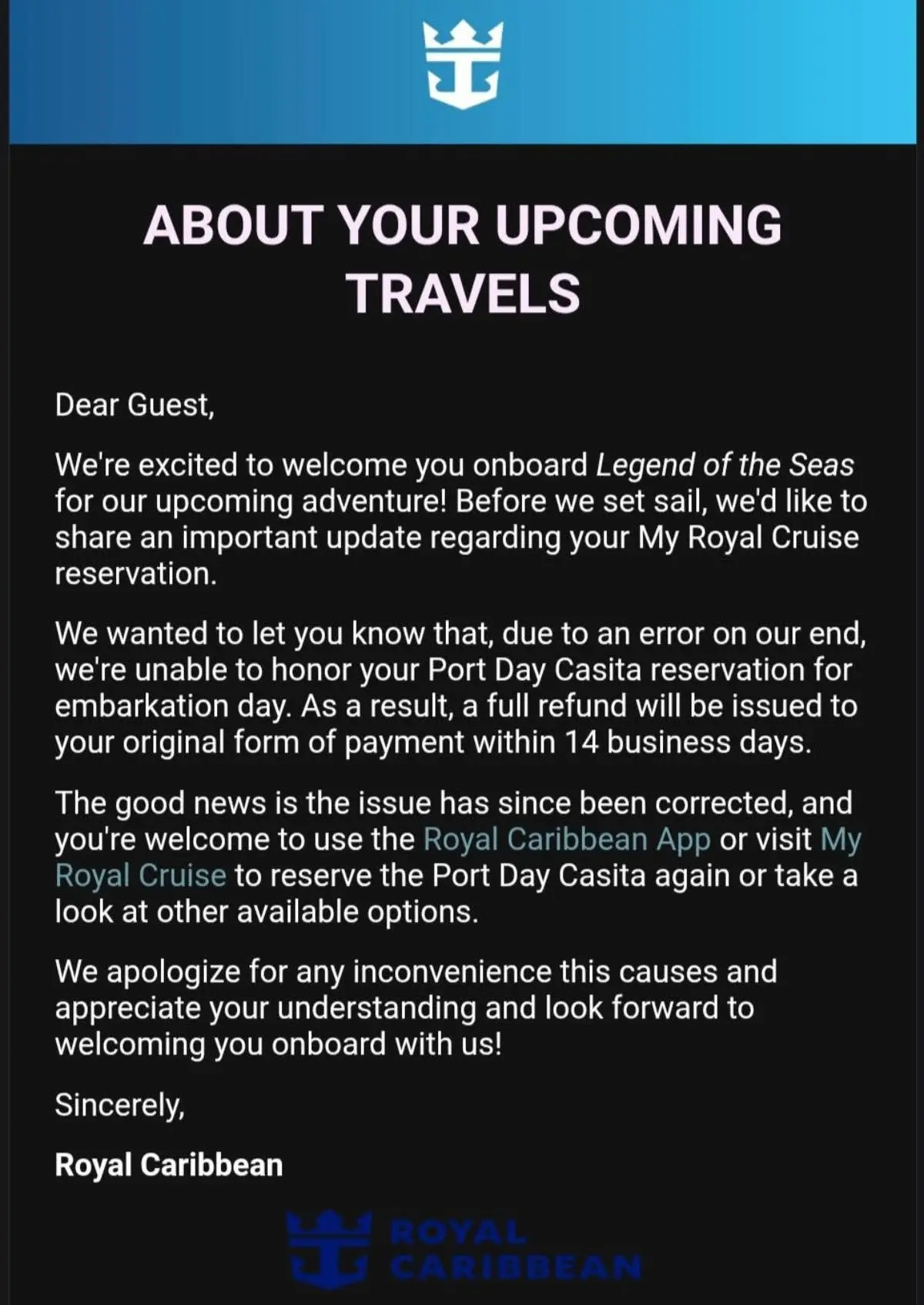
The communication sent to affected passengers was brief, offering little room for negotiation or customer service appeals. The notification read, in part:
"Due to an error on our end, we’re unable to honor your Port Day Casita reservation for embarkation day. As a result, a full refund will be issued to your original form of payment within 14 business days."
The message went on to note that the underlying technical issue had since been corrected. When bewildered guests returned to the cruise line’s digital planner to see if they could rebook, they were met with a harsh reality check: the very same casitas they had secured for $120 were now listed at standard rates, with one traveler reporting a dramatic price leap to $384.
Understanding the Asset: What Is a Port Day Casita?
To fully grasp why travelers are so deeply invested in securing these specific reservations, it is necessary to examine the nature of the amenity itself. Royal Caribbean introduced its modern iteration of private poolside lounging as part of its upscale offerings on select vessels, most notably across its massive Oasis-class and revolutionary Icon-class ships.
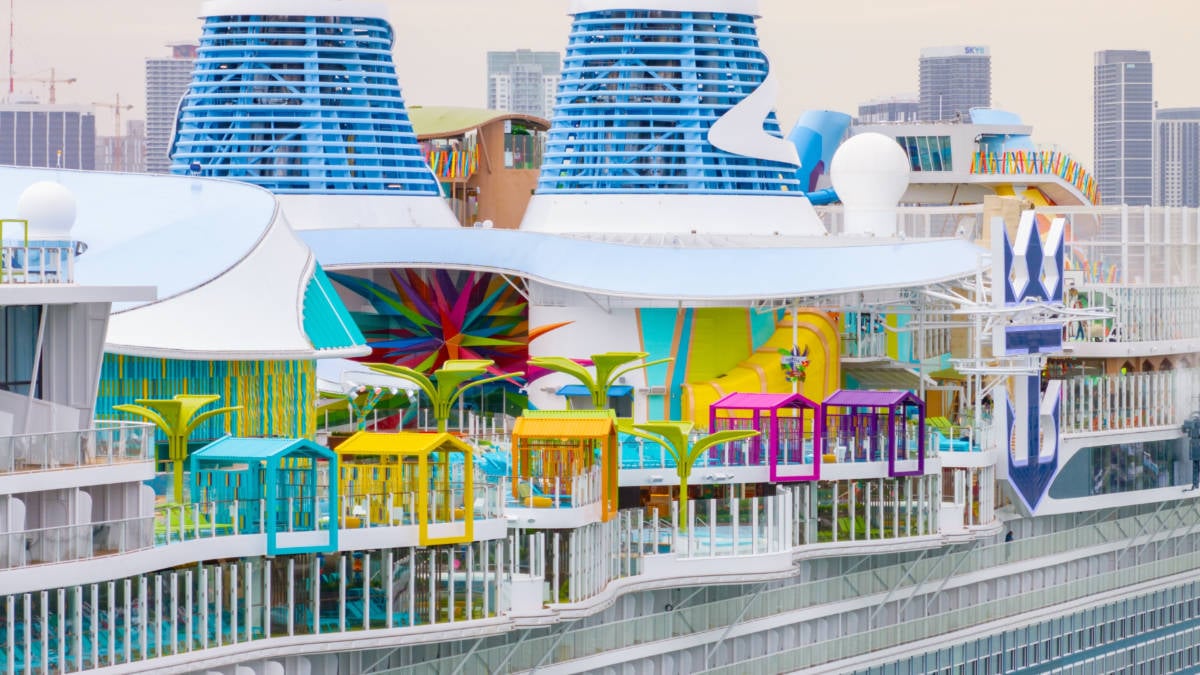
Located strategically on the primary pool decks, Port Day Casitas provide an elevated sanctuary amid the bustling atmosphere of modern mega-ships. Unlike traditional, first-come-first-served deck chairs—which often spark intense competition and early-morning towel-saving maneuvers—a casita guarantees a dedicated, premium physical space for the duration of the day.
The amenities bundled into a standard casita rental include:
- Dedicated Service: Assigned staff members attend to the casita occupants, bringing food and beverages directly from nearby bars and grills.
- Complimentary Welcome Inclusions: Guests typically receive a selection of complimentary welcome beverages, such as bottled water or curated welcome drinks.
- Comfort and Convenience: The luxury loungers feature comfortable, plush seating configurations, privacy curtains, and integrated charging outlets for mobile devices and cameras.
- Strategic Location: Positioned directly adjacent to the pool deck action yet shielded enough to offer a semi-private retreat, they represent the pinnacle of open-air relaxation at sea.
Because casitas can be rented on both port days and sea days, pricing fluctuates dynamically. Sea days naturally command top dollar because the majority of passengers remain onboard, driving up demand for prime poolside real estate. Port days, by contrast, see lower demand as guests disembark to explore destinations, making them prime targets for promotional discounting. However, dropping the price below the $150 threshold completely decoupled the amenity from its actual operating and opportunity costs, signaling to corporate revenue managers that a glaring system error had occurred.
Fleet-Wide Impact: The Icon-Class Focus
While Royal Caribbean operates an expansive fleet spanning multiple vessel classes—including Vision, Voyager, Freedom, Quantum, Oasis, and Icon classes—the current controversy has primarily impacted the cruise line’s crown jewels.
Reports of cancellations have flooded in from guests booked across the entire current and near-future Icon-class roster:
- Icon of the Seas
- Star of the Seas
- Legend of the Seas (referencing upcoming itineraries within the broader fleet expansion)
Because the Icon class represents the absolute pinnacle of modern cruise ship design—carrying thousands of passengers per sailing—demand for limited-capacity amenities like casitas is exceptionally high. On a ship accommodating close to 10,000 people when fully occupied, private poolside spaces are severely constrained resources. Consequently, any pricing glitch on these specific vessels naturally amplified the number of impacted bookings and catalyzed a widespread outcry online.
Passenger Reaction and the "Bait-and-Switch" Debate
Social media platforms, particularly dedicated cruise groups on Facebook and specialized forums like Reddit, quickly became venting grounds for disappointed travelers. Many expressed deep frustration, openly questioning whether the error was genuinely a digital glitch or a deliberate marketing ploy.
The prevailing sentiment among a vocal segment of the passenger base is that the incident resembles a classic "bait-and-switch" tactic. The theory posits that low introductory pricing was intentionally or recklessly deployed to generate immediate pre-cruise engagement, harvest advance deposits, and build consumer momentum, only for the company to pull the rug out and re-list the inventory at market-clearing rates.
Legal and consumer protection analysts, however, generally urge caution before ascribing malicious intent to corporate logistics failures. Modern cruise line inventory systems are immensely complex, relying on intricate algorithms that tie dynamic pricing models, yield management software, third-party vendor integrations, and pre-cruise planner databases together. A minor coding error, a database synchronization failure, or an errant decimal placement during a routine software update can easily generate anomalous pricing across thousands of SKUs in seconds.
The Legal Reality of Pricing Glitches
From a contractual standpoint, cruise line ticket contracts and purchase terms uniformly protect operators against human or systemic errors. Standard terms of service universally stipulate that companies retain the right to cancel and fully refund any transaction executed at an incorrect or erroneous price. This applies equally to:
- Stateroom fares and cruise tickets
- Drink packages and beverage upgrades
- Specialty dining reservations
- Excursions, spa treatments, and onboard cabana or casita rentals
While the policy is legally sound and backed by binding consumer agreements, it does little to soothe the psychological friction experienced by a loyal customer who feels penalized for a corporate technological failure.
Historical Precedent: Pricing Errors in the Cruise Industry
This incident is far from an isolated anomaly within the cruise sector. As cruise lines have increasingly digitized their pre-cruise purchasing funnels—pushing guests toward mobile apps and web portals months before embarkation—pricing glitches have become an expected hazard of modern travel logistics.
1. The Carnival Cruise Line Fare Glitch (May 2026)
Earlier in 2026, Cruise Hive reported on a significant technological misstep by Carnival Cruise Line. During a scheduled system outage and subsequent website update, a software glitch generated ultra-low fare classifications across a variety of itineraries. Thrilled bargain hunters rushed to secure bookings at fractions of their true value. Much like Royal Caribbean’s casita situation, Carnival ultimately exercised its right to cancel the erroneously priced bookings, issuing full refunds while leaving many prospective cruisers deeply disappointed.
2. The Royal Caribbean Drink Package Debacle (2019)
Interestingly, Royal Caribbean has navigated similar terrain in the past with varying outcomes. In 2019, the cruise line experienced a major website glitch that priced ubiquitous deluxe beverage packages at a mere $18 per day, a radical departure from the standard rate of approximately $55 per day at the time.
Initially, Royal Caribbean moved swiftly to cancel the aberrant purchases, sparking an immediate and ferocious wave of consumer backlash across the travel blogosphere and social media. Recognizing the potential long-term damage to brand loyalty and customer goodwill, the corporate leadership reversed course, ultimately deciding to honor the discounted $18 daily rate for those who had managed to lock it in during the glitch window.
The stark contrast between the 2019 beverage package resolution and the current 2026 casita cancellations highlights a shifting corporate posture. As cruise lines face tightening profit margins, escalating operational costs, and unprecedented demand for high-end shipboard spaces, corporate tolerance for absorbing multi-thousand-dollar system errors has visibly narrowed.
Official Statements and Corporate Accountability
Royal Caribbean’s official response has remained strictly administrative. The automated cancellation notices sent to guests emphasize operational transparency regarding the root cause—explicitly citing "an error on our end"—while offering swift monetary remediation via full refunds processed back to the original form of payment within 14 business days.
Beyond the transactional notification, however, corporate communications have not included discretionary goodwill gestures, such as partial pricing credits or alternative promotional discounts for impacted guests. This minimalist approach has exacerbated customer service friction, leaving travelers feeling discarded rather than valued.
Industry consumer advocates suggest that while cruise lines are legally entitled to cancel mistaken purchases, providing a minor consolation token—such as a modest onboard credit or a targeted discount code for future pre-cruise purchases—can go a long way toward preserving brand loyalty and mitigating the sting of a canceled reservation.
Future Outlook: Safeguarding Against Digital Discrepancies
As the travel industry pushes deeper into automated, algorithm-driven commerce, pricing errors will inevitably continue to occur. For both cruise operators and consumers, the casita pricing debacle serves as a valuable case study in digital risk management.
Recommendations for Cruise Lines
To mitigate future friction, cruise operators must invest in more robust pre-deployment testing environments for their digital commerce platforms. Implementing hard-coded safety guardrails—such as automated floor limits that prevent promotional discounts from exceeding a maximum allowable percentage off base rates—could intercept anomalous pricing before it ever goes live to the public. Furthermore, refining customer service escalation protocols to handle such errors with greater empathy and targeted compensation could prevent minor glitches from blossoming into viral public relations challenges.
Advice for Savvy Travelers
For consumers navigating the digital cruise marketplace, the old adage remains truer than ever: if a deal looks too good to be true, it probably is.
While booking engines occasionally yield legitimate, highly lucrative sales—such as localized flash sales or bundled perks during wave season—aberrant price drops that defy all standard industry economics carry an inherent risk. Travelers who secure such deals should maintain cautious optimism, recognizing that automated cancellation policies remain a standard safety valve for travel providers caught off guard by their own software errors.
Ultimately, while the current wave of Port Day Casita cancellations has left a bitter taste in the mouths of many Royal Caribbean loyalists, it underscores the delicate balance between digital convenience and human expectation in the modern era of cruising. As mega-ships continue to push the boundaries of onboard luxury, ensuring transparent, reliable, and error-free digital infrastructure will remain an ongoing imperative for the world’s leading cruise lines.