





Executive Overview
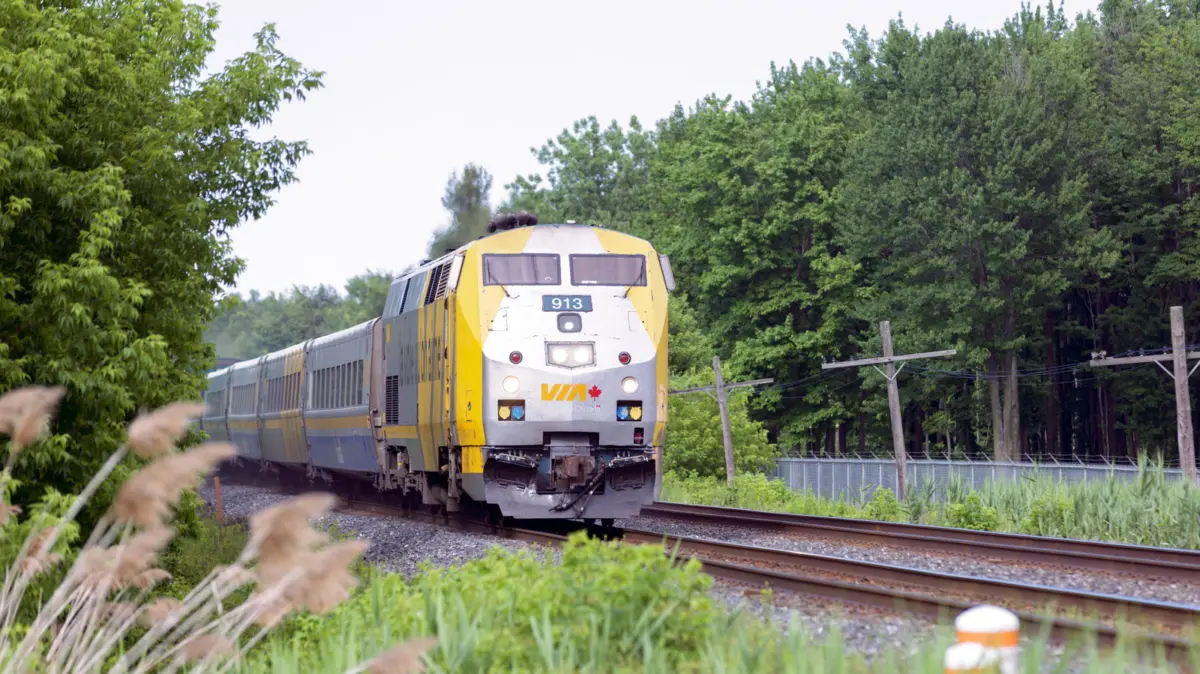
In an era defined by the hurried efficiency of commercial aviation and the congested monotony of highway travel, the romance of the rails endures as a powerful counterweight. For travelers seeking a deliberate, reflective, and immersive journey, North America offers a rare relic of a bygone golden age: The Ocean. Operated by VIA Rail Canada, this legendary route holds the prestigious distinction of being the oldest continuously operating named passenger train on the continent.
Stretching approximately 840 miles across the varied terrain of eastern Canada, The Ocean links the bustling, cosmopolitan metropolis of Montreal, Quebec, with the historic maritime port of Halifax, Nova Scotia. Spanning roughly 24 hours of travel time, this overnight voyage is far more than a simple mode of transportation; it is a moving chronicle of Canadian history, an engineering marvel born out of Confederation, and a scenic odyssey that carries passengers through rolling hills, dense eastern forests, and windswept Atlantic coastlines.
Originally established in the late 19th century to physically unify a fractured young nation, the railway catalyzed the birth, settlement, and industrialization of dozens of communities along its path. Today, a journey aboard The Ocean invites travelers to step off the modern treadmill. Whether booked into comfortable Economy seats or upscale Sleeper Plus accommodations—complete with private cabins and access to classic dining cars—passengers are treated to an ever-changing panorama of French-Canadian villages, Acadian settlements, and breathtaking river and ocean vistas. As VIA Rail continues to navigate the evolving demands of modern tourism and infrastructure, The Ocean remains a vital cultural bridge, preserving the heritage of eastern Canada while offering an unforgettable window into its soul.

Detailed Chronology: From Confederation to Modern Rail
The story of The Ocean is inextricably linked to the birth of modern Canada. To understand the significance of the tracks that carry passengers today, one must look back to the political and geographic realities of the 1860s and 1870s.
The Intercolonial Railway Era (1860s–1904)
Following the Canadian Confederation in 1867, the newly formed dominion faced a massive logistical hurdle. The Maritime provinces of Nova Scotia and New Brunswick were geographically isolated from the central provinces of Quebec and Ontario. Roads were primitive, impassable for large parts of the year, and wholly inadequate for binding a transcontinental country together.
To secure the economic and political union of the Maritimes with central Canada, the federal government committed to building the Intercolonial Railway (ICR). Completed primarily during the 1870s, the ICR was an engineering triumph for its time, cutting through unforgiving wilderness, bridging wide rivers, and scaling rugged terrain. More than just a transport link, the railway acted as an economic catalyst. Towns sprang up along its cleared corridors like beads on a string, fueled by lumber, fishing, and nascent manufacturing industries.
The Birth of The Ocean (1904)
By the dawn of the 20th century, passenger expectations were shifting. Travelers demanded greater speed, improved safety, and higher standards of comfort on long-distance journeys. Recognizing this demand, the railway administration officially inaugurated The Ocean Limited in 1904. Running over the tracks of the Intercolonial Railway, it quickly established a reputation for reliability and luxury, transporting businessmen, politicians, and families between Montreal and Halifax.

Over the subsequent decades, the service weathered major historical milestones, including the First and Second World Wars—where routes like Truro served as critical mobilization hubs—and the transition from steam locomotives to diesel power in the mid-20th century.
The VIA Rail Era (1978–Present)
By the late 1970s, passenger rail in North America was struggling under the financial weight of declining ridership and competition from automobiles and commercial airlines. In response, the Canadian government created VIA Rail in 1978 as an independent crown corporation to assume responsibility for intercity passenger rail services across the country.
Under VIA Rail’s stewardship, The Ocean (dropping "Limited" from its formal title) was preserved, modernized, and adapted to changing economic realities. While frequencies and equipment have evolved over the decades, the train has maintained its historic identity. Today, it stands as the oldest continuously operating named passenger train in North America, bridging over a century of continuous service through war, peace, economic depression, and technological revolution.
Supporting Context & Metrics: Route Geography, Communities, and Onboard Experience
Traversing three of Canada’s most culturally rich and geographically diverse provinces—Quebec, New Brunswick, and Nova Scotia—The Ocean offers a masterclass in regional geography.
The Route and Its Historic Communities
Departing from Montreal’s central station, the train heads eastward, quickly trading urban sprawl for the pastoral beauty of the St. Lawrence River valley and the rolling hills of the Quebec countryside. As the journey progresses, the train makes scheduled and flag stops at communities that owe their very existence to the railway:
- Mont-Joli, Quebec: A historic railway town that grew up around the servicing needs of the early locomotives. Today, Mont-Joli is celebrated for "Les murmures de la ville" (Murmurs of the City), an open-air public art gallery featuring 36 vibrant murals that depict the region’s rich heritage, making it a beloved hidden gem for cultural travelers.
- Matapédia, Quebec: Situated at the dramatic confluence of the Matapédia and Restigouche rivers, this small community boasts a unique identity rooted in world-class salmon fishing. Its cultural fabric is a complex, rich tapestry blending Acadian, French-Canadian, Irish, and Mi’kmaq ancestry.
- Truro, Nova Scotia: A vital industrial and railway hub historically known for machinery, printing, and lumbering. Truro holds a solemn and proud place in Black Canadian military history; it was here that the No. 2 Construction Battalion—Canada’s first and only all-Black military battalion—trained during World War I, facing systemic racism while eagerly answering the call to serve overseas.
- Other Notable Stops: Towns like Rimouski, Campbellton, and Moncton punctuate the route, offering glimpses into maritime life, regional commerce, and resilient coastal communities.
Service Tiers and Onboard Logistics
Operating on a tri-weekly schedule—with departures generally running on Wednesdays, Fridays, and Sundays—The Ocean accommodates a wide range of travelers through two primary classes of service:
- Economy Class: Designed for budget-conscious travelers and shorter regional hops, Economy offers spacious, ergonomic reclining seats with ample legroom, large panoramic windows, and access to a shared service car for light snacks and refreshments.
- Sleeper Plus Class: For those seeking the classic overnight rail experience, Sleeper Plus provides private accommodations ranging from cozy roomettes to larger bedrooms. Fares in this tier include exclusive access to the historic dining car—where chefs prepare meals featuring regional Canadian ingredients—and comfortable lounge spaces designed for socializing and uninterrupted sightseeing.
Seasonal Dynamics
The visual appeal of The Ocean is deeply tied to Canada’s dramatic seasonal shifts:
- Spring: Witness the dramatic thaw as frozen rivers rush with snowmelt and brilliant green buds transform the eastern forests.
- Summer: Golden sunlight glints off the Atlantic Ocean, coastal estuaries, and inland waterways, casting a warm, ethereal glow over sleepy fishing villages.
- Autumn: Competing directly with the legendary foliage routes of New England, the eastern Canadian provinces explode into vibrant hues of crimson, orange, and gold, offering a mesmerizing visual feast for eastbound travelers.
- Winter: Snow blankets the pine forests, frozen lakes, and historic stations, transforming the landscape into a serene, monochromatic wonderland best observed from the warmth of a domed or panoramic lounge car.
Official Statements and Industry Perspectives
The enduring appeal of The Ocean is frequently highlighted by transportation officials, cultural historians, and tourism advocates who view the train not merely as a commercial asset, but as an irreplaceable national institution.
In past corporate strategy releases emphasizing the modernization of Canada’s rail corridors, VIA Rail executives have repeatedly underscored the cultural imperative of maintaining heritage routes. While high-speed rail discussions naturally dominate discussions in the heavily populated Windsor-Quebec City corridor, the federal corporation has consistently acknowledged that long-distance routes like The Ocean serve a distinct purpose. They provide essential mobility for remote and rural communities while satisfying a growing consumer appetite for experiential, slow-paced tourism.
Cultural preservationists and historians in Nova Scotia and New Brunswick have similarly lauded the train’s uninterrupted legacy. In public symposiums focusing on Maritime heritage, local historians frequently point out that the survival of The Ocean acts as a living museum. Unlike static exhibits in brick-and-mortar museums, this rolling archive preserves the human geography of the 19th-century expansion, keeping alive the stories of the laborers, engineers, settlers, and indigenous communities whose lives were forged along the iron highway.
Furthermore, eco-tourism advocates point to VIA Rail’s operations as a crucial step toward sustainable travel. With the global tourism sector under increasing pressure to reduce its carbon footprint, rail travel—particularly on electrified or fuel-optimized long-distance corridors—is increasingly championed as a responsible alternative to regional aviation. Industry analysts note that as consumer preferences shift toward regenerative and low-impact travel, historic routes like The Ocean are uniquely positioned to capture a new generation of environmentally conscious explorers.
Future Outlook: Challenges and Opportunities for North America’s Oldest Train
As The Ocean steams into its second century of continuous operation, it faces a complex landscape of operational challenges and golden opportunities.
Infrastructure and Track Rights
One of the most persistent hurdles facing VIA Rail’s long-distance routes is the reliance on freight-owned infrastructure. Because VIA Rail operates the majority of The Ocean’s route on tracks owned and maintained by major freight railways (primarily Canadian National Railway), passenger trains are occasionally subject to delays when yielding the right-of-way to commercial freight traffic. Advocacy groups and rail-travel associations continue to lobby federal lawmakers for stronger passenger priority legislation, mirroring ongoing debates in the United States regarding Amtrak corridors. Ensuring schedule reliability will be critical to attracting and retaining time-conscious travelers.
Fleet Modernization and Passenger Comfort
To remain competitive against modern travel amenities, ongoing investment in rolling stock is paramount. VIA Rail has made significant strides in recent years toward fleet renewal across its network—most notably with the introduction of new corridor trainsets in central Canada. While The Ocean retains its classic, nostalgic charm through modernized Renaissance-era cars, long-term planning must continue to address accessibility standards, mechanical reliability, and upgraded digital connectivity to meet the expectations of modern digital nomads and international tourists.
The Rise of "Slow Travel"
Despite operational hurdles, the macro-trends in global tourism heavily favor the unique value proposition offered by The Ocean. The global "slow travel" movement—which prioritizes deep, meaningful immersion in local cultures over rushed, checklist-style sightseeing—has experienced a massive resurgence. Travelers are increasingly willing to trade the sterile efficiency of airport terminals for the rhythmic clack of rail tracks, communal dining cars, and unobstructed panoramic views of untamed wilderness.
Additionally, domestic tourism campaigns promoting "staycations" and regional exploration within Canada have boosted interest in maritime getaways. By packaging the journey as a destination in its own right, VIA Rail has successfully marketed The Ocean not just as a way to get from Montreal to Halifax, but as an unhurried, soul-stirring voyage through the heart of Canada’s historic East Coast.
Conclusion
North America’s oldest continuously operating named passenger train is far more than an artifact of 19th-century engineering; it is a living, breathing testament to the power of connection. By faithfully chugging through the snowy woods of Quebec, the river valleys of New Brunswick, and the coastal communities of Nova Scotia, The Ocean continues to weave together the past and the present. For those fortunate enough to book a ticket, it offers an invitation to slow down, look out the window, and witness the timeless beauty of a nation unfolding at the steady, rhythmic pace of a steam-era dream.