










Executive Overview
For decades, the standard playbook for managing public transit safety relied on a singular pillar: law enforcement. Armed guards, increased police patrols, and strict fare enforcement were long considered the default solutions to maintaining order on buses, trains, and platforms. However, a profound shift is underway across major metropolitan transit networks in the United States.
Recognizing that modern transit systems function as micro-communities facing complex urban challenges—such as homelessness, untreated mental health crises, and substance use disorders—major agencies are rewriting their security strategies. Leading this paradigm shift are the Chicago Transit Authority (CTA) and the Maryland Department of Transportation Maryland Transit Administration (MTA).
Both agencies are launching comprehensive, innovative programs designed to de-escalate crises, assist riders, and foster unprecedented levels of transparency. Rather than treating policing and social support as mutually exclusive options, the CTA and MTA are deploying a "layered" safety strategy. This multi-faceted approach combines traditional law enforcement resources with non-enforcement interventionists, customer service ambassadors, data dashboards, and wraparound social services.
By meeting vulnerable individuals where they are and addressing non-violent disruptions before they require a police response, these agencies are working to build a more welcoming, predictable, and secure transit experience for millions of daily commuters.
Detailed Chronology of the New Initiatives
The rollout of these sweeping safety and transparency programs represents the culmination of months—and in some cases years—of strategic planning, community workshops, and pilot program development.
The Path to Chicago’s Safe Ride Specialists
The genesis of the Chicago Transit Authority’s latest initiative dates back to collaborative community frameworks established over recent years. Crucially, the momentum accelerated following a pivotal Transit Community Safety workshop held in August 2025. This gathering convened riders, labor representatives, community organizations, and more than 30 mental health and social-service experts to evaluate how the system could better manage non-criminal disruptions and humanitarian crises.
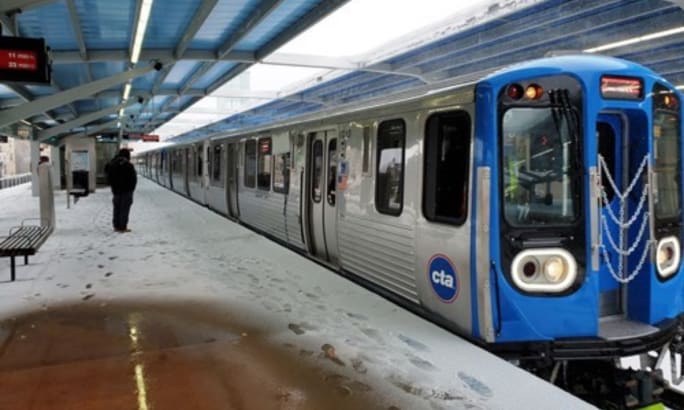
Following approval from the Chicago Transit Board, the CTA finalized plans for the $9.6-million Safe Ride Specialists pilot program. Set to officially launch in September, the program will deploy trained, non-law-enforcement personnel across the high-traffic Blue, Red, and Green lines.

The initiative draws on personnel provided by four distinct community-based organizations. These specialists will operate in targeted stations, on moving trains, and aboard buses. Armed with trauma-informed care training, de-escalation protocols, and anti-bias principles, these workers will carry outreach materials, hygiene care kits, and Narcan to reverse opioid overdoses. The program splits its focus into two core functions:
- Crisis Intervention Specialists: Focused on assisting individuals navigating acute mental health crises and substance use disorders.
- Community Violence Intervention Specialists: Tasked with engaging young people, building trust, and actively mitigating interpersonal conflicts before they escalate.
Concurrently, the CTA is expanding its partnership with the city’s Department of Family and Support Services (DFSS). Backed by a funding commitment of up to $4.2 million annually for the next two years, this expanded agreement bolsters outreach efforts along the 24-hour Red and Blue lines and secures at least 30 dedicated shelter beds. Notably, the Blue Line is gaining a third dedicated outreach team to ensure round-the-clock (24/7) coverage, while a registered nurse will join the existing Red Line outreach team to provide immediate medical assessments.
Maryland’s Twin Pillars: CARE Ambassadors and Data Transparency
While Chicago leans heavily into targeted crisis intervention, the Maryland Transit Administration is taking a complementary, customer-centric approach aimed at enhancing both human presence and institutional accountability.
Beginning September 1, the MTA’s newly minted CARE (Customer Assistance and Rider Experience) Ambassador Team will begin operations across the Metro Subway and Light Rail system. These ambassadors are designed to serve as a friendly, highly visible frontline presence. Their duties include assisting riders with trip planning, explaining fare and payment options, answering transit-related questions, and promoting respectful behavior in accordance with the agency’s updated Code of Conduct. Crucially, CARE Ambassadors also receive foundational de-escalation training, allowing them to resolve minor disputes and address low-level behavioral issues before they require intervention from transit police.
Simultaneously, the MTA has rolled out its public Safety and Security Dashboard. Designed to bridge the gap between the agency and the riding public, this digital platform provides real-time, transparent data regarding serious crimes and police clearance rates across the system.
This transparency initiative joins other recent technological rollouts, such as the See Say mobile app, which was launched in October 2025 to allow commuters to discreetly report safety concerns directly to the MTA Police department.
Supporting Context & Metrics: Measuring Success
Evaluating the efficacy of non-traditional transit safety programs requires moving beyond traditional metrics like arrest numbers and citation counts. Both the CTA and MTA have established robust frameworks to gauge the true impact of their investments on rider experience, operational efficiency, and community health.
The CTA’s Evaluation Metrics
The one-year pilot of the Safe Ride Specialists program will be rigorously evaluated using a multifaceted scorecard. Key performance indicators (KPIs) include:
- De-escalation Success Rates: The total volume of incidents successfully resolved by specialists without requiring a law enforcement response.
- Operational Continuity: Reductions in service delays associated with behavioral disturbances or platform disruptions.
- Safety and Well-being Outcomes: Comprehensive safety metrics for both everyday riders and front-line transit employees.
- Social Service Integration: Quantifiable connections made to wraparound services, shelter beds, and long-term behavioral healthcare for vulnerable populations.
These metrics build upon an already established track record between the CTA and DFSS. Since the two agencies began formal collaboration in 2023, outreach teams have successfully connected thousands of unhoused individuals with emergency shelter placements, permanent housing opportunities, meals, clothing, showers, and substance use treatment.
MTA Safety Data and Crime Trends
In Maryland, the introduction of the Safety and Security Dashboard provides much-needed statistical context for a system that accommodates nearly four million trips annually. According to MTA data:
- Decline in Serious Crime: Part 1 violent crimes—which encompass robbery, aggravated assault, and homicide—registered declines across both 2024 and 2025.
- High Clearance Rates: MTA Police successfully cleared 76% of serious crime cases over the preceding two-year period.
- Ridership Growth: Safety indicators have continued an upward trajectory even as system-wide ridership experiences steady post-pandemic growth.
The dashboard works in tandem with the MTA Police’s broader operational strategies, which blend station patrols, vehicle checks, and active partnerships with the Baltimore City Police, Baltimore City School Police, the Maryland Department of Juvenile Services, and the Mayor’s Office of Youth Violence Prevention.
Official Statements and Perspectives
Leadership from both transit agencies emphasize that these new programs are not intended to replace law enforcement, but rather to optimize public safety resources by deploying the right professional to the right situation.
"Safety is really about meeting people where they are," stated CTA Acting President Nora Leerhsen during the official announcement of the Safe Ride Specialists program. "This program will help every rider feel welcome, connect vulnerable riders to the support they need, and complement our recent investments to increase law enforcement resources."
Leerhsen’s sentiments underscore a growing industry consensus: police officers are vital for deterring and responding to violent crime, but they are rarely the most appropriate personnel to counsel an individual experiencing a psychological crisis or navigate an unhoused person toward housing resources.
Maryland Transit Administrator Holly Arnold echoed a similar philosophy regarding the integration of customer service, behavioral frameworks, and data accountability:
"The safety of our riders and employees will always be our top priority," Arnold noted. "The CARE Ambassadors and Safety dashboard work together with other agency tools, including the Code of Conduct and See Say app, to provide a comprehensive safety approach across the transit system."
Labor unions and social service partners have also voiced cautious optimism, noting that centering front-line employee safety while providing vulnerable citizens with humane, dignified pathways to stability creates a safer environment for everyone who steps foot on a bus or train.
Future Outlook: The Evolution of North American Transit Safety
The simultaneous rollouts by the Chicago Transit Authority and the Maryland Transit Administration signal a permanent evolution in how North American public transit agencies operate. As urban centers grapple with intersecting crises of housing affordability, mental health resource gaps, and post-pandemic behavioral shifts, transit systems can no longer afford a one-size-fits-all security model.
By pioneering layered safety frameworks, the CTA and MTA are establishing blueprints that other regional transit networks are watching closely. For the CTA, the data and qualitative outcomes harvested from the Safe Ride Specialists pilot will directly inform broader regional safety initiatives spearheaded by the Northern Illinois Transit Authority. Meanwhile, Maryland’s integrated model of combining human-centric customer service ambassadors with open-book data transparency sets a high standard for institutional accountability.
Ultimately, the overarching goal of these initiatives is simple yet ambitious: to redefine public safety on public transit. By balancing rigorous security enforcement with proactive crisis intervention, community violence prevention, and empathetic social work, agencies like the CTA and MTA are proving that a truly safe transit system is one that is secure, accessible, and supportive for every single rider.