




By Global Maritime Infrastructure Bureau
Published: August 26, 2026
Executive Overview
In a decisive move designed to reshape the geopolitical and economic landscape of West African maritime logistics, the Nigerian Federal Government—acting through the Nigerian Ports Authority (NPA)—has officially awarded the high-stakes contract for the comprehensive reconstruction and capital dredging of the critical Escravos Channel to the China Harbour Engineering Company (CHEC). Finalized earlier this month, this multi-million-dollar infrastructure initiative represents a foundational pillar of the federal administration’s ambitious Eastern Ports Rehabilitation Program.
For decades, the strategic gateway to the Warri Port has been plagued by severe sedimentation, declining navigational depths, and infrastructural obsolescence. These conditions have historically constrained vessel throughput, elevated insurance and operational risks for shipowners, and compromised the economic viability of Nigeria’s delta ports. By entrusting CHEC—a global heavyweight in marine engineering and port development—with this complex undertaking, Abuja is signaling an uncompromising commitment to unlocking the latent economic potential of the Niger Delta.
This comprehensive report examines the multifaceted drivers behind the Escravos Channel project. It details the operational bottlenecks that necessitated emergency interventions, analyzes the scope of engineering works assigned to CHEC, contextualizes the geopolitical and economic implications for the broader sub-Saharan maritime sector, and outlines the long-term outlook for regional trade competitiveness.
Detailed Chronology: The Path to the Escravos Overhaul
The awarding of the Escravos Channel contract is the culmination of years of mounting stakeholder frustration, protracted bureaucratic deliberations, and escalating navigational hazards within the Warri Port complex. To understand the gravity of the current intervention, it is necessary to trace the chronology of events that brought Nigeria’s eastern maritime artery to this critical juncture.
Years of Neglect and Rising Navigational Risks
Dating back to the early 2010s, maritime operators, shipping associations, and terminal concessionaires operating within the Warri Port zone repeatedly raised red flags regarding the rapid siltation of the Escravos Bar and the adjoining channel approaches. As littoral drift, wave action, and upstream sediment discharge continued unabated without sustained maintenance dredging campaigns, the navigable draught of the channel steadily decreased.
By the early 2020s, the situation had evolved from an operational inconvenience into a critical safety crisis. Large container ships, bulk carriers, and petroleum product tankers calling at Warri were routinely forced to light-load—discharging portions of their cargo at offshore terminals or alternative deep-water ports before attempting transit up the channel. Even with light-loading precautions, numerous vessels suffered groundings, resulting in costly hull damages, prolonged off-hire periods, and soaring maritime insurance premiums for voyages routed through the Delta.
The Legislative and Administrative Push
Recognizing that the chronic underperformance of the Eastern Ports was exacerbating port congestion in Lagos and starving the southern and eastern geopolitical zones of efficient supply chains, the Federal Government launched a comprehensive audit of all navigational channels under the purview of the NPA. The findings underscored an urgent need for capital intervention rather than routine maintenance.
Throughout 2024 and 2025, the Ministry of Marine and Blue Economy, in close collaboration with the NPA, laid the groundwork for a transparent, competitive procurement process. Stakeholder consultations involving the indigenous shipping community, port terminal operators, and international dredging contractors were convened to define the parameters of the rehabilitation.
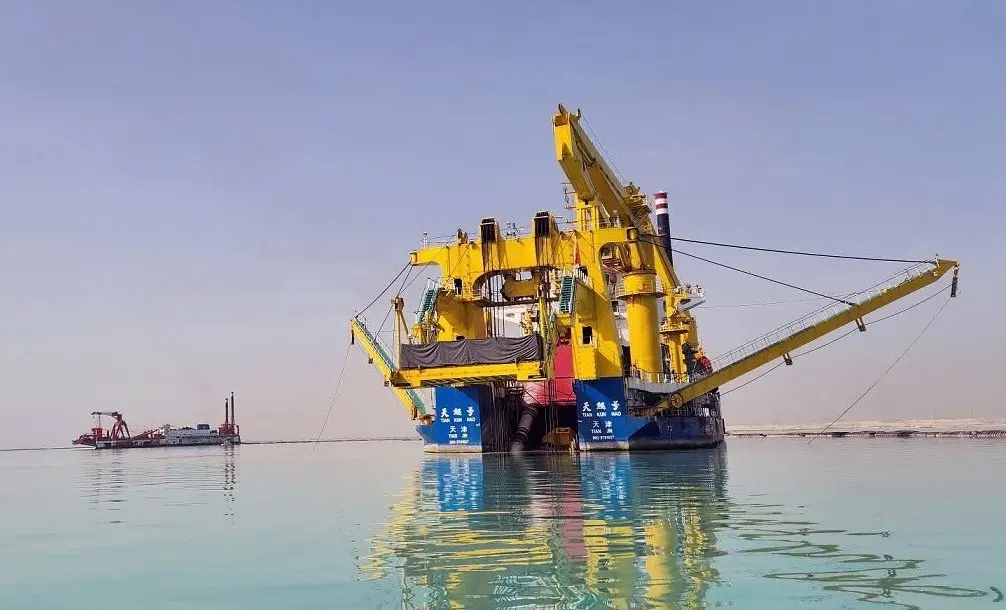
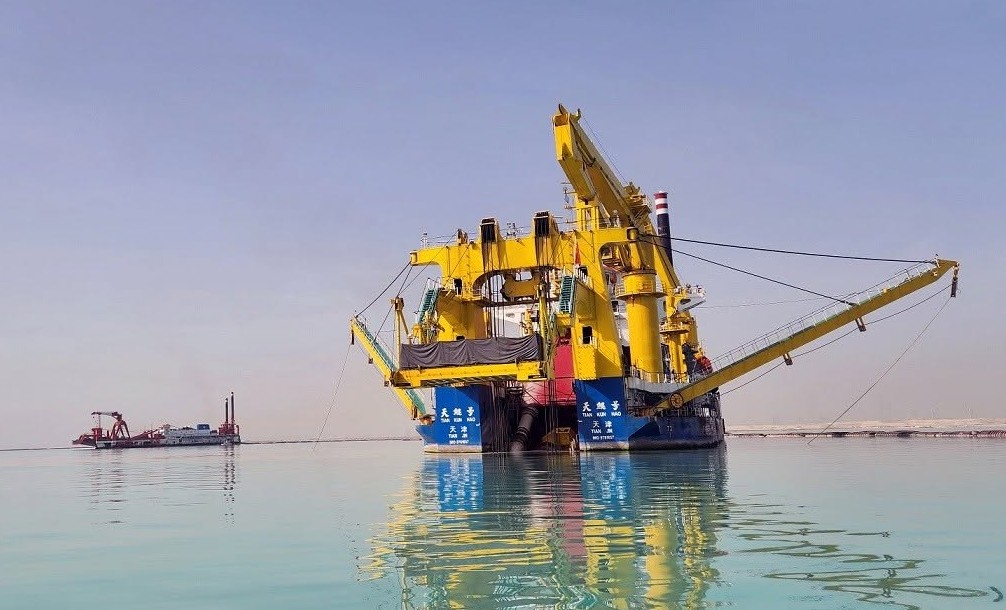
The turning point arrived in mid-2026 when financial and technical bids were evaluated. CHEC’s comprehensive proposal—combining state-of-the-art trailing suction hopper dredgers (TSHDs), cutter suction dredgers (CSDs), and a robust coastal protection framework—surfaced as the most technically viable and economically competitive solution. The contract was formally executed in August 2026, setting the stage for immediate site mobilizations.
Supporting Context & Metrics: Engineering the Escravos Breakthrough
The technical scope of the Escravos Channel reconstruction and dredging project is immense, requiring precision engineering to combat hostile coastal dynamics and ensure long-term channel sustainability.
Geological and Hydrological Challenges
The Escravos entrance is subject to intense wave energy, longshore sediment transport, and high tidal variability. The hydrodynamics of the region dictate that any unmaintained channel will rapidly silt up due to the constant migration of sandbars. Consequently, CHEC’s mandate extends far beyond simple sediment removal; it encompasses a holistic stabilization strategy designed to maintain the designed channel depth over extended maintenance cycles.
- Target Draught and Bathymetry: The project aims to restore and deepen the channel to accommodate deeper-draft vessels, effectively eliminating the historical draft restrictions that capped Warri Port’s capacity at smaller vessel classes (Handysize and below).
- Volume of Dredging: Preliminary geotechnical and bathymetric surveys indicate that millions of cubic meters of soft clay, dense sand, and compacted silt must be excavated from the navigational corridor and disposed of in designated offshore dumping zones.
- Breakwater and Coastal Protection: In addition to dredging, the contract includes the rehabilitation and reinforcement of existing breakwaters and groynes. These structures are critical for mitigating wave action at the river mouth and preventing littoral drift from choking the newly dredged channel.
Economic Stakes for the Niger Delta
The revitalization of Warri Port is inextricably linked to the economic empowerment of the Niger Delta region. Historically, the concentration of maritime traffic in Lagos (Apapa and Tin Can Island ports) created severe logistical bottlenecks, overland transport delays, and inflated cargo dwell times.
By restoring the Escravos Channel, the Federal Government aims to:
- Lower Logistics Costs: Importers and exporters in the South-South, South-East, and northern hinterlands will benefit from direct routing to eastern ports, cutting expensive road-haulage mileage from Lagos.
- Boost Local Employment: The influx of maritime infrastructure activity is projected to generate thousands of direct and indirect jobs for marine engineers, logistics personnel, chandlers, and local service providers.
- Enhance Energy and Industrial Logistics: Given Warri’s proximity to major oil, gas, and industrial manufacturing hubs, a functional port channel directly supports the seamless movement of heavy equipment, project cargo, and petroleum products.
Official Statements and Industry Perspectives
The announcement of CHEC’s contract award has elicited strong reactions from government officials, maritime regulators, and industry leaders, highlighting the national importance of the project.
Speaking on behalf of the administration, representatives of the Ministry of Marine and Blue Economy emphasized that the rehabilitation of the Escravos Channel is a cornerstone of the broader national strategy to diversify economic gateways and optimize port efficiency.
"For too long, the economic potential of our Eastern Ports has been held hostage by natural and man-made navigational constraints," a senior maritime ministry official noted. "The contract awarded to China Harbour Engineering Company is not merely a dredging project; it is a vital economic lifeline for Warri Port and a clear message to the international shipping community that Nigeria is serious about world-class maritime infrastructure."
The Nigerian Ports Authority (NPA) has similarly underscored its supervisory role in ensuring that the project adheres to strict environmental standards, local content regulations, and execution timelines. The NPA has committed to deploying advanced hydrographic survey vessels to monitor CHEC’s progress in real time, ensuring compliance with specified depth milestones.
Meanwhile, representatives from private terminal operators and the Nigerian Chamber of Shipping have welcomed the development with cautious optimism.
"We have spent years absorbing the financial shocks of vessels running aground or waiting weeks for favorable tides to clear the Escravos bar," said a spokesperson for a leading port logistics association operating in Warri. "If CHEC delivers this project to specifications and establishes a reliable maintenance regime, we will witness an immediate renaissance in cargo volumes routed through the eastern corridor. This is a monumental step in the right direction."
Future Outlook: A New Era for Nigerian Maritime Competitiveness
As CHEC mobilizes its fleet of specialized dredging vessels to the Niger Delta, the maritime sector is looking toward a transformed operational environment by the late 2020s and into the 2030s.
Transforming Regional Transshipment Dynamics
The successful execution of the Escravos Channel project is expected to alter West African trade routes. With Warri Port capable of safely receiving larger container ships and bulk carriers, shipping lines will be incentivized to establish direct mainline calls to Nigeria’s eastern seaboard, bypassing the congested anchorages of neighboring regional hubs. This shift promises to reduce demurrage costs, enhance supply chain resilience, and position Nigeria as a dominant transshipment hub for the landlocked nations of the West African sub-region.
Sustainability and Maintenance Protocols
A historical pitfall of infrastructure development in Nigeria has been the lack of sustainable post-construction maintenance frameworks. Industry observers emphasize that the long-term success of the Escravos investment depends on institutionalizing continuous maintenance dredging contracts. The NPA’s current framework reportedly incorporates performance-based clauses that obligate contractors to maintain specified depths over a multi-year window, mitigating the risk of rapid silting reversion.
Geopolitical and Economic Convergence
The involvement of China Harbour Engineering Company also highlights the enduring role of international engineering partnerships in shaping African infrastructure. As part of broader global supply chain integrations, the transfer of advanced marine engineering technology and the training of local Nigerian maritime cadres will remain crucial benchmarks for evaluating the ultimate success of the venture.
Conclusion
The award of the Escravos Channel reconstruction and dredging contract to CHEC marks a watershed moment for Nigerian maritime infrastructure. By tackling the root causes of navigational inefficiency at Warri Port, the Federal Government and the Nigerian Ports Authority are dismantling structural barriers that have constrained national commerce for decades. As dredgers commence operations, stakeholders across the maritime value chain will be watching closely, anticipating a new era of safety, efficiency, and economic vitality across Nigeria’s Eastern Ports.