











Executive Overview
Against the backdrop of a booming $102 billion industry experiencing unprecedented momentum, transit leaders, policymakers, global suppliers, and technology pioneers from every corner of the mobility ecosystem have converged upon Chicago. The American Public Transportation Association (APTA) officially kicked off its flagship APTA 2026 TRANSform Conference & EXPO, setting the stage for what organizers, exhibitors, and attendees anticipate will be a watershed moment for the future of public transportation and passenger rail.
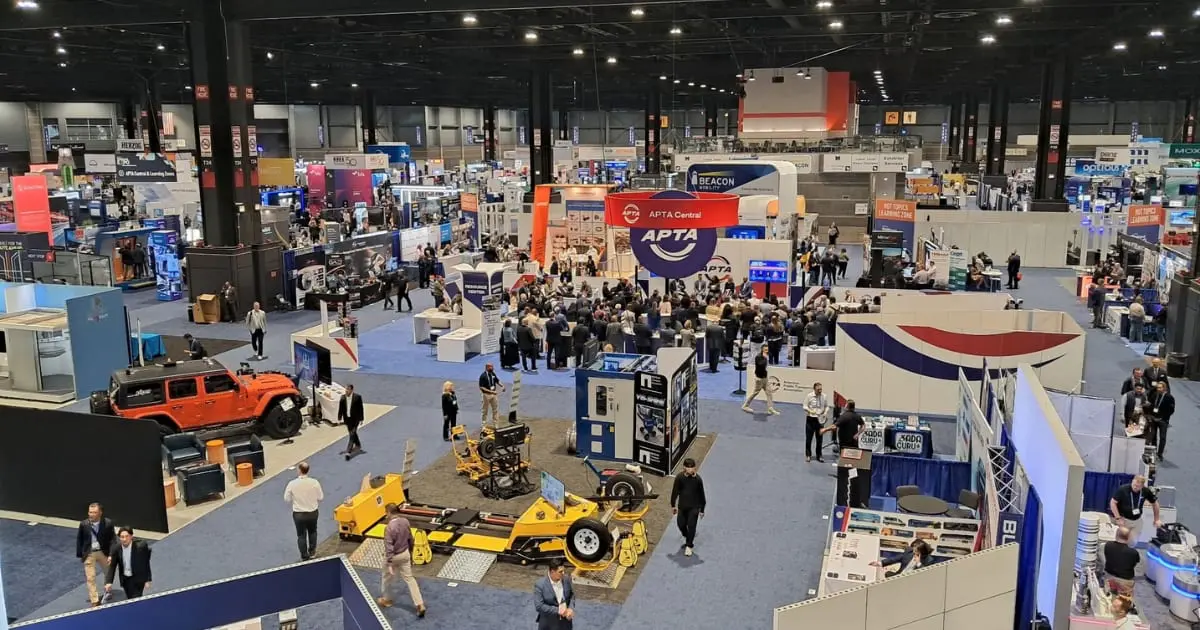
Running through October 7, the multi-day mega-event serves as an international crucible for ideas, equipment, and cutting-edge technology. The expo floor is packed with the latest in zero-emission fleets, artificial intelligence-driven operational software, resilient infrastructure solutions, and next-generation passenger experience platforms. For an industry charged with moving millions of people daily while simultaneously navigating the existential challenges of climate change, aging assets, and evolving post-pandemic ridership patterns, the stakes—and the investments—have never been higher.
APTA President and CEO Paul P. Skoutelas set an optimistic, forward-leaning tone during his opening remarks, framing the event not merely as a trade show, but as a catalyst for systemic reinvention.
"As agencies scale up sustainable tech and modernize networks, the innovations debuting on the EXPO floor this week will define the future of public transportation mobility," Skoutelas stated. "As we gather for EXPO 2026, we celebrate a $102 billion industry experiencing unprecedented momentum. We are not just meeting today’s infrastructure needs; we are re-inventing modern public transit and passenger rail to drive economic growth and create more connected, sustainable communities."
This comprehensive report examines the core themes, technological breakthroughs, economic drivers, and local backdrops shaping the APTA 2026 TRANSform Conference & EXPO, offering an authoritative look at how the decisions made in Chicago this week will reverberate across global transit networks for decades to come.
Detailed Chronology: Day One and the Road Ahead
The opening day of the APTA 2026 TRANSform Conference & EXPO set a blistering pace, establishing an agenda packed with high-level plenaries, technical workshops, and the grand opening of the expansive exhibition hall.
Day One: Setting the Stage for Transformation
The morning commenced with opening general sessions addressing the macro-trends defining modern transit: federal funding landscapes, the acceleration of electrification timelines, and the integration of autonomous technologies into legacy networks. As policymakers and transit agency general managers took the stage, discussions quickly pivoted from theoretical policy frameworks to practical deployment strategies.
Following the morning plenaries, the ribbon was officially cut on the EXPO exhibition floor. Thousands of attendees flooded the aisles to interact with hundreds of global exhibitors showcasing heavy-duty electric buses, hydrogen fuel cell infrastructure, real-time predictive maintenance software, and advanced fare-collection architectures. The energy on the floor underscored a renewed sense of confidence within the industry, heavily buoyed by historic federal investments and a growing public consensus regarding the necessity of green, equitable mobility options.
The Days Ahead: Panels, Pitches, and Partnerships
Over the remainder of the conference, the schedule features specialized tracks covering everything from cybersecurity in operational technology (OT) to equitable transit-oriented development (TOD). Key highlights slated for the coming days include:
- Deep-Dive Technical Tours: Attendees are scheduled to tour Chicago’s premier transit infrastructure sites, observing firsthand how agencies manage complex multi-modal networks under heavy daily loads.
- Startup and Tech Innovation Pitches: Emerging companies specializing in artificial intelligence, machine learning, and advanced materials will present ground-breaking solutions designed to solve persistent operational bottlenecks.
- Workforce Development Summits: As agencies grapple with labor shortages and the specialized skills required to maintain electric and digital fleets, human resources leaders are convening to share best practices in recruitment, training, and retention.
The event will culminate on October 7 with closing plenary sessions summarizing key takeaways and establishing industry benchmarks for the year ahead, ensuring that the momentum generated in Chicago translates into actionable, long-term progress back home.
Supporting Context & Metrics: A $102 Billion Industry in Transition
To fully understand the gravity of the discussions taking place at McCormick Place, one must examine the macroeconomic and structural realities of the North American public transportation landscape in 2026.
The Scale of the Modern Transit Economy
The public transportation sector has officially cemented its status as a $102 billion industry, reflecting massive capital infusions from federal, state, and local funding sources over the past several years. This financial scale is matched by the sheer volume of daily economic activity facilitated by transit networks across the United States and Canada. Billions of passenger trips are completed annually, connecting workers to jobs, students to education, and consumers to commercial hubs.
However, this financial expansion is accompanied by complex operational mandates. Agencies are no longer judged solely on schedule adherence and fare-box recovery ratios. Today’s transit authorities are evaluated against aggressive environmental benchmarks, digital equity goals, and safety metrics that demand zero tolerance for preventable accidents or systemic vulnerabilities.
The Four Pillars of EXPO 2026 Floor Traffic
An analysis of attendee engagement and exhibitor buzz reveals that foot traffic and strategic inquiries on the EXPO floor are heavily concentrated around four critical, interconnected industry themes:
- Evolving Fleet Technology and Zero-Emission Transitions:
The transition away from internal combustion engines is well past its infancy. Agencies are moving past pilot programs and deploying entire fleets of battery-electric and hydrogen fuel cell buses. The conversation at EXPO 2026 focuses heavily on the downstream challenges of this transition: high-capacity depot charging infrastructure, grid resilience, battery lifecycle management, and supply chain reliability for specialized components. - Artificial Intelligence and Autonomous Operations:
AI has firmly established itself as a foundational operational tool rather than a futuristic novelty. Transit agencies are leveraging machine learning algorithms for predictive maintenance—identifying mechanical anomalies in rolling stock and rail infrastructure before they cause catastrophic failures. Furthermore, AI-driven traffic signal priority (TSP) systems are actively transforming bus speeds and schedule reliability in congested urban corridors. - Operational Resilience and Cyber-Physical Security:
As transit networks become increasingly digitized, interconnected, and reliant on Internet of Things (IoT) sensors, the attack surface for cyber threats expands exponentially. Concurrently, agencies must harden physical networks against extreme weather events driven by climate change. Resilience sessions at the conference are drawing massive crowds eager to learn how to safeguard both digital control rooms and physical tracks against compounding vulnerabilities. - Passenger Experience and Seamless Mobility (Mobility-as-a-Service):
Modern riders demand frictionless, door-to-door journeys. Exhibitors showcasing account-based ticketing, open-payment architectures, and unified Mobility-as-a-Service (MaaS) platforms are seeing unprecedented interest. The goal is clear: make public transit as easy to access, pay for, and navigate as ordering a ride-sharing vehicle, while maintaining universal accessibility for all socioeconomic groups.
Official Statements: Perspectives from Industry Leadership
The overarching philosophy of the APTA 2026 conference is encapsulated in the reflections of leadership and the historical significance of the host city.
In his keynote address, Paul P. Skoutelas emphasized that the industry’s current momentum is not an accident of history, but the result of deliberate, strategic advocacy and hard-fought capital deployment.
"We are not just meeting today’s infrastructure needs; we are re-inventing modern public transit and passenger rail to drive economic growth and create more connected, sustainable communities," Skoutelas remarked, capturing the dual mission of modern transit agencies: economic engine building and social equity advancement.
The Return to Chicago: A 45-Year Legacy
The choice of Chicago as the host city for the 2026 TRANSform Conference & EXPO holds profound symbolic and practical value for the association. Forty-five years ago, in 1981, Chicago played host to the very first APTA EXPO. Returning to the city allows the association to measure how far the industry has traveled since the dawn of the computer age in transit management, while honoring Chicago’s deep industrial and transportation roots.
"Chicago is a city that helped build America, and public transportation has long been central to its growth," Skoutelas noted. "Forty-five years later, we are proud to return to a city that shows how transit connects people to opportunity and helps communities thrive."
This sentiment was echoed by local transit executives and civic leaders, who pointed to Chicago’s ongoing modernization efforts as a living laboratory for the technologies and governance models being debated on the conference floor.
Future Outlook: Chicago as the Ultimate Backdrop for Innovation
There is perhaps no better urban canvas to explore the future of transit than Chicago. The region’s vast transportation network provides more than 1.3 million rides every single day across a six-county footprint, serving as a vital lifeline for millions of residents and visitors.
A New Era of Regional Governance: NITA
Chicago’s transit ecosystem is currently undergoing a historic structural evolution under the Northern Illinois Transit Authority (NITA). Designed to streamline and unify regional transit oversight, NITA coordinates service planning, fare structures, and capital investments across the region’s three primary operating agencies:
- The Chicago Transit Authority (CTA): Managing high-density heavy rail (the "L") and extensive bus networks within the city.
- Metra: Delivering commuter rail service connecting the collar counties to downtown Chicago.
- Pace: Providing suburban bus and ADA paratransit services across the metropolitan area.
By bringing these entities under a more cohesive regional framework, NITA is eliminating historical silos, making regional travel seamless for the commuter while maximizing administrative and operational efficiency.
Historic Capital Investments: The Red Line Extension
This new era of regional governance is backed by unprecedented financial commitments. More than $11 billion in capital projects have either been recently completed or actively announced across the Chicago region.
Chief among these generational investments is the $5.7 billion Red Line Extension (RLE) project. Representing the largest single transit capital project in the city’s history, the RLE will extend the CTA Red Line southward from the 95th/Dan Ryan Terminal to 130th Street, constructing four new accessible stations and providing long-overdue rapid transit access to historically underserved communities on Chicago’s Far South Side. The project exemplifies the exact intersection of social equity, economic development, and infrastructure modernization that defines the core ethos of the APTA 2026 conference.
Conclusion: The Road Beyond Chicago
As the exhibits hum, panels convene, and networking sessions unfold through October 7, the participants of the APTA 2026 TRANSform Conference & EXPO carry a collective responsibility. The $102 billion industry momentum celebrated in Chicago is not a destination, but a springboard.
The challenges of the 21st century—urban congestion, carbon emissions, equity gaps, and technological disruption—demand nothing less than a complete reimagining of how humanity moves through space. Armed with artificial intelligence, zero-emission fleets, unified regional governance models, and historic federal and local funding, the leaders gathered in Chicago are proving that public transportation is not merely a relic of industrial history, but the indispensable vanguard of our sustainable, connected future.


