








Executive Overview
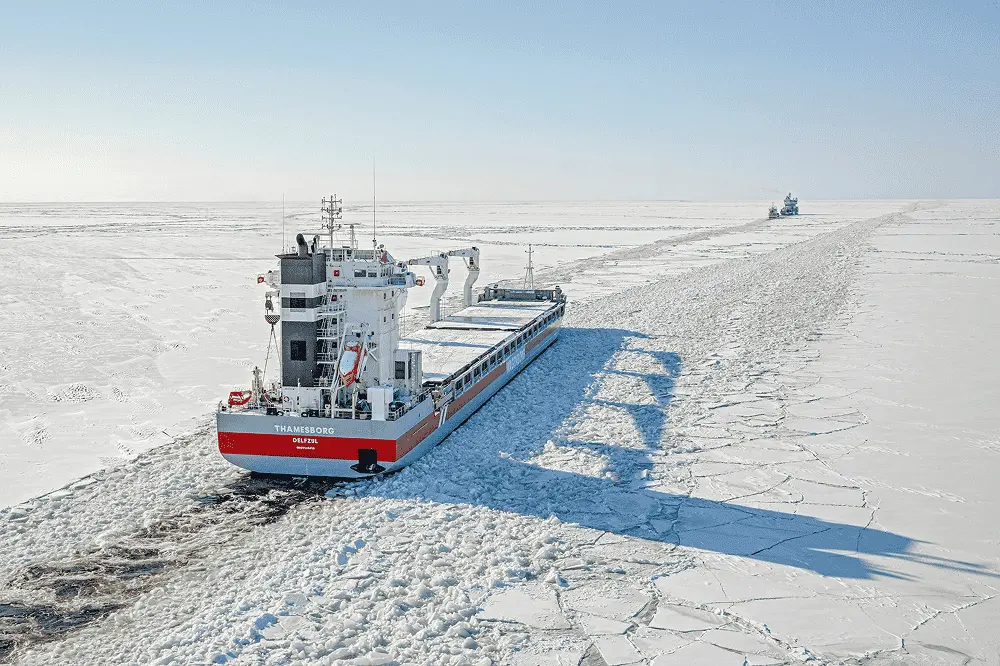
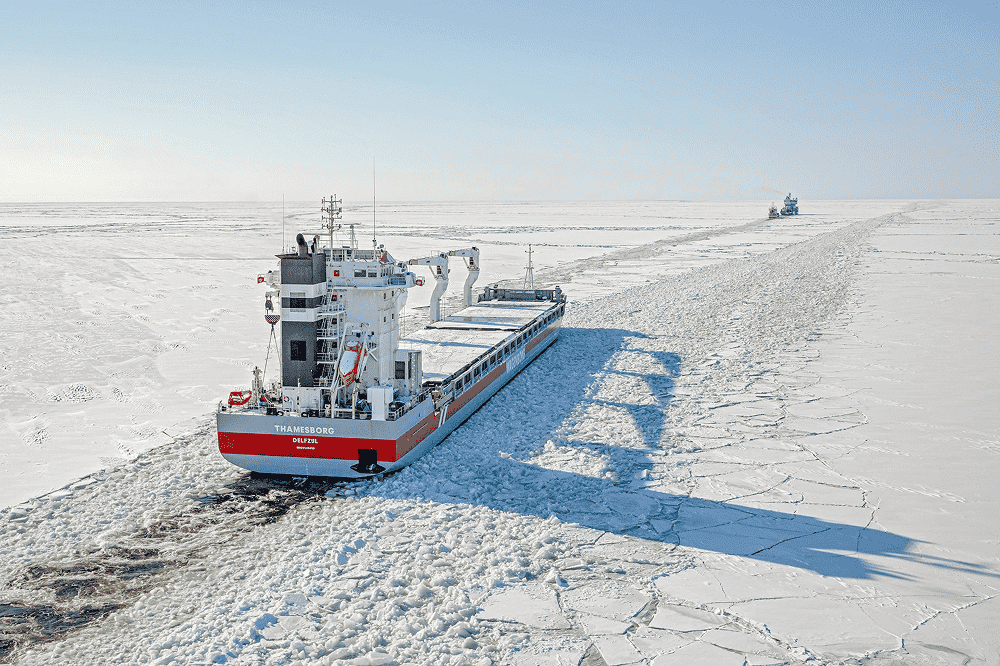
In a striking demonstration of operational resilience and maritime adaptation, the Dutch general cargo vessel Thamesborg has successfully completed its first transit of Canada’s treacherous Northwest Passage since running aground on an uncharted shoal in the region nearly a year ago. Operated by the prominent Dutch shipping company Royal Wagenborg, the 172-meter (564-foot) vessel completed the highly symbolic voyage in mid-August 2026, navigating within a few nautical miles of the very site where its hull was severely compromised in September 2025.
The successful passage represents more than just a routine commercial transit; it serves as a critical case study in Arctic navigation, risk mitigation, and the ongoing challenges of mapping the rapidly changing polar environment. According to Automatic Identification System (AIS) tracking data, the Thamesborg departed Matane, Quebec, on August 8, 2026, and entered the Northwest Passage on August 13. Over the course of a five-day transit, the vessel carefully negotiated the narrow corridors of the Canadian Arctic Archipelago, exiting the passage on August 18. The freighter is currently en route to Onsan, South Korea, where it is scheduled to arrive on September 3, 2026.
This successful voyage stands in stark contrast to the vessel’s harrowing experience in 2025, which triggered one of the most complex, remote, and logistically challenging salvage operations in recent Arctic history. By analyzing the differences between the 2025 and 2026 transits, maritime experts are gaining valuable insights into how commercial operators must adapt to the unforgiving and under-mapped realities of high-latitude shipping.
Detailed Chronology
[Sept 6, 2025: Grounding in Franklin Strait]
       │
       ▼
[Sept–Oct 2025: Complex Arctic Salvage (5k tons of cargo offloaded)]
       │
       ▼
[Oct 2025: Refloated & Escorted to Baie-Comeau]
       │
       ▼
[Dec 2025: Atlantic Crossing & Repairs at Turkish Shipyard]
       │
       ▼
[Aug 8, 2026: Departure from Matane, Quebec]
       │
       ▼
[Aug 13–18, 2026: Safe Northwest Passage Transit]
       │
       ▼
[Sept 3, 2026: Scheduled Arrival in Onsan, South Korea]
The 2025 Franklin Strait Incident
The trouble began on September 6, 2025. The Thamesborg was transiting the Franklin Strait—a critical and narrow waterway in the territory of Nunavut—while en route from China to Baie-Comeau, Quebec. The vessel was laden with a heavy cargo of industrial carbon blocks.
While navigating the strait, the vessel struck an uncharted shoal. The impact was severe, breaching the outer hull and damaging several ballast tanks, which led to immediate water ingress. Although the crew managed to stabilize the vessel and prevent injuries or environmental pollution, the Thamesborg was firmly stranded in one of the most remote and inaccessible maritime corridors on Earth.
A High-Stakes Arctic Salvage
Because the grounding occurred in an area devoid of deep-water ports or heavy salvage infrastructure, refloating the Thamesborg required an extraordinary, month-long logistical effort.
- Cargo Offloading: To reduce the vessel’s draft and ease it off the shoal, salvors had to conduct ship-to-ship cargo transfers under freezing Arctic conditions. More than 5,000 metric tons of industrial carbon blocks were meticulously transferred from the stricken freighter onto two receiving vessels, the Silver Copenhagen and the Nunalik.
- Water Extraction and Stabilization: The multipurpose icebreaker Botnica was dispatched to the scene, carrying specialized salvage and pumping equipment. Salvage teams worked continuously to pump water out of the damaged ballast tanks and secure the hull’s integrity.
- Refloating: In early October 2025, nearly a month after the initial grounding, the lightened and stabilized Thamesborg was successfully refloated.
The Long Road to Recovery
The refloating was only the first phase of a long journey home. Escorted by the icebreaker Botnica and the specialized tug Beverly M I, the Thamesborg sailed under its own power out of the Arctic, arriving in Baie-Comeau in late October to discharge its remaining cargo.
Once empty, the vessel faced a daunting transatlantic crossing to undergo permanent repairs. Accompanied by Boskalis’ powerful anchor-handling tug supply (AHTS) vessel Princess, the Thamesborg crossed the ocean under its own power. In December 2025, the vessel arrived at a shipyard in Turkey, where it underwent extensive steel replacement and structural rehabilitation to repair its damaged bottom plating and ballast system.
The Triumphant 2026 Return Transit
After completing repairs and returning to active service, Royal Wagenborg elected to send the Thamesborg back through the Northwest Passage during the summer 2026 shipping window.
Departing Matane, Quebec, on August 8, 2026, the vessel arrived at the eastern entrance of the Northwest Passage on August 13. The ship’s navigation team executed a flawless five-day transit through the archipelago, navigating within a few miles of the 2025 grounding site before safely exiting into the Beaufort Sea on August 18.
Supporting Context & Metrics
The Hydrographic Reality of the Canadian Arctic
The primary contributing factor to the 2025 grounding of the Thamesborg was the presence of an "uncharted shoal"—a stark reminder of the massive hydrographic data gaps that plague the Canadian Arctic.
| Metric / Parameter | Details |
|---|---|
| Vessel Length / Draft | 172 meters (564 feet) / Variable depending on cargo load |
| 2026 Transit Duration | 5 days (August 13 – August 18, 2026) |
| 2025 Grounding Date | September 6, 2025 |
| Salvage Duration (2025) | Approx. 4 weeks (Refloated early October 2025) |
| Cargo Transferred (2025) | Over 5,000 tons of industrial carbon blocks |
| Repair Location | Shipyard in Turkey (December 2025) |
According to the Canadian Hydrographic Service (CHS) and various international maritime bodies, less than 15 percent of the waters in the Canadian Arctic Archipelago have been surveyed to modern, high-resolution standards. Many of the charts currently in use rely on depth soundings gathered during historical expeditions or sparse, low-resolution regional surveys.
In these remote corridors, shifting ice sheets, seismic activity, and underwater silt movement can alter the seafloor topography. When combined with incomplete bathymetric data, these factors create an incredibly high-risk environment for deep-draft commercial vessels.
AIS Track Analysis: 2025 vs. 2026
A comparative analysis of the Thamesborg’s AIS tracks reveals a deliberate adjustment in navigational strategy between the two voyages.
During the ill-fated 2025 voyage, the vessel’s track showed it navigating significantly further to the east within the Franklin Strait. It was in this eastern sector that the vessel encountered the uncharted shoal.
During the successful 2026 transit, the ship’s command took a noticeably different route, keeping the vessel further to the west, utilizing a deeper, better-documented corridor of the strait. This adjustment highlights how modern operators must rely on peer-shared data, local ice-navigator expertise, and post-incident lessons learned to navigate areas where official hydrographic charts remain incomplete.
Official Statements & Investigative Status
Despite the successful completion of the 2026 transit, the official investigation into the 2025 grounding remains active. The Transportation Safety Board (TSB) of Canada is still reviewing the incident to determine the exact sequence of events, navigational decisions, and systemic issues that led to the grounding.
In a statement provided to maritime news outlet gCaptain, Royal Wagenborg emphasized its commitment to using the 2025 incident as a catalyst for improving safety standards across its entire fleet.
"While investigations into the Thamesborg incident are still ongoing, Wagenborg remains fully committed to safe, responsible navigation through the Northwest Passage," a company representative stated. "We view every operational challenge as an opportunity to review our procedures, enhance our training, and expand our knowledge base in this delicate environment."
The company also underscored the importance of international and regional cooperation when operating in ecologically sensitive and indigenous-managed waters:
"We approach every Arctic voyage with rigorous preparation, working hand-in-hand with Canadian authorities and local stakeholders throughout every transit."
This collaborative approach is increasingly vital under the International Maritime Organization’s (IMO) Polar Code, which mandates strict guidelines regarding ice navigation, crew training, and environmental protection in polar waters.
Future Outlook
The 2026 Northwest Passage Season
The successful transit of the Thamesborg comes during a particularly busy summer season for the Northwest Passage. Driven by retreating summer sea ice and growing commercial interest, the passage is seeing record levels of traffic from both commercial cargo ships and high-end expedition cruise vessels.
Public schedules and AIS tracking show a diverse array of passenger ships operating in or preparing to enter the passage in August and September 2026, including:
- Seabourn Venture (Ultra-luxury expedition ship)
- MS Fridtjof Nansen (Hybrid-powered expedition vessel operated by Hurtigruten)
- Ocean Victory (Albatros Expeditions vessel featuring an inverted X-Bow design)
These vessels carry hundreds of tourists into ecologically sensitive regions, highlighting the dual nature of modern Arctic shipping: while commercial freighters use the passage to shave thousands of miles off traditional routes between Asia and Europe, cruise operators are capitalizing on the growing demand for polar tourism.
Balancing Opportunity and Risk
The contrasting stories of the Thamesborg—its near-disaster in 2025 and its triumphant return in 2026—neatly encapsulate the future of Arctic shipping.
On one hand, the Northwest Passage offers a highly lucrative alternative to the Panama or Suez canals, reducing transit times and fuel emissions for global trade. On the other hand, the region remains a logistical wilderness. The lack of emergency towing vessels, search-and-rescue infrastructure, oil spill response equipment, and accurate hydrographic data means that any incident can quickly escalate into an environmental and financial catastrophe.
As climate change continues to diminish the Arctic summer ice pack, the volume of traffic will undoubtedly rise. The legacy of the Thamesborg’s grounding and subsequent redemption will likely serve as a blueprint for the industry: a reminder that successful Arctic navigation requires not just state-of-the-art ice-class hulls, but a deep respect for the limitations of current maritime data, continuous crew training, and an unwavering commitment to safety.