The intersection of recreational fishing and sustainable marine technology has reached a compelling new milestone. For decades, anglers favoring kayaks have understood the unique benefits of electric propulsion: silent operation that doesn’t spook fish, zero local emissions, and precise throttle control that allows for stealthy navigation in skinny water. However, adapting traditional electric outboards—or even heavy trolling motors—to specialized fishing kayaks has historically required cumbersome battery placements, tangled wiring, and awkward rigging.
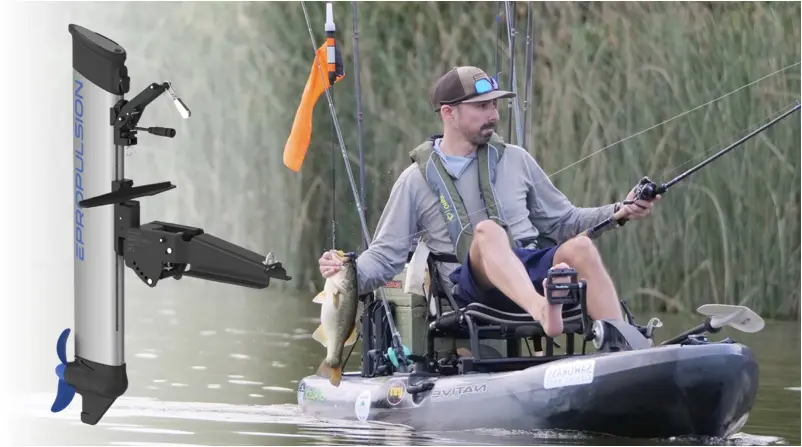
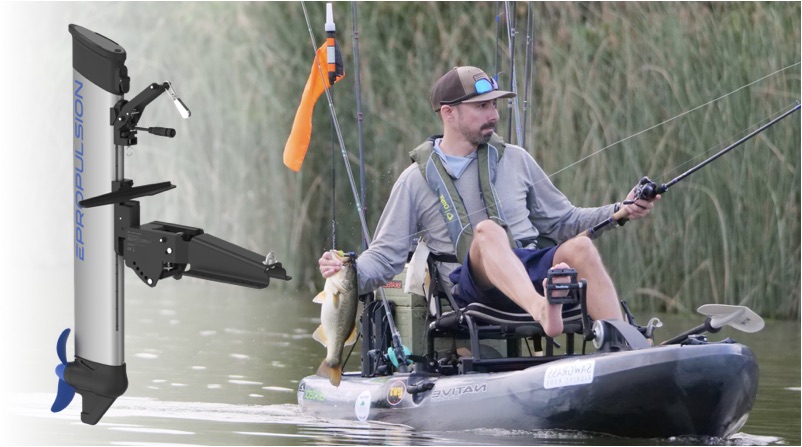
Entering this rapidly expanding market is ePropulsion, a global leader in marine electric mobility, with the introduction of its specialized kLite 750. Derived from the highly successful, rudder-style eLite outboard, the kLite 750 is meticulously engineered for the unique demands of kayak anglers. Weighing in at under 15 pounds (6.8 kg) complete with an integrated 378-watt-hour battery, the unit eliminates the burden of lugging heavy, external power sources. Featuring a multi-mode performance architecture—including a high-torque "Sport Burst" for challenging currents and a dedicated "Fish Mode" for low-speed positioning—the kLite 750 represents a paradigm shift in portable marine propulsion.
This launch is not merely a product release; it is a calculated strategic move into a multimillion-dollar sub-segment of the outdoor recreation economy. With over 2.5 million Americans actively fishing from kayaks, the demand for lightweight, efficient, and integrated propulsion solutions is soaring. As ePropulsion continues to scale its portfolio—ranging from nimble dinghy motors to massive 250kW commercial inboards—the kLite 750 underscores the company’s commitment to eliminating carbon, noise, and toxic emissions across every sector of the marine industry.
Detailed Chronology: From Academic Roots to Global Electric Leadership
To understand the engineering pedigree behind the kLite 750, one must trace the trajectory of ePropulsion from its academic origins to its current status as an international marine powerhouse.
The Foundation (2012–2014)
ePropulsion was founded in 2012 by current CEO Danny Tao alongside a coalition of students, graduates, faculty members, and advisers from the prestigious Hong Kong University of Science and Technology (HKUST). United by a shared vision to revolutionize marine propulsion through advanced engineering and clean energy, the founding team spent two years in rigorous research and development.
Their breakthrough moment arrived at the 2014 METStrade marine industry trade show, where they debuted their inaugural product: the Spirit 1.0. Utilizing a brushless, direct-drive technology that was entirely unprecedented in the low-power outboard market at the time, the Spirit 1.0 immediately captured the attention of the global marine community. It established a new benchmark for efficiency, reliability, and quiet operation, laying the groundwork for the company’s future expansions.
Expanding the Portfolio: Low-Power to Commercial Inboards (2015–2022)
Following the success of the Spirit series, ePropulsion diversified its offerings. The company developed the Navy and Spirit low-power outboard and pod drive lines, targeting power outputs ranging from 1 to 6 kilowatts (roughly equivalent to 3 to 10 horsepower). These systems quickly built a reputation for high value and robust durability among tender owners, sailors, and small craft operators.
As the brand matured, ePropulsion looked toward heavier commercial and recreational markets. In 2022, the company introduced the H-Series range of inboards. Ranging from 60 to 250 kilowatts (80 to 350 horsepower), these heavy-duty electric motors were designed specifically for boatbuilders and commercial operators, enabling vessels between 60 and 100 feet (18 to 30 meters) to transition to zero-emission battery-electric propulsion.
Recent Innovations: The I-Series, X-Series, and eLite (2023–Present)
The momentum accelerated between 2023 and 2024. The I-Series brought lower-powered inboard solutions (10 to 40kW / 15 to 55hp) to market, catering to smaller day boats, sailboats, and canal narrowboats. Simultaneously, the X-Series introduced high-performance electric outboards in the 12kW, 20kW, and 40kW brackets.
In 2024, ePropulsion changed the landscape of portable tenders with the introduction of the eLite rudder-style outboard. Its sleek, integrated design resonated strongly with boaters worldwide. Capitalizing on that design language, ePropulsion returned to the drawing board to adapt the concept for the sportfishing community, culminating in the 2026 debut of the kLite 750.
Supporting Context & Metrics: The Booming Kayak Fishing Economy
The timing of the kLite 750 launch aligns with powerful macroeconomic and demographic shifts within recreational sportfishing. Fishing from kayaks has evolved from a niche hobby into one of the fastest-growing segments in the outdoor recreation industry.
Market Size and Economic Impact
According to data compiled by the American Sportfishing Association (ASA), more than 2.5 million anglers in the United States alone regularly fish from kayaks. This massive user base underwrites a thriving economic sector. Current market valuations place the overall US kayak fishing industry at between $500 million and $600 million (€440 million – €525 million).
Within this broader market, auxiliary equipment—particularly specialized electric propulsion systems—commands a substantial share. Industry intelligence firm Ken Research estimates that electric propulsion systems designed specifically for kayaks account for roughly 10% of total industry revenue, translating to $50 million to $70 million in annual sales.
Why Kayak Anglers Are Turning to Electric
Traditional paddle-powered kayaking offers undeniable health benefits and tranquility, but it comes with distinct physical limitations:
Fatigue: Anglers frequently paddle miles offshore or against heavy river currents to reach prime fishing grounds, exhausting physical energy before the fishing even begins.
Wind and Tide Resistance: Sudden weather shifts or strong tidal currents can make manual retrieval exhausting or outright hazardous.
The "Stealth" Factor: While traditional gas-powered outboards are far too loud and disruptive for shallow-water kayak fishing, trolling motors often require complex rigging, heavy deep-cycle lead-acid batteries, and intrusive foot-steering cables.
The kLite 750 directly addresses these friction points. By integrating the motor, steering shaft, and a high-density 378-watt-hour lithium battery into a single, cohesive unit weighing less than 15 pounds, ePropulsion has removed the logistical nightmare traditionally associated with motorized kayaking.
Performance Modes Tailored for Anglers
The kLite 750 features a specialized mounting bracket and a three-mode operational profile accessible via a simple switch:
Go Mode: Delivers 500 watts of continuous power (approximately 0.75 horsepower), optimized for efficient, long-range cruising to and from fishing spots.
Sport Burst: Generates 750 watts (1 horsepower) for up to 60 seconds. This burst mode is invaluable for punching through heavy tidal rips, navigating fast-moving river rapids, or escaping sudden inclement weather.
Fish Mode: Designed for the moment the angler reaches their destination. It provides precise, ultra-low-end throttle control, allowing for subtle position adjustments while casting or drifting along a weed line without disturbing the water.
Official Statements and Industry Reception
The industry’s reaction to the kLite 750 indicates that ePropulsion has accurately identified an underserved market need.
"When we showed our original prototype at ICAST—the world’s largest sportfishing trade show—the interest was substantial," noted Tom Watson, President of ePropulsion Americas. "The eLite has already been revolutionary for tenders and small craft, and we are confident that the kLite is going to take kayak anglers to new and exciting places."
Watson’s optimism is shared by marine retail analysts who point out that modern anglers are increasingly willing to invest in premium, lightweight technology that enhances their on-water efficiency. By showcasing the prototype at ICAST, ePropulsion gauged direct feedback from professional guides, tournament anglers, and weekend enthusiasts, refining the kLite’s feature set to meet real-world demands.
Furthermore, the hardware ecosystem supporting these motors—such as ePropulsion’s proprietary E-Series and G-Series lithium iron phosphate (LiFePO4) batteries—ensures high energy density, extended cycle life, and top-tier safety profiles. Through the implementation of eSSA (ePropulsion Smart System Architecture), all components communicate via a modular network, reducing installation complexity and eliminating the tangled wiring hazards that have long plagued custom kayak builds.
Future Outlook: The Electric Transition on Water
As regulatory pressures mount and environmental consciousness deepens, the marine industry is undergoing an undeniable structural shift. Traditional two-stroke and four-stroke internal combustion engines, long criticized for their noise pollution, hydrocarbon emissions, and fuel spillage in fragile aquatic ecosystems, are facing increased scrutiny from both regulators and consumers.
ePropulsion’s comprehensive product roadmap—spanning from the sub-15-pound kLite 750 kayak motor all the way up to commercial 250kW inboard systems—positions the company at the forefront of this transition. By establishing a reputation for uncompromising build quality, advanced battery safety systems, and intuitive user interfaces, the brand has bridged the gap between early-adopter tech enthusiasts and mainstream boaters.
For the everyday kayak angler, the kLite 750 represents more than just a convenient gadget; it is an invitation to explore further, fish longer, and do so in absolute harmony with the natural environment. As these clean-tech solutions continue to permeate recreational and commercial waterways alike, the vision of a completely zero-emission marine future is rapidly transitioning from an idealistic goal into an everyday reality.