







Executive Overview
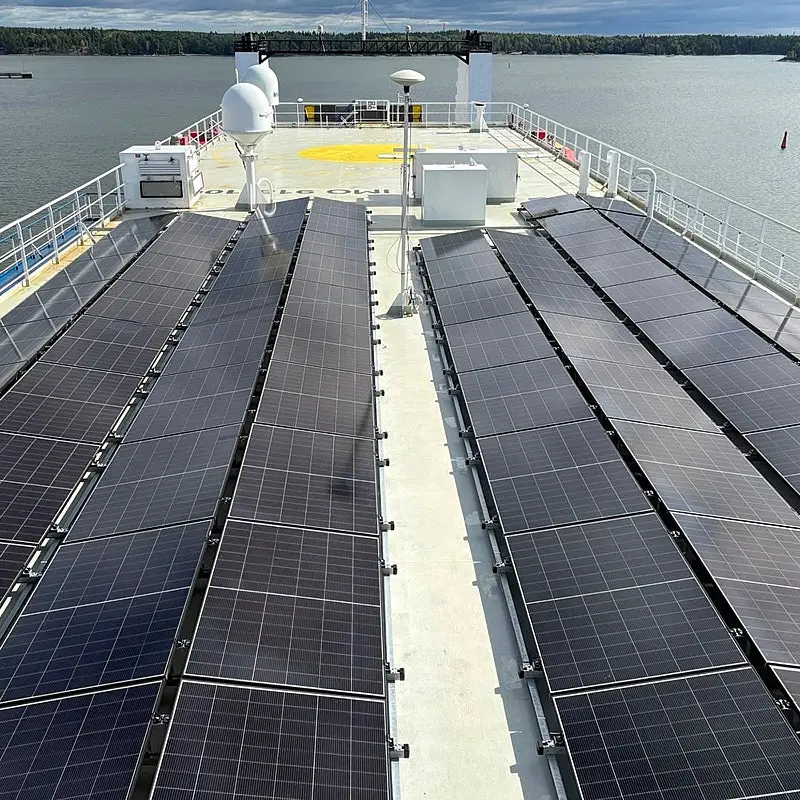
In an era defined by accelerating regulatory pressures and an urgent imperative to decarbonize global shipping corridors, Finnish operator Eckerö Line has formally commissioned a marine-grade solar photovoltaic (PV) installation aboard its cargo and passenger vessel, FINBO CARGO. Comprising 120 specialized photovoltaic panels, the newly integrated array marks a significant operational step forward in the adoption of onboard renewable microgrids within the Northern European short-sea shipping sector.
The onboard system is projected to generate roughly 70 megawatt-hours (MWh) of clean electricity per year. By feeding directly into the vessel’s auxiliary power distribution system, the solar array is expected to reduce fuel consumption by approximately 15 tonnes annually. While modest in the context of the vessel’s primary propulsion demands, this offset directly mitigates the operational load on auxiliary diesel generators during daylight hours, thereby curbing carbon dioxide ($textCO_2$), sulfur oxides ($textSO_x$), nitrogen oxides ($textNO_x$), and particulate matter emissions in the sensitive ecological zone of the Baltic Sea.
+-----------------------------------------------------------------------+
|                       FINBO CARGO SOLAR RETROFIT                      |
+-----------------------------------------------------------------------+
|  Array Size:            120 Marine-Grade Solar Panels                 |
|  Annual Generation:     ~70 Megawatt-hours (MWh)                      |
|  Fuel Savings:          ~15 Tonnes annually (Offset from Aux. Engines)  |
|  Environmental Impact:  ~48 Tonnes CO2 avoided per year               |
|  Integration Partner:   Solel Åland                                   |
|  Primary Route:         Helsinki (Vuosaari) <-> Tallinn (Muuga)       |
+-----------------------------------------------------------------------+
Executed in collaboration with Åland-based renewable energy specialist Solel Åland, the deployment serves as both an immediate operational efficiency upgrade and a scalable proof-of-concept. As commercial shipping confronts stringent climate frameworks—including the European Union’s Emissions Trading System (EU ETS) expansion to maritime transport and the upcoming FuelEU Maritime regulations—Eckerö Line’s initiative illustrates how targeted, modular retrofits can extract incremental efficiency gains from existing fleet assets.
Detailed Chronology & Technical Implementation
[ Strategic Energy Audit ] ──> [ Engineering & Marine Adaptation ] ──> [ Physical Retrofit & Commissioning ] ──> [ Live Microgrid Operation ]
   - Identification of baseline    - Module selection for high salinity    - Installation by Solel Åland           - Real-time power injection
     auxiliary engine loads          and wind shear loads                   - Integration with shipboard AC grid     - Modular expansion readiness
   - Vessel selection: FINBO CARGO - Structural load assessment            - Safety & safety system clearance
Strategic Genesis and Project Inception
The deployment of solar infrastructure on FINBO CARGO emerged from a broader internal sustainability audit conducted by Eckerö Line. Tasked with identifying unexploited operational efficiencies across its fleet, the company’s technical management team targeted auxiliary electrical loads—the power required for hotel services, ventilation, pump operation, and deck lighting—as a primary candidate for decarbonization.
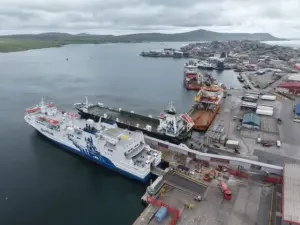
FINBO CARGO, a ro-ro (roll-on/roll-off) passenger vessel operating primarily between the freight ports of Vuosaari in Helsinki, Finland, and Muuga in Tallinn, Estonia, offered an ideal platform. Featuring extensive, unobstructed top-deck surface area exposed to direct sunlight during long daylight windows in Northern Europe’s summer season, the ship presented favorable conditions for dynamic, motion-tolerant solar power generation.
Marine Engineering and Structural Adaptation
Naval architecture demands that any topside modification undergo rigorous engineering clearance. Installing solar technology on a commercial vessel operating in northern latitudes introduces distinct technical challenges that extend far beyond standard land-based applications:
- Environmental Exposure: Systems must withstand continuous exposure to highly corrosive marine environments, including salt spray, high humidity, and extreme temperature fluctuations.
- Dynamic Physical Loads: Panels must endure extreme wind shear forces at sea, mechanical vibrations from the vessel’s primary engine plant, and structural stresses caused by pitching and rolling in heavy seas.
- Electrical Integration: The solar array requires robust power conversion equipment capable of interfacing safely with the ship’s closed-loop alternating current (AC) distribution grid without introducing frequency instability or harmonic distortion.
To resolve these challenges, Eckerö Line engaged Solel Åland, an Åland-based firm specializing in tailored photovoltaic retrofits. The engineering team selected marine-certified photovoltaic modules featuring reinforced structural backing, specialized anti-reflective surface coatings, and high-tolerance salt-mist resistance. High-efficiency marine inverters were selected to handle variable direct current (DC) inputs generated by shifting sun angles, rolling vessel postures, and intermittent cloud cover, seamlessly converting power to feed the ship’s primary distribution switchboard.
Retrofit Execution and Grid Commissioning
The installation phase was executed with minimal disruption to FINBO CARGO‘s active commercial sailing schedule. Engineers installed structural mounting frames designed to distribute wind shear loads evenly across the deck structure without compromising the ship’s integrity or stability metrics.
Following physical mounting, electrical retrofitting involved running specialized marine-grade, flame-retardant cabling from the topside array down to central power management systems. The commissioning process verified automatic synchronization between the solar array and the ship’s auxiliary diesel generators. Under normal operation, when solar irradiance is sufficient, the system automatically injects renewable power into the onboard microgrid, allowing automatic power management software to throttle back generator output, reducing fuel consumption proportionately.
Supporting Context & Key Metrics
Technical & Environmental Performance Metrics
To fully appreciate the operational impact of the FINBO CARGO installation, the project’s performance metrics must be analyzed in the context of commercial ship operations.
| Metric | Quantitative Value | Operational Significance |
|---|---|---|
| Total Panel Count | 120 Photovoltaic Modules | Optimized footprint matching available topside deck area |
| Annual Power Output | ~70 MWh (Megawatt-hours) | Offsets continuous electrical baseload of ship systems |
| Annual Fuel Offset | ~15 Metric Tonnes | Direct reduction in Marine Gas Oil (MGO) combustion |
| Annual $textCO_2$ Reduction | ~48 Metric Tonnes | Calculated using standard baseline factors ($3.2text t CO_2/textt MGO$) |
| Primary Operator | Eckerö Line | Strategic push for regional fleet energy efficiency |
| EPC Contractor | Solel Åland | Regional expertise in Northern marine climate PV retrofits |
The annual generation of 70 MWh represents a targeted reduction in generator engine hours. While marine main engines generate thousands of kilowatts for propulsion, auxiliary engines run constantly—even when berthed or maneuvering—to power internal systems. In high-latitude maritime zones like the Baltic, solar output peaks during the late spring and summer months, coinciding with peak seasonal tourism and cargo traffic volumes.
       TYPICAL AUXILIARY POWER DEMAND PROFILE (SUMMER DAY)

  Power (kW)
    ^
    |  +-------------------------------------------------+  <-- Total Baseline Auxiliary Load
    |  |//////////////// Solar Generation //////////////|  <-- ~70 MWh/yr Yield Offset
    |  +-------------------------------------------------+
    |  |                                                 |
    |  |         Auxiliary Diesel Generators             |
    |  |           (Throttled Down Output)               |
    |  +-------------------------------------------------+
    +-------------------------------------------------------> Time (24h)
From an environmental standpoint, saving 15 tonnes of fuel yields compounding advantages:
- Carbon Dioxide ($textCO_2$) Avoidance: The combustion of one tonne of distillative marine fuel yields approximately 3.2 tonnes of $textCO_2$. Consequently, the system directly eliminates nearly 50 tonnes of greenhouse gas emissions annually.
- Air Quality Parameters: Reducing localized fuel burn reduces exhaust sulfur dioxide ($textSO_2$) and nitrogen oxides ($textNO_x$), lowering the vessel’s atmospheric footprint in densely populated port centers like Helsinki and Tallinn.
- Engine Maintenance Lifecycle: Offloading power production from auxiliary diesel gensets slows physical component wear, extending maintenance intervals and reducing lubricating oil consumption.
The Baltic Sea Regulatory Landscape
The installation comes against the backdrop of one of the world’s most strictly regulated maritime environments. The Baltic Sea is designated by the International Maritime Organization (IMO) as a Special Area for sulfur and nitrogen oxide emissions (SECA and NECA zones).
                      REGULATORY PRESSURES IN THE BALTIC SEA
                                        │
         ┌──────────────────────────────┼──────────────────────────────┐
         ▼                              ▼                              ▼
    IMO SECA / NECA               EU ETS Maritime              FuelEU Maritime
(0.10% Fuel Sulfur Limit;    (Phase-in of carbon costs    (Strict GHG intensity limits
 Strict NOx Tier III rules)     for vessels >= 5000 GT)      scaling up through 2050)
Simultaneously, the European Union’s policy framework has placed direct financial burdens on maritime carbon footprints:
- EU ETS Expansion: Starting in 2024, commercial shipping fleets operating within EU waters must purchase emission allowances covering their carbon emissions. Under this framework, every tonne of fuel saved represents an immediate cost reduction in carbon allowances.
- FuelEU Maritime Initiative: Scheduled to take effect in 2025, this mandate establishes decreasing limits on the annual greenhouse gas intensity of energy used onboard ships, driving operators to integrate onboard renewables, shore power connections, and low-carbon fuels.
In this context, Eckerö Line’s investment in onboard photovoltaics goes beyond operational savings; it serves as a strategic mechanism to lower the vessel’s overall baseline compliance costs under evolving European climate legislation.
Official Statements & Strategic Perspective
Operational Insights from Fleet Leadership
Commenting on the deployment, representatives from Eckerö Line emphasized that while no single technological solution exists to resolve maritime decarbonization overnight, practical and immediate retrofits are crucial to long-term fleet evolution.
"Energy efficiency is achieved through the accumulation of systematic, continuous improvements across every layer of our operations," noted senior technical personnel at Eckerö Line. "Integrating solar capability onboard FINBO CARGO demonstrates that clean energy generation can be integrated directly into active short-sea shipping lines. Every megawatt-hour of solar power generated on deck is a megawatt-hour we do not need to produce by burning fossil fuels."
The company emphasized that the system’s modular architecture was intentionally designed for future expansion. By engineering the power management interfaces to support higher input capacities, Eckerö Line has created a pathway to scale up the solar array during future scheduled drydock maintenance periods.
The Marine Engineering Viewpoint
From the perspective of the installation partner, Solel Åland, the deployment on FINBO CARGO underscores the operational viability of commercial solar applications in Northern Europe’s harsh maritime climate.
"Retrofitting PV infrastructure onto an operational commercial ferry requires careful balancing of mechanical durability, electrical safety, and space utilization," standard project documentation from Solel Åland notes. "The successful commissioning of the FINBO CARGO array confirms that high-efficiency solar modules, when properly ruggedized and integrated into dynamic marine microgrids, deliver predictable performance even in high-latitude marine environments."
Industry analysts highlight that installations of this nature alter the technical perception of solar energy in commercial shipping. Rather than viewing photovoltaics merely as a niche solution for specialized vessels, mainstream operators increasingly view onboard solar arrays as valuable secondary power systems that complement primary propulsion engines and battery storage technologies.
Future Outlook & Maritime Decarbonization Horizon
Scalability and Fleet Retrofit Strategies
The successful operation of the 120-panel deployment on FINBO CARGO establishes a baseline for future operational upgrades across Eckerö Line’s broader fleet assets, including the high-capacity passenger ferry m/s Finlandia.
                       ONBOARD DECARBONIZATION ROADMAP

  Short-Term Focus                 Medium-Term Integration            Long-Term Vision
+-------------------------+       +-------------------------+       +-------------------------+
| - Modular PV Expansion  |  ───> | - Onboard BESS Coupling |  ───> | - Alternative Fuels     |
| - Hull Friction Coatings|       | - Expanded Cold Ironing |       |   (E-Methanol/Ammonia)  |
| - Route Optimization    |       | - Peak-Shaving Systems  |       | - Zero-Emission Ports   |
+-------------------------+       +-------------------------+       +-------------------------+
Because the microgrid interface aboard FINBO CARGO is scalable, the initial 120-panel installation acts as a foundational groundwork. Future upgrades can easily integrate additional panel arrays across unused deck spaces. As flexible, ultra-thin perovskite-silicon tandem solar cells reach commercial maturity, future marine retrofits may cover curved ship surfaces, significantly increasing generation capacity without adding significant weight or aerodynamic drag.
Hybridization and Integrated Energy Architectures
The future of short-sea shipping in the Baltic and beyond relies on hybridized energy systems. Onboard solar installations represent a key component in a multi-technology energy ecosystem that includes:
- Battery Energy Storage Systems (BESS): Coupling solar arrays with high-capacity onboard lithium-ion battery banks allows excess daytime energy to be stored and used during peak demand periods or port stays, enabling zero-emission auxiliary operations while berthed.
- Cold Ironing (Shore-to-Ship Power): Connecting to municipal electrical grids while docked eliminates the need to run auxiliary engines in port. Solar power generated while underway complements shore power, lowering overall energy draw from land grids.
- Alternative Fuels: As primary propulsion systems shift toward e-methanol, green ammonia, or liquid hydrogen, operational energy efficiency becomes even more critical due to the higher cost and limited volumetric energy density of alternative fuels. Onboard renewables lower total fuel consumption, improving the economic viability of green fuels.
                           BALTIC SHORT-SEA ENERGY HUB

              ┌───────────────────────────────────────────┐
              │             FINBO CARGO                   │
              │                                           │
              │   [120 Solar PV Array] ──> [Inverters]   │
              └─────────────────────┬─────────────────────┘
                                    │
                                    ▼
┌──────────────────┐    ┌───────────────────────┐    ┌──────────────────┐
│  Shore Power     │───>│ Onboard Microgrid     │<───│ Auxiliary Diesel │
│  (While Berthed) │    │ Power Management System│    │ Engines (Reduced)│
└──────────────────┘    └───────────┬───────────┘    └──────────────────┘
                                    │
                                    ▼
                        ┌───────────────────────┐
                        │ Internal Ship Loads   │
                        │ (Hotel, HVAC, Pumps)  │
                        └───────────────────────┘
Conclusion
The installation of 120 solar panels aboard FINBO CARGO represents an important, practical advancement for Northern European short-sea shipping. While the annual saving of 15 tonnes of fuel and ~70 MWh of electricity represents a step-by-step efficiency gain within the overall power demands of a ro-pax vessel, its real value lies in proving the reliability, integration, and commercial value of modern solar microgrids at sea.
By partnering with Solel Åland to complete this project, Eckerö Line demonstrates how commercial operators can take immediate action to optimize existing fleets. As regional environmental mandates tighten, practical innovations like the FINBO CARGO solar retrofit provide a viable, field-tested roadmap for reducing maritime emissions—one ray of sunlight at a time.