





Executive Overview
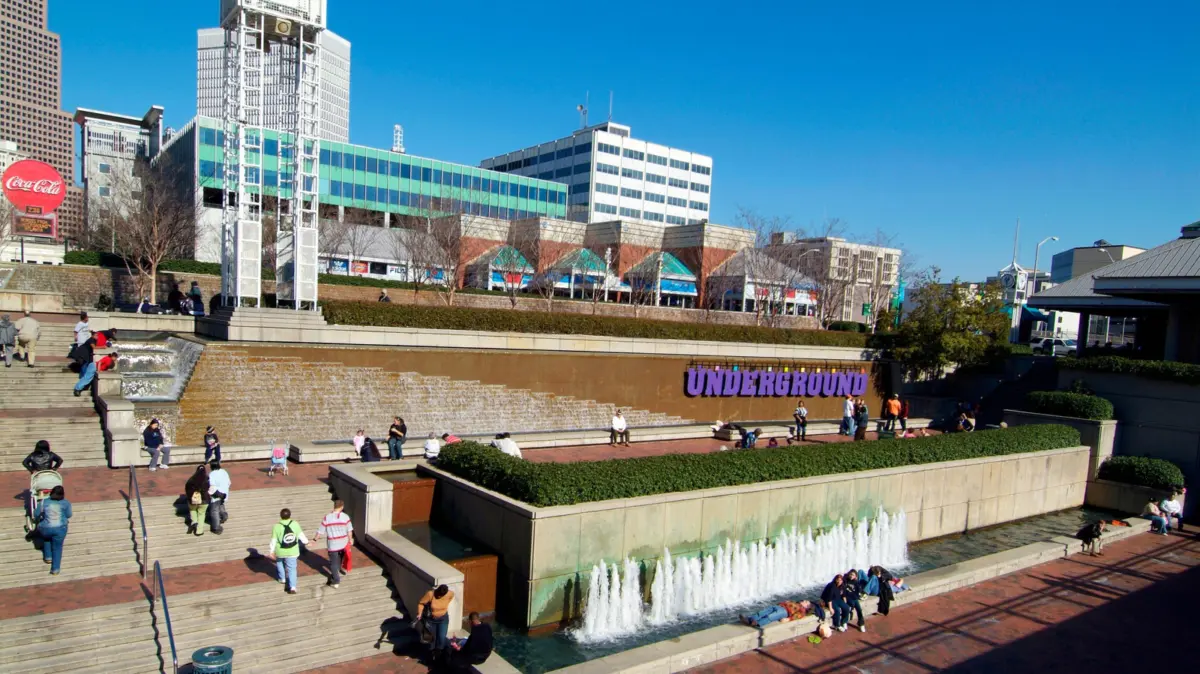
For decades, mentioning "Underground Atlanta" to a local resident or seasoned traveler elicited a groan, a warning, or a dismissive wave. Long categorized as an underwhelming, dimly lit tourist trap, this subterranean labyrinth of downtown Atlanta struggled through generations of over-promised developments, high-profile retail failures, and severe security concerns. Once celebrated as the "city beneath the streets," the multi-level commercial development became a textbook example of urban planning gone awry—a casualty of changing economic tides, shifting demographics, and structural isolation.
Yet, urban spaces are rarely static. Following its most recent closure in 2017, Underground Atlanta has quietly undergone a profound, gritty, and culturally rich transformation. Spearheaded by strategic private investment, an influx of independent creators, and the stubborn resilience of nightlife mainstays, the historic two-block sector is no longer trying to be a traditional suburban-style shopping mall. Instead, it is reinventing itself as a raw, authentic heartbeat of downtown Atlanta’s arts, music, and culinary underground.
This deep dive explores the fascinating origins of Atlanta’s subterranean district, the economic and social factors that led to its multi-decade decline, and the ongoing renaissance that is turning a historic tourist blunder into a thriving, culturally vibrant urban nexus.

Detailed Chronology: From Infrastructure Fix to Subterranean Ghost Town
To understand the current transformation of Underground Atlanta, one must look back nearly a century. The genesis of the district was not born out of a desire for commerce or tourism, but out of absolute infrastructural necessity.
The 1920s: The Elevated Streets and the Submerged City
During the roaring twenties, downtown Atlanta faced a crippling problem: railroad traffic. At-grade rail crossings choked the city center, resulting in severe traffic gridlock that threatened to stifle the growing metropolis’s economic expansion. To solve this, city officials engineered a massive public works project, constructing concrete viaducts over the railroad tracks. This effectively raised the street level of a vital two-block commercial district by roughly one to two stories.
The engineering feat solved the surface-level transit crisis, but it created an unprecedented real estate dilemma. The original ground-floor storefronts—once prime retail real estate—were suddenly marooned beneath the newly elevated roadways. Rather than abandoning their properties, forward-thinking business owners adapted by moving their primary storefront operations to what had previously been the second stories of their buildings. The original street level, complete with sidewalks, storefront facades, and Victorian architecture, was plunged into perpetual shadow. For decades, this forgotten underworld served primarily as utility space, basements, and forgotten storage.
The 1960s–1980s: The First Rebirth and Historic Recognition
By the late 1960s, a group of visionary developers—chiefly steaming from the efforts of businessmen Jack Paterson and Steven J. Davis—rediscovered the atmospheric potential of the subterranean corridors. Recognizing the distinct historic charm of the 19th-century brickwork, gas lamps, and ironwork frozen in time beneath the viaducts, they spearheaded a massive restoration project.

In the late 1960s and 1970s, Underground Atlanta opened as an entertainment and dining district, quickly becoming one of the Southeast’s premier nightlife destinations. Lined with gas-lit saloons, jazz clubs, and eclectic restaurants, the district drew millions of visitors, including U.S. presidents and international celebrities. However, this initial boom was short-lived. The opening of the nearby MARTA (Metropolitan Atlanta Rapid Transit Authority) rapid transit construction severely disrupted surface access, and suburban flight drained downtown of its evening crowds. By the early 1980s, the district had largely shuttered, though its historical significance was cemented in 1980 when it was officially listed on the National Register of Historic Places.
The 1989–2017 Era: The Festival Marketplace and Slow Decay
Determined not to let the asset die, the city partnered with The Rouse Company—pioneers of the "festival marketplace" concept—to redevelop Underground Atlanta. Backed by millions in public and private funding, the complex reopened in June 1989 as a sprawling retail mall featuring a mix of national chains, food courts, and entertainment venues.
While the grand reopening drew massive crowds, the festival marketplace model proved ill-suited for the shifting socio-economic landscape of downtown Atlanta heading into the 1990s. Retail tenants struggled with high turnover, and the sprawling layout made security a persistent challenge. Over the decades, public perception curdled.
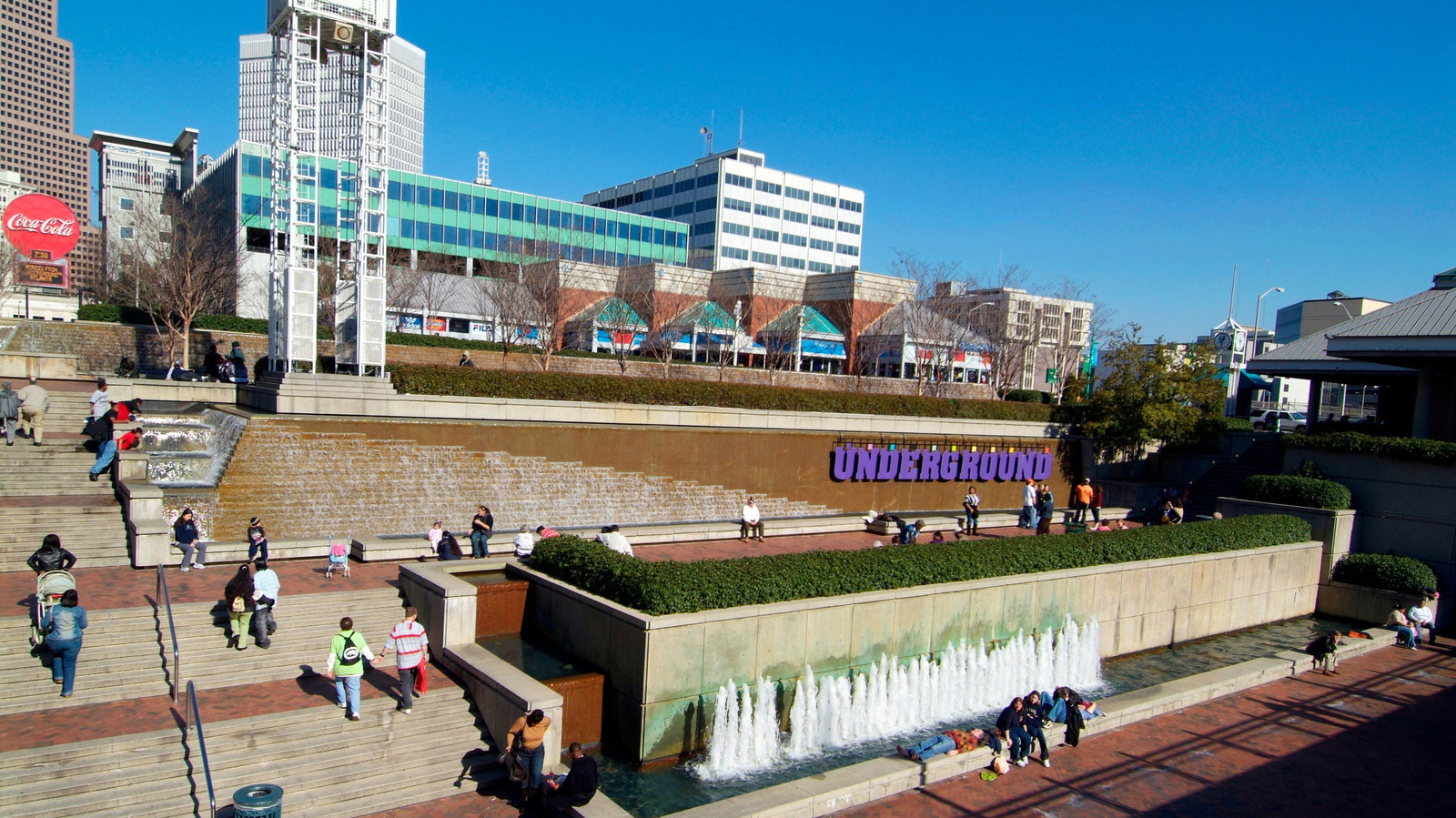
By the 2000s, forums and message boards were rife with warnings. As one disgruntled visitor noted on a travel board in 2005, Underground Atlanta had evolved into a magnet for transient populations, underage drinking, and criminal elements, far removed from its family-friendly marketing campaigns. Foot traffic plummeted, national retailers fled, and the complex entered a terminal state of decay. Despite multiple acquisition attempts by various development groups, the retail mall officially closed its doors in 2017, seemingly sealing the fate of the subterranean district once and for all.
Supporting Context & Metrics: The Anatomy of a Rebirth
The revitalization of a failed urban mega-project is a rare feat in American real estate development. Traditional developers look at shuttered malls like Underground Atlanta and see only demolition costs and structural liabilities. However, the current resurgence relies on a fundamentally different philosophy: organic placemaking, cultural preservation, and affordable creative space.
The Numbers Behind the Transformation
- Location & Proximity: Situated roughly 10 miles north of Hartsfield-Jackson Atlanta International Airport—consistently ranked among the busiest airports in the world—Underground Atlanta occupies a prime geographic position in the city’s core.
- Property Scale: Spanning multiple city blocks with distinct multi-level corridors (including Upper Alabama Street, Lower Alabama Street, and Kenny’s Alley), the footprint offers hundreds of thousands of square feet of raw potential.
- Digital Sentiment Shift: While legacy travel sites like TripAdvisor still show mixed-to-poor historical ratings due to residual memories of the 1990s decline, real-time metrics on platforms like Google Maps reveal a climbing approval rating. Newer dining and nightlife spots within the complex routinely score between 4.5 and 4.8 stars, reflecting high customer satisfaction with the current iteration.
Key Pillars of the Current Ecosystem
The modern iteration of Underground Atlanta avoids the sterile, corporate uniformity of traditional shopping centers. Instead, it is anchored by three distinct pillars:
- The Live Music & Nightlife Resurgence: The anchor that kept the lights on during the darkest years was The Masquerade, a legendary independent music venue that relocated to Kenny’s Alley within the abandoned mall complex. Featuring four distinct indoor performance spaces—Heaven, Hell, Purgatory, and Altar—The Masquerade continued to draw tens of thousands of alternative music fans annually. This foot traffic paved the way for subsequent nightlife additions, including the underground club MJQ Concourse (known for its cult-following "Locals Only" nights) and Lunchbox, a burgeoning hub for electronic dance music (EDM).
- Culinary Innovation: Dining at Underground Atlanta has broken away from the generic fast-food court model. Establishments like Dolo’s Pizza have gained regional acclaim by merging unexpected culinary traditions—such as New York-style pizza crusts infused with Caribbean flavors, exemplified by their signature jerk chicken and blue cheese "Matey" pie. Meanwhile, street-level eateries like Underground Diner offer upscale comfort food (hailed by reviewers for exceptional chicken and waffles) alongside craft cocktails and polished service.
- Artist Row and Cultural Production: Perhaps the most vital structural shift on Lower Alabama Street has been the designation of space for "Artist Row." This initiative transforms former retail bays into active working studios, galleries, and incubator spaces for Atlanta’s marginalized or independent creative class. By providing accessible workspace in the heart of downtown, the district is fostering an authentic grassroots arts scene that cannot be replicated by corporate developments.
Official Statements and Strategic Vision
When Lalani Ventures acquired Underground Atlanta in 2020, the real estate firm recognized that a traditional retail playbook would spell certain failure. The COVID-19 pandemic compounded downtown recovery challenges, yet the ownership group leaned into a vision centered on arts, culture, and residential density integration.
"Underground Atlanta is not just a real estate parcel; it is a vital chapter of Atlanta’s historical identity," shared representatives from Lalani Ventures during early stakeholder briefings. "Attempting to force a suburban mall template onto a historic, multi-level urban core was the mistake of the past. Our goal is to peel back the layers of asphalt and commercial artifice, honor the true grit and history of the space, and hand the keys back to the creatives, musicians, and restaurateurs who define Atlanta’s modern culture."
City planners and downtown development authorities have echoed this sentiment, viewing the revitalization of Underground Atlanta as a critical link in stitching together the South Downtown corridor with the broader revitalization happening along the Atlanta BeltLine and Centennial Yards. By fostering an environment where nightlife, independent retail, and visual arts coexist, the city aims to prove that historic urban cores can adapt without resorting to wholesale demolition.
Future Outlook: Navigating the Challenges Ahead
Despite the undeniable momentum generated by venues like The Masquerade, Artist Row, and acclaimed eateries, Underground Atlanta’s evolution is far from complete. Urban revitalization projects of this magnitude must continuously navigate complex systemic challenges:
- Perception and Safety: Overcoming a multi-decade reputation for crime and vacancy requires persistent, proactive municipal security, improved lighting, and active street-level stewardship. While late-night crowds for concerts and club nights are robust, driving daytime foot traffic remains an ongoing objective.
- Equitable Development: As property values in downtown Atlanta rise, developers and city leaders face the delicate task of ensuring that the artists and independent operators who brought Underground Atlanta back from the brink are not priced out by subsequent waves of commercial gentrification.
- Infrastructure Integration: Fully connecting the subterranean layers of the complex with above-ground transit networks, pedestrian greenways, and upcoming residential developments will be essential to transforming the area from a destination district into a fully integrated neighborhood.
Conclusion
Underground Atlanta’s journey from a nineteenth-century grade-separation necessity to a glittering 1970s hotspot, a failing 1990s retail mall, and finally, a gritty, culturally rich urban laboratory is one of the most compelling narratives in American urbanism. It stands as proof that even the most written-off tourist traps can find redemption if given the space to evolve organically.
Today, visitors willing to venture beneath the street level will find a district that has stopped trying to be a corporate tourist attraction and has instead embraced its true identity: a resilient, vibrant mosaic of Atlanta’s underground culture, art, and nightlife.