






Executive Overview
In a landmark step toward the technological modernization of America’s critical trade corridors, the U.S. Department of Transportation (DOT), alongside the Maritime Administration (MARAD), has officially signed a Memorandum of Cooperation (MOC) with the Port of Corpus Christi. The high-profile agreement aims to aggressively explore, test, and potentially integrate Small Modular Reactor (SMR) technology into America’s maritime and port operations.
This strategic pact represents the second major agreement launched under the DOT’s nationwide SMR initiative, which debuted earlier this year following an initial partnership with the Port of Long Beach in California. By bringing advanced nuclear energy to the Gulf Coast—the beating heart of the nation’s energy export infrastructure—federal and local leaders are signaling a fundamental shift in how commercial ports will power themselves, fuel the next generation of maritime vessels, and fortify national supply chains against escalating cyber, physical, and environmental threats.
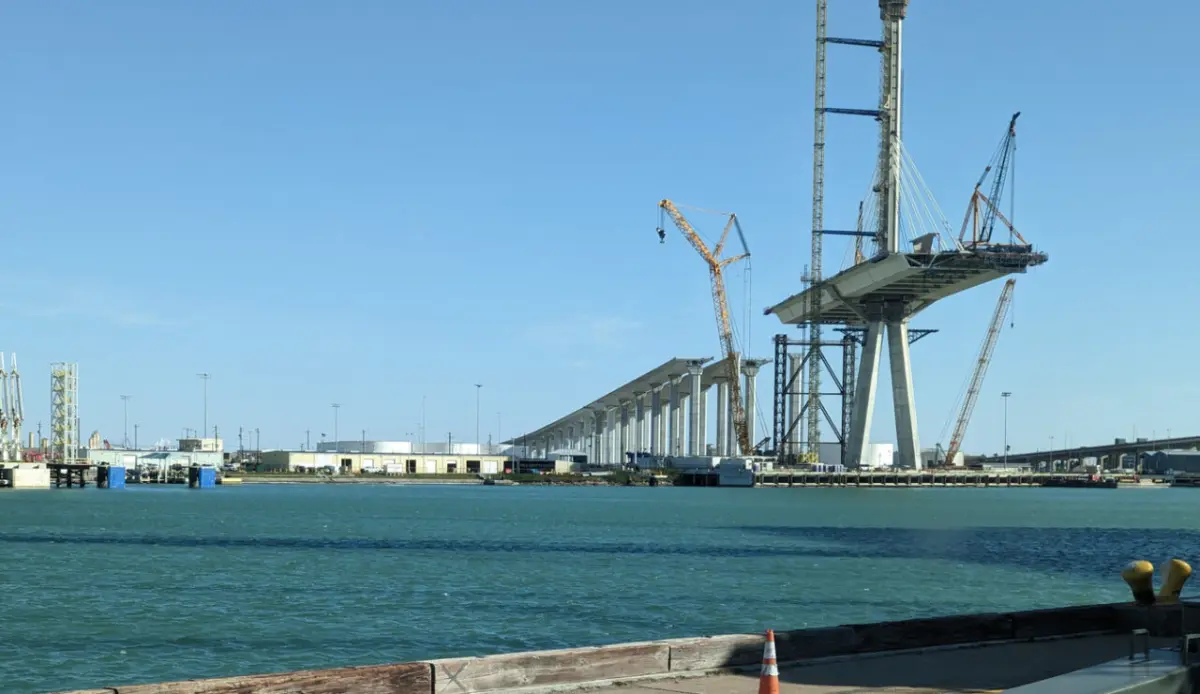
The agreement was formalized during a high-level delegation visit to Texas, featuring U.S. Secretary of Transportation Sean P. Duffy, Maritime Administrator Stephen M. Carmel, and U.S. Representative Michael Cloud (TX-27). Ahead of the official signing ceremony, federal officials and port leadership conducted an extensive on-the-ground tour of Corpus Christi’s sprawling energy infrastructure. The visit underscored the sheer scale of the port’s operations and the immense power demands required to sustain one of the world’s premier energy gateways.
Under the terms of the MOC, the DOT, MARAD, and the Port of Corpus Christi will embark on a collaborative roadmap encompassing maritime energy systems, the potential deployment of SMRs, resilient port microgrids, advanced shoreside power architectures, next-generation vessel propulsion concepts, and specialized workforce development initiatives. As global shipping seeks cleaner, more reliable, and uninterrupted energy sources, this partnership aims to position the United States at the vanguard of a nuclear-powered maritime revolution.
Detailed Chronology: From Concept to Coastal Implementation
The path toward integrating nuclear technology into American maritime infrastructure is a rapidly accelerating policy evolution. While nuclear propulsion has a long and proven history within the United States Navy—particularly aboard aircraft carriers and submarines—its application to commercial merchant shipping and shoreside port operations has historically remained restricted by regulatory, economic, and logistical hurdles.
The current wave of momentum began taking concrete shape in May, when the U.S. Department of Transportation officially launched its national Small Modular Reactor (SMR) initiative. Recognizing that traditional fossil-fueled port infrastructure faces mounting pressures from environmental regulations, grid instability, and surging electricity demands driven by automation and electrification, the DOT established a framework to help commercial ports evaluate advanced nuclear solutions.
The Milestones Leading to Corpus Christi
- May: The DOT announces its national SMR initiative, signaling a federal pivot toward exploring advanced, scalable nuclear technologies for civil transportation and logistics sectors.
- Mid-Year: The DOT and MARAD execute their first-ever maritime SMR Memorandum of Cooperation with the Port of Long Beach on the West Coast, setting an early precedent for bi-coastal technological exploration.
- Fall: Federal engagement shifts to the Gulf Coast. Discussions intensify between MARAD and the Port of Corpus Christi—historically recognized as the leading energy port in the United States by tonnage—to assess how SMRs can specifically address the complex logistical and power requirements of liquid bulk and energy export hubs.
- Current Signing: U.S. Secretary of Transportation Sean P. Duffy travels to Texas alongside Maritime Administrator Stephen M. Carmel and Representative Michael Cloud. The delegation conducts a comprehensive tour of Corpus Christi’s energy facilities before officially executing the MOC.
This chronological progression highlights a deliberate strategy by the federal government: pairing with the nation’s most critical import hub (Long Beach) and its dominant energy export engine (Corpus Christi) to test SMR applications across distinctly different operational profiles.
Supporting Context & Metrics: Why Corpus Christi? Why SMRs?
To understand the strategic significance of the DOT-Corpus Christi agreement, one must examine the unique operational realities of the port and the engineering promise of Small Modular Reactors.
The Strategic Weight of the Port of Corpus Christi
Located on the Texas Gulf Coast, the Port of Corpus Christi is not merely a regional shipping hub; it is a vital linchpin of global energy security. Handling millions of tons of crude oil, liquefied natural gas (LNG), refined products, and dry bulk cargo annually, the port operates on a staggering scale.
However, this massive volume comes with extraordinary energy demands. Modernizing terminal operations, handling increasing vessel sizes, implementing shore power (cold-ironing) for ships at berth, and powering automated cargo-handling equipment require a continuous, high-capacity electrical supply. Traditional regional power grids, frequently subjected to extreme weather events such as hurricanes and extreme heat waves, present vulnerabilities that can stall maritime commerce and disrupt national supply chains.
The Mechanics and Promise of Small Modular Reactors
Small Modular Reactors represent a paradigm shift in nuclear engineering. Unlike traditional gigawatt-scale nuclear power plants, which are custom-built, highly capital-intensive, and require years or decades to construct, SMRs are engineered to be:
- Modular: Components are fabricated in secure factory settings and transported via truck, rail, or barge to the installation site, drastically reducing construction times and upfront capital costs.
- Scalable: Ports can deploy a single reactor module to meet baseline power needs and subsequently add units as energy demands grow.
- Inherently Safe: Modern SMR designs utilize passive safety systems that rely on natural physical laws—such as gravity, natural circulation, and convection—requiring little to no human intervention or external power to shut down safely in an emergency.
- Zero-Emission: SMRs generate reliable, continuous baseload power with zero greenhouse gas emissions, aligning perfectly with national and international decarbonization targets without sacrificing grid reliability.
Core Pillars of the MOC Collaboration
The newly signed Memorandum of Cooperation outlines several specific avenues of technical exploration:
- Maritime Energy Systems: Comprehensive studies on how SMRs can be integrated into the local energy matrix to provide stable, independent power.
- Resilient Port Microgrids: Designing microgrid architectures that can decouple from the municipal power grid during emergencies, ensuring continuous port operations during hurricanes, cyber incidents, or regional blackouts.
- Shoreside Power Architecture: Upgrading electrical infrastructure to deliver high-voltage shore power to docked vessels, reducing maritime emissions while ships are in port.
- Emerging Vessel Propulsion Concepts: Laying the groundwork for infrastructure capable of supporting alternative propulsion systems, potentially including nuclear-assisted maritime shipping in the decades to come.
- Workforce Development: Collaborating with regional academic and technical institutions to train the next generation of nuclear engineers, safety technicians, and high-skilled American mariners.
Official Statements and Leadership Perspectives
The announcement drew strong, unified praise from federal policymakers, maritime regulators, and port executives, emphasizing a shared vision for American technological leadership and supply chain resilience.
U.S. Secretary of Transportation Sean P. Duffy underscored the transformative potential of the initiative, stating:
"Small modular reactors have the potential to reshape America’s maritime sector, lower shipping costs, and bolster our supply chains. I’m thrilled that the Port of Corpus Christi is embracing this exciting partnership with the Trump Administration to ensure the United States leads the way in innovation. Maritime dominance starts with rebuilding America’s fleet with this state-of-the-art technology."
Maritime Administrator Stephen M. Carmel highlighted the operational and security benefits of the partnership, noting:
"This agreement with the Port of Corpus Christi demonstrates that the leading energy port in the nation understands the significance of this technology. SMR integration has the potential to drive down costs and guarantee that our critical Gulf Coast maritime supply chains remain resilient against any contingency, from extreme weather to power grid disruptions, while training the next generation of high-skilled American mariners."
Echoing these sentiments from the local perspective, Jeff Pollack, Chief Strategy and Innovation Officer for the Port of Corpus Christi, emphasized the port’s enduring commitment to global trade leadership:
"With this agreement, the Port of Corpus Christi affirms its commitment to work with the Administration to promote innovation in the US maritime sector in support of our nation’s storied maritime industrial base and the communities around the world that depend upon it."
The political backing was further reinforced by U.S. Representative Michael Cloud (TX-27), whose congressional district encompasses the port. Rep. Cloud’s participation in the site tour and signing ceremony underscores the bipartisan and regional recognition that energy innovation is inextricably linked to economic prosperity and national security.
Future Outlook: Charting the Course for Nuclear-Powered Ports
As the ink dries on the Memorandum of Cooperation, the immediate focus shifts from conceptual agreement to rigorous technical feasibility studies, regulatory navigation, and stakeholder engagement.
Overcoming Regulatory and Engineering Hurdles
Implementing civil nuclear technology within commercial maritime environments is not without its challenges. SMR deployment will require close coordination with the Nuclear Regulatory Commission (NRC) to establish clear, efficient licensing pathways for non-utility, industrial, and maritime applications. Furthermore, local community outreach, environmental impact assessments, and rigorous safety validations will be critical steps in ensuring public confidence.
A Blueprint for National Maritime Dominance
If successful, the joint efforts between MARAD, the Port of Long Beach, and the Port of Corpus Christi could serve as a national blueprint. By securing independent, carbon-free, and virtually limitless baseload power directly at the water’s edge, U.S. ports can insulate themselves against energy volatility, enhance cargo-handling speeds, and reduce operational overhead.
Looking further ahead, the successful land-based integration of SMRs at ports could eventually pave the way for floating nuclear power barges and advanced marine propulsion systems. Such advancements would fundamentally alter the global shipping landscape, allowing commercial vessels to traverse oceans with unprecedented range, zero emissions, and minimal reliance on traditional bunker fuels.
In an era defined by intensifying global competition, supply chain vulnerabilities, and the urgent need for sustainable infrastructure, the DOT-Corpus Christi partnership represents a bold, forward-looking investment. By harnessing the power of the atom, the United States is taking decisive steps to ensure that its ports—and its maritime workforce—remain the most advanced, resilient, and dominant in the world.