





Executive Overview
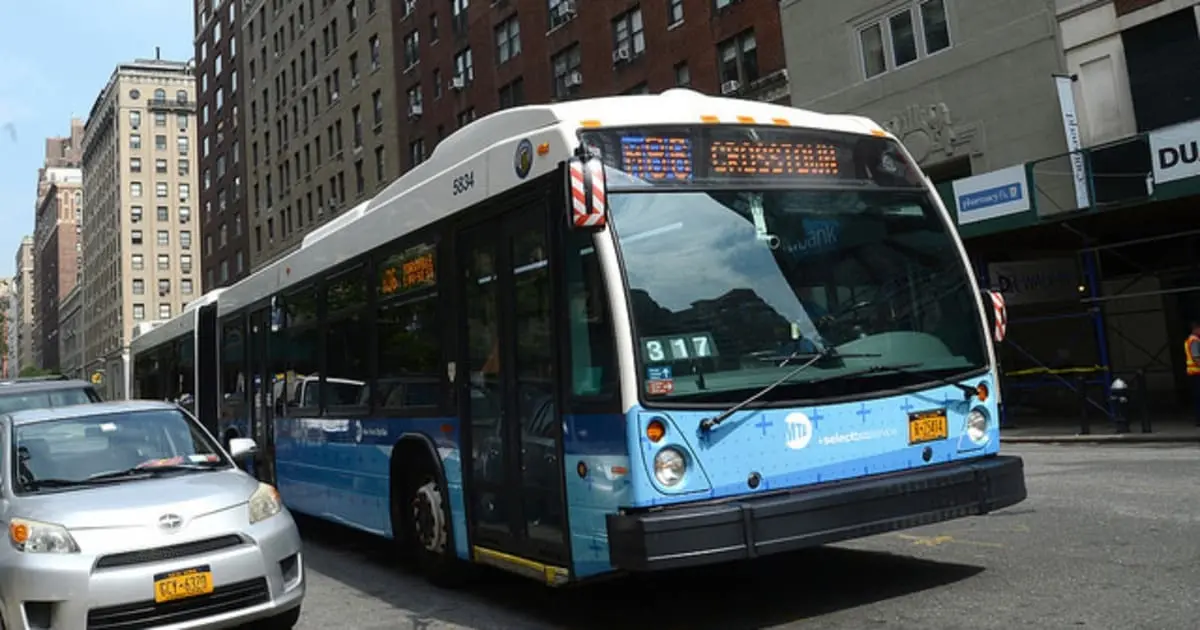
In a decisive move to overhaul the backbone of New York City’s surface transit network, New York Governor Kathy Hochul has announced that the Metropolitan Transportation Authority (MTA) is officially releasing a comprehensive request for proposals (RFP) for the acquisition of 650 new buses. This sweeping procurement milestone represents the single largest fleet upgrade undertaken by the agency since 2013, marking a watershed moment in the ongoing municipal and state efforts to modernize urban mobility, reduce carbon footprints, and elevate the daily commuting experience for more than one million passengers.
Once fully manufactured, delivered, and integrated into active service, these 650 new vehicles will constitute over 10 percent of the MTA’s entire bus fleet. The procurement is financed through funds secured by Governor Hochul within the MTA’s 2025–2029 Capital Plan. This financial blueprint underpins the agency’s unwavering commitment to fleet modernization, a core pillar of the ambitious transit strategy titled Next Stop: Faster Buses, Better Service. Unveiled earlier this year in a high-profile partnership between the Governor’s office and New York City Mayor Zohran Kwame Mamdani, this joint municipal-state initiative aims to systematically eliminate transit bottlenecks, increase average bus speeds, and ensure uniform reliability across all five boroughs.
The newly commissioned buses will run on Compressed Natural Gas (CNG), serving as direct, modern replacements for aging CNG models that have reached the end of their operational lifecycles. By phasing out these legacy vehicles, the MTA anticipates immediate operational dividends: newer buses require substantially less maintenance, spend more hours actively servicing routes rather than sitting idly in repair bays, and deliver a cleaner, quieter ride for the millions of straphangers who navigate the urban landscape every day.
While the broader long-term horizon for the MTA remains anchored in zero-emission electrification, this strategic deployment of advanced CNG technology—fully offset by renewable natural gas—bridges the gap between immediate service reliability needs and sustainable future infrastructure. As the MTA rolls out its innovative Rolling Stock Program to streamline procurement, this landmark investment signals a new era of proactive municipal governance, fiscal stewardship, and unwavering dedication to the millions of New Yorkers who depend on public transportation.
Detailed Chronology
The Genesis of Modernization: Summer 2025 and the Next Stop Initiative
The path toward this monumental RFP began earlier this summer when Governor Kathy Hochul and New York City Mayor Zohran Kwame Mamdani stood shoulder-to-shoulder to unveil Next Stop: Faster Buses, Better Service. For years, critics and daily commuters alike had pointed to sluggish bus speeds, irregular headways, and aging vehicle stock as major vulnerabilities in the city’s transit network. The joint municipal-state plan was explicitly designed to shatter these administrative and operational silos, establishing a unified roadmap to accelerate bus transit across densely populated corridors.
Even before the ink was dry on the overarching policy framework, the MTA initiated rapid-response interventions. In the weeks immediately following the announcement, the agency deployed 41 brand-new buses directly onto high-priority routes. These initial rollouts targeted the oldest, most beleaguered segments of the fleet. Prior to their retirement, these legacy vehicles averaged a staggering 18 years of continuous service—with the single oldest bus clocking in at 21 years old, well past its designated useful life.
These early deployments served as a crucial proving ground, demonstrating to the public that administrative commitments would be met with immediate, tangible equipment upgrades. However, transportation planners recognized that piecemeal replacements would not suffice to transform a network serving millions daily. A systemic, large-scale procurement strategy was imperative.
Crafting the Capital Plan and the 2025–2029 Financial Blueprint
To achieve the scale necessary to fundamentally alter the demographic profile of the active fleet, transit planners looked toward the MTA’s comprehensive 2025–2029 Capital Plan. Securing adequate funding within this multi-billion-dollar framework required intense negotiation, meticulous cost-benefit forecasting, and steadfast political backing from Governor Hochul’s administration.
By earmarking capital specifically for rolling stock acquisition, leadership ensured that the ambitions of the Next Stop initiative were backed by guaranteed financial resources. The capital allocation was strategically designed to avoid compromising ongoing infrastructure projects, such as station accessibility upgrades and signal modernization, while aggressively tackling the rolling stock deficit.
The Evolution of the Rolling Stock Program
A critical administrative breakthrough preceding this RFP is the MTA’s newly minted Rolling Stock Program. Historically, procurement contracts for heavy transit assets have been plagued by rigid specifications, protracted bureaucratic delays, and adversarial relationships between transit agencies and rolling stock manufacturers.
Recognizing these historical bottlenecks, MTA leadership overhauled the procurement mechanism. The Rolling Stock Program re-engineers how contracts are structured by actively encouraging industrial innovation and granting bus manufacturers greater operational flexibility to propose cutting-edge design modifications and manufacturing efficiencies.
The result is a streamlined, modernized contract framework. This new approach guarantees that the MTA can acquire high-quality, durable buses on strict delivery schedules while maximizing value for taxpayers. The release of the 650-bus RFP serves as the premier test case for this innovative procurement philosophy, setting a new benchmark for public-sector contracting efficiency.
Supporting Context & Metrics
Fleet Demographics and Operational Scale
To fully comprehend the significance of a 650-bus acquisition, one must examine the staggering scale of the Metropolitan Transportation Authority’s surface transit operations. The MTA operates one of the largest and most complex bus fleets in the Western Hemisphere, navigating congested urban grids, bridge crossings, and expansive residential arterials across all five boroughs of New York City.
- Fleet Share: The incoming order of 650 buses represents more than 10 percent of the MTA’s total active bus fleet. This concentration of new vehicles will noticeably alter the average age profile of the agency’s rolling stock.
- Daily Ridership: These vehicles will directly serve a staggering baseline of more than one million daily passenger trips, touching nearly every neighborhood and socioeconomic demographic in the metropolitan area.
- Legacy Retirement: The new procurement builds upon the immediate retirement of buses that had long outlived their operational utility. With prior legacy units averaging 18 years in service—and extremes reaching 21 years—the introduction of 650 modern vehicles effectively purges the oldest remaining outliers from active duty.
Technological Transition: Compressed Natural Gas (CNG) and Renewable Integration
A recurring point of discussion among transit advocates, environmental scientists, and agency executives is the choice of propulsion technology. While the global transit industry moves steadily toward full electrification, the MTA faces the immediate, pragmatic reality of maintaining high-frequency, reliable service for millions of daily commuters while electric bus technologies and charging infrastructures continue to mature.
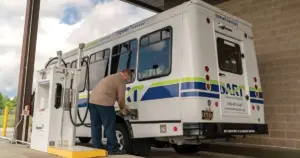
The 650 new buses will utilize Compressed Natural Gas (CNG), serving as direct replacements for older, high-mileage CNG vehicles currently aging out of service. Far from being a step backward environmentally, the MTA’s CNG strategy incorporates sophisticated sustainability safeguards:
- Renewable Natural Gas (RNG) Offset: The natural gas utilized to propel these vehicles is 100 percent offset by Renewable Natural Gas. RNG is captured directly from organic decomposition processes—such as methane harvested from regional landfills and agricultural operations. This closed-loop sourcing dramatically slashes the lifecycle greenhouse gas emissions of the fleet, transforming what would otherwise be fugitive greenhouse gases into productive urban motive power.
- Market Insulation and Cost Control: By integrating RNG, the MTA shields its operating budget from the notoriously volatile price swings associated with traditional diesel fuel. This financial stability protects taxpayer investments and ensures predictable operational expenditures.
- Maintenance Advantages: Compared to aging diesel fleets, CNG-powered buses demonstrate superior reliability metrics and require significantly fewer man-hours in maintenance depots. This translates directly to higher fleet availability and reduced mechanical downtime.
Balancing CNG and Zero-Emission Strategies
The MTA’s long-term environmental vision does not rely exclusively on natural gas. Agency strategy documents indicate that approximately 30 percent of standard bus purchases within the current Capital Plan will consist of CNG units, bridging the technological gap while zero-emission ecosystems scale up.
Simultaneously, the 2025–2029 Capital Plan explicitly accounts for the procurement of 500 zero-emission battery-electric and hydrogen fuel cell buses. Crucially, this zero-emission rollout is paired with the heavy-duty installation of advanced charging infrastructure at bus depots strategically clustered in communities historically and disproportionately burdened by poor air quality and high localized emissions. This dual-track approach ensures immediate service reliability while methodically advancing environmental justice across New York neighborhoods.
Official Statements
The announcement of the 650-bus RFP has drawn widespread commentary from key political and transit leaders, underscoring the collaborative nature of the initiative and its alignment with broader urban mobility goals.
New York Governor Kathy Hochul emphasized the direct, tangible benefits of the procurement for everyday commuters, framing the investment as the fulfillment of a vital municipal promise:
"We promised New Yorkers a historic partnership with City Hall to move buses faster and more reliably; now we are delivering by moving full speed ahead with the single largest purchase of new MTA buses in over a decade. Modern, reliable buses can spend more time on the road and less time in the shop than the old vehicles they will replace, a win for riders who depend on frequent, reliable service to get around."
Echoing the Governor’s sentiments, MTA Chair and CEO Janno Lieber addressed the strategic timing of the technology selection, balancing long-term environmental aspirations with the immediate operational realities of managing a massive transit network:
"The Governor and Mayor have been clear: better bus service can’t wait. So, while the electric bus industry continues to mature, MTA is moving forward with CNGs to further improve service for the millions of New Yorkers who ride MTA buses every day."
Mayor Zohran Kwame Mamdani’s office has similarly championed the partnership, reinforcing that systemic transit improvements require unyielding administrative alignment between state capital allocation and municipal street-level management—ranging from dedicated bus lanes to optimized traffic signal timing. Together, these leadership voices project a unified front dedicated to reversing decades of transit fatigue and restoring absolute public confidence in surface transportation.
Future Outlook
As the Metropolitan Transportation Authority formally opens the request for proposals for the 650 new buses, the transit agency stands on the threshold of a transformative operational chapter. The timeline moving forward will demand intense coordination among municipal planners, state oversight bodies, and winning manufacturing partners to ensure that production benchmarks are met without delay.
Manufacturing and Delivery Milestones
Over the coming months, transit engineers and procurement specialists will review competitive bids submitted under the newly minted Rolling Stock Program. Bidders will be evaluated not merely on per-unit costs, but on their ability to deliver durable, high-performance vehicles that meet stringent New York operating conditions—ranging from punishing winter freezes to gridlock-heavy summer heatwaves. Once a manufacturer is selected and contracts are formally executed, prototype testing and phased manufacturing runs will commence, with initial vehicle deliveries expected to populate metropolitan depots in the coming years.
The Broader Impact on Urban Mobility
The introduction of these 650 modern CNG buses—backed by RNG offsets and supported by the structural reforms of the Next Stop: Faster Buses, Better Service agenda—promises to reshape the urban experience. By dramatically reducing mechanical breakdowns, lowering fleet maintenance overhead, and ensuring reliable, high-frequency headways along heavily congested corridors, the MTA is addressing the root causes of commuter frustration.
Furthermore, this procurement serves as a bellwether for public transit agencies nationwide. In an era where many metropolitan systems struggle with post-pandemic ridership shifts, aging infrastructure, and tightening municipal budgets, New York’s aggressive capital commitment demonstrates that strategic investment, innovative procurement reform, and cross-governmental collaboration can successfully revitalize legacy mass transit networks.
As the buses roll off the assembly lines and onto the bustling avenues of New York City, they will carry more than one million daily passengers; they will carry the tangible proof that public infrastructure can evolve, adapt, and relentlessly deliver for the public good.