

Executive Overview
The maritime transportation sector in the United States is standing on the precipice of a profound technological transformation, and the waters of Maine are leading the charge. In a milestone development for regional public transit and sustainable engineering, the Battery Steele—Casco Bay Lines’ highly anticipated 164-foot steel vessel—has officially entered the Atlantic Ocean. Having successfully completed its initial launching phase in North Kingstown, Rhode Island, this cutting-edge ferry is currently navigating its way up the New England coastline toward its permanent home in Portland, Maine.
As one of the very first public passenger ferries in the United States to feature a state-of-the-art diesel-electric hybrid propulsion system utilizing advanced battery technology, the Battery Steele represents a paradigm shift in how coastal communities approach public transit. Scheduled to arrive in Portland later this summer, the vessel will undergo rigorous final commissioning and comprehensive crew training before officially entering service this fall. Once operational, it will primarily service the heavily trafficked route between Portland and Peaks Island, eventually succeeding the venerable Machigonne II.
Beyond its technical innovations, the vessel embodies a bridge between the region’s storied history and its ecological future. Named in honor of the historic military fortification on Peaks Island—a monumental former gun battery transformed into a cherished public sanctuary—the Battery Steele carries the weight of local heritage while championing ultra-modern environmental stewardship. Designed by the esteemed naval architecture firm Elliott Bay Design Group and expertly constructed by Senesco Marine in Rhode Island, this landmark vessel is projected to slash carbon dioxide emissions by up to 800 metric tons annually.
This comprehensive report examines the trajectory of the Battery Steele, detailing its pioneering propulsion mechanics, the socio-historical significance of its namesake, the logistics of its construction and delivery, and the broader implications of its deployment for the future of sustainable maritime transportation in New England and beyond.
Detailed Chronology: From Blueprint to the Open Atlantic
The realization of the Battery Steele is the culmination of years of meticulous strategic planning, rigorous fleet evaluation, and expert engineering execution. Understanding the timeline of this historic project illuminates the sheer operational complexity required to bring a first-of-its-kind vessel to life.
Phase I: Conception and Fleet Evaluation
The journey began long before steel was cut in a Rhode Island shipyard. Casco Bay Lines, facing the inevitable need to modernize its aging fleet and address escalating environmental concerns, initiated a comprehensive Fleet Evaluation Project. Recognizing that traditional diesel-mechanical propulsion systems were no longer viable for the long-term sustainability of the Casco Bay ecosystem, transit planners and marine engineers collaborated to conceptualize a vessel that could combine uncompromising operational reliability with dramatic emissions reductions.
The mandate was clear: the new ferry had to seamlessly integrate into the existing infrastructure of the Portland terminal and Peaks Island slipways while dramatically lowering the carbon footprint of the daily commute. To achieve this, Casco Bay Lines partnered with the renowned naval architecture and marine engineering firm Elliott Bay Design Group. Tasked with translating these ambitious environmental and operational goals into hard engineering specifications, the designers devised an advanced diesel-electric hybrid architecture tailored specifically to the unique operational profile of the Casco Bay run.
Phase II: Construction and the North Kingstown Launch
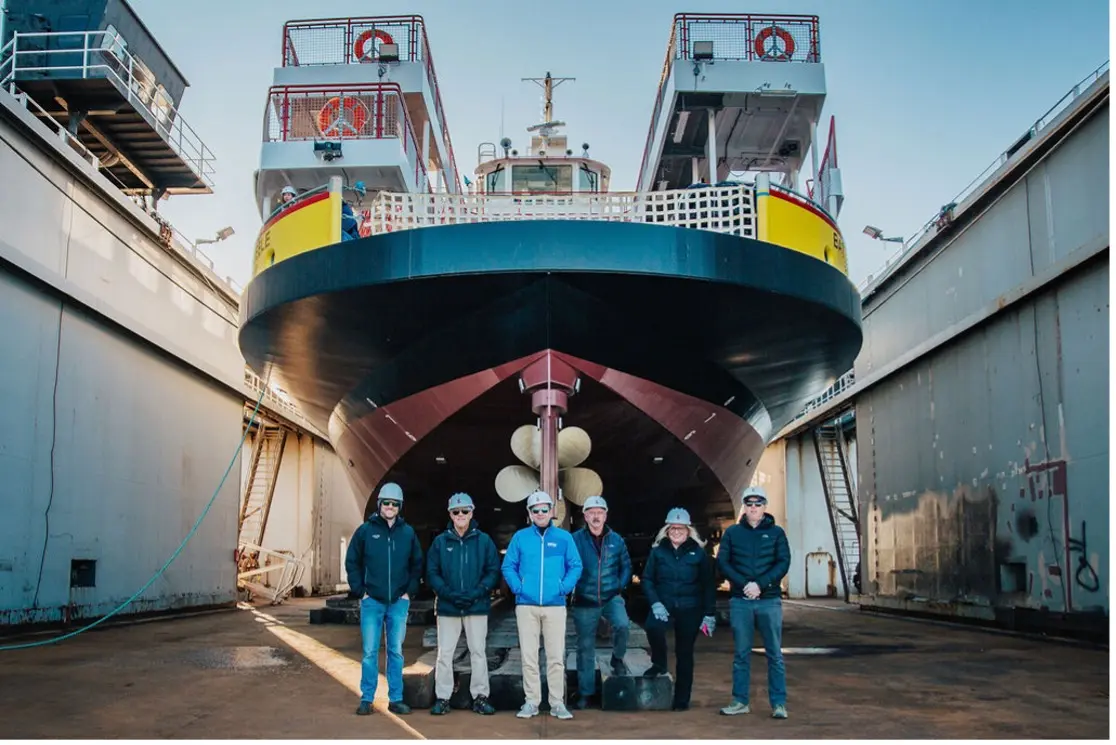
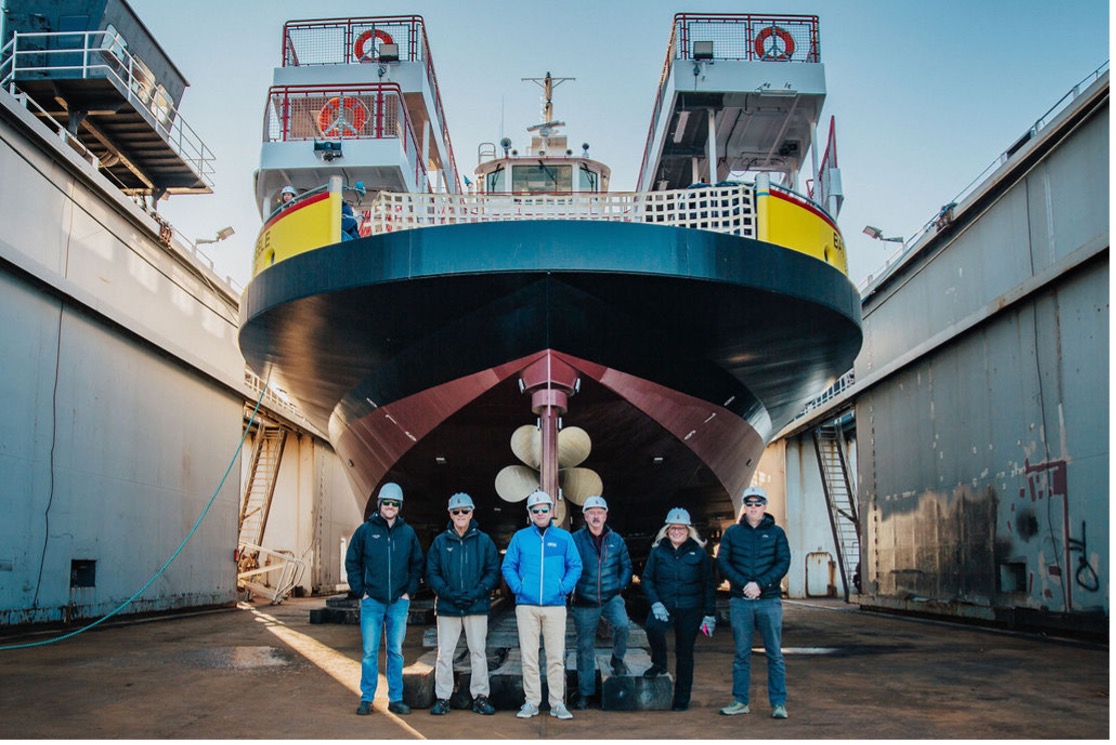
With the blueprints finalized, the construction contract was awarded to Senesco Marine, a premier shipyard located in North Kingstown, Rhode Island, known for its exceptional craftsmanship and adherence to rigorous maritime standards. Over many months, skilled shipwrights, welders, and marine electricians transformed raw steel and advanced electrical components into the sleek, robust hull of the Battery Steele.
The milestone moment arrived in early April, when members of the Casco Bay Lines executive and operational teams traveled to Rhode Island for the traditional christening and launch ceremony. Marking a time-honored maritime tradition, a bottle of champagne was ceremoniously smashed against the vessel’s hull, officially welcoming the Battery Steele into existence. This event not only celebrated months of physical labor by the Senesco Marine workforce but also symbolized a major leap forward for green maritime infrastructure in the Northeast.
Phase III: The Atlantic Transit and New England Coastline Journey
Following its successful launch and initial dockside system checks, the Battery Steele embarked on its next major hurdle: the open-ocean transit. Having entered the Atlantic Ocean, the vessel is currently navigating the picturesque yet demanding waters of the New England coastline. This voyage serves as an initial shakedown cruise, testing the vessel’s seaworthiness, hull integrity, and primary propulsion systems under real-world maritime conditions.
Phase IV: Arrival, Commissioning, and Autumn Deployment
Upon its arrival in Portland later this summer, the Battery Steele will transition from its delivery phase into final commissioning. This critical window will involve exhaustive dockside and underway testing of its complex battery management systems, shoreside charging interfaces, and auxiliary diesel generators.
Concurrently, Casco Bay Lines will spearhead an intensive crew training program. Operating a diesel-electric hybrid ferry requires a specialized skill set, blending traditional seamanship with advanced electrical systems monitoring. Captains, engineers, and deckhands will undergo rigorous simulations and hands-on drills to ensure absolute operational proficiency.
If all milestones are met according to schedule, the Battery Steele will carry its first fare-paying passengers and vehicles this fall. Stepping into the shoes of the Machigonne II, the vessel will immediately assume its heavy-duty role as an indispensable lifeline for the Peaks Island community, ushering in a new era of quiet, clean, and reliable transit across Casco Bay.
Supporting Context & Metrics: Engineering a Clean Maritime Future
The true significance of the Battery Steele lies beneath its waterline and within its engine room. By rejecting conventional diesel-mechanical propulsion in favor of a cutting-edge diesel-electric hybrid system, Casco Bay Lines has set a new benchmark for public passenger ferries across the United States.
Propulsion Dynamics and Battery Technology
Traditional passenger ferries rely on internal combustion engines mechanically linked to propeller shafts, resulting in continuous fuel consumption, significant underwater noise pollution, and substantial greenhouse gas emissions—even when idling or maneuvering at low speeds around docks.
The Battery Steele rewrites this operational playbook. Its hybrid system centers around advanced, high-capacity energy storage banks that supply power directly to electric propulsion motors. This configuration allows the vessel to operate primarily on zero-emission battery power for significant portions of its daily route.
To maintain strict schedules without sacrificing environmental goals, the vessel employs a dual-mode strategy:
- Shoreside Charging Infrastructure: While docked at the Portland terminal, the vessel will interface with high-capacity shoreside charging stations, replenishing its battery banks using shore power during passenger loading and unloading cycles.
- Onboard Backup Generators: For extended operations, severe weather contingencies, or times when rapid turnaround is required, the vessel is equipped with efficient auxiliary diesel generators. These generators can provide immediate auxiliary power while simultaneously recharging the battery banks, ensuring unwavering reliability year-round regardless of grid fluctuations or weather extremes.
Environmental Impact and Emissions Reductions
The quantifiable ecological benefits of transitioning to this hybrid model are profound. Independent environmental assessments project that the Battery Steele will prevent up to 800 metric tons of carbon dioxide ($CO_2$) emissions annually. To put this figure into perspective, removing 800 metric tons of $CO_2$ is equivalent to taking approximately 170 gasoline-powered passenger vehicles off the road permanently each year.
Furthermore, the operational shift will dramatically curtail other harmful air pollutants, including nitrogen oxides ($NO_x$), sulfur oxides ($SO_x$), and particulate matter, directly improving local air quality for residents and visitors in both downtown Portland and Peaks Island.
Noise Pollution Mitigation
Beyond atmospheric emissions, maritime operations introduce significant acoustic pollution into marine ecosystems. Low-frequency engine vibrations and propeller noise can disrupt marine life, interfere with fish communication, and degrade the tranquil ambiance of coastal communities.
Because the Battery Steele will operate extensively on pure electric battery power, its acoustic signature is drastically lower than that of its conventional counterparts. Passengers will experience a remarkably smooth, vibration-free, and quiet ride across Casco Bay, while waterfront residents on Peaks Island and Portland will enjoy a noticeable reduction in ambient harbor noise. This harmonious integration of modern engineering with natural serenity underscores the meticulous thought that went into the vessel’s design.
Cultural Heritage: Honoring the Legacy of Battery Steele
While the technological achievements of the new ferry are undeniably forward-looking, its very name anchors it firmly in the rich local history of Casco Bay. The designation "Battery Steele" carries deep resonance for residents of Peaks Island and the broader Portland community.
The Historic Military Installation
To understand the weight of the name, one must look back to the mid-20th century. Battery Steele, located on Peaks Island, was constructed during World War II as part of the Harbor Defenses of Portland. It was designed as a massive coastal artillery fortification meant to protect the crucial industrial and military shipping lanes of Portland Harbor against potential enemy naval attacks.
Featuring two colossal 16-inch naval guns housed within heavily reinforced concrete casemates, Battery Steele was one of the largest and most formidable gun batteries ever built in the United States. Spanning acres of land, the installation was a marvel of mid-century military engineering, manned by hundreds of service members during the height of wartime mobilization.
From Fortification to Public Sanctuary
With the conclusion of the war and the rapid evolution of military defense technology—particularly the advent of long-range ballistic missiles and aerial warfare—coastal artillery installations like Battery Steele quickly became obsolete. For decades following its decommissioning, the site sat largely abandoned, a sprawling concrete relic gradually overtaken by the rugged Maine wilderness.
However, a profound transformation began to take shape in the 1990s. Through dedicated grassroots preservation efforts, local municipal action, and environmental advocacy, the former military site was successfully rescued from private development. Over the subsequent decades, the grounds were meticulously rehabilitated, converting a zone of wartime readiness into an open, accessible public space.
Today, Battery Steele is celebrated as a unique ecological and historical landmark. It serves as a popular destination for hikers, history enthusiasts, and nature lovers seeking exploration, quiet reflection, and a tangible connection to the past. The sprawling concrete structures now host native vegetation, art installations, and community gatherings, symbolizing a triumph of community stewardship over militarization.
Bridging Past and Future
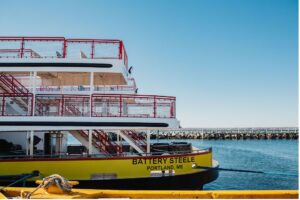
By christening their flagship hybrid vessel the Battery Steele, Casco Bay Lines has masterfully bridged the gap between Portland’s robust maritime history and its sustainable future. Just as the historic battery evolved from a site of defensive isolation into an open space for community connection, the new ferry represents a decisive evolution in public transit—moving away from ecologically damaging industrial practices toward a cleaner, more harmonious coexistence with the natural environment.
The name serves as a daily reminder to passengers that while technology moves forward, the core identity, resilience, and pride of the Casco Bay community remain unchanging.
Future Outlook: A New Standard for Regional Maritime Transit
The debut of the Battery Steele is not merely an isolated fleet upgrade for a single ferry service; it represents a watershed moment for regional public transportation throughout the Northeast and serves as a blueprint for sustainable maritime operations nationwide.
Setting the Precedent in New England
As one of the very first electrically propelled, high-capacity public passenger ferries constructed and operated in New England, Casco Bay Lines has positioned itself at the absolute vanguard of green maritime transportation. Transit authorities, municipal planners, and environmental regulators from across the country are watching the Casco Bay initiative closely.
The success of the Battery Steele will provide a vital empirical dataset on the viability, reliability, and economic efficiency of hybrid-electric marine propulsion in cold-weather, high-demand coastal environments. If, as projected, the vessel meets or exceeds its operational and environmental targets, it could catalyze a broader wave of fleet electrification across other major ferry networks in Boston, New York, Seattle, and beyond.
Catalyzing Future Fleet Evaluations
The introduction of the Battery Steele to the Portland-to-Peaks Island run is just the beginning of Casco Bay Lines’ long-term strategic evolution. The insights gained during the construction, testing, and day-to-day operation of this vessel will directly inform future fleet evaluations. As battery energy density improves, charging infrastructure expands, and maritime environmental regulations become increasingly stringent, subsequent additions to the Casco Bay fleet will likely build upon the technological foundation laid by the Battery Steele.
For the daily commuters, school children, local business owners, and seasonal tourists who rely on the ferry service to maintain their livelihood and connection to the mainland, the arrival of the Battery Steele signifies a steadfast commitment to reliability and environmental health. It ensures that the vital maritime highway of Casco Bay will remain pristine, accessible, and operational for generations to come.
Conclusion: Welcoming a New Era
As the Battery Steele continues its historic journey up the Atlantic coastline toward Portland Harbor, it carries with it the hopes of an innovative transit agency, the pride of a historic island community, and the promise of a cleaner, quieter maritime future.
When the vessel officially drops anchor and welcomes its first passengers this fall, it will do more than simply transport travelers across the bay; it will demonstrate definitively that modern engineering and environmental preservation can sail hand in hand. Casco Bay Lines invites all residents, commuters, and visitors to follow the final stages of the vessel’s journey via their Fleet Evaluation Project portal, and most importantly, to look forward to stepping aboard the Battery Steele as it charts a bold, sustainable course into tomorrow.