








Executive Overview
Norwegian Cruise Line (NCL) has officially detailed its expansive and strategic 2028 Caribbean program, signaling a major commitment to deploying its newest, most technologically advanced vessels across the tropical theater. By positioning marquee ships—including the newly introduced Norwegian Aura and Norwegian Luna, alongside returning favorites like Norwegian Prima and Norwegian Escape—across three primary U.S. homeports (Miami, Galveston, and Port Canaveral), NCL is engineering a comprehensive operational footprint for the spring, summer, and fall seasons of 2028.
This meticulously engineered deployment strategy addresses multiple market segments simultaneously. It caters to multigenerational family travelers seeking short-to-mid-range itineraries equipped with next-generation amenities, cruisers demanding diverse regional access from centralized domestic fly-drive hubs, and enthusiasts of extended-duration voyages looking for deep Southern Caribbean exploration.
At the core of the 2028 strategy is NCL’s calculated investment in onboard innovation—most notably the debut of "Ocean Heights" aboard the Norwegian Aura—and the heavy integration of private-destination infrastructure, headlined by Great Stirrup Cay in The Bahamas and Harvest Caye in Belize. By optimizing its fleet allocation across Florida and Texas, NCL aims to capture surging demand for premium Caribbean vacations while offering unparalleled schedule flexibility through alternating itineraries and back-to-back voyage opportunities.
Detailed Chronology: Fleet Deployments and Itinerary Breakdowns
The 2028 Caribbean blueprint is structured around a diverse array of ships performing specialized deployment rotations. From weekly roundtrips out of South Florida to complex repositioning legs linking the Southern Caribbean to the U.S. Northeast, NCL’s operational cadence is designed to maximize regional exposure.
Norwegian Aura: Leading the Charge from Miami
Anchoring NCL’s flagship offerings for 2028 is the Norwegian Aura, representing one of the newest additions to the fleet. The vessel will spearhead the line’s Eastern Caribbean program with a series of seven-day roundtrip voyages originating from Miami.
- The Itinerary: Calls are scheduled for Puerto Plata (Dominican Republic), St. Thomas (U.S. Virgin Islands), Tortola (British Virgin Islands), and NCL’s private island, Great Stirrup Cay (The Bahamas).
- Port Highlights: Puerto Plata continues to solidify its status as a premier Dominican Republic destination, seamlessly blending access to the historic Malecón waterfront, cascading inland waterfalls, and pristine coastal stretches. St. Thomas remains an anchor port for duty-free retail and deep-water excursions, while Tortola offers access to the dramatic topography and tranquil island chains of the British Virgins.
- Onboard Innovation: The deployment of the Norwegian Aura serves as an early showcase for the ship’s groundbreaking structural layout, engineered explicitly with multigenerational demographics in mind. The vessel introduces Ocean Heights, NCL’s first-ever open-air activities complex, moving beyond traditional top-deck pool configurations to offer dynamic, multi-tier outdoor recreation. Furthermore, specialized zones such as Adventure Alley, Little Explorer’s Cove, and the Teen Hangout cement the ship’s position as a premier family-vacation platform.
Norwegian Prima: Strengthening the Texas and Western Markets
For travelers originating from the central United States and Texas, the 2028 season marks the highly anticipated return of the Norwegian Prima to the port of Galveston.
- The Itinerary: Operating seven-day roundtrip Western Caribbean cruises, the Norwegian Prima injects contemporary cruise hardware into the competitive Texas departure market.
- Key Destinations: The itinerary prominently features Harvest Caye, Belize, NCL’s master-planned, resort-style destination situated off the country’s southern coast. Harvest Caye offers a sprawling 7-acre beach, an extensive lagoon-style pool, private luxury cabanas, zip-line networks, water sports, and direct transit links to mainland Mayan archaeological sites and nature reserves.
- Market Impact: Galveston’s ascent as a premier international cruise gateway continues to accelerate. By stationing the Norwegian Prima in Texas, NCL provides central-U.S. consumers with a modern, design-forward megaship option without requiring transcontinental air travel to coastal Florida ports.
Norwegian Luna: Southern Caribbean Repositioning and Inaugural Calls
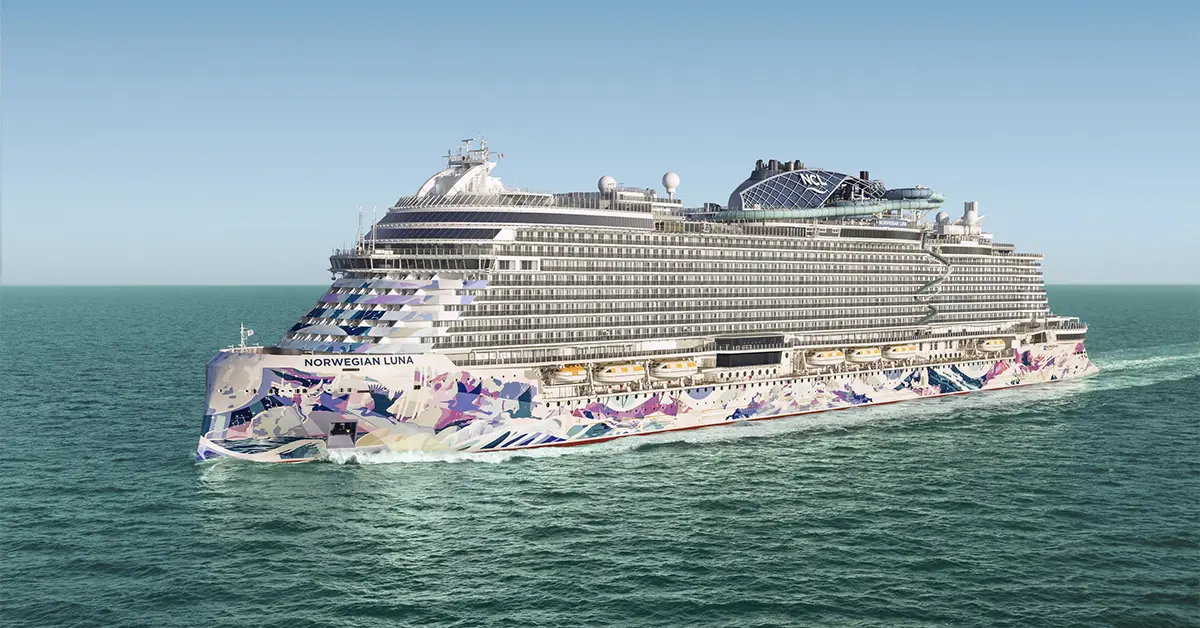
Discerning travelers seeking extended itineraries will find a compelling option aboard the Norwegian Luna, which is slated to operate a high-profile, 10-day repositioning voyage from Miami to New York City in May 2028.

- Itinerary Composition: This special north-bound transit features maiden calls for the Norwegian Luna in Aruba, Curaçao, and San Juan (Puerto Rico), before concluding its journey in New York.
- Port Diversity:
- Aruba: Passengers gain prolonged access to the island’s famous white-sand strips like Eagle Beach and Palm Beach, alongside explorations of Oranjestad and the rugged, cactus-studded interior of Arikok National Park.
- Curaçao: The ship docks near Willemstad, allowing guests to experience the UNESCO-listed Dutch colonial architecture of the Punda and Otrobanda districts, alongside world-class shore diving and a burgeoning culinary scene.
- San Juan: The vessel delivers travelers directly into the historic heart of Old San Juan, placing them within walking distance of 16th-century Spanish fortifications like El Morro, cobblestone plazas, and vibrant local commerce.
Norwegian Escape: Central Florida Flexibility via Port Canaveral
Rounding out the Florida deployment, the Norwegian Escape will be stationed at Port Canaveral, serving the lucrative Orlando and Central Florida tourism corridor.
- Itinerary Structure: The ship will operate alternating Eastern and Western Caribbean roundtrip itineraries, weaving in signature stops at Great Stirrup Cay.
- Operational Advantages: Alternating routes out of a single homeport provide repeat cruisers with distinct geographical choices. Crucially, this setup facilitates back-to-back cruising, enabling passengers to remain onboard for consecutive weeks to construct a seamless, multi-destination vacation covering both sides of the Caribbean basin.
Supporting Context & Metrics: Gateway Logistics and Private Islands
The success of NCL’s 2028 strategy relies heavily on the synergistic relationship between its homeports, destination infrastructure, and fleet deployment economics.
| Vessel | Homeport | Itinerary Type | Key Ports of Call | Highlight Amenities / Focus |
|---|---|---|---|---|
| Norwegian Aura | Miami, FL | 7-Day Eastern Caribbean | Puerto Plata, St. Thomas, Tortola, Great Stirrup Cay | Ocean Heights, Family Zones, Multigenerational Focus |
| Norwegian Prima | Galveston, TX | 7-Day Western Caribbean | Harvest Caye (Belize) & regional ports | Modern design, central-U.S. accessibility, resort-style island day |
| Norwegian Luna | Miami to NYC | 10-Day Repositioning (May) | Aruba, Curaçao, San Juan (Puerto Rico) | Extended duration, Southern Caribbean inaugural calls |
| Norwegian Escape | Port Canaveral, FL | Alternating 7-Day Eastern/Western | Great Stirrup Cay & regional hubs | Back-to-back itinerary capabilities, Orlando market access |
The Strategic Value of Private Destinations
Private islands and resort-style mainland ports have transitioned from mere amenities to the primary economic engines of contemporary cruise design. In the 2028 program, Great Stirrup Cay in The Bahamas serves as a recurring anchor across multiple vessels, featured prominently in both the Norwegian Aura Miami departures and the Norwegian Escape Port Canaveral sailings.
Control over the shore-side environment allows NCL to maintain stringent service standards, mitigate port congestion issues frequently encountered in municipal harbors, and guarantee a uniform beach experience. Similarly, Harvest Caye in Belize functions as the cornerstone of the Western Caribbean deployment, offering a controlled, amenity-rich oasis that bridges the gap between rugged eco-tourism and high-end leisure.
Homeport Economics: Miami, Galveston, and Port Canaveral
- Miami: Retains its crown as the undisputed cruise capital of the world, offering unmatched airlift capacity through Miami International Airport (MIA) and Fort Lauderdale-Hollywood International Airport (FLL), making it the optimal launchpad for premium tonnage like the Norwegian Aura.
- Galveston: Serves as the vital demographic bridge to the American West and Midwest. By deploying the Norwegian Prima to Texas, NCL capitalizes on the "drive-in" cruise market, capturing passengers who might otherwise bypass fly-to Caribbean options.
- Port Canaveral: Capitalizes on the massive tourism infrastructure of Orlando. Combining a cruise out of Port Canaveral with theme park visits or space coast attractions makes it an indispensable asset for family-centric bookings.
Official Perspectives and Industry Insights
While specific fiscal performance metrics associated exclusively with the 2028 deployment remain part of NCL’s broader forward-looking financial disclosures, senior maritime analysts and company stakeholders have emphasized the methodical nature of this scheduling rollout.
Industry observers note that spreading newer tonnage—rather than concentrating all recent builds exclusively in Europe or Alaska—reflects robust, sustained consumer appetite for warm-weather cruising. The deliberate pairing of high-capacity family ships with high-amenity hardware is calculated to drive higher onboard yield and ticket pricing power.
Furthermore, the introduction of Ocean Heights aboard the Norwegian Aura represents a direct response to post-pandemic demographic shifts in cruising, where multi-generational family groups have become the fastest-growing customer segment. By engineering open-air activity spaces that scale across age cohorts, NCL is addressing the perennial challenge of keeping diverse family groups engaged during weeklong sea-and-sun deployments.
Future Outlook: The Horizon for NCL’s Caribbean Operations
Looking beyond the immediate mechanics of the 2028 calendar, Norwegian Cruise Line’s strategy points toward a stabilized, highly sophisticated operational model for the late 2020s.
- Fleet Harmonization: The simultaneous presence of the Aura, Prima, Luna, and Escape demonstrates a balanced ladder of ship ages and classes, ensuring that NCL can test new onboard concepts while maintaining reliable capacity in high-demand regional corridors.
- Geographic Diversification: By stretching its map from the coral-fringed shores of the Dutch Caribbean (Aruba and Curaçao) up through the historical fortifications of San Juan, the limestone drop-offs of the Western Caribbean, and the pristine shallows of The Bahamas, NCL hedges against localized weather events, geopolitical shifts, or shifting regional tourism taxes.
- Consumer Adaptation: The structural ease of booking back-to-back cruises out of Port Canaveral or leveraging the massive air network out of Miami positions NCL to capture longer, higher-value vacations as consumer vacation habits evolve toward extended durations.
As 2028 approaches, the industry will undoubtedly monitor the performance of the Norwegian Aura and its pioneering Ocean Heights complex. If successful, this deployment blueprint could very well serve as the architectural standard for NCL’s warm-weather programming well into the next decade, cementing the brand’s footprint as a dominant force in the tropical cruise market.