










Executive Overview
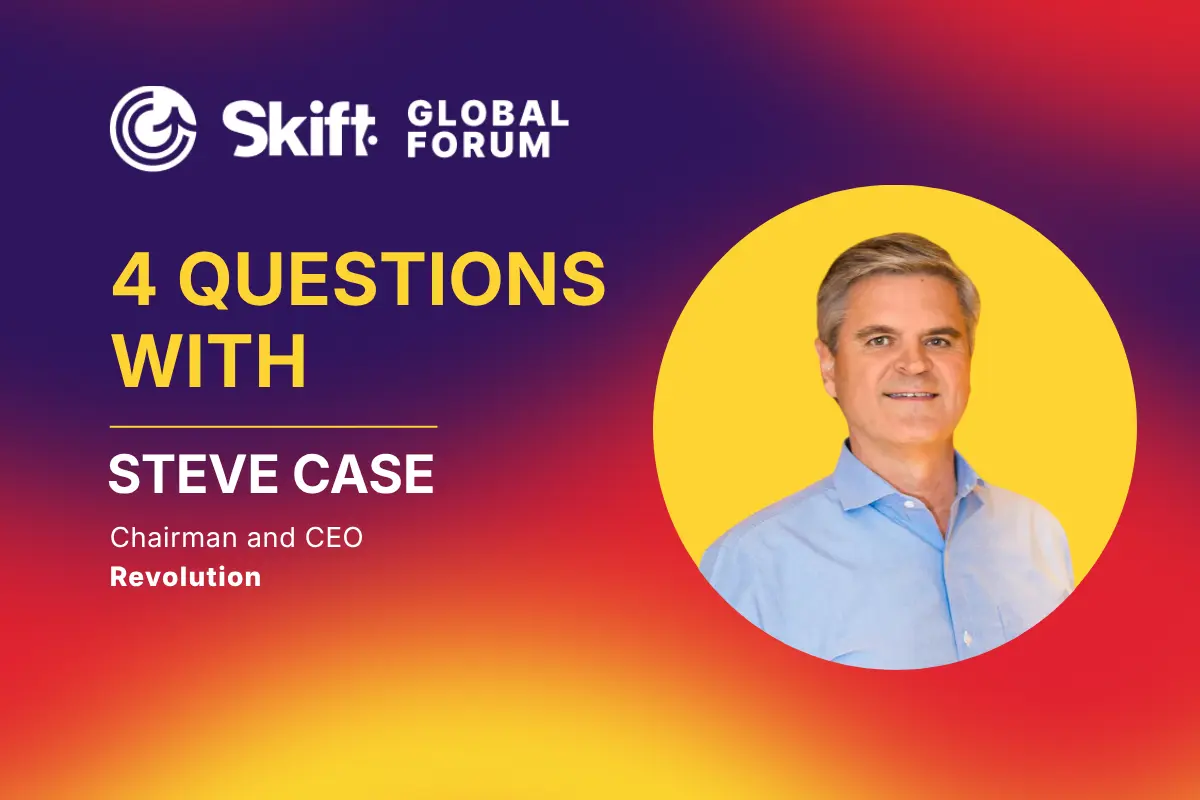
As artificial intelligence rapidly reshapes the digital and physical landscapes, industries are scrambling to adapt to a world where data, information, and routine logistics are trending toward zero marginal cost. Yet, according to Steve Case—the visionary co-founder of AOL and current chairman and CEO of investment firm Revolution—this technological tidal wave points toward a counterintuitive truth. Rather than digitizing everything, the ultimate luxury in an AI-dominated era will be scarcity.
Case, whose portfolio includes major hospitality and travel players such as Exclusive Resorts, Inspirato, onefinestay, and the sprawling Punta Cacique development in Costa Rica, argues that the travel industry stands at a critical juncture. The core thesis governing his investment strategy is deceptively simple: aggressively deploy AI to manage the growing mountain of digital abundance, while relentlessly pouring capital into things that cannot be replicated.
Ahead of his upcoming appearance at the Skift Global Forum, Case breaks down why younger generations are rebelling against endless digital choices in favor of human travel advisors, why compounding community relationships have replaced episodic transactions, and why the ultimate challenge for the next decade of hospitality is not eliminating friction—but deliberately protecting the right kind.
Detailed Chronology: The Evolution of the Scarcity Shift
To understand Case’s current investment philosophy, one must trace the trajectory of technological disruption over the past three decades.
Phase 1: The Era of Access (The Late 1990s to 2010s)
When Case helped pioneer the consumer internet through AOL, the primary mandate of technology was to democratize access. Information was scarce, long-distance communication was expensive, and booking travel required navigating opaque, legacy systems. The internet successfully dismantled geographic barriers, lowering transaction costs and opening up global markets to ordinary consumers. For years, tech innovation was judged by how quickly it could connect people and digitize physical records.
Phase 2: The Paradox of Abundance (The 2020s)
Today, that initial promise has mutated into a pervasive problem: the paradox of abundance. Travelers are no longer starved for information; they are drowning in it. Infinite scrolling, algorithmic trip planners, and automated booking platforms have created an overwhelming surplus of choices, leading to widespread decision fatigue. Consumers have more tools at their fingertips than ever before, yet they often feel less confident in their final travel decisions.
Phase 3: The Scarcity Shift and AI Integration
Recognizing this paradigm shift, Case formalized what he terms the "Scarcity Shift." As AI commoditizes planning, content generation, and logistical personalization, the value equation has flipped entirely.

- What is becoming abundant (Automated via AI): Information, content creation, broad itinerary planning, research, administrative tasks, and routine customer service mechanics.
- What is remaining scarce (Secured via Capital): Irreplaceable geographic assets (such as untouched oceanfront peninsulas), decades of deep-rooted community trust, authentic human curation, and the profound feeling of being somewhere truly unique.
Case’s philosophy dictates that operators must use AI ruthlessly to strip away the administrative friction of travel, while steering capital exclusively toward assets that algorithms can never manufacture.
Supporting Context & Metrics: The Paradox of Choice and the Human Rebellion
A common assumption of the early digital age was that technology would entirely disintermediate human middlemen. Travel agents, traditional concierges, and physical tour operators were written off as relics of a bygone era. However, empirical market data reveals a surprising counter-trend: the digital generation is leading a massive resurgence in human-led curation.
Recent industry data underscores this fundamental shift in consumer behavior:
- The Gen Z and Millennial Preference: In a comprehensive Chase Travel survey encompassing over 4,000 travelers, a staggering 60% of Gen Z and Millennials explicitly stated a preference for utilizing human travel advisors.
- The Digital-Native Paradox: The generation most fluent in generative AI tools and social media discovery is actively choosing human judgment when it comes to committing their hard-earned money and precious vacation time.
- The Rise of Compounding Memberships: Platforms operating under "The Exclusive Collective" umbrella (incorporating Exclusive Resorts, Inspirato, and onefinestay) have demonstrated that retention and value soar when a brand transitions from a transactional booking engine to a relationship-driven club model. By the tenth trip, a member is no longer purchasing a generic room; they are engaging with an institutional memory that understands their family milestones, preferences, and lifestyle needs better than any algorithm ever could.
Official Insights: Perspectives from Steve Case
In exclusive commentary outlining his strategic worldview, Case unpacks the nuances of modern hospitality, the shifting mechanics of customer loyalty, and the hidden dangers of automated convenience.
On the Decision-Making Rule: Abundance vs. Scarcity
"I start with a simple question: Will AI make this more abundant, or will it remain scarce? Throughout history, technology has made certain things cheaper, faster, and more accessible. AI is accelerating that trend, creating unprecedented abundance in the digital world… As those things become abundant, the things AI can’t create become more valuable."
Highlighting real-world execution, Case points to the development of Punta Cacique, an exclusive oceanfront peninsula on Costa Rica’s Guanacaste coast.
"The question wasn’t whether AI would change hospitality—it will, in dozens of useful ways. The question was whether anything could ever create another peninsula like that one. It can’t. The same logic runs through our land holdings in Hawaii and our membership businesses: AI can help operate a business more efficiently, but it can’t manufacture an irreplaceable place, build decades of trust with a community, or replace the feeling of being somewhere truly special."
On the Death of the Transactional Relationship
According to Case, traditional hospitality models built around episodic, single-transaction bookings are rapidly losing ground to compounding community ecosystems.
"When I invested in Exclusive Resorts more than two decades ago, I thought it was mostly about the homes. Over the years I’ve come to learn that the homes are table stakes. What people really value is the community—being part of a club of other interesting people… By the tenth trip, we’re not selling members a vacation—we know how they celebrate milestones, which properties their kids grew up in, what they’ll want before they ask. No algorithm starts with that head start, and no competitor can copy it."
On the Critical Distinction Between Good and Bad Friction
Perhaps Case’s most provocative observation revolves around the concept of friction—a metric that tech companies have historically tried to eliminate entirely. He divides friction into two distinct categories:
- Bad Friction: Standing in long airport security lines, sitting on hold with an airline call center, sorting through endless web pages of mediocre options, and battling confusing logistical hurdles. AI should—and will—eliminate this entirely.
- Good Friction: Taking an unplanned wrong turn down a cobblestone side street and stumbling upon an undiscovered neighborhood, tasting a local dish you cannot pronounce, struggling through a few words of a foreign language, or sharing an unexpected conversation with a resident.
"Here’s the risk: as AI gets better at optimizing every trip, we could accidentally sand away the serendipity people are actually paying for," Case warns. "The most important design question facing this industry over the next decade isn’t which friction to eliminate—AI will handle that. It’s which friction to protect. And how to use technology to do what it does best, but always remember that hospitality is a people business. Just because you can automate something doesn’t mean you should."
Future Outlook: What Lies Ahead for the Travel Industry
As the travel ecosystem prepares for the discussions at the upcoming Skift Global Forum in New York—where industry titans such as Steve Case (Revolution), Brian Chesky (Airbnb), Glenn Fogel (Booking Holdings), and Darrell Wade (Intrepid Travel) take the stage—the path forward requires a delicate balancing act.
The next decade will not be won by companies that simply digitize faster or deploy the most advanced chatbots. Those tools will quickly become commoditized baseline utilities available to every market participant. Instead, the ultimate winners will be those who master the delicate equilibrium of the Scarcity Shift.
Hospitality executives must ask themselves whether their investments lie in the realm of the infinitely reproducible or the permanently irreplaceable. By leaning into human curation, protecting the serendipitous moments of "good friction," and transforming episodic customers into lifelong members of a trusted community, travel brands can insulate themselves against the commoditizing pressures of artificial intelligence. In a world drowning in digital noise and automated perfection, the ultimate competitive advantage will remain wonderfully, beautifully human.