









Executive Overview
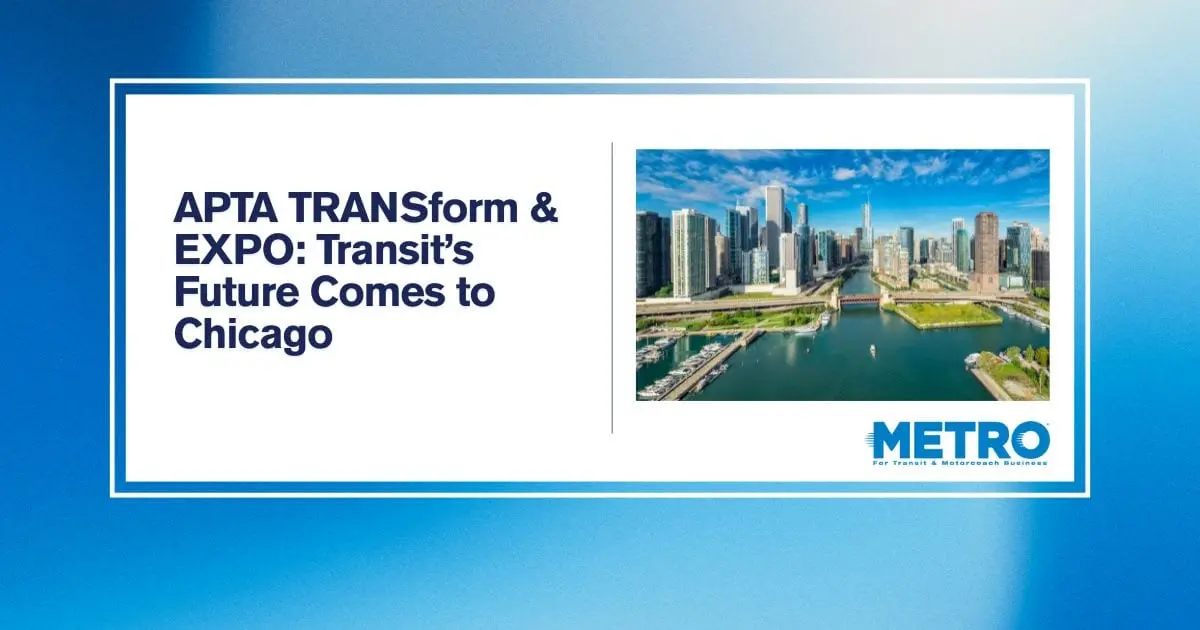
As North America’s public transportation sector navigates a complex era defined by rapid technological disruption, shifting commuter patterns, and the urgent imperative of environmental sustainability, the industry is preparing for its most consequential gathering of the decade. The American Public Transportation Association (APTA) has officially confirmed that its flagship event, the TRANSform & EXPO 2026, will return to Chicago’s McCormick Place from October 4 to October 7, 2026.
Widely acknowledged as the premier event for the transit industry on the continent, the four-day mega-conference is projected to convene thousands of public transportation professionals, executive leadership, transit agency directors, policymakers, consultants, academics, and commercial innovators. Against a backdrop of unprecedented capital investments—bolstered by federal funding streams and a growing recognition of transit’s economic multiplier effect—attendees will converge to tackle the twin challenges of balancing day-to-day operational excellence with forward-looking capital transformations.
The 2026 conference agenda is meticulously designed to address the issues keeping transit leaders awake at night. From the integration of artificial intelligence (AI) and autonomous vehicle technologies into legacy operations to the large-scale deployment of zero-emission fleets, enhanced cybersecurity frameworks, and data-driven workforce development, TRANSform & EXPO 2026 serves as both an intellectual crucible and a commercial marketplace.
With more than 800 industry-leading exhibitors occupying the sprawling McCormick Place exhibition floor, the event bridges the gap between high-level policy formulation and tangible, on-the-ground execution. For transit agencies striving to modernize infrastructure, optimize schedules, and enhance the passenger experience, Chicago will serve as the epicenter where the trajectory of the next generation of public mobility is mapped out.
Detailed Chronology and Event Framework
The four-day schedule of APTA TRANSform & EXPO 2026 has been structured to maximize immersion, blending high-level strategic discourse with hands-on technological evaluation. The event’s chronological flow moves from foundational plenary sessions to specialized technical workshops, culminating in comprehensive on-site industry showcases.
Day 1: Opening Plenary and the Dawn of Autonomous Mobility
The conference opens on Sunday, October 4, with registration and opening networking receptions designed to reacquaint peers and forge cross-sector alliances. The official kickoff features keynote addresses from prominent federal policymakers, urban planners, and transit agency chief executive officers.
The initial day’s panels heavily emphasize macro-level trends, particularly the convergence of municipal planning and autonomous technologies. Discussions will center on how cities can future-proof their roadways and rail networks for connected and automated vehicles (CAVs) without exacerbating congestion or equity gaps.
Day 2: Artificial Intelligence, Predictive Maintenance, and Cybersecurity
Monday, October 5, dives deep into the operational engine room of modern transit. The morning sessions focus exclusively on the integration of artificial intelligence across various operational verticals. Attendees will participate in specialized technical tracks exploring AI-powered predictive maintenance models—systems capable of detecting mechanical anomalies in railcars and buses long before catastrophic failure occurs.
Simultaneously, afternoon tracks will address the escalating threat landscape, with cybersecurity experts detailing risk mitigation strategies for operational technology (OT) and supervisory control and data acquisition (SCADA) systems that govern modern rail and signaling infrastructure.
Day 3: Zero-Emission Fleets, Energy Resilience, and the EXPO Floor
Tuesday, October 6, shifts the spotlight to environmental sustainability and infrastructure readiness. As transit agencies nationwide race to meet aggressive zero-emission mandates, sessions will examine the logistical realities of battery-electric and hydrogen fuel cell vehicle rollouts. Industry leaders will share hard-learned lessons regarding depot electrification, grid capacity constraints, and supply chain bottlenecks for charging hardware.
Running parallel to the educational forums, the EXPO floor opens in full force, offering attendees an uninterrupted window into the latest heavy-duty electric buses, hydrogen refuelling modules, contactless fare payment architectures, and real-time passenger information displays.
Day 4: Workforce Development, Equity, and Technical Tours
The concluding day, Wednesday, October 7, tackles the human element of public transit: the workforce crisis and mobility equity. Sessions will explore innovative recruitment pipelines, upskilling programs for maintenance technicians transitioning to electric architectures, and retention strategies in a competitive labor market.
The afternoon will feature curated technical tours of Chicago’s world-class multimodal transit network, allowing delegates to experience the city’s heavy rail, commuter rail, and bus operations firsthand, concluding the conference with practical insights drawn from one of North America’s most complex urban transit ecosystems.
Supporting Context & Metrics: The Economic Engine of Public Transit
To fully appreciate the urgency and scale of the innovations showcased at TRANSform & EXPO 2026, one must examine the macroeconomic data underpinning the modern public transportation industry. According to economic impact data compiled by the American Public Transportation Association, public transit is not merely a public service; it is a powerful economic catalyst.
The Return on Investment (ROI) of Transit Funding
Extensive economic research highlighted by APTA demonstrates that public transportation delivers a remarkable $5.11 economic return for every $1.00 invested. This multiplier effect ripples through regional economies by reducing household transportation expenditures, alleviating traffic congestion, lowering carbon emissions, and connecting marginalized populations to employment, education, and healthcare centers.
Furthermore, investments in transit infrastructure directly stimulate local job growth. Economic analyses reveal that every $1 billion invested in public transportation supports approximately 41,400 jobs across a wide spectrum of industries, ranging from construction, engineering, and manufacturing to software development, electrical grid management, and supply chain logistics.
Capital Investments vs. Everyday Service Quality
Transit agencies across North America find themselves walking a delicate tightrope. On one hand, federal legislative milestones and grant programs have injected billions of dollars into capital investment pipelines. Agencies are modernizing aging rail fleets, expanding light rail networks, and executing massive facility overhauls.
On the other hand, post-pandemic ridership patterns—marked by hybrid work models, decentralized commuting, and shifting peak-hour demands—require agencies to be hyper-responsive to everyday service quality. Commuters now demand clean, safe, reliable, and frequent service.
This duality forms the core thesis of the 2026 conference: How can transit agencies leverage massive, long-term capital investments to solve immediate, everyday operational pain points? Whether through real-time predictive scheduling tools that minimize delays or enhanced security protocols that restore passenger confidence, the solutions must be both visionary and practical.
Official Statements and Industry Perspectives
The anticipation surrounding TRANSform & EXPO 2026 reflects a broader consensus among transit leaders regarding the transformative nature of current industry trends. Industry stakeholders have increasingly emphasized that collaboration between the public sector and private enterprise is no longer optional—it is a survival requirement.
In statements previewing the upcoming conference, transit executives have underscored the vital role that the EXPO floor plays in procurement decisions. For mid-sized and large transit systems alike, evaluating new technologies in a vacuum is fraught with financial risk. The ability to convene in Chicago, inspect competing hardware side-by-side, interrogate software platforms, and engage directly with global suppliers provides a vital de-risking mechanism for public funds.
Moreover, academic and policy leaders participating in the TRANSform educational tracks have pointed to artificial intelligence as the most disruptive—and promising—frontier in public mobility. While early deployments of AI focused primarily on customer-facing applications like chatbots and trip planners, the 2026 conference highlights a decisive shift toward back-end operational integration.
Transit directors are increasingly turning to machine learning algorithms to dynamically optimize bus routes in real time, balance power loads across depot charging stations, and automate safety compliance monitoring. By bringing together the minds engineering these algorithms and the operators deploying them on the streets, APTA provides a unique forum for rigorous peer review and knowledge transfer.
Future Outlook: The Next Horizon for Public Mobility
As the transportation sector looks past the horizon of 2026, the decisions made and partnerships forged at McCormick Place will reverberate throughout the industry for decades. The convergence of multiple technological revolutions—electrification, autonomy, digitization, and data analytics—is permanently altering the DNA of public transportation.
The Zero-Emission Transition
The complete electrification of North American transit fleets is no longer a theoretical debate; it is an active logistical marathon. By 2026, many agencies that initiated pilot programs years prior will be grappling with full-scale fleet deployments.
The challenges ahead are formidable, involving complex negotiations with local electric utilities, investments in microgrids, and the development of resilient charging infrastructure capable of withstanding extreme weather events driven by climate change. TRANSform & EXPO 2026 will serve as an essential testing ground for resiliency planning, ensuring that agencies can maintain zero-emission operations even under grid stress.
The Evolution of the Passenger Experience
Ultimately, the success of public transportation is measured by its riders. The future of transit hinges on creating a seamless, door-to-door mobility experience that rivals or exceeds the convenience of private automobile ownership. This requires breaking down silos between heavy rail, buses, micro-mobility options (such as bike-share and scooter networks), and on-demand paratransit services.
Account-based, open-payment architectures that allow riders to tap seamlessly across multiple modes using smartphones or contactless cards are rapidly becoming the industry standard. Discussions in Chicago will push this concept further, exploring how mobility-as-a-service (MaaS) platforms can integrate real-time trip planning with dynamic pricing and equitable access initiatives.
Conclusion: Chicago as the Crossroads of Innovation
There is profound symbolic resonance in hosting North America’s premier transit conference in Chicago. As a historic and contemporary transportation powerhouse defined by its extensive, interconnected multimodal networks, the city embodies the resilience and adaptability of the urban transit model.
For agencies plotting their capital budgets, assessing technological readiness, or seeking inspiration from peer organizations, APTA TRANSform & EXPO 2026 offers an unmatched professional ecosystem. As the industry confronts the realities of a changing climate, evolving workforce dynamics, and rising consumer expectations, Chicago will once again prove to be the crucible where the future of public transportation is forged.
Transit professionals, manufacturers, and policymakers interested in shaping the next era of mobility can secure their credentials and review detailed registration guidelines by visiting the official event portal at APTA EXPO Registration Information.