


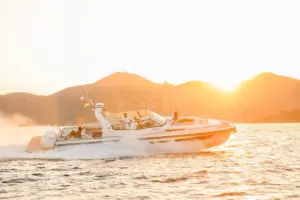





Maritime safety authorities have renewed urgent appeals across the recreational boating community following the publication of a critical safety flyer and comprehensive investigation report concerning a fatal allision in southern England. The incident—which occurred on August 14, 2025—involved the high-speed impact of a rigid inflatable boat (RIB), named Peaky Blinder, with a solid navigation beacon situated within the bustling confines of Portsmouth Harbour. The collision resulted in catastrophic structural damage to the vessel and the tragic loss of two lives, sending shockwaves through the local maritime and coastal communities.
The ensuing investigation, conducted by marine accident investigators, laid bare the stark realities of high-speed navigation in confined waters, human factors under operational stress, and, most critically, the life-or-death difference made by personal flotation devices (PFDs). While the full accident report provides a granular breakdown of the navigational errors, environmental conditions, and mechanical factors leading up to the disaster, the newly released safety flyer targets the wider recreational boating public. It serves as an unvarnished reminder that the margin for error on the water is perilously thin.
As maritime tourism and recreational vessel ownership continue to surge across coastal regions, marine authorities are grappling with a persistent culture of complacency regarding basic safety gear. Many weekend mariners treat lifejackets and buoyancy aids as optional accessories rather than essential survival equipment. The Peaky Blinder tragedy has starkly underscored that high-speed collisions, sudden groundings, and unexpected overboard scenarios can unfold in seconds, leaving no time to locate or don stowed safety equipment.

This article examines the multifaceted dimensions of the Portsmouth Harbour tragedy, drawing upon official investigation findings, maritime safety data, and expert analysis. By exploring the chronological sequence of the accident, the physiological realities of cold-water immersion and impact trauma, and the broader implications for recreational boating governance, this piece highlights the vital lessons that must be learned to prevent future loss of life on the water.
Detailed Chronology: The Peaky Blinder Tragedy
The events of August 14, 2025, began under conditions that initially appeared benign, offering favorable weather for recreational boating along the Hampshire coast. Portsmouth Harbour, one of the United Kingdom’s most historically significant and heavily trafficked naval ports, presents a complex matrix of commercial shipping lanes, high-speed passenger ferries, military vessels, and a dense concentration of recreational craft. Navigating these waters requires constant vigilance, precise positional awareness, and a thorough understanding of local tidal streams and navigational aids.
On that fateful afternoon, the rigid inflatable boat Peaky Blinder was operating within the harbor limits. RIBs are celebrated within the maritime community for their exceptional maneuverability, speed, and seaworthiness, making them immensely popular for both commercial utility and recreational thrills. However, these very characteristics can foster a false sense of security, encouraging operators to push speed and handling limits beyond safe parameters, particularly in congested or confined waters.
As the Peaky Blinder traversed the harbor, circumstances deteriorated rapidly. While the full sequence of control inputs, visibility factors, and potential distractions remains detailed in the primary investigation report, the vessel deviated from safe navigable water. Traveling at a significant speed, the RIB suffered a catastrophic allision—striking a fixed navigation beacon head-on.
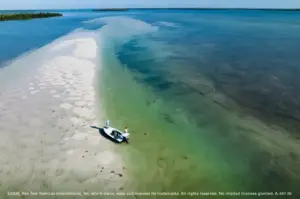
The physical forces involved in the impact were immense. Unlike collisions with yielding bodies of water or softer shorelines, striking a rigid steel and concrete navigation structure at high speed results in an instantaneous deceleration. The structural integrity of the Peaky Blinder’s bow failed catastrophically, transmitting extreme shockwaves through the hull and directly impacting the occupants.
The immediate aftermath of the crash plunged the situation into critical emergency response territory. The violence of the impact resulted in fatal injuries to two individuals on board, while also precipitating secondary hazards, such as crew members being thrown violently within the vessel or ejected into the cold, tidal waters of the harbor. Local emergency services, including the Portsmouth Queen’s Harbour Master’s patrol craft, the Royal National Lifeboat Institution (RNLI), and local ambulance and police units, responded with rapid coordination. Despite swift extraction and medical intervention, the two victims could not be saved.
The tragedy immediately triggered a multi-agency inquiry led by marine accident investigators to determine not merely what happened, but why a routine recreational excursion ended in unmitigated disaster.
Supporting Context & Metrics: The Physics of Survival and PFD Realities
To fully grasp the significance of the safety flyer issued in the wake of the Peaky Blinder incident, one must examine the empirical data surrounding recreational boating fatalities and the biomechanics of maritime accidents. Statistical analyses consistently reveal a sobering narrative: a significant proportion of drowning victims recovered from recreational boating incidents were not wearing personal flotation devices at the time of the incident, despite many of those devices being readily available on board.
The Dynamics of High-Speed Allisions
When a rigid inflatable boat impacts a stationary object like a navigation beacon, the occupants are subjected to severe kinetic forces. In the absence of secure seating, four-point harnesses, or shock-mitigating seats, human bodies become projectiles within the confines of the vessel. Investigators often find that trauma sustained during the initial impact is the primary cause of severe injury or unconsciousness.
However, for those who survive the initial deceleration, the secondary hazard is immersion. An unconscious or severely injured person in the water will drown within minutes—or even seconds—unless a properly fitted personal flotation device automatically rights them and keeps their airway clear of the water. In the case of the Peaky Blinder, the violence of the allision likely incapacitated the victims, making the immediate deployment of buoyancy a vital, yet missing, line of defense.
Cold Water Shock and Immersion Dynamics
Even during the warm summer months of August, UK coastal waters present physiological challenges that catch unprepared mariners off guard. "Cold water shock" occurs immediately upon immersion in water temperatures below 15°C (59°F), triggering an involuntary gasp reflex, hyperventilation, massive spikes in blood pressure, and cardiac strain.
If a boater is thrown into the water unexpectedly—as frequently happens during sudden allisions or sharp turns—the initial gasp can lead to water inhalation and drowning within the first 60 seconds. A properly secured PFD provides immediate positive buoyancy, mitigating the panic of immersion, keeping the head above water during the hyperventilation phase, and conserving the physical energy required to maintain body temperature and signal for rescue.
Human Factors in Recreational Navigation
The investigation into the Peaky Blinder allision also spotlights the insidious nature of human error in familiar environments. Recreational boaters frequently navigate local waters with a relaxed adherence to passage planning and lookout maintenance. Factors such as cognitive distraction, over-reliance on electronic chart plotters, environmental glare, and a failure to accurately calculate stopping distances at high speeds frequently converge in maritime accidents.
The safety flyer emphasizes that safety equipment is not an emergency afterthought; it is an active, integrated component of operational readiness. Just as a motorist fastens a seatbelt before turning the ignition, the recreational boater must view the donning of a PFD as an absolute prerequisite before casting off lines.
Official Statements and Regulatory Guidance
The release of the safety flyer alongside the comprehensive investigation report underscores the proactive, educational mandate of marine accident investigation bodies. Rather than operating purely in a punitive or retrospective capacity, these organizations strive to translate tragic lessons into actionable, life-saving guidance for the marine community.
In accompanying statements released with the documentation, marine safety officials emphasized that the lessons drawn from the Peaky Blinder disaster must resonate far beyond the waters of Portsmouth Harbour. A spokesperson for the investigation branch noted:
"The loss of two lives in such sudden and violent circumstances is a profound tragedy that reverberates deeply across the maritime community. Our detailed investigation into the allision of the RIB Peaky Blinder has exposed critical vulnerabilities in high-speed navigation and vessel control. However, the most urgent message we can deliver to every weekend sailor, angler, and thrill-seeker is deceptively simple: wear your personal flotation device. In an accident, you will rarely have the luxury of time to reach for stowed safety gear. It must be worn, fitted correctly, and maintained to professional standards."
The safety flyer itself is structured to be accessible, punchy, and direct, catering specifically to the recreational sector—a demographic that often operates outside the rigorous regulatory frameworks governing commercial shipping and passenger vessels. Key provisions highlighted in the guidance document include:
- Mandatory Pre-Departure Donning: PFDs and lifejackets should be worn continuously while underway, particularly in high-speed craft, during restricted visibility, or when navigating congested waters and close to navigational hazards.
- Proper Fit and Maintenance: Owning a lifejacket is insufficient; it must be correctly sized for the wearer, adjusted snugly, and subjected to regular manufacturer-approved servicing, including gas cylinder and automatic inflation mechanism checks.
- Situational Awareness and Speed Management: Operators must match their speed to environmental conditions, traffic density, and their vessel’s handling characteristics, maintaining a wide berth around fixed navigational structures regardless of familiarity with the waterway.
- Emergency Preparedness: Crews must be briefed on emergency stop procedures, man-overboard recovery protocols, and the operation of onboard safety communications before departure.
By disseminating these principles through printable resources and digital channels, authorities aim to dismantle the cultural barriers that discourage PFD usage—such as discomfort, aesthetic concerns, or the misconception that experienced swimmers are immune to drowning.
Future Outlook: Cultural Shift and Maritime Safety
The tragedy of the Peaky Blinder and the subsequent release of the safety flyer arrive at a critical juncture for the recreational marine sector. As technology advances—bringing faster vessels, more sophisticated electronics, and broader accessibility to coastal waters—the marine safety community faces the ongoing challenge of ensuring that human behavior and safety culture evolve in tandem with hardware capabilities.
Looking forward, maritime safety advocates are pushing for a multi-pronged approach to reduce recreational boating fatalities. This strategy encompasses enhanced public awareness campaigns, greater collaboration with yacht clubs and training centers, and potential re-evaluations of how safety equipment compliance is promoted across coastal hotspots.
Educational Outreach and Grassroots Advocacy
Education remains the most potent tool in changing maritime behavior. Programs that integrate practical safety demonstrations—such as experiencing cold water immersion in controlled environments while wearing a PFD—have proven highly effective in altering public perception. When recreational boaters witness firsthand how rapidly muscle function deteriorates in cold water and how effortlessly a modern lifejacket preserves life, theoretical warnings translate into instinctive habits.
Furthermore, marine authorities are leveraging digital platforms to ensure that safety flyers and investigation reports reach grassroots organizations, boat rental agencies, and online boating forums. By embedding safety discussions into the purchasing and renting experience of high-performance craft like RIBs, the industry can proactively target high-risk demographics before accidents occur.
Technological Integration
While human factors remain the primary variable in accidents like the Peaky Blinder allision, technological innovations offer supplementary layers of protection. The proliferation of engine cut-off switches (kill cords)—which automatically shut down the engine if the helm is thrown from the console—is becoming increasingly standard. Pairing mandatory kill cord usage with compulsory PFD wear creates an integrated safety envelope that addresses both runaway vessel hazards and drowning prevention.
Additionally, advancements in personal locator beacons (PLBs) and lightweight, ergonomic inflatable PFDs mean that modern safety gear no longer impedes movement or comfort. Manufacturers have made significant strides in designing lifejackets tailored specifically for active water sports, removing traditional excuses related to bulkiness or restricted mobility.
Conclusion
The allision of the rigid inflatable boat Peaky Blinder with a navigation beacon in Portsmouth Harbour on August 14, 2025, stands as a solemn reminder of the inherent risks of the marine environment. It exposes the fragility of human life when pitted against high-speed kinetic forces and the unforgiving nature of open water.
Yet, the true legacy of this tragedy must be found in prevention. By heeding the lessons articulated in the official investigation report and embracing the practical directives outlined in the safety flyer, the recreational boating community can honor the memories of those lost. Wearing a personal flotation device is not a sign of apprehension; it is the ultimate hallmark of a seasoned, responsible mariner who respects the power of the sea and ensures they return safely to shore.