







Executive Overview
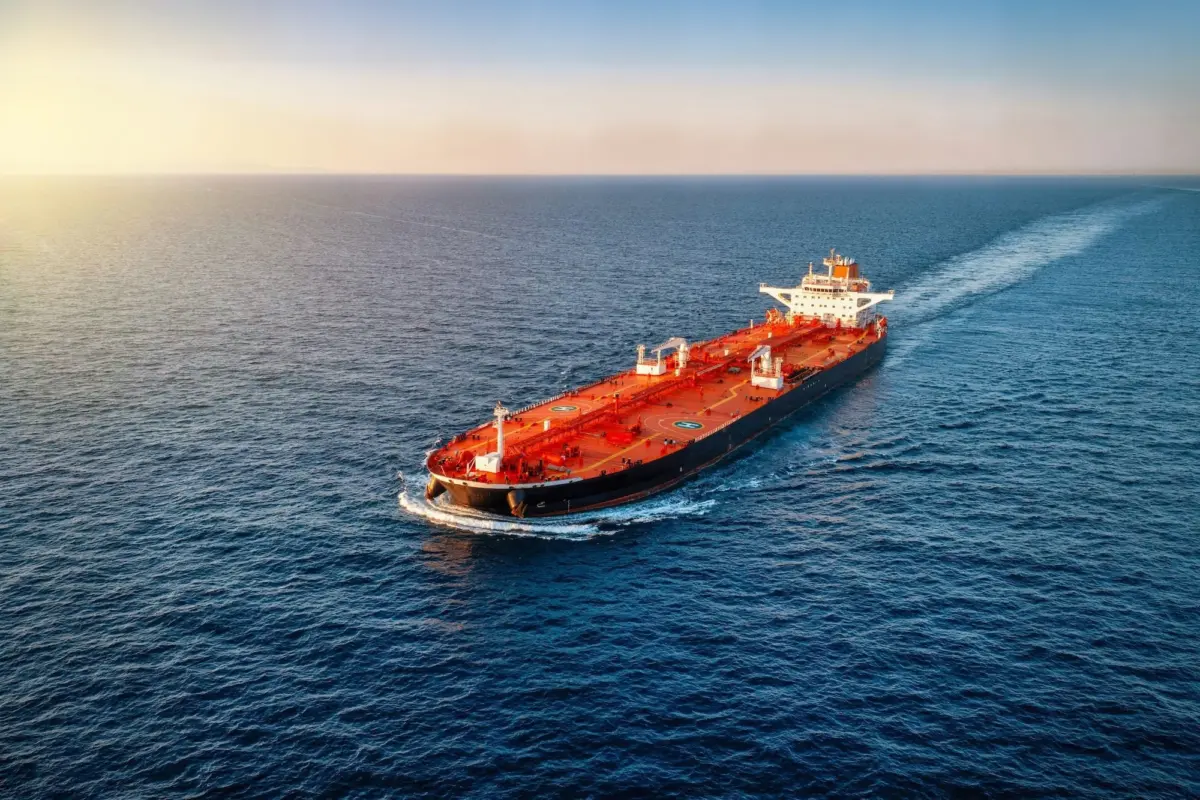
The global maritime industry has entered uncharted territory. In a stunning reflection of the geopolitical volatility reshaping trade routes, the cost of chartering a Very Large Crude Carrier (VLCC) on the industry’s benchmark Persian Gulf-to-China route has surpassed $1 million per day for the first time in history. Data released by the Baltic Exchange in London confirms that charterers agreed to a record-breaking rate of $1.035 million per day, signaling an unprecedented squeeze on global shipping capacity.
This historic spike is the direct result of a compounding series of crises: an active war involving Iran that has rendered the Strait of Hormuz virtually impassable for standard commercial vessels, ongoing disruptions in the Red Sea caused by Yemen’s Houthi rebels, and the lingering structural deficits of the war in Ukraine. Together, these conflicts have severed traditional maritime arteries, forcing the industry to adopt highly inefficient logistical workarounds.
To bypass the lethal risks of the Strait of Hormuz, the market has pivoted to a dual-stage "shuttle-and-transfer" system. Under this model, smaller, highly insured, or state-backed vessels shuttle crude through the chokepoint to safer deepwater zones in the Gulf of Oman. From there, standard VLCCs collect the cargoes for transport to East Asia. Yet, even this workaround offers little financial relief: chartering a VLCC from outside the Strait in the Gulf of Oman now commands an astronomical $644,000 per day—a rate that, in previous market downturns, would have represented nearly a month’s worth of operational earnings.
VLCC Daily Charter Rates (2026 Peak vs. Historical Baselines)
======================================================================
[Benchmark Route: Persian Gulf to China]   | $1,035,000 / day (RECORD)
[Alternative Route: Gulf of Oman to China] | $644,000 / day
[Historical Market Downturns]             | $20,000 - $25,000 / day
======================================================================
Compounding this crisis is a massive, speculative cornering of the tanker market by a secretive South Korean maritime tycoon, whose aggressive long-term charter acquisitions have starved the spot market of available tonnage. Backed by record-high refining margins, downstream energy companies have no choice but to pay these exorbitant freight rates, desperate to secure crude to feed a global market starved of diesel, gasoline, and jet fuel.
Detailed Chronology: The Road to $1 Million a Day
The road to this unprecedented milestone is marked by a series of escalating military actions, insurance crises, and speculative financial maneuvers that unfolded over several months.
CHRONOLOGY OF THE 2026 MARITIME SQUEEZE

  [Month 1: Outbreak of Iran War]
         │
         ▼
  [Month 2: Strait of Hormuz declared "High-Risk Zone"; insurance premiums surge]
         │
         ▼
  [Month 3: Introduction of the "Hormuz Shuttle" system off Fujairah]
         │
         ▼
  [Month 4: Houthi rebel attacks intensify; Red Sea bypass forces Cape of Good Hope detours (+30 days)]
         │
         ▼
  [Month 5: Korean tycoon's speculative spot-market sweep starves fleet supply]
         │
         ▼
  [Month 6: Baltic Exchange records historic $1.035 million/day charter rate]
Phase 1: The Outbreak of the Iran War and the Closing of Hormuz
Following a sharp escalation in regional hostilities, the Strait of Hormuz—through which roughly one-fifth of the world’s petroleum passes—became an active combat zone. Naval skirmishes, drone strikes on commercial vessels, and state-sponsored seizures prompted international marine underwriters to declare the entire inner Persian Gulf a high-risk zone. War-risk insurance premiums skyrocketed to prohibitively expensive levels, with some underwriters refusing to cover vessels transiting the strait altogether. Consequently, mainstream shipowners pulled their fleets from the region, leaving the world’s most critical oil-exporting hub largely isolated.
Phase 2: The Emergence of the "Hormuz Shuttle"
To maintain the flow of crude, state-backed oil entities and risk-tolerant niche operators established a costly logistical bypass. Rather than sending massive, billion-dollar VLCCs into the line of fire, exporters began using smaller, specialized shuttle tankers to transport crude out of the Persian Gulf, navigating the dangerous waters of the strait to deposit the oil at transshipment hubs like Fujairah in the Gulf of Oman.
While this kept the oil flowing, it created an immense logistical bottleneck. VLCCs now had to wait in long queues outside the strait to load oil via ship-to-ship (STS) transfers. This added days to standard voyage times, tying up valuable tonnage and draining global vessel supply.
Phase 3: The Red Sea Blockade and the African Detour
Simultaneously, the maritime security crisis widened. In the southern Red Sea, Yemen’s Houthi rebels intensified their campaign against merchant shipping. Missile and drone attacks targeting tankers forced major shipowners to abandon the Suez Canal route entirely.
To deliver Saudi and Persian Gulf crude to European and North American refiners, tankers were forced to take the long route around the Cape of Good Hope. This detour added approximately 30 days and thousands of nautical miles to each round trip, effectively locking up a massive portion of the global tanker fleet on extended voyages and triggering a severe shortage of available ships on the spot market.
Phase 4: The Korean Tycoon’s Strategic Squeeze
As the physical supply of ships dwindled, a highly secretive South Korean shipping magnate executed a series of aggressive financial moves. Anticipating a prolonged geopolitical conflict, the tycoon’s offshore entities quietly secured long-term time charters on dozens of modern VLCCs.
When the spot market began to tighten, these vessels were intentionally held back or sub-chartered only at premium rates. This maneuver effectively cornered a crucial segment of the global spot fleet, leaving desperate refiners to bid against one another for the few remaining uncommitted vessels.
Supporting Context & Metrics: The Economics of the Squeeze
The astronomical surge in freight rates is supported by a unique combination of soaring downstream margins and restricted vessel capacity.
The "Ton-Mile" Crisis
In shipping economics, demand is measured in "ton-miles"—the volume of cargo multiplied by the distance it must travel. The forced detour around the Cape of Good Hope has caused ton-mile demand to surge to historic highs.
VOYAGE COMPARISON: MIDDLE EAST TO NORTHERN EUROPE
======================================================================
Route via Suez Canal:       ~14-18 Days (High Risk / Blocked)
Route via Cape of Good Hope: ~44-48 Days (+30 Days Detour)
======================================================================
Result: ~2.5x increase in transit time, locking up vessel capacity.
By tripling the duration of voyages from the Middle East to Europe, the detour has effectively reduced the global fleet’s carrying capacity by an estimated 25%. This structural deficit means that even a minor increase in oil demand triggers an exponential rise in chartering costs.
Refining Margins and the "Crack Spread"
Typically, a $1 million-a-day shipping rate would trigger immediate demand destruction, as the cost of transport would erase any potential profit for oil buyers. However, the ongoing wars in both Ukraine and Iran have knocked out significant global refining capacity.
With key refining hubs offline or running at reduced capacity, the global supply of finished petroleum products—specifically diesel, gasoline, and aviation fuel—has fallen critically short of demand. Consequently, refining margins (commonly referred to as "crack spreads") have spiraled to record highs.
ESTIMATED REFINERY MARGIN ANALYSIS (USD per Barrel)
======================================================================
Historical Average Margin:  $10.00 - $15.00 / bbl
2026 Peak Margin:           $55.00 - $70.00 / bbl
======================================================================
Because refiners are earning unprecedented profits on every barrel of crude they process, they can easily absorb shipping costs that would have been ruinous in a normal market. A $1 million-a-day charter rate equates to roughly $10 to $12 per barrel in freight costs for a 2-million-barrel VLCC cargo. With profit margins hovering above $60 per barrel, refiners remain highly motivated to pay whatever it takes to secure raw crude.
Official Statements and Industry Perspectives
The unprecedented surge in charter rates has sent shockwaves through the global energy and maritime sectors, prompting reactions from analysts, security experts, and trade bodies.
An executive report from the Baltic Exchange in London highlighted the breakdown of traditional trade routes:
"The benchmark routes that have guided global maritime commerce for decades are rapidly losing their relevance. While our data shows a historic $1.035 million-a-day print for the Persian Gulf-to-China run, the reality is that very few owners are actually risking their assets inside the Strait of Hormuz. The true indicator of market pressure is the $644,000-a-day rate for Gulf of Oman loadings. This demonstrates that even outside the active combat zone, the shortage of physical tonnage has created a highly competitive, high-cost environment."
Marine Insurance Underwriters at Lloyd’s of London defended the surging cost of coverage, citing the severe risks of the region:
"The designation of the inner Persian Gulf as an uninsurable zone for standard hull and machinery policies is a direct response to the weaponization of key maritime chokepoints. Until international coalitions can guarantee safe passage through the Strait of Hormuz, the cost of risk will remain priced into every barrel of oil and every shipping contract. The current rates reflect a market operating under wartime conditions."
A senior energy analyst at a major East Asian Petrochemical Conglomerate expressed deep concern over the long-term sustainability of the current logistics model:
"We are currently operating in survival mode. While our refining margins are strong enough to absorb these historic shipping costs for now, this is a highly fragile equilibrium. If product demand softens even slightly, or if crude prices spike further, these freight rates will immediately force refiners to cut run rates. We are paying over $10 a barrel just for transit—this is an unsustainable tax on global energy security."
Future Outlook: Is the Freight Spike Sustainable?
The current shipping crisis presents a highly volatile outlook for the remainder of 2026 and beyond. Whether these historic rates represent a temporary peak or the new baseline for global energy transit depends on several key variables.
POTENTIAL FUTURE SCENARIOS & MARKET IMPACTS

  [Scenario A: Diplomatic De-escalation]
         │
         ▼
  - Reopening of Strait of Hormuz
  - Direct transit resumes; "shuttle" system disbanded
  - VLCC rates normalize to $80,000 - $120,000/day

  [Scenario B: Prolonged Regional Conflict]
         │
         ▼
  - High-risk zones remain active
  - Cape of Good Hope detours become permanent route
  - Consolidation of spot market by private cartels
  - Volatile rates sustained at $500,000 - $800,000/day
The Limits of Demand Resilience
The primary risk to these sky-high charter rates is the threat of demand destruction. While refiners can currently afford to pay $1 million a day due to exceptional crack spreads, this dynamic is vulnerable to macroeconomic shifts.
If high fuel prices begin to drag down global economic growth, demand for gasoline and diesel will inevitably soften. This would cause refining margins to contract, leaving refiners unable to absorb high freight costs and forcing them to scale back crude purchases. This shift would quickly deflate the tanker spot market.
Fleet Supply and Long-Term Structural Shifts
The global tanker fleet is facing a structural supply squeeze that cannot be resolved quickly. For years, shipowners underinvested in new VLCCs, choosing instead to focus on dual-fuel container ships and LNG carriers. Consequently, the pipeline for new tanker deliveries over the next 24 months is remarkably thin.
Even if the wars in Iran and Ukraine were to resolve tomorrow, the global fleet would still operate at historically high utilization rates. The shipping market’s structural tight supply suggests that while rates may eventually fall from their $1 million-a-day peak, the baseline for tanker charters is likely to remain elevated for years to come.
Geopolitical Realignment and the "Shadow Fleet"
The ongoing crisis is accelerating the division of the global shipping industry into two distinct sectors: a highly regulated, transparent Western fleet that avoids high-risk zones, and a growing "shadow fleet" of older, anonymously owned vessels that operate without Western insurance or oversight.
As traditional shipowners pull out of volatile regions, this shadow fleet is stepping in to transport high-risk cargoes through the Strait of Hormuz and other contested waters. This development threatens to permanently weaken international maritime oversight, raising serious long-term concerns for safety, environmental protection, and security on the high seas.