






In the high-stakes theater of maritime emergency response, the Royal Canadian Air Force (RCAF) 442 Transport and Rescue Squadron has once again demonstrated its unwavering commitment to offshore safety. On Monday, September 14, 2026, the elite Comox-based unit executed a daring, highly complex medical evacuation of a critically ill passenger aboard Royal Caribbean International’s Serenade of the Seas. Operating hundreds of miles off the rugged coast of British Columbia, the squadron braved challenging oceanic winds and remote geography to deliver life-saving intervention.
This high-seas rescue marks the third maritime medical airlift executed by the exact same squadron within a breathless seven-day window, underscoring the relentless operational tempo faced by Canadian military search and rescue (SAR) personnel during the peak of the Alaska cruise season. Just days prior, the 19 Wing Comox squadron airlifted an injured crew member from the Disney Wonder on September 8, followed swiftly by the emergency extraction of a sick guest from an undisclosed cruise vessel on Saturday, September 12.
While the individual privacy of the passenger aboard Serenade of the Seas remains strictly protected, the sheer frequency of these missions brings to light the extraordinary logistical challenges, technical precision, and inherent risks involved in providing advanced medical care to mega-ships navigating remote northern waters. This comprehensive report delves into the chronology of the rescue, the sophisticated mechanics of maritime airlifts, the vital perspectives of military aviation leadership, and the broader context of cruise ship safety and emergency preparedness in the Pacific Northwest.
Detailed Chronology of the Serenade of the Seas Rescue
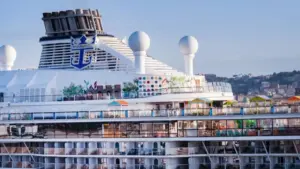
The emergency sequence began to unfold far out in the northeastern Pacific, as Serenade of the Seas plied the waters on the opening leg of a seven-night Alaska itinerary. The ship had departed Vancouver just a day prior, carrying 2,143 guests and a full complement of crew members, with scheduled port calls awaiting them in southern and southeastern Alaskan hubs including Sitka, Juneau, Ketchikan, and Prince Rupert.
However, a sudden medical emergency on board shifted the voyage’s trajectory entirely. With the vessel positioned approximately 280 nautical miles northwest of Port Hardy—and roughly 480 miles northwest of Vancouver—the ship’s onboard medical team determined that the patient required advanced, land-based medical intervention beyond the scope of the ship’s hospital. A distress call and request for a medical evacuation were transmitted to Canadian authorities, triggering the immediate deployment of 19 Wing Comox.
The Aerial Response: Coordination and Execution
The RCAF deployed a dual-aircraft package consisting of its premier long-range search and rescue assets: a CH-149 Cormorant helicopter and a CC-295 Kingfisher fixed-wing aircraft. While the Cormorant served as the primary extraction vehicle, the Kingfisher played an indispensable supporting role, acting as an airborne command post, communication relay, and visual monitor.
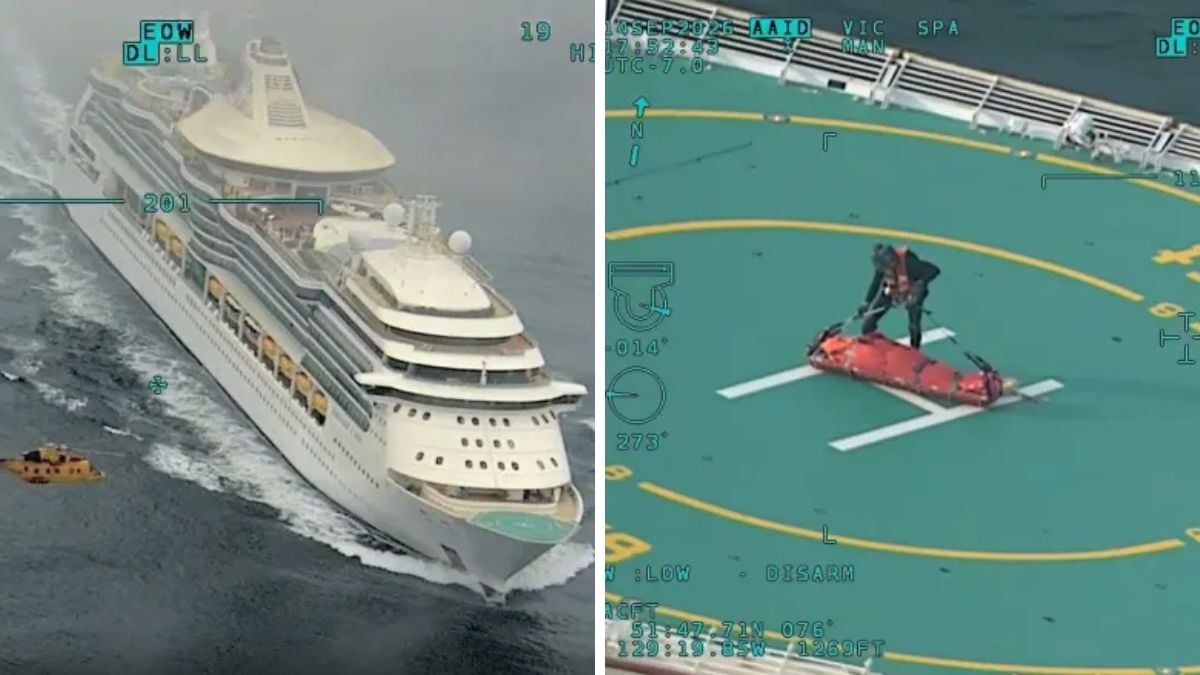
The aviation assets intercepted the cruise ship just before 6:00 p.m. local time. Executing a successful maritime airlift requires an intricate dance between flight deck aviators and the bridge team of a moving vessel. Adhering to strict safety protocols, the flight crew directed the cruise ship to slow down to a minimum steerage speed and orient its bow directly into the oncoming wind, creating the most stable platform possible for the hovering helicopter.
With the ship stabilized, the Cormorant positioned itself over the forward bow helipad. Two highly specialized Search and Rescue Technicians (SAR Techs) were deployed via hoist directly onto the vessel’s deck.
The Extraction Under Breezy Conditions
Working against the elements under breezy, unpredictable maritime conditions, the SAR Techs rapidly assessed the patient, stabilized them, and secured them into a specialized rescue litter. To combat the rotational forces and aerodynamic downwash generated by the helicopter’s massive rotor blades, the team utilized precision guide wires. These tethers kept the litter strictly level as it was hoisted from the ship’s bow into the cabin of the CH-149 Cormorant.
Once the patient and SAR Techs were safely recovered onboard, the aircraft broke formation and set a direct course for Port Hardy, British Columbia. Upon arrival, the patient was seamlessly transferred to a waiting team of local paramedics for advanced transit to a specialized medical facility. Throughout the operation, both the cruise ship’s captain and the RCAF flight crew exchanged professional acknowledgments, commending each other’s execution and wishing safe passages ahead.
Supporting Context & Metrics: A Relentless Operational Tempo
To fully grasp the magnitude of the September 14 rescue, one must examine the unprecedented strain placed on 19 Wing Comox over a single week in September 2026. Maritime rescue operations in the Pacific Northwest are rarely straightforward, but the concentration of three major cruise ship airlifts in seven days stretched operational parameters to new heights.
The September Surge
- September 8, 2026: The 442 Transport and Rescue Squadron successfully airlifted an injured crew member from the Disney Cruise Line vessel Disney Wonder, requiring precise coordination off the coast of British Columbia.
- September 12, 2026: Just four days later, the exact same squadron was scrambled to conduct a medical evacuation for a critically ill guest aboard an undisclosed cruise ship operating in the same northern region.
- September 14, 2026: The trifecta was completed with the extraction of the unidentified passenger from Royal Caribbean’s Serenade of the Seas, solidifying an intense period of continuous high-readiness operations.
Anatomy of 19 Wing Comox
Behind these successful rescues lies a deeply integrated military apparatus. Based out of British Columbia, the 442 Transport and Rescue Squadron comprises approximately 200 active-duty personnel. This elite force is a multi-disciplinary ecosystem including:
- Pilots and Co-Pilots: Highly trained in night-vision flight, instrument meteorological conditions, and hostile maritime environments.
- Navigators and Flight Engineers: Responsible for calculating fuel reserves, tracking weather patterns, and managing aircraft systems during protracted missions.
- Search and Rescue Technicians (SAR Techs): Elite military paramedics who hold advanced certifications in trauma care, alpine mountaineering, parachuting, and open-ocean rescue.
- Maintenance and Ground Support Crews: The unsung heroes who ensure that complex airframes like the CH-149 Cormorant and CC-295 Kingfisher remain mission-ready around the clock.
The vast geographic expanse of the region—often characterized by freezing temperatures, unpredictable squalls, and deep ocean swells—means these professionals frequently operate at the absolute limit of aircraft range and human endurance.
Official Statements and Insights on Maritime Risk
While civilian passengers are routinely instructed during mandatory muster drills and emergency briefings to refrain from filming or photographing active rescue operations on cruise ships—primarily to prevent dangerous distractions for the bridge and deck crews—the RCAF occasionally releases official mission footage to the public. This deliberate transparency serves a vital educational and morale-boosting purpose.
Captain Steve Davies on the Realities of Offshore Rescue
In an interview with CHEK News, Captain Steve Davies provided a rare, behind-the-scenes look at the harrowing realities that military aircrews face when answering calls from the sea. He emphasized that the public dissemination of rescue videos helps demystify the immense planning required to pull off such operations safely.
"You are vulnerable out over the ocean for protracted periods," Captain Davies explained. "Naturally the planning that goes into them is quite intense. Whether it’s at night or in the day, and the weather you’re going to encounter en route will drastically change the complexity."
Davies noted that while training prepares crews for every conceivable mechanical and environmental failure, the dynamic nature of the open ocean means no two rescues are ever identical. From shifting deck heights caused by ocean swells to sudden micro-weather patterns rolling off the coastal mountain ranges, pilots must make split-second calculations that balance crew safety with the imperative of patient survival.
Safeguarding Passenger Privacy
In alignment with international privacy standards and cruise industry protocols, neither Royal Caribbean International nor military officials released specific personal data regarding the evacuated passenger. Details such as age, gender, exact medical diagnosis, and nationality have been withheld.
This policy is designed to protect vulnerable individuals and their families from intrusive public scrutiny during moments of profound medical crisis. Cruise operators and military liaisons alike maintain that the primary focus of any medical evacuation must remain strictly centered on clinical outcomes and patient dignity.
Future Outlook: The Evolution of Cruise Ship Medical Safety
As the Alaska cruise market continues to shatter passenger volume records, cruise lines and maritime rescue authorities are continuously evaluating how to manage medical emergencies in remote itineraries. The deployment of modern mega-ships to areas hundreds of miles from comprehensive trauma centers means that the synergy between commercial cruise fleets and national military search-and-rescue agencies will remain a cornerstone of maritime safety for the foreseeable future.
Technological and Procedural Advancements
- Enhanced Telemedicine at Sea: Modern cruise ships like Serenade of the Seas are equipped with increasingly sophisticated onboard medical facilities, effectively functioning as floating urgent care centers. Improved satellite communications (such as Starlink integration across major fleets) now allow shipboard doctors to consult in real-time with land-based specialists, optimizing onboard stabilization before an airlift is even initiated.
- Standardized Helipad Protocols: The integration of standardized lighting, reinforced landing zones, and automated stabilization guides has streamlined the physical interface between military helicopters and commercial cruise hulls.
- Cross-Sector Training: Ongoing joint debriefs between cruise line safety officers and military aircrews ensure that communication protocols are continually refined, minimizing response times and reducing exposure windows during hoist operations.
A Debt of Gratitude
The successful conclusion of the Serenade of the Seas rescue—following closely on the heels of the Disney Wonder operation and the September 12 mission—stands as a testament to the unyielding dedication of the 442 Transport and Rescue Squadron. While passengers enjoy the breathtaking glaciers and fjords of the Pacific Northwest, an invisible safety net operated by hundreds of dedicated military personnel remains perpetually cast across the ocean. Their tireless readiness ensures that no matter how remote the coordinates, professional, life-saving help is never truly out of reach.