






By Philippe Lazaro, Digital Content Manager
Estimated Reading Time: 8 Minutes
Executive Overview
Storytelling is one of humanity’s most foundational and enduring cultural practices. Across every continent, archipelago, and coastal settlement, oral traditions have served as vessels for shared values, historical preservation, and ecological wisdom. Far from being arbitrary fables born of superstition, the coastal legends that have survived centuries of retelling often encode vital, empirically grounded insights about the ocean.
For countless generations, maritime communities have relied on mythology not merely to explain the inexplicable, but to regulate human behavior, foster respect for marine biodiversity, and sustain a reciprocal relationship with the sea. Today, as modern marine science uncovers the staggering complexity of aquatic ecosystems, it increasingly validates the ancient wisdom preserved in these global traditions.
From the seal-people of Scotland to the celestial navigators of Pasifika, and from the divine protectors of Vietnam to the tempestuous water deities of the Caribbean, global folklore offers a profound blueprint for ocean stewardship. Examining these traditions bridges the gap between cultural heritage and modern conservation, revealing that our ancestors understood a fundamental truth we are still fighting to protect today: the ocean is not an infinite resource to be exploited, but a living entity requiring our reverence, restraint, and protection.
Detailed Chronology: Five Cultural Traditions and Their Ecological Foundations
1. Scotland: The Selkie and the Protection of the Gray Seal
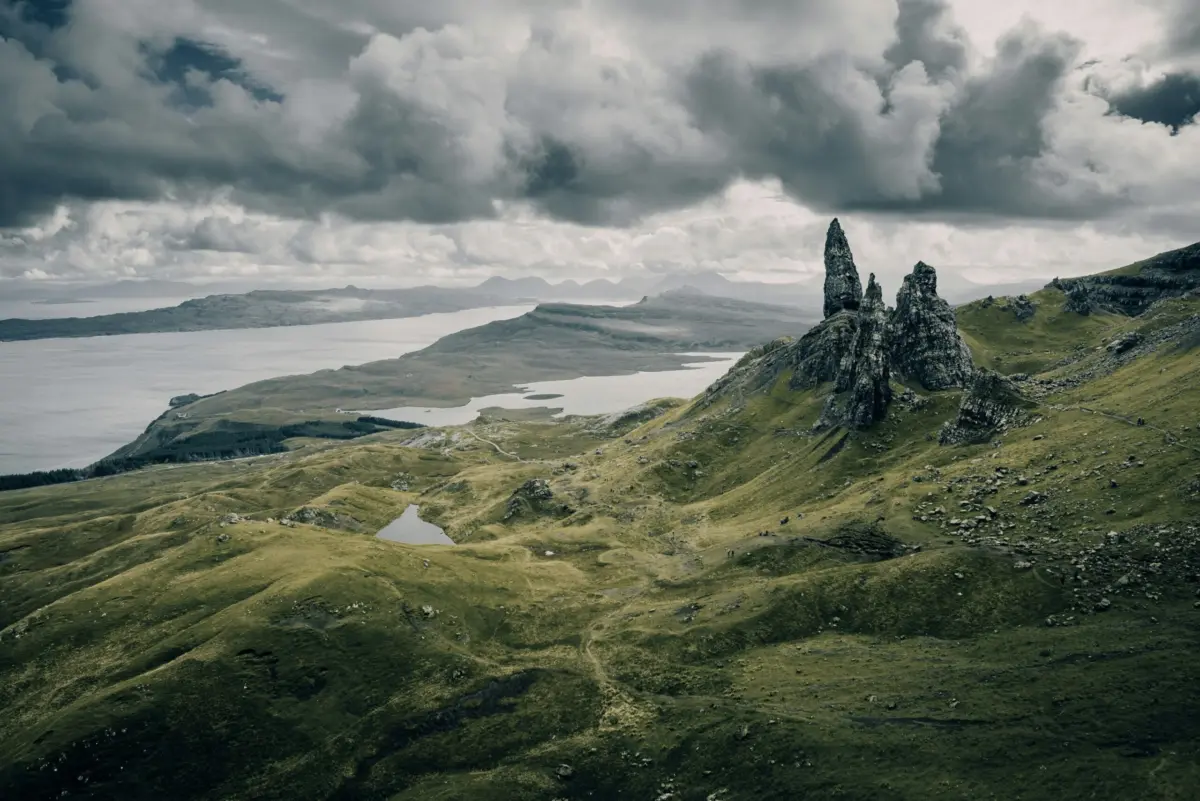
Early written records and oral histories from the rugged coasts of Scotland tell of the selkie—mystical seal-people capable of shedding their aquatic pelts to walk ashore in human form. In these familiar, melancholy narratives, a mortal often discovers a selkie’s sealskin on the shore, hiding it to bind the creature to a human life on land. Bound by circumstance, the selkie marries, raises a family, but remains perpetually homesick, gazing out at the waves until the day the skin is finally recovered, prompting an immediate and irreversible return to the sea.
The Ecological Reality: The inspiration behind the selkie legend is rooted in careful observation of gray and harbor seals (Halichoerus grypus and Phoca vitulina), which possess strikingly human-like characteristics. Seals exhibit expressive, soulful eyes, complex vocalizations, and maternal behaviors—such as nursing and cradling pups—that strongly mirror human infant care. Ancient Scottish coastal communities recognized these familiar traits, embedding a cultural taboo against the excessive or indiscriminate hunting of seals.
Modern Parallels: Today, the selkie remains a potent symbol of Scottish cultural identity and environmental advocacy. Modern marine conservation organizations frequently invoke the selkie to foster empathy for local seal populations, which continue to face severe anthropogenic threats, including entanglement in abandoned fishing gear (ghost gear) and historical culling practices—precisely the sort of unrestrained exploitation that the selkie taboo was originally designed to prevent.
2. Pasifika: Celestial Wayfinding and Empirical Oceanography
Pasifika—the collective term for the Indigenous Peoples of the Pacific Islands—has mastered the art of transoceanic navigation for over three thousand years, traversing the vast, featureless expanses of the Pacific Ocean without modern instrumentation. Their secret weapon was not technology, but a sophisticated framework of oral tradition and storytelling.
The Ecological Reality: Pasifika navigators encoded complex oceanographic, meteorological, and astronomical data into stories of deities and demigods. Tales of the demigod Māui and his canoe, Waka-a-Māui, alongside stories of Tāwhirimātea, the god of wind and storms, served as mnemonic devices. For instance, the appearance of the Pleiades star cluster (associated with Tāwhirimātea) signaled favorable weather windows for launching long-distance voyages. Far from being mere fantasy, Pasifika wayfinding represents an empirical science built upon millennia of meticulous observation, trial, and intergenerational knowledge transmission.
[Oral Tradition: Mythological Tales & Deities]
       ↓ (Mnemonic Encoding)
[Empirical Observation: Star Clusters & Swells]
       ↓ (Safe Application)
[Sustainable Transoceanic Navigation & Marine Stewardship]
3. Mexico: Chalchiuhtlicue and the Dual Nature of Water
In Aztec cosmology, Chalchiuhtlicue reigned as the revered goddess of rivers, lakes, streams, and the open ocean, as well as the divine protector of fishermen and navigators. Worshiped intensely across Mesoamerica, she was consistently portrayed as both a gentle creator and a fierce destroyer—a deity whose waters could sustain agricultural civilizations with abundant harvests or devastate them with catastrophic floods.

The Ecological Reality: Mexico’s Pacific and Gulf coasts comprise some of the most biologically rich yet storm-vulnerable marine environments on Earth. Chalchiuhtlicue’s dual persona reflects an advanced understanding of the hydrological cycle and marine volatility. Indigenous cultures recognized water as the foundational substance of existence, understanding that the health of the ocean directly dictated human survival. This mythological framework encouraged a deep-seated respect for the sheer, uncontrollable power of marine ecosystems.
4. Vietnam: "Grandfather Whales" and Maritime Reciprocity
Along the coastal villages of Vietnam, whales are revered not merely as large marine mammals, but as divine protectors. Traditionally referred to as Cá Ông, or "Grandfather Whales," these cetaceans occupy a sacred space in local maritime culture.
The Ecological Reality: Oral histories across coastal Vietnam maintain that when fishing vessels are imperiled in violent monsoons, whales will physically intervene to guide crews safely to shore. Marine science has since documented behaviors among sperm whales (Physeter macrocephalus), humpbacks (Megaptera novaeangliae), and gray whales that align with these rescue accounts, such as approaching distressed swimmers, shielding vulnerable pods, and exhibiting cooperative intelligence.
Vietnamese fishing communities institutionalized this bond through reciprocity. Whale Prayer Festivals are celebrated biannually, and when a whale is beached, it receives a formal, sacred funeral complete with traditional mourning rites.
Ecological Insight: Beyond cultural reverence, this practice mirrors ecological reality. When a whale dies and sinks to the seafloor, its carcass—known as a whale fall—creates a localized ecosystem that sustains hundreds of scavenger and deep-sea species for decades, turning even the death of a "Grandfather Whale" into a cornerstone of marine life.
5. The Caribbean: Mami Wata and the Sacred Species Effect
Throughout the Caribbean and parts of the broader African Diaspora, the water deity Mami Wata—known variously as La Sirène in Haiti, River Mumma in Jamaica, and Yemonja in Brazil—holds a prominent place in coastal folklore. Carried across the Atlantic by enslaved Africans and adapted to new marine environments, Mami Wata is typically depicted as a mesmerizing, siren-like figure possessing both immense generosity and perilous volatility.
The Ecological Reality: Scholars suggest that historical sightings of Mami Wata were heavily influenced by encounters with manatees. These large, slow-moving marine mammals possess paddle-like tails, expressive human-like eyes, and a habit of nursing their young upright in the water column, closely mirroring folkloric descriptions of water spirits.
Anthropologists note that when traditional beliefs surrounding Mami Wata began to decline in certain regions, local manatee populations frequently suffered from increased hunting and habitat degradation. This phenomenon illustrates the "sacred species effect": when an animal is imbued with profound spiritual significance, cultural taboos against harming it often provide more robust, enduring protection than formal legal frameworks.
Supporting Context & Metrics: The Intersection of Folklore and Modern Conservation
While modern marine science relies on satellite telemetry, oceanographic sensors, and genetic sequencing, the fundamental goals of conservation—understanding ecosystem balance, preventing overexploitation, and preserving biodiversity—echo the core themes of ancient oral traditions.
| Region / Culture | Focal Species / Element | Traditional Concept | Modern Conservation Parallel |
|---|---|---|---|
| Scotland | Gray & Harbor Seals | Selkie (Seal-people shape-shifters) | Protection from culling and ghost gear entanglement |
| Pasifika | Constellations & Swells | Wayfinding Deities (Māui, Tāwhirimātea) | Sustainable navigation and marine resource management |
| Mexico | Rivers, Gulfs, & Oceans | Chalchiuhtlicue (Goddess of water duality) | Ecosystem-based management for storm-prone coasts |
| Vietnam | Cetaceans (Whales) | Cá Ông ("Grandfather Whales") | Cetacean protection, whale-fall ecology, and rescue response |
| Caribbean | West Indian Manatee | Mami Wata / La Sirène (Water spirits) | The "Sacred Species Effect" protecting endangered sirenians |
Data compiled by marine biologists demonstrates that regions managed with strong Indigenous and traditional stewardship frameworks consistently exhibit higher biodiversity resilience than those managed solely through top-down industrial regulations. By encoding ecological data into narrative structures, ancient societies achieved what contemporary resource managers strive for: a generational commitment to conservation that transcends political and economic cycles.

Official Statements and Industry Insights
Environmental advocates and marine scientists emphasize that modern conservation must increasingly integrate traditional ecological knowledge (TEK) to be truly effective.
"Long before satellites tracked ocean temperatures or biologists mapped migratory corridors, coastal peoples were paying intimate attention to the sea," notes a senior researcher at Ocean Conservancy. "They recognized which creatures signaled safe weather, which behaviors led to sustainable catches, and how vital reciprocity was to survival. These are not relics of the past; they are living blueprints for our future."
Despite the enduring wisdom of these cultural traditions, industrial pressures continue to degrade the marine environments that global communities have revered for millennia. Conservationists point out a critical modern hypocrisy: while coastal cultures have historically honored the ocean as a living relative, modern industrial entities frequently treat the seafloor as an expendable waste receptacle.
Future Outlook: Protecting the Seafloor Legacy
The historical connection between humans and the sea demonstrates that the ocean has always been viewed as more than a mere reservoir for extraction—it is a living system demanding stewardship, respect, and active protection.
This ethos forms the backbone of contemporary conservation campaigns. Today, aging offshore oil and gas infrastructure is rapidly corroding across the global seafloor, leaking toxic pollutants and threatening many of the iconic marine species that cultures worldwide hold sacred. Corporations responsible for this offshore infrastructure frequently exploit regulatory loopholes to evade multi-billion-dollar cleanup obligations, leaving marine life and coastal communities to bear the environmental toll.
To honor the timeless wisdom embedded in our global ocean stories, systemic legislative action is urgently required. The proposed Offshore Leasing Standards and Accountability Act currently before the United States Congress represents a crucial step forward. This legislation would compel oil and gas corporations to assume full financial and operational responsibility for their drilling infrastructure—before, during, and after extraction operations.
As oral traditions remind us through the tales of the selkie, the whale, and the water spirit, humanity’s fate is inextricably linked to the health of the sea. Passing accountability legislation and enforcing rigorous marine protection standards is not just a policy choice; it is a modern fulfillment of an ancient promise to protect the deep.
Take Action
The ocean has sustained human culture, art, and survival for millennia. Now, it needs our voice.
- Add your name to support marine protection initiatives.
- Urge legislators to pass the Offshore Leasing Standards and Accountability Act and hold corporate polluters accountable for seafloor degradation.