









Executive Overview
For the better part of the last decade, global headlines regarding Saudi Arabia’s tourism sector have been dominated by ultra-luxury megalith projects, pristine Red Sea private islands, and cliffside architectural marvels. Backed by the immense financial firepower of the Public Investment Fund (PIF) and Vision 2030, the Kingdom has positioned itself as the new frontier for high-net-worth tourism. International hotel operators rushed to secure their footprints in Riyadh, Jeddah, and emergent coastal enclaves, eager to plant flags for their most prestigious luxury and lifestyle brands.
Yet, beneath the glittering surface of six-star resorts and Michelin-starred dining destinations, a fundamental shift is underway in the Kingdom’s hospitality economics. According to Simon Vincent, Hilton’s President for Europe, Middle East, and Africa (EMEA), the upper tier of the Saudi market is rapidly approaching saturation. The phase of proving that Saudi Arabia can cater to the global elite is giving way to a more pragmatic, foundational phase: capturing the burgeoning domestic and regional middle class.
In an exclusive interview, Vincent made it clear that Hilton’s future growth trajectory in the Kingdom will not be defined by another wave of Waldorfs and Conrads. Instead, the hospitality giant is setting its sights squarely on the mid-market and the franchise model. With an established portfolio covering almost every luxury and upper-upscale brand in its arsenal, Hilton believes the next chapter of Saudi tourism belongs to brands like Hilton Garden Inn and Hampton by Hilton.

This strategic pivot mirrors a broader maturity cycle seen in other high-growth emerging markets. By shifting focus to secondary and tertiary cities, Hilton aims to anchor itself as the infrastructural backbone of domestic tourism, business travel, and religious pilgrimage. As Vision 2030 broadens its scope to include millions of middle-class travelers, this article explores how the Kingdom’s hospitality landscape is transitioning from exclusive luxury to scalable, accessible accommodation.
Detailed Chronology: The Evolution of Hilton’s Saudi Strategy
To understand Hilton’s current strategic pivot, one must examine the chronological progression of its footprint in the Middle East, and specifically within the Kingdom of Saudi Arabia. For decades, global hotel chains treated the Middle East as a playground for oil wealth and luxury tourism, where only the highest-end properties could guarantee a return on investment.
Phase One: The Pioneer Years and Urban Flagships (Pre-2015)
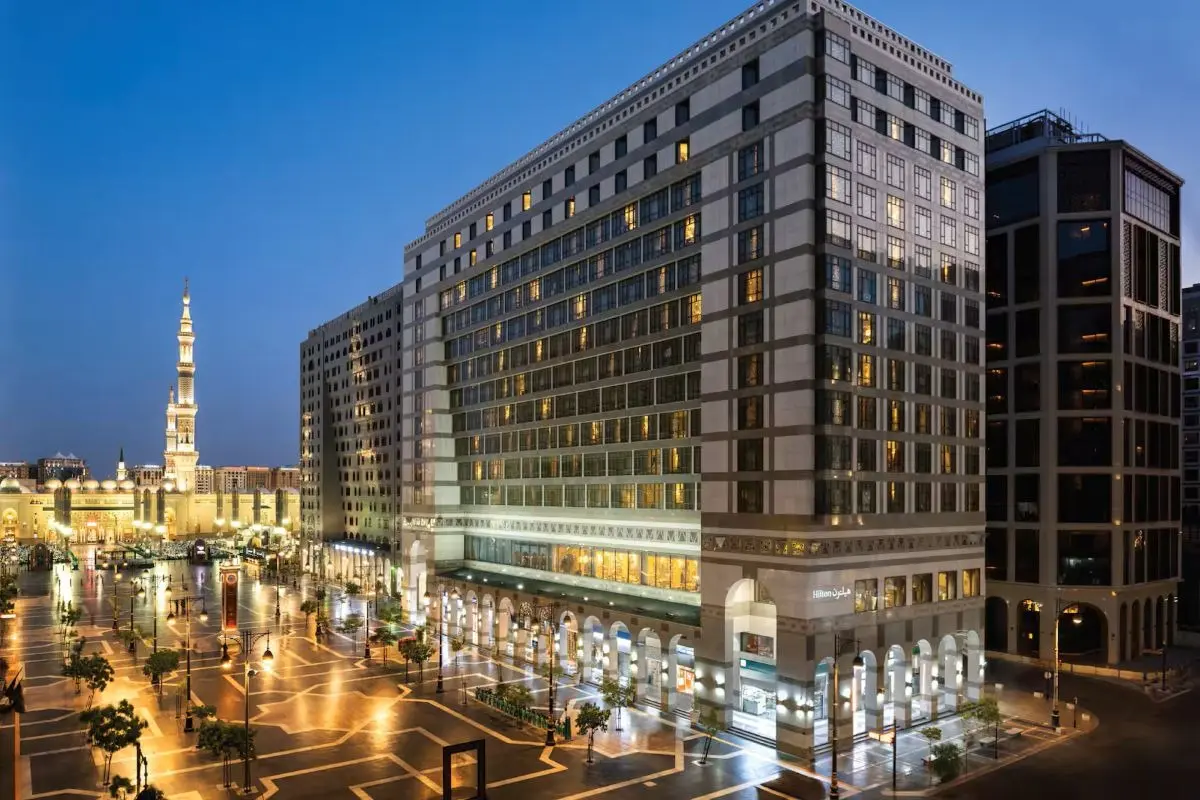
Hilton’s history in the Kingdom dates back decades, but for a long time, its presence was concentrated in gateway business hubs and religious centers. Properties like the Hilton Makkah and early developments in Jeddah and Riyadh were designed to serve corporate travelers, government officials, and the steady, year-round flow of religious pilgrims. During this era, the brand portfolio was traditional, limited largely to flagship Hilton hotels and early upscale entries. These hotels were monolithic structures, often state-owned or developed in partnership with prominent local trading families, serving as social hubs for local elites and international dignitaries.
Phase Two: The Vision 2030 Luxury Land Grab (2016–2023)
The launch of Saudi Arabia’s Vision 2030 in 2016 fundamentally rewrote the rules of engagement for international hotel operators. Crown Prince Mohammed bin Salman’s ambitious blueprint aimed to transform the Kingdom into a global tourism powerhouse, contributing 10% of the nation’s GDP by the end of the decade.

This triggered a frantic "land grab" for prime luxury real estate. Hilton, alongside competitors like Marriott, IHG, and Accor, signed a flurry of agreements to introduce their most exclusive brands. The pipeline swelled with Waldorf Astoria, Conrad, LXR Hotels & Resorts, and Curio Collection properties.
During this period, the mandate from Saudi developers was clear: bring the best, the boldest, and the most luxurious. Hilton answered the call, embedding its luxury brands into giga-projects and urban revitalization schemes. As Simon Vincent vividly described to Skift, Hilton has accumulated luxury properties in the Kingdom "coming out of our ears."
Phase Three: The Saturation and Mid-Market Realization (2024 and Beyond)
By 2024, the upper tier of the Saudi market—while still expanding—began to show signs of structural maturation in key metropolitan nodes. While giga-projects on the Red Sea and in Diriyah will continue to absorb ultra-high-net-worth individuals, the sheer volume of incoming travelers—fueled by regional events, business deregulation, domestic tourism campaigns, and expanded religious tourism—requires a different kind of hotel room.
Recognizing this, Hilton has initiated a strategic recalibration. The company is pivoting from direct-managed luxury assets to franchise-driven, mid-market developments. This phase prioritizes speed-to-market, cost-efficiency for local owners, and geographic expansion into underserved provincial capitals and industrial centers.
Supporting Context & Metrics: The Mechanics of the Mid-Market Pivot
To appreciate why Hilton is doubling down on the mid-market in Saudi Arabia, one must analyze the shifting demographics, economic indicators, and structural changes transforming the Kingdom.
The Demographic Imperative: Youth and Disposable Income
Saudi Arabia possesses a uniquely youthful demographic profile, with over 60% of its population under the age of 30. This tech-savvy, increasingly employed, and culturally mobile generation represents a massive engine for domestic tourism. Unlike previous generations who viewed travel primarily through the lens of international vacations or religious pilgrimages, young Saudis are actively exploring their own country.
However, this domestic tourist base—alongside a growing influx of regional travelers from neighboring Gulf Cooperation Council (GCC) nations—does not exclusively seek $1,00 العالمي-a-night luxury villas. They require clean, reliable, contemporary, and moderately priced accommodations for weekend getaways, road trips, and business travel between secondary cities.
The Power of the Franchise Model
Building and operating a luxury hotel like a Waldorf Astoria requires intensive capital expenditure, bespoke design, high staffing ratios, and complex operational oversight. Conversely, mid-market focused brands like Hampton by Hilton and Hilton Garden Inn operate on a highly efficient, scalable franchise model.
In emerging markets, working with local investors and property owners via franchises accelerates expansion. Local real estate developers understand regional zoning, cultural nuances, and construction supply chains better than international operators. By offering robust brand standards, global distribution systems, and powerful loyalty programs (Hilton Honors), Hilton empowers local owners to build mid-market assets that practically run themselves while generating reliable yields.
The Turkey Playbook: A Blueprint for Saudi Arabia
To contextualize this strategy, Simon Vincent drew a direct parallel to Hilton’s historical expansion in Turkey—a market where the company holds a commanding presence.
Hilton’s entry into Turkey began with iconic flagships like the Hilton Istanbul Bosphorus, which opened its doors in 1955 as a symbol of modernity and international engagement. For decades, that single luxury-leaning property was the anchor. However, Hilton’s current footprint in Turkey—surpassing 100 hotels—wasn’t built by scattering more ultra-luxury Conrads across the Anatolian plains.
Instead, growth was fueled by mid-market brands like Hilton Garden Inn penetrating provincial towns and Hampton hotels anchoring secondary cities. These properties filled a vital vacuum: in many of those regional Turkish hubs, a Hilton Garden Inn instantly became the highest-quality, most reliable hotel in town. It provided international standards of hospitality to regional business travelers and domestic tourists who previously had to settle for substandard local motels.
Hilton intends to execute the exact same playbook in Saudi Arabia. Beyond the gleaming towers of Riyadh and the coastal resorts of Jeddah, the Kingdom is dotted with thriving industrial hubs, regional administrative capitals, and university towns—such as Al-Ahsa, Jizan, Tabuk, and Abha—where the demand for branded, mid-market lodging vastly outstrips supply.
Official Statements & Industry Perspectives
The shift in Hilton’s strategic narrative reflects a broader conversation happening across the global hospitality sector regarding the sustainability of pure-luxury models in emerging tourism markets.
"We’ve got Conrads, Waldorfs, Hiltons, Curios, and DoubleTrees coming out of our ears over there," Simon Vincent, Hilton’s President for Europe, Middle East, and Africa, remarked during his interview with Skift.
"But it’s the mid-market we want to build out, and that’s how, very often, markets evolve."
Vincent’s candid assessment underscores a pragmatic corporate maturity. While the PR value of opening a luxury resort in a high-profile giga-project is immense, the day-to-day revenue stability and long-term asset health of a global hotel group rely heavily on the sheer volume of room nights generated by mid-tier travelers.
Industry analysts have largely applauded this forward-thinking approach. For years, critics of Saudi Arabia’s tourism masterplan questioned whether the market would suffer from over-indexing on luxury while ignoring the "missing middle" of hospitality infrastructure. By actively steering developer appetite toward focused-service and mid-scale brands, Hilton is directly addressing this structural gap.
Furthermore, local Saudi real estate developers are beginning to recognize the financial attractiveness of mid-market assets. While luxury hotels carry high risk and cyclical vulnerability during economic downturns, mid-market franchise hotels—supported by corporate travel contracts, government delegations, and religious tourism streams—offer resilient, consistent occupancy rates.
Future Outlook: The Next Frontier of Saudi Hospitality
As Saudi Arabia marches toward its Vision 2030 milestones, the composition of its tourism economy will inevitably shift. The initial splash phase—defined by global PR victories and awe-inspiring architectural reveals—is successfully drawing the world’s attention. Now, the operational phase requires embedding tourism into the daily economic and social fabric of the nation.
The Provincial Boom
Over the next five to ten years, the most aggressive growth in Saudi Arabian hospitality will occur outside the primary urban centers. As infrastructure projects—such as the national rail network, expanded regional airports, and improved highway systems—connect remote parts of the Kingdom, secondary and tertiary cities will open up to leisure and business travelers.
Hilton’s mid-market brands are uniquely positioned to capture this regional movement. A Hampton by Hilton situated near an industrial zone in Jubail or a Hilton Garden Inn located in the cooler mountain climate of Asir will serve as the commercial engines of this domestic tourism boom. These hotels will not merely accommodate travelers; they will raise the baseline service standards of the local hospitality ecosystem, inspiring domestic competitors to elevate their offerings.
Empowering Local Talent and Franchisees
Another critical pillar of Hilton’s future outlook in Saudi Arabia is alignment with national workforce development goals. The Saudi National Tourism Strategy places immense emphasis on Saudization—training and employing local citizens across all levels of the hospitality sector.
Mid-market and focused-service hotels, with their streamlined operational structures, often provide ideal environments for accelerated training and career progression for young Saudi nationals entering the workforce. By expanding the franchise network, Hilton is also indirectly empowering local entrepreneurs and family-owned conglomerates to diversify their investment portfolios into modern hospitality management.
Conclusion
Hilton’s journey in Saudi Arabia is entering its most crucial chapter. Having established its luxury credentials with an enviable lineup of Waldorfs, Conrads, and lifestyle flagships, the company is demonstrating strategic agility by pivoting to where the true volume of future demand lies.
By applying the lessons learned from mature markets like Turkey, Hilton is shifting its gaze from the exclusive palaces of the elite to the functional, reliable, and deeply necessary mid-market. In doing so, the company is not only securing its own commercial future in the Kingdom but is also helping to build the democratic, accessible tourism infrastructure that Saudi Arabia needs to sustain its economic transformation for decades to come.