









Executive Overview
In a decisive move that could fundamentally reshape how public transportation systems across the United States are funded, managed, and secured, federal officials are throwing their weight behind a rigorous new legislative framework. U.S. Transportation Secretary Sean P. Duffy has formally voiced his strong support for the Safe Transit Act, a landmark piece of legislation introduced by Senator Bill Hagerty (R-Tenn.).
If enacted, this sweeping legislation would grant the U.S. Department of Transportation (USDOT) and the Federal Transit Administration (FTA) unprecedented authority to tie federal transit subsidies directly to stringent public safety metrics, crime reduction benchmarks, and infrastructural security mandates. For decades, federal transit grants have flowed to state and local transit authorities with relatively broad operational discretion. However, under the proposed Safe Transit Act, jurisdictions that struggle with high crime rates, pervasive fare evasion, or lenient bail and pretrial release policies for violent offenders could face severe financial penalties—ranging from a 50% reduction to a total 100% freeze of their federal formula funding.
The legislative push arrives at a critical juncture for urban transit networks nationwide. In the wake of the COVID-19 pandemic, public transportation systems in major metropolitan areas have struggled to recover pre-pandemic ridership numbers, heavily constrained by rising crime rates, widespread public disorder, physical deterioration, and an alarming surge in assaults against transit operators and passengers alike. While some transit agencies have proactively implemented aggressive policing and technological upgrades, others have lagged behind, creating a fragmented safety landscape for millions of daily commuters.
By coupling federal funding directly to measurable security outcomes, the Safe Transit Act seeks to establish a unified national baseline for public transit safety. This comprehensive report explores the mechanics of the proposed legislation, details the structural requirements it imposes on local transit agencies, examines the broader regulatory climate surrounding the Federal Transit Administration, and analyzes the potential ramifications for urban mobility across the United States.
Detailed Chronology of the Legislative Push and Regulatory Pressure
The introduction of the Safe Transit Act is not an isolated event; rather, it is the culmination of years of escalating friction between federal transportation regulators and urban transit operators over persistent safety, maintenance, and crime crises.
The Escalation of Federal Oversight
Over the past several years, the Federal Transit Administration has increasingly utilized its regulatory powers to intervene in local transit management. Traditionally focused primarily on rail track safety and equipment maintenance, the FTA has broadened its purview to encompass public safety, worker assaults, and systemic crime rates.
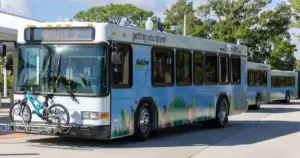
Federal intervention has targeted several high-profile, troubled transit systems across the country. According to USDOT disclosures, federal regulators have initiated safety-related actions, formal audits, and compliance reviews involving major operators, including:
- The Chicago Transit Authority (CTA)
- The Washington Metropolitan Area Transit Authority (WMATA)
- New York’s Metropolitan Transportation Authority (MTA)
- Los Angeles County Metropolitan Transportation Authority (LA Metro)
- The Charlotte Area Transit System (CATS)
- Southeastern Pennsylvania Transportation Authority (SEPTA)
- Metropolitan Atlanta Rapid Transit Authority (MARTA)
In many of these jurisdictions, federal audits exposed severe safety vulnerabilities, inadequate training protocols, understaffed security details, and a failure to protect transit workers from escalating onboard violence.
Local Adaptations Under Pressure
Anticipating stricter federal mandates and responding to intense public outcry from riders and labor unions, several major transit agencies have already begun scrambling to overhaul their security postures:
- Chicago: The CTA rolled out an enhanced security plan that significantly increased visible law enforcement patrols across its rail network.
- Los Angeles: LA Metro took the dramatic step of establishing a dedicated transit police force, hiring a dedicated police chief to oversee the agency’s internal security apparatus.
- Philadelphia: SEPTA expanded its active security monitoring capabilities and increased private security and police deployment across vulnerable station platforms.
- San Francisco: Bay Area Rapid Transit (BART) initiated system-wide infrastructural overhauls, installing next-generation high-security fare gates across its entire 50-station network to combat rampant fare evasion.
Despite these localized efforts, federal transit leadership argues that voluntary compliance is insufficient. Secretary Duffy and Senator Hagerty designed the Safe Transit Act to compel stubborn, non-compliant municipalities to adopt aggressive safety protocols, paving the way for the current legislative showdown in Congress.
What the Safe Transit Act Would Require: A Deep Dive into the Mandates
The Safe Transit Act introduces a multi-tiered enforcement mechanism that blends financial penalties with mandatory capital investments in security infrastructure. The bill’s provisions are designed to target both the root causes of transit crime—such as fare evasion and unsecured station environments—and systemic judicial loopholes that allow violent offenders back onto public transit systems.
1. The 100% Funding Withholding Mechanism
Under the most stringent provision of the proposed act, the USDOT would be authorized to withhold 100% of federal funding from cities and local governments that fail to satisfy specific statutory requirements. This penalty targets systemic policy failures, including:
- Unaddressed Fare Evasion: Failure to enforce laws and maintain infrastructure preventing unlawful entry into transit systems.
- Violent Offender Restrictions: The absence of statutory frameworks or operational policies prohibiting violent criminals from utilizing public transit networks.
- Pretrial Release Loopholes: Lenient pretrial release and bail policies for individuals who commit violent crimes on public transit properties. This provision directly incorporates principles inspired by "Iryna’s Law," a high-profile piece of legislation passed in North Carolina aimed at keeping violent offenders off the streets and out of public spaces.
2. Mandatory Safety and Crime-Prevention Spending
Rather than relying purely on punitive measures, the Safe Transit Act actively directs capital toward security enhancements. The legislation mandates that transit agencies operating in urbanized areas dedicate at least 3% of their federal formula funding directly to safety and crime-prevention initiatives.
Eligible investments under this mandatory spending floor include:
- Advanced Surveillance Systems: High-definition security cameras integrated with real-time monitoring capabilities.
- Environmental Design Improvements: Enhanced lighting in dark corridors, stairwells, and parking structures to eliminate blind spots.
- Emergency Communication: Strategically placed emergency call boxes connected directly to law enforcement dispatch.
- Operator Protection: Physical barriers, secure partitions, and reinforced doors designed to protect bus operators and train conductors from physical assaults and projectile attacks.
3. Crime Rate Penalties (The 50% Threshold)
Recognizing that some transit networks suffer from endemic, systemic crime waves that transcend simple policy failures, the legislation authorizes the USDOT to withhold up to 50% of federal transit funding from cities whose reported crime rates significantly exceed the national transit average. This creates a financial imperative for municipal police departments and transit authorities to coordinate closely on anti-crime sweeps, visible deterrence strategies, and rapid-response protocols.
4. Infrastructure and Rolling Stock Standards
The bill introduces nationwide performance standards for physical infrastructure. Outdated, waist-high turnstiles that can easily be jumped or bypassed would be systematically replaced with secure physical gates, full-height turnstiles, and modern optical barriers designed to eliminate fare evasion at the point of entry.
Furthermore, the legislation establishes strict procurement mandates: any new buses or rail vehicles purchased using federal funding must come equipped with advanced inward- and outward-facing security cameras, as well as robust event recorders. These systems will provide crucial forensic evidence for criminal investigations and ensure greater accountability for both passengers and operators.
Supporting Context, Metrics, and Economic Implications
To understand why the Safe Transit Act has garnered such passionate support from federal officials, one must examine the profound economic and social toll that crime and disorder have exacted on America’s transit systems.
The True Cost of Transit Crime
For decades, public transit was celebrated as the green backbone of American urban mobility—an efficient, equitable, and cost-effective way to move millions of workers, students, and tourists. However, the post-pandemic era upended these assumptions. Crime data compiled across major metropolitan transit systems reveals a disturbing trend: while overall ridership has hovered below pre-pandemic levels (often resting between 70% and 85% of 2019 benchmarks), rates of violent crime, property theft, and harassment per passenger-mile have climbed noticeably.
Surveys consistently show that fear of crime is the single greatest deterrent keeping former riders away from public transit. When commuters feel unsafe waiting on a dark platform, navigating a chaotic mezzanine, or sitting in a subway car, they seek alternative transportation methods—primarily driving personal automobiles. This behavioral shift not only undermines municipal congestion-reduction goals and urban climate targets, but it also creates a downward financial spiral for transit agencies: lower ridership leads to reduced farebox revenues, which in turn leads to budget deficits, service cuts, deferred maintenance, and diminished security.
The Crisis Facing Transit Workers
While passengers bear the brunt of erratic behavior and violent incidents, transit operators—bus drivers, train engineers, station agents, and transit police—face occupational hazards that have reached crisis levels. According to recent reports from the Federal Transit Administration and labor organizations representing transit workers, physical assaults, verbal abuse, and spitting incidents directed at operators have surged nationwide.
Bus drivers, operating in isolation behind vulnerable cockpits, have frequently been victims of unprovoked attacks. The Safe Transit Act’s mandate for protective barriers and comprehensive onboard surveillance directly addresses this harrowing reality, offering workers a much-needed layer of physical protection and legal recourse.
The Intersection of Federal Dollars and Local Governance
From a constitutional and economic standpoint, the Safe Transit Act highlights the ongoing debate over the limits of federal leverage. Historically, federal transit grants—distributed through programs managed by the FTA—have been treated as entitlements or guaranteed formula funds meant to support baseline infrastructure maintenance and capital expansion.
By introducing performance-based strings attached to public safety and criminal justice policies, Secretary Duffy and Senator Hagerty are shifting the federal posture from passive funder to active regulator. Critics of such legislation often argue that conditioning federal transit dollars on local criminal justice policies (such as bail reform and pretrial release guidelines) represents an overreach into local legal jurisdictions. Proponents, however, counter that because federal taxpayers fund these transit systems, Washington has an absolute obligation to ensure that the resulting infrastructure is safe, secure, and utilized in a manner that protects the public interest.
Official Statements and Stakeholder Perspectives
The debate surrounding the Safe Transit Act has drawn sharp commentary from federal leaders, transportation administrators, and legislative architects.
U.S. Transportation Secretary Sean P. Duffy
Defending the urgent need for federal accountability, Secretary Duffy emphasized the tangible successes already achieved in certain jurisdictions while underscoring the stubborn resistance of others:
"Our work has slashed fare evasion, increased law enforcement patrols, and reduced crime — including right here in our nation’s capital. But for the stubborn states, cities, and systems that refuse to meet basic safety standards, we need more flexibility to hold them accountable," Duffy declared.
He added: "I want to thank Senator Hagerty for leading this critical legislation and ensuring hardworking taxpayer dollars deliver transit systems that Americans can be proud of."
Senator Bill Hagerty (R-Tenn.)
As the primary sponsor of the legislation, Senator Hagerty framed the bill as a common-sense restoration of civil order and passenger prioritization:
"My legislation would direct federal funding to communities that actually protect passengers and promote public safety," Hagerty stated. "It’s time to put Americans’ safety first."
FTA Acting Deputy Administrator Matthew Cahill
Echoing the sentiments of executive leadership, FTA Acting Deputy Administrator Matthew Cahill underscored the enforcement challenges faced by federal regulators:
"The federal government should not have to sound the alarm on insufficient transit safety protocols on the state and city level," said Cahill. "This legislation gives FTA the backing we need to enforce basic safety standards, clean up high-crime systems, and put the safety of transit riders and workers first."
Industry Reception and Local Pushback
While federal officials and passenger advocacy groups have largely welcomed the proposed legislation as a long-overdue correction, local transit officials and municipal leaders have expressed mixed reactions.
Representatives from progressive urban centers have voiced concern that withholding federal funds from cities with high crime rates could create a punitive feedback loop. Under this argument, stripping a cash-strapped transit system of 50% to 100% of its federal grants would worsen the agency’s financial distress, forcing service cuts, reducing maintenance staff, and degrading security infrastructure—the exact opposite of the bill’s stated intent.
Conversely, law-and-order advocates and transit labor unions have praised the bill’s uncompromising stance. Unions representing bus operators and train conductors have long demanded federal safety standards, arguing that local municipal governments have historically prioritized budget balancing over the physical well-being of transit employees.
Future Outlook: What Lies Ahead for the Safe Transit Act
As the Safe Transit Act moves through the legislative process, its fate will depend heavily on congressional negotiations, bipartisan compromises, and the evolving political landscape surrounding urban safety and federalism.
Legislative Hurdles in Congress
Passing a bill that ties federal transit funding to local criminal justice policies—such as pretrial release reform and bail laws—will undoubtedly face stiff opposition in Congress. Lawmakers from dense urban districts with progressive criminal justice policies are expected to challenge the provisions that penalize cities based on local judicial statutes.
However, growing bipartisan frustration over urban crime, visible public disorder, and declining transit ridership provides a compelling counter-narrative. Even in politically divided legislatures, public safety and accountability resonate strongly with voters across the political spectrum. If proponents can successfully frame the bill as a consumer-protection and worker-safety measure rather than a purely partisan policy tool, its chances of securing broad support increase significantly.
Implementation and Adaptation
If the Safe Transit Act is enacted into law, its implementation will require a monumental coordination effort between the Federal Transit Administration, state departments of transportation, municipal police forces, and local transit boards.
- The Transition Period: Transit agencies will likely be granted a compliance grace period to upgrade fare collection infrastructure (installing physical gates and turnstiles) and reallocate their capital budgets to meet the mandatory 3% safety spending floor.
- The Data Challenge: Establishing a uniform national standard for measuring transit crime and comparing urban crime rates against the national transit average will require rigorous, standardized data collection protocols managed by the USDOT.
- A New Era for Urban Mobility: Ultimately, the Safe Transit Act signals the dawn of a new era in American public transportation. The era of unconditional federal subsidies is facing a rigorous challenge. If the legislation succeeds, it will permanently alter the social contract between federal funders, local transit operators, and the commuting public—ensuring that federal tax dollars are inextricably linked to the fundamental human right of safe, secure, and reliable travel.