







For nearly four years, regular readers of Streetsblog grew accustomed to a reliable cadence of five to seven bylines a week dissecting the intersections of urban design, public health, and transit equity. Then, abruptly in June, that output ceased. The sudden silence was not the result of burnout or a career pivot, but rather the entry into a deeply personal crucible: a leave of absence taken following the rapid decline and subsequent death of the author’s father.
While the intimate details of a parent’s final days typically fall outside the mission parameters of a publication dedicated to infrastructure and mobility, the intersection of this personal tragedy with a professional life spent analyzing transportation policy has yielded profound insights. The author, a veteran reporter on disability, mobility, and the mounting challenges of the "silver tsunami"—the demographic wave of aging Baby Boomers losing their ability to drive—discovered that theoretical expertise offers little shelter against the raw, logistical chaos of end-of-life caregiving in an auto-centric society.
This piece explores how becoming a caregiver in an ultra-car-dependent rural community dismantled abstract policy assumptions about aging in place, spatial design, and transportation reform. It argues that while urbanists and transportation advocates are correct to push for dense, multimodal, and walkable cities, they must also grapple with the emotional tethers of home, the invisible labor of caregiving, and the hard truth that chronic, terminal illness ultimately exposes the deep structural failures of our current built environment.
Detailed Chronology: The Fall from Independence to Immobilization
To understand the friction between modern mobility policy and the reality of aging and illness, one must look at the rapid trajectory of the author’s father. In September of the previous year, the 73-year-old was a picture of vitality. An active retiree, he had recently driven more than 500 miles to embark on a multi-day canoe trip. He lived in a planned community in rural Ohio—a home he shared for 25 years, and one he remained deeply attached to following the death of his second wife just a year prior.
Within days, that independence evaporated. Diagnosed with stage IV cancer that had metastasized to his bones, the healthy septuagenarian was suddenly tethered to a regimen of heavy, sedating painkillers. Chemotherapy swiftly stripped away his remaining energy, leaving him falling asleep mid-sentence at the kitchen table. The SUV sitting in his garage transitioned overnight from a tool of freedom to an expensive, unusable anchor.
Driving was instantly out of the question. What followed was a grueling descent into hyper-dependency, compounded entirely by the geography of his surroundings.
His home was located in a planned community deliberately built without sidewalks, fixed-route public transit, or even basic street lighting. While a grocery store sat adjacent to the property, reaching it required either a risky drive or a perilous trek along a 45-mile-per-hour arterial highway. The complex itself backed up against a roaring interstate—a highway the father had historically viewed as an amenity because it allowed him to live in the horse country he loved, near the equestrian therapy center where he volunteered for individuals with disabilities.
As his condition deteriorated, the logistical nightmare of accessing medical care began. With the author and her sister living multiple states away, the siblings were forced to establish a tag-team caregiving rotation, flying in to serve as unpaid chauffeurs, nurses, cooks, and housekeepers.
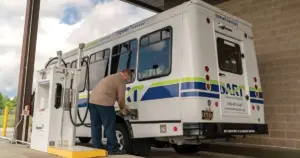
The most punishing bottleneck proved to be transportation to medical appointments. Local home health aides and the underfunded rural paratransit system offered no flexibility, requiring advance notice that completely clashed with the volatile, day-to-day emergencies of a cancer patient. Commercial ride-hailing services like Uber and taxis routinely canceled rides upon witnessing the rural distance or refused to assist a frail patient down the front steps. Even later, when the father was relocated to an "all-inclusive" assisted living facility in the author’s city, the systemic failures persisted: hundreds of residents were serviced by a single staff driver, and outgoing trips required a rigid 72-hour booking window—an impossibility for a patient exhausted by chemotherapy fatigue who required hours of recovery after even minor exertion.
Supporting Context & Metrics: The Intersection of Aging and Spatial Design
The personal ordeal highlights macro-level statistics that urban planners and transportation economists have long wrestled with. According to federal transportation data, roughly one-third of U.S. households either cannot or do not use cars. This demographic disproportionately includes older Americans facing mounting mobility challenges. As the Baby Boomer generation ages into frailty, millions of citizens are poised to lose their driving privileges in communities where driving is treated as a mandatory prerequisite for basic survival.
Furthermore, public health research increasingly links auto-centric infrastructure to chronic illness. The father’s long-term exposure to the adjacent interstate highway placed him squarely in the crosshairs of PM 2.5 particulate pollution—air pollution heavily correlated with respiratory illnesses, cardiovascular disease, and specific types of cancer. Despite reading his daughter’s numerous policy briefs on the subject, the father viewed the highway not as a hazard, but as the literal gateway to the rural lifestyle he cherished.
This dichotomy exposes a blind spot within the transportation reform movement. Urbanists frequently write off residents of car-dependent suburbs as uninformed victims of "car-brain" or targets of predatory housing markets. Yet, as this case demonstrates, residential choices are often governed by deep emotional bonds to home and grief, rather than mere logistical calculation. When a person is grieving a late spouse, the emotional gravity of a home supersedes abstract data on walkability scores.
Moreover, the crisis underscores the invisible subsidy underpinning the American medical and transportation systems: the unpaid labor of family caregivers. Millions of family members—disproportionately women and daughters—fill the vast chasms left by underfunded healthcare networks and hostile street designs. They spend their days juggling insurance bureaucracy, pharmacy runs, and grueling drives through gridlocked traffic just to secure basic palliative care for their loved ones.
Perspectives from the Ground: Navigating the Broken Infrastructure of Care
Reflecting on months spent navigating medical campuses across sprawling metropolitan regions, the author confronted the hard limits of traditional transit advocacy.
Critics online frequently target urbanists for advocating bicycle lanes and pedestrian infrastructure, arguing that such amenities do nothing for the elderly, the disabled, or the terminally ill. In this specific instance, those critics were technically correct: a bike lane would not have saved the author’s father. He was physically incapable of walking, let alone cycling, in his final months. Even the finest bus network in the world could not have provided the door-through-door physical assistance required to guide a struggling patient to a specialist’s waiting room.
However, dismissing the systemic failures of car dependence on these grounds misses the broader point. The author observed that mass, forced car dependency actively degrades the quality of life for the sick and dying. Sitting in gridlocked traffic in an urgent care queue, or navigating vast hospital parking garages that consume space better allocated to medical facilities, reveals an inefficient, hostile system.
+--------------------------------------------------------------------------+
                    THE CARETAKER'S TRANSPORTATION DILEMMA
+--------------------------------------------------------------------------+
  Obstacle                     Systemic Reality         Impact on Patient
  ------------------------------------------------------------------------
  Rural Paratransit            Requires 72-hr notice    Incompatible with
                                                        dynamic oncology needs.

  Rideshare / Taxis            Frequent cancellations   Stranded patients;
                               due to rural distance    no door-to-door physical
                                                        assistance.

  Retirement Communities       Single staff driver      Rigid scheduling leaves
                               for hundreds of residents no room for fatigue/recovery.

  Car-Centric Sprawl           Far-flung medical        Exhausting multi-mile drives
                               campuses & gridlock      through heavy highway traffic.
+--------------------------------------------------------------------------+
Furthermore, the investigation revealed an uncomfortable truth that many transportation reformers avoid: when individuals become severely ill, no transportation option—not even the automobile—truly serves them. The journey from the living room to the car garage eventually feels insurmountable. Patients inevitably become housebound, and then bedbound. In those final stages, the only viable mobility interventions are proximal: localized healthcare delivery, in-home support, and policies that eliminate the need for travel altogether.
Future Outlook: Reimagining Mobility Through the Lens of Vulnerability
The lessons drawn from this personal loss point toward an urgent evolution in how urban planners, policymakers, and advocates approach transportation equity. The movement to end forced car dependency is fundamentally compatible with—and must expand to encompass—the movement to support car-dependent, vulnerable individuals.
Future mobility advocacy must integrate structural support systems for populations that cannot move independently. Key policy shifts required to close these systemic gaps include:
- Healthcare Logistics Reform: Integrating localized medical delivery networks and expanding mobile health clinics to reduce the frequency of grueling cross-city transit requirements for fragile patients.
- Caregiver Industry Overhaul: Treating caregiving as essential infrastructure, providing robust federal and state wages, training, and institutional support for home health aides and transportation assistants.
- Palliative-Focused Urban Planning: Requiring senior residential and assisted-living developments to maintain dedicated, flexible transit fleets designed specifically for medical volatility rather than rigid corporate schedules.
- Holistic Housing Transitions: Developing deeply subsidized, accessible intergenerational housing within urban cores so that aging populations are not forced to choose between isolation in car-dependent rural enclaves and clinical institutionalization.
Ultimately, the overarching takeaway is one of compassionate resilience. The world already contains an overwhelming amount of inherent human pain. Building transportation and housing systems that accelerate mortality, isolate the elderly, and place crushing logistical burdens on grieving families is an entirely preventable tragedy. By expanding the scope of urbanism to include the realities of illness, aging, and caregiving, society can forge a future marked by significantly less suffering—a goal the author’s father would have fiercely championed.