








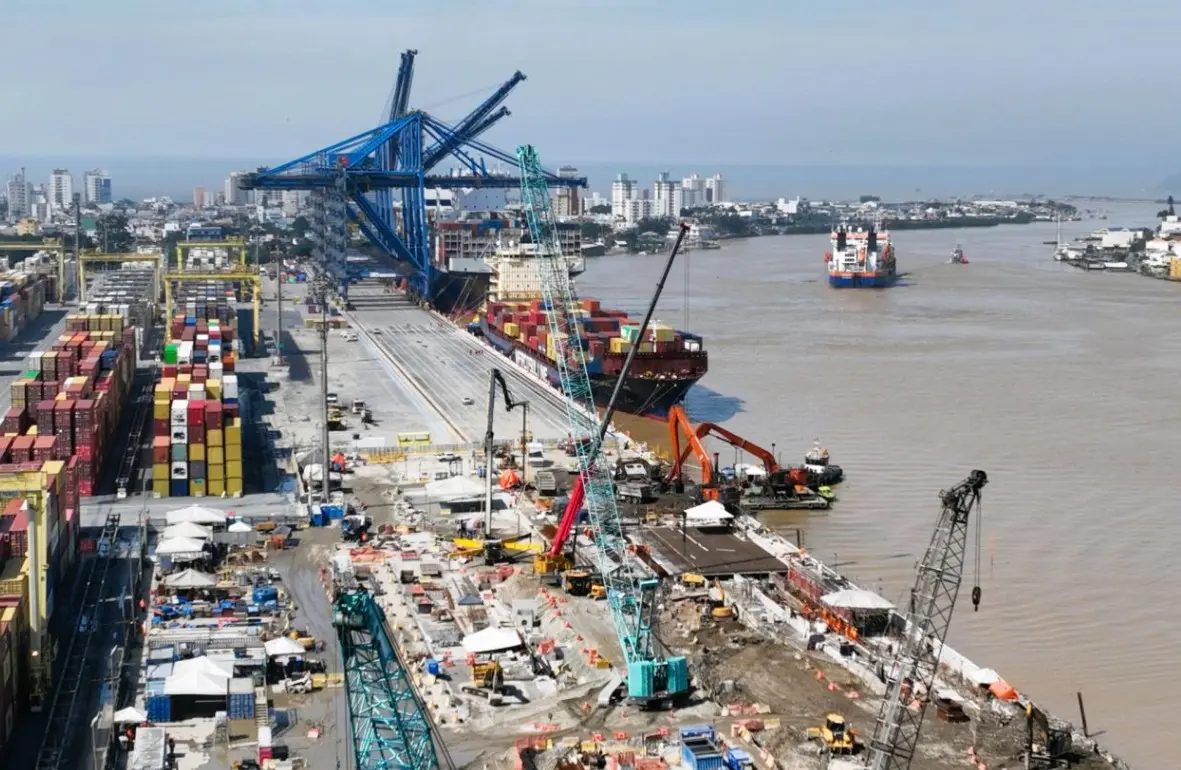
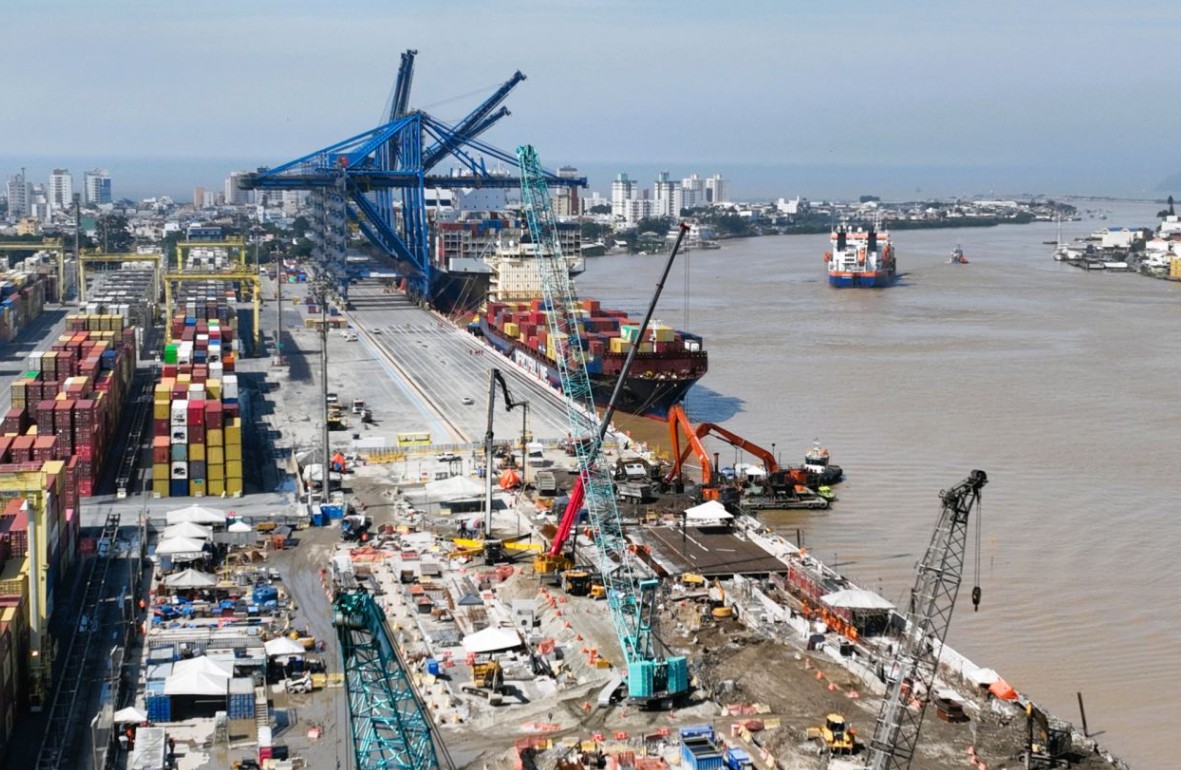
NAVEGANTES, BRAZIL — In a significant engineering triumph for South America’s maritime logistics sector, global infrastructure leader BESIX has announced the successful delivery of an additional 250 meters of state-of-the-art quay wall at the Portonave terminal in Navegantes, Santa Catarina, Brazil. This latest achievement brings the cumulative total of newly delivered maritime infrastructure to an impressive 740 meters, marking a crucial step forward in one of the region’s most ambitious port expansion and modernization initiatives.
The project, which began in 2024, is designed to future-proof Portonave—one of Brazil’s most efficient and critical container terminals—ensuring it can accommodate the escalating demands of global shipping trade, larger vessel classes, and increased cargo throughput. With only 245 meters remaining to complete the overarching modernization framework, the project is rapidly hurtling toward its final stages, cementing its status as a benchmark for complex marine civil engineering executed within a functioning, high-volume commercial port.
Executive Overview: Transforming Brazil’s Container Logistics Hub
The continuous expansion of the Portonave terminal is not merely a local construction project; it is a vital catalyst for Brazil’s broader economic competitiveness. As international trade routes evolve and maritime carriers increasingly rely on ultra-large container vessels (ULCVs) to achieve economies of scale, Brazilian ports face intense pressure to upgrade their physical and nautical infrastructure.
BESIX, renowned globally for its expertise in marine works, complex foundations, and deep-water terminal construction, has risen to this challenge. By executing a complex phased reconstruction directly on the footprint of existing infrastructure, the engineering team has successfully balanced massive civil works with continuous commercial port operations. The delivery of this additional 250-meter segment underscores the company’s technical capability to execute high-precision marine construction under demanding site conditions.
The overarching development directly enhances the port’s operational capacity, improves berth availability, reduces vessel turnaround times, and reinforces Navegantes’ position as a premier gateway for international trade in the Americas.
Detailed Chronology of the Portonave Expansion Project
The execution of the Portonave quay wall project represents a masterclass in modern construction phasing, logistics planning, and marine engineering. Because the port had to remain open and fully functional throughout the lifecycle of the works, every phase required meticulous synchronization between civil contractors, terminal operators, port authorities, and logistics coordinators.
Phase 1: Groundbreaking and Initial Foundation Works (2024)
When the project broke ground in 2024, the engineering challenges were immediately apparent. The project required the complete reconstruction of the quay wall within the exact footprint of the existing, aging structure. This "in-place" replacement strategy eliminated the possibility of expanding outward into unutilized maritime space, necessitating deep-foundation interventions, specialized marine piling, soil stabilization, and structural anchoring systems capable of supporting significantly heavier loads and deeper draft requirements.

Throughout 2024 and early 2025, BESIX teams operated heavy marine plant equipment, including floating cranes, piling barges, and land-based heavy-lift machinery. Working in a tidal marine environment while commercial container ships continued to berth, load, and discharge cargo required unprecedented levels of safety management and construction sequencing.
Milestone Achievement: The October 2025 Handover
The project achieved its first major milestone in October 2025, when BESIX officially delivered the initial 450 meters of the newly constructed quay wall. This handover marked the formal conclusion of the project’s first major phase.
The transition from construction site to operational terminal was executed with startling speed and precision. In a meticulously planned logistical maneuver, port operators orchestrated the relocation of six massive ship-to-shore (STS) gantry cranes in just 48 hours. This swift crane redeployment instantly activated the new 450-meter stretch, allowing the port to welcome its very first ultra-large container vessels onto the upgraded facility without suffering extended commercial downtime.
The August 2026 Milestone: Delivering the Next 250 Meters
Building on the momentum of the 2025 handover, BESIX engineering teams continued unyielding progress through the late-winter months of 2026. The recent delivery of the additional 250-meter section brings the total operational length to 740 meters.
This newly completed stretch has already undergone rigorous structural integrity testing and quality assurance audits. It integrates seamlessly with the previously delivered infrastructure, featuring modern electrical trenching, high-capacity bollards, advanced fender systems, and reinforced concrete surfaces engineered to withstand decades of heavy dynamic loading from multi-ton container handlers and multi-tiered cargo stacks.
Supporting Context & Technical Metrics: Engineering a Modern Mega-Terminal
To understand the magnitude of the BESIX Navegantes project, it is essential to examine the technical specifications and operational metrics driving the modern container shipping industry in South America.
Navigating the Demands of Ultra-Large Container Vessels (ULCVs)
Historically, Brazilian ports were designed for smaller, regional feeder vessels or traditional Panamax ships. However, the global consolidation of trade routes has driven a rapid upscaling of fleet sizes. Modern container ships frequently exceed 350 meters in length, with beams surpassing 50 meters and draft requirements exceeding 14 meters when fully laden.
To berth these behemoths safely, ports require:
- Increased Structural Load-Bearing Capacity: Quay walls must withstand massive horizontal earth pressures, hydrostatic forces, and the immense concentrated loads exerted by crane outriggers during high-speed container lifts.
- Deeper Channel and Berth Pockets: Alongside quay wall construction, capital dredging is invariably required to maintain and deepen navigational channels and berth pockets, ensuring safe under-keel clearance.
- Advanced Mooring and Fendering Systems: The kinetic energy generated during the berthing of a 150,000-deadweight-ton vessel requires sophisticated energy-absorbing rubber fenders and high-holding-capacity bollards to protect both the ship and the shore infrastructure.
The "In-Place" Engineering Challenge
Constructing a new quay wall in the exact same location as an existing, operating structure is an engineering paradox. It requires dismantling old marine structures—often consisting of heavily reinforced concrete piles, sheet piling, and tie-back systems—while simultaneously driving new, deeper, and stronger foundation elements into the seabed.
BESIX utilized advanced marine excavation techniques, high-capacity vibro-hammers, and precision underwater concrete pouring to construct the replacement wall. By phasing the work into manageable linear blocks, the project team ensured that a significant portion of the terminal’s operational frontage remained accessible to shipping lines at all times, thereby safeguarding Portonave’s revenue streams and supply chain reliability during the multi-year construction period.
Official Perspectives and Industry Reactions
The success of the Portonave expansion has drawn praise from maritime logistics experts, trade associations, and corporate leadership across the international engineering community.
In official communications marking the August 2026 milestone, BESIX highlighted the collective effort of its on-site personnel and engineering divisions, encapsulating the project’s progress with the concise and determined statement:
“740 meters delivered. Only 245 left to go.”
Industry analysts point out that BESIX’s ability to maintain an aggressive construction schedule—despite facing supply chain volatilities, marine weather challenges, and the rigorous operational constraints of an active port—demonstrates the firm’s elite capabilities in international marine infrastructure development.
Portonave representatives have similarly emphasized the transformative impact of the infrastructure upgrade. By modernizing its waterfront, the terminal has solidified its reputation as one of the most technologically advanced and customer-centric ports in Latin America. Shippers benefit from reduced vessel service times, improved yard productivity, and enhanced connectivity to global maritime networks.
Future Outlook: The Final Stretch and Regional Economic Impact
As BESIX enters the final phase of the Navegantes project, attention naturally turns toward the completion of the remaining 245 meters of quay wall.
Completing the Vision
With 740 meters already fully integrated and operational, the final 245 meters will complete the modernization of the terminal’s target waterfront zone. The remaining works will follow the proven methodology established during the first two phases: rigorous structural demolition of legacy elements, precision marine foundation installation, backfilling, utility integration, and surface finishing.
Project managers anticipate maintaining the rapid pace established over the last two years, keeping the final delivery timeline firmly on track. Once the remaining 245 meters are handed over, Portonave will boast a continuous, modernized, high-capacity quay wall capable of matching the peak efficiency standards of premier European and Asian container hubs.
Economic Implications for Brazil
The strategic importance of this infrastructure investment extends far beyond the municipal boundaries of Navegantes. Santa Catarina is a powerhouse of Brazilian manufacturing, agriculture, and industrial production. Efficient port infrastructure directly reduces logistics costs—frequently referred to in Brazil as the Custo Brasil—thereby enhancing the global market competitiveness of Brazilian exports, including poultry, pork, timber, machinery, and manufactured goods.
Furthermore, by future-proofing its facilities for the next generation of ultra-large container ships, Portonave ensures that Navegantes will remain a primary magnet for major international shipping lines. This designation secures local employment, drives municipal and state tax revenues, and reinforces the resilience of regional supply chains against future global disruptions.
Conclusion
The milestone achieved by BESIX at Portonave in August 2026 is a testament to the power of visionary infrastructure planning and elite marine engineering. By successfully delivering 740 meters of advanced quay wall while keeping a major commercial port fully operational, BESIX has once again demonstrated why it remains a trusted global leader in complex maritime construction. As the project enters its home stretch with just 245 meters left to build, the maritime community watches with eager anticipation as Navegantes solidifies its place at the vanguard of South American port logistics.