







DUBAI / ASHEVILLE, North Carolina — A dangerous escalation has once again gripped the Middle East as the United States and Iran exchange direct military blows, shattering a month-long lull in kinetic hostilities. Following a pre-emptive U.S. airstrike on Iranian military assets on Larak Island in the Strait of Hormuz, Tehran launched a barrage of missiles targeting U.S. military installations in Jordan.
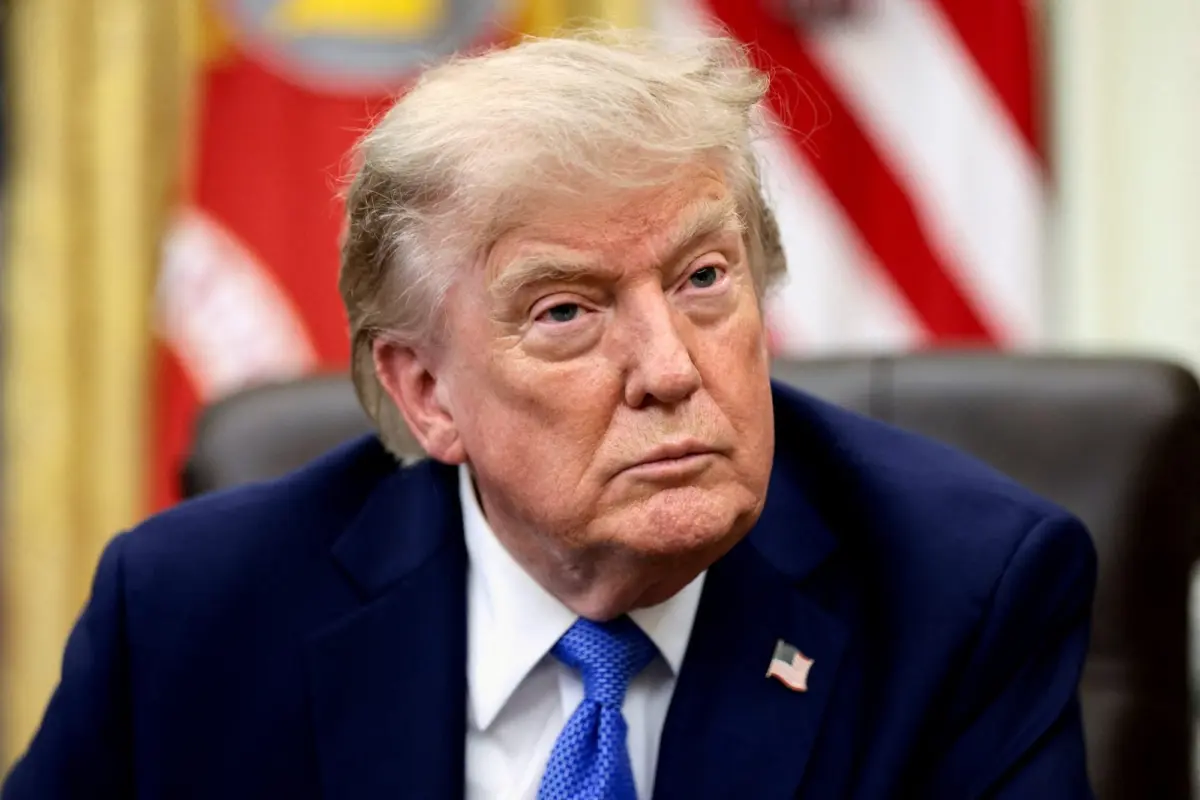
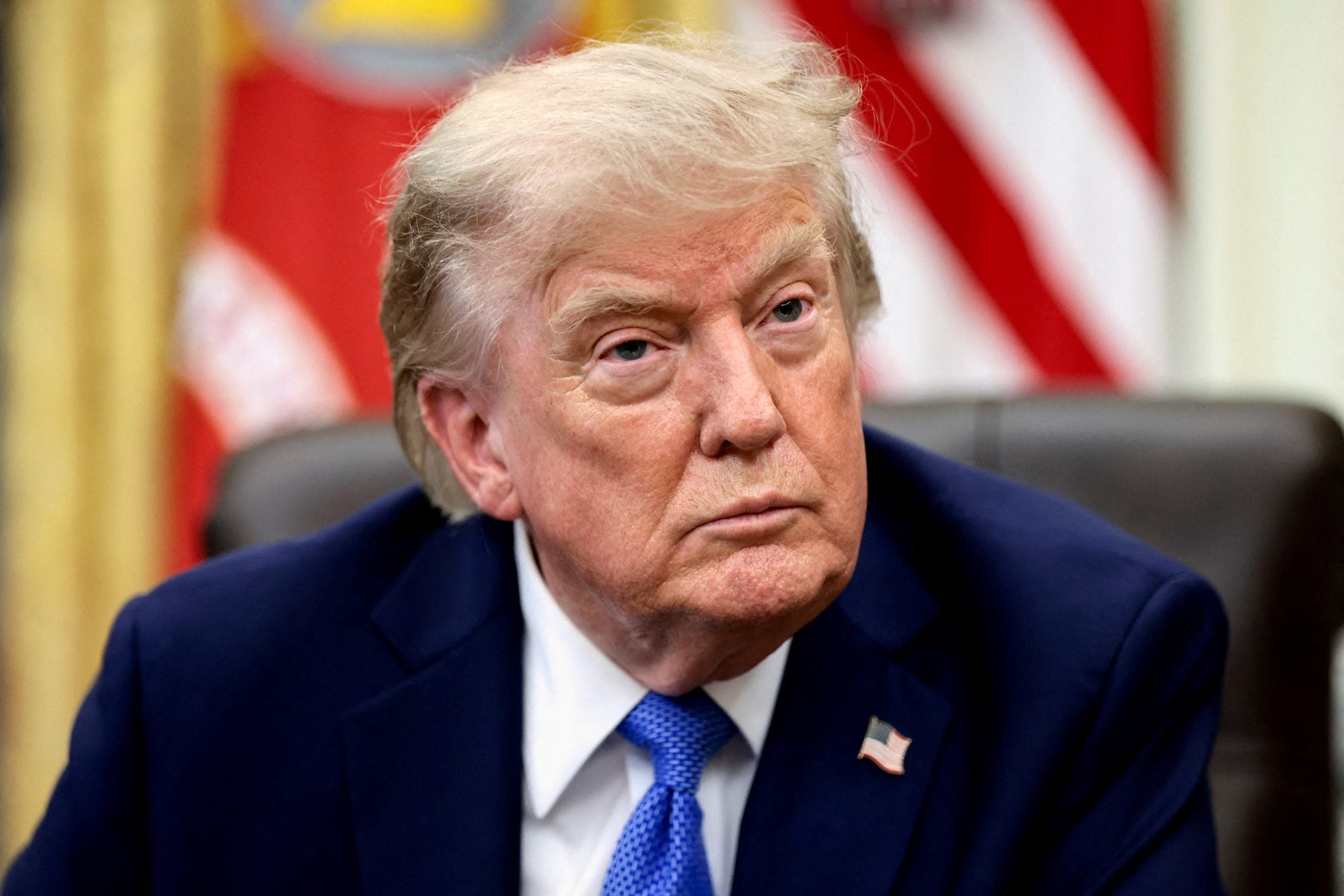
In the wake of the overnight strikes, U.S. President Donald Trump issued a stern warning, promising to "hit them hard" in response to the attacks, while Washington simultaneously prepares to unleash a devastating new wave of secondary economic sanctions designed to cripple the Iranian banking sector.
Executive Overview
The six-month-old conflict between the United States, its regional allies, and Iran has entered a volatile new phase. The latest flare-up began on Sunday, August 30, 2026, when U.S. forces conducted a precision strike on Larak Island, targeting Islamic Revolutionary Guard Corps (IRGC) positions allegedly preparing to deploy sea mines into the critical Strait of Hormuz. The strike resulted in three Iranian casualties, including two members of the IRGC Navy, prompting a swift retaliatory missile barrage from Tehran directed at U.S. airbases in Jordan.

While President Trump declared that U.S. air defenses successfully intercepted all incoming threats, the exchange has reignited fears of an uncontrollable regional conflagration. The Strait of Hormuz, which traditionally facilitates the passage of approximately 20% of the world’s crude oil, remains effectively blocked, keeping global energy markets on a knife-edge.
Concurrently, the conflict has expanded into the realms of economic warfare and psychological operations. At a G20 finance ministers’ meeting in North Carolina, U.S. Treasury Secretary Scott Bessent announced a systematic campaign of weekly secondary sanctions designed to completely isolate Iran’s financial system. Meanwhile, a controversy emerged online after President Trump shared an AI-generated video depicting the destruction of Iran’s vital Kharg Island oil terminal—a post dismissed by Tehran as "laughable" but one that underscores the highly charged nature of the information war accompanying the physical combat.
Detailed Chronology of the Escalation
The timeline of the latest confrontation reveals a rapid sequence of action and reaction, highlighting the razor-thin margin for error in the strategic waterways and airspace of the Middle East.
[Sunday, Aug 30]
 U.S. detects IRGC mine-laying preparations on Larak Island.
 U.S. launches "limited, precise" airstrike, killing 3 IRGC-affiliated personnel.

[Overnight, Aug 30-31]
 Iran launches retaliatory ballistic missiles at U.S. airbases in Jordan.
 IRGC claims strikes on Al Minhad Air Base (UAE); UAE denies but intercepts a drone.
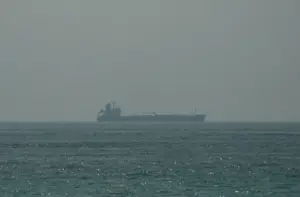
 IRGC claims mine attack on a supertanker in the Strait; U.S. dismisses as propaganda.

[Monday, Aug 31]
 President Trump vows to "hit them hard" and claims 100% interception rate.
 Treasury Sec. Bessent announces weekly secondary banking sanctions at G20.
 President Pezeshkian meets PM Modi in Kyrgyzstan, expressing a desire for diplomacy.
The Catalyst: The Strike on Larak Island
On the afternoon of Sunday, August 30, U.S. intelligence and reconnaissance assets observed IRGC Navy personnel active on Larak Island, a strategic outpost situated near the major Iranian port of Bandar Abbas in the narrowest portion of the Strait of Hormuz. According to U.S. Central Command (CENTCOM), these forces were actively preparing launchers to deploy naval mines and rockets into the shipping lanes.
Deeming the activity an "imminent threat" to what remains of international shipping navigation, CENTCOM authorized a "limited, precise" strike on two Iranian launchers. Iranian state-affiliated media, including the Tasnim news agency, later confirmed that the strike killed three people, identifying two of the deceased as specialized officers within the IRGC Navy.
The Retaliation: Targeting Jordan and the UAE
Tehran’s response was swift and multi-pronged:
- The Jordan Airbase Strikes: Overnight, Iran’s state military apparatus launched a series of ballistic missiles aimed at two U.S. military installations in Jordan. These bases serve as vital logistical and air-defense nodes for coalition operations. U.S. officials confirmed the attack but stated that advanced air defense systems—including Patriot and NASAMS batteries—successfully neutralized the incoming projectiles before they could cause casualties or infrastructure damage.
- The Al Minhad Discrepancy: The Iranian military claimed it had successfully struck the Al Minhad Air Base in the United Arab Emirates (UAE), a facility frequently utilized by Western coalition forces. The UAE Ministry of Defense swiftly issued a statement dismissing the claim as entirely fabricated. However, Abu Dhabi later conceded that its air defense forces had engaged and destroyed an unidentified drone originating from Iran over UAE territorial waters.
- The Disputed Tanker Attack: Adding to the confusion, Iranian state television broadcast claims by the IRGC that a commercial supertanker had been struck by naval mines in the southern Strait of Hormuz, causing a catastrophic fire and halting the vessel. The U.S. Navy’s Fifth Fleet quickly refuted the claim, labeling it a disinformation tactic designed to project control over the blockaded waterway.
Supporting Context & Economic Metrics
The military confrontation is occurring against the backdrop of an aggressive economic containment strategy orchestrated by Washington. The conflict, which began on February 28, 2026, with coordinated U.S. and Israeli airstrikes on Iranian nuclear and military infrastructure, has evolved into a war of attrition.
The Impact of Sanctions on Iran’s Battered Economy
At the G20 finance ministers’ summit in Asheville, North Carolina, U.S. Treasury Secretary Scott Bessent argued that Iran’s military actions are a direct symptom of economic desperation. "They are lashing out kinetically because they are losing economically," Bessent told reporters.
The U.S. Treasury is preparing to implement a "maximum pressure 2.0" campaign, utilizing secondary sanctions to target foreign financial institutions that continue to clear transactions for Iranian entities.
| Sanction Target Sector | Current Operational Status | Projected Impact of New Secondary Sanctions |
|---|---|---|
| Banking & Finance | Partially restricted via SWIFT limitations; reliant on regional intermediaries. | Complete isolation; foreign banks face exclusion from the U.S. financial system if they transact with Tehran. |
| Crude Oil Exports | Severely degraded; down from pre-war levels due to the blockade of major terminals. | Target remaining illicit ship-to-ship transfers and shadow-fleet operators in East Asia. |
| Industrial Materials | Heavily sanctioned; domestic manufacturing facing acute supply-chain bottlenecks. | Interdiction of dual-use technology imports via Central Asian and Caucasian trade corridors. |
The Energy Blockade and the Role of Kharg Island
Prior to the outbreak of hostilities in February 2026, Kharg Island served as the crown jewel of Iran’s energy infrastructure, processing and exporting roughly 90% of the country’s crude oil. Since the war began, the virtual closure of the Strait of Hormuz has starved the Iranian government of vital petrodollar revenues.
While President Trump stoked geopolitical anxieties by sharing an AI-generated video depicting Kharg Island being "blown to smithereens," defense analysts note that an actual kinetic strike on the island would have catastrophic consequences for the global economy, potentially driving oil prices to unprecedented heights and alienating key U.S. allies in Europe and Asia who are already enduring high inflation.
Official Statements and Diplomatic Posturing
The rhetoric from both Washington and Tehran reflects deep internal divisions regarding the ultimate objectives of the conflict.
The View from Washington
Speaking to Fox News, President Donald Trump emphasized American military superiority and defensive readiness:
"We’re going to hit them hard. There will be a response. Our air defenses did their job, shooting down every single missile that could have caused any damage. The sanctions are working, and the Iranian regime is feeling the squeeze like never before."
Treasury Secretary Scott Bessent reinforced this position, highlighting the systematic nature of the economic campaign:
"They are taking these measures very seriously… they are in shock at the state of their economy. We plan to unveil new secondary sanctions on a weekly basis, with an immediate and uncompromising focus on the banking sector."
The View from Tehran
In contrast to the aggressive posturing of the IRGC, Iranian President Masoud Pezeshkian adopted a highly diplomatic tone during a bilateral meeting with Indian Prime Minister Narendra Modi on the sidelines of a regional security summit in Kyrgyzstan:
"We are still trying to achieve an agreement and understanding, and we believe that continuing the war is in no one’s interest, neither ours, nor the region’s, nor humanity’s."
However, a senior Iranian government official, speaking to Reuters on the condition of anonymity, warned that Pezeshkian’s diplomatic overtures should not be mistaken for weakness:
"The situation in the Strait of Hormuz will become progressively worse for any vessels that violate the rules of passage established by Tehran. No target in the region is beyond our reach, and any further aggression by the United States will be met with a harsh, uncontained response."
Future Outlook
Six months into the war, the conflict remains deadlocked. President Trump has yet to achieve the primary strategic objectives outlined at the onset of the campaign: the verifiable dismantling of Iran’s nuclear enrichment capabilities, the permanent neutralization of its regional proxy network, and the instigation of domestic political change within Iran.
Key Scenarios and Geopolitical Risks
- The Threat of Miscalculation via Information Warfare: The proliferation of sophisticated digital disinformation—exemplified by the AI-generated video of the Kharg Island explosion shared by the U.S. President—creates a highly volatile environment. If a deepfake or false-flag report is interpreted by either command structure as a genuine strategic strike, it could trigger a massive, pre-emptive retaliatory cycle.
- The Efficacy of Secondary Sanctions: The U.S. strategy hinges on the belief that economic strangulation will force Iran to the negotiating table on Washington’s terms. However, historical precedents suggest that when regimes face existential economic collapse, they often escalate military operations to force international intervention or to extract concessions.
- Third-Party Mediation: The meeting between President Pezeshkian and Prime Minister Modi highlights India’s potential role as a diplomatic mediator. As a major consumer of Middle Eastern energy and a nation maintaining cordial ties with both Washington and Tehran, New Delhi has a vested interest in de-escalating the crisis and restoring commercial navigation through the Strait of Hormuz.
As both nations brace for the next phase of this confrontation, the international community remains highly vulnerable to any further disruption of regional stability. With the U.S. committed to a weekly escalation of economic pressure and Iran demonstrating its willingness to target Western military infrastructure, the path toward a diplomatic resolution remains fraught with peril.