











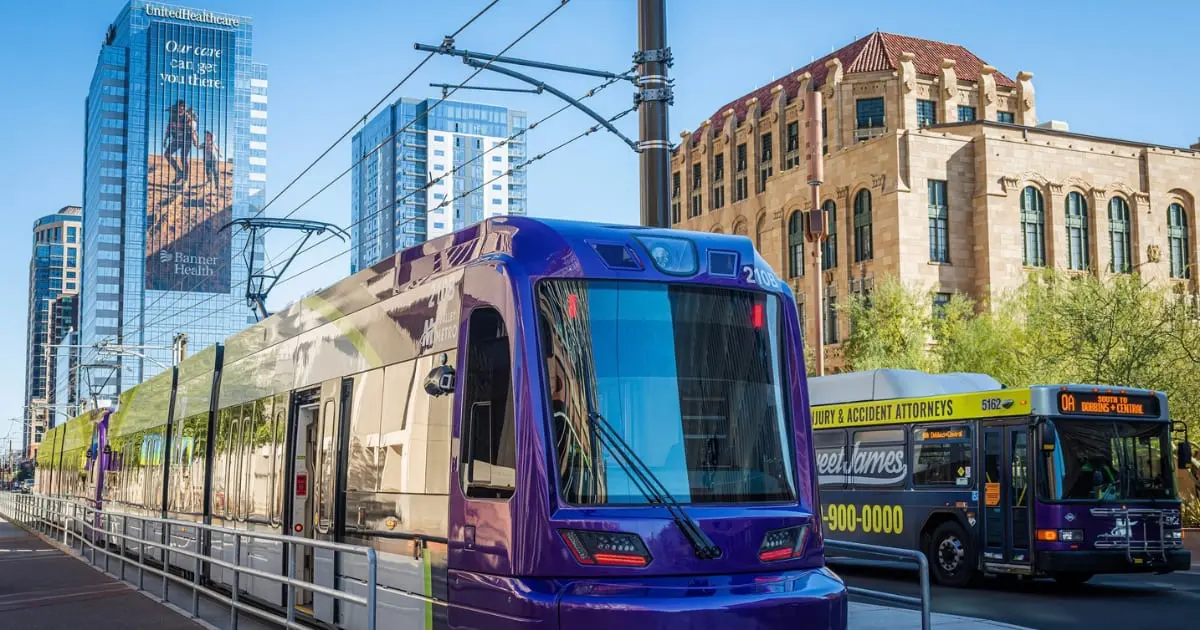
In the rapidly evolving landscape of American urban transit, expansion is frequently quantified in miles of freshly laid track, rows of newly purchased buses, and incremental spikes in raw ridership. Yet, for Valley Metro—the multimodal public transportation agency servicing the sprawling Phoenix metropolitan region—realized growth has demanded a far more complex equation. Over the past four years, the agency has scaled its infrastructure aggressively while concurrently overhauling the foundational mechanics of its system: workforce development, rigorous safety protocols, advanced customer-facing technology, and steadfast fiscal stewardship.
This holistic approach to transit management culminated in a major industry milestone: the American Public Transportation Association (APTA) named Valley Metro the recipient of its prestigious 2026 Outstanding Public Transportation System Award in the category of systems serving between 15 million and 50 million annual passenger trips.
The national recognition arrives as Valley Metro experiences a massive surge in demand. In Fiscal Year 2026, the agency recorded more than 41.7 million passenger trips—a robust 8.7% jump, representing an additional 3.3 million rides compared to the previous fiscal period. However, as Valley Metro CEO Jessica Mefford-Miller notes, the APTA award is not merely a celebration of climbing numbers; it is a peer-voted endorsement of how an agency can successfully scale operations, enhance safety, and maintain financial discipline amidst the relentless population boom of Maricopa County.
Detailed Chronology of Expansion and Operational Evolution
To understand Valley Metro’s current operational maturity, one must examine its trajectory from a nascent regional provider to an integrated metropolitan network.
The Light Rail Transformation (2008–2026)
When Valley Metro first launched its light rail service in 2008, it relied on a single, continuous 20-mile corridor connecting downtown Phoenix, Tempe, and Mesa. For years, this backbone served as the primary fixed-guideway asset of the system.
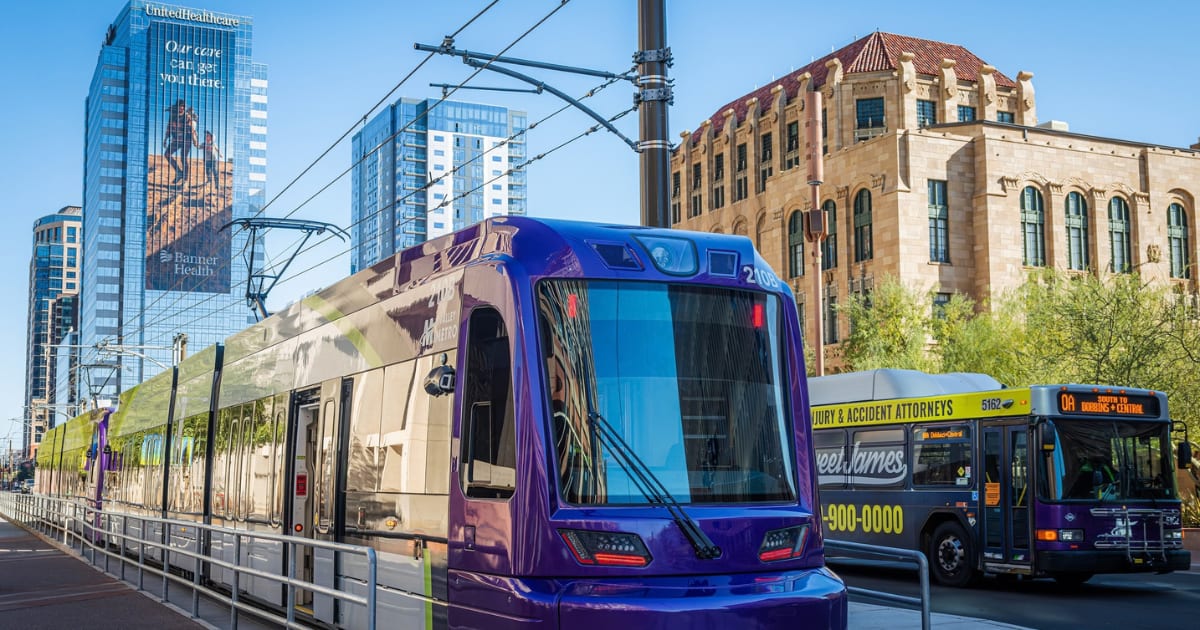
Over the past four successive years, however, the agency executed a historic period of network maturation. By opening three major rail projects, Valley Metro added 10 miles of light rail service, successfully transforming its footprint into a 35-mile, two-line network. This expansion fundamentally shifted travel behaviors across the Valley, bridging major employment hubs, educational institutions, and residential zones.
Modernizing the Bus Fleet and Maintenance Infrastructure
Simultaneously, the agency recognized that adding miles of service without upgrading underlying mechanical support systems would spell operational disaster. As Maricopa County expanded outward, Valley Metro confronted the reality that aging bus fleets and expanding rail corridors required a parallel modernization of maintenance protocols.
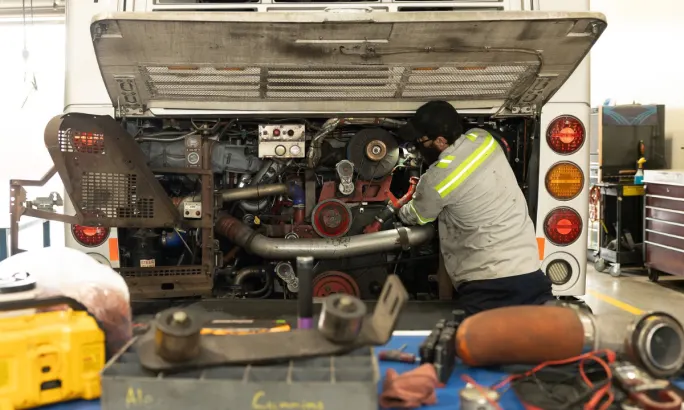
The agency instituted a sophisticated, reliability-centered maintenance program specifically targeting its bus fleet. By shifting from reactive repairs to predictive maintenance schedules, Valley Metro achieved a staggering milestone: it tripled the overall reliability of its bus fleet. This tactical achievement proved critical in shielding daily commuters from unexpected cancellations and delays as route networks stretched to meet suburban growth.
Supporting Context & Metrics: Safety, Technology, and Fiscal Discipline
Managing a modern transit agency requires balancing multiple competing priorities. Valley Metro’s success across 2025 and 2026 stems from intentional interventions across three distinct pillars: safety and security, digital modernization, and aggressive cost containment.
Transforming Passenger Safety and Operational Security
For years, urban transit systems across the United States have grappled with post-pandemic security challenges. Valley Metro countered this trend by adopting an "end-to-end" view of the customer journey, redefining the rider experience to encompass the walk to the station, the platform wait, the onboard trip, and the final destination.
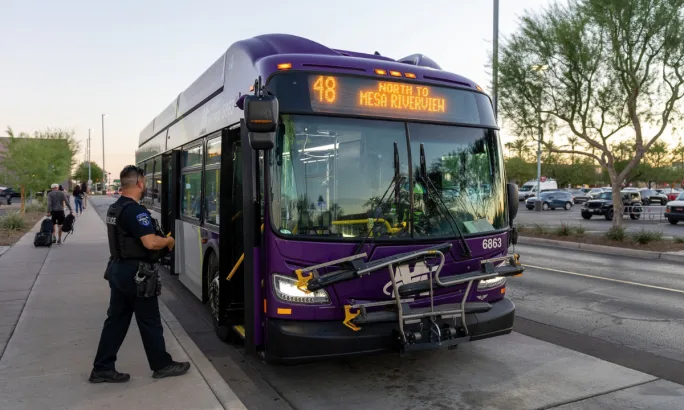
The agency dramatically increased its visible security presence. During peak operating hours, between 45 and 50 dedicated security officers are stationed directly along the rail network. Furthermore, through targeted initiatives like Operation Blue Ride, Valley Metro partnered closely with municipal law enforcement agencies—such as the Tempe Police Department—and local social service providers. This coalition directs specialized police patrols and social services toward higher-volume bus routes and transit hubs.
The results of these targeted interventions have been dramatic. Between 2024 and 2025, Valley Metro reported a:
- 55% reduction in rail passenger assaults.
- 60% reduction in bus operator assaults.
Mitigating Rail-Motorist Collisions
Beyond onboard security, the agency faced a physical infrastructure challenge inherent to street-running light rail systems: collisions with motorists. Internal data from 2026 revealed that an overwhelming 84% of light rail collisions resulted directly from motorist actions, with 80% involving illegal turns across the tracks.
Following a comprehensive rail collision reduction study completed in 2025, Valley Metro utilized spatial data to isolate high-risk intersections. The agency systematically deployed targeted countermeasures, including enhanced signage, optimized traffic signal timing, specialized operator training, and public safety education campaigns. These combined efforts drove the system’s collision rate down from 1.88 collisions per 100,000 vehicle miles in 2025 to 1.64 in 2026.
Digital Innovation and Fare Modernization
Technology has served as another primary lever for reducing passenger friction. Valley Metro’s Fare System Modernization project introduced Smart Fare, an account-based system allowing riders to pay via mobile devices or reloadable Copper Cards. The system features automatic fare capping, ensuring that customers never pay more than established daily, weekly, or monthly maximums, thereby protecting low-income riders from financial strain.
For digital support, an AI Virtual Transit Agent was deployed to provide round-the-clock trip planning and customer service. For paratransit users, the VM Connect platform streamlined trip booking, real-time vehicle tracking, and account management.
Behind the scenes, the agency deployed the AlphaVu platform to aggregate and analyze customer feedback from phone calls, emails, social media channels, and web chats. This data feed allows operations teams to rapidly identify recurring service bottlenecks and adjust operations accordingly.
Navigating Fiscal Realities and Cost Containment
Rapid expansion occurs against a backdrop of rising operational overheads. Surging labor costs, climbing wages, expensive contractor agreements, and soaring construction materials prices have squeezed transit agencies nationwide.
Faced with these economic realities, Valley Metro prioritized aggressive fiscal stewardship. The agency undertook a comprehensive cost-containment strategy, which included streamlining administrative processes, competitively re-bidding major vendor contracts, and bringing specialized functions back in-house. These disciplined financial maneuvers paid immediate dividends: Valley Metro’s FY27 operating budget came in 1.2% lower than its FY26 budget, proving that service expansion can coexist with rigorous fiscal restraint.
Official Statements and Leadership Insights
The scope of Valley Metro’s achievements highlights the collaborative nature of modern regional transit management. Accepting the APTA award, agency leadership underscored that institutional success is inherently collective.
"Receiving APTA’s Outstanding Public Transportation System Award in the 15- to 50-million annual trips category is an incredible honor," stated Valley Metro CEO Jessica Mefford-Miller.
"Voted on by our peers, the award recognizes the progress Valley Metro and our regional partners have made over the past three years across several areas, including ridership, reliability, safety and security, customer experience, workforce development, and fiscal stewardship."
Mefford-Miller also emphasized that technical scaling is impossible without a resilient internal culture and continuous investment in human capital:
"We recognize that investing in talent is essential to delivering safe, reliable, and customer-focused transit, and we know that in our unique industry, we must cultivate talent inside of our organizations."
Reflecting on the complex challenges the agency navigated—ranging from motorist collisions on light rail corridors to inflationary budget pressures—Mefford-Miller noted:
"These challenges have reinforced the importance of using data and innovation, communicating clearly, and working collaboratively with cities, peers, operators, riders, and other partners to achieve lasting and impactful change."
Future Outlook: Sustainable Growth and Horizon Projects
As Maricopa County continues its rapid demographic expansion, Valley Metro’s leadership is looking far beyond immediate operational metrics. The agency is actively shaping its next generational phase through comprehensive network redesigns, capital infrastructure planning, and workforce empowerment.
Upcoming Transit and Network Extensions
Valley Metro is currently conducting a wide-scale Bus Network Redesign, meticulously evaluating route geometry, span of service, and bus frequencies against evolving regional travel patterns. By engaging local businesses, civic leaders, and everyday riders, the agency aims to ensure its bus network remains nimble and responsive.
On the fixed-guideway front, two critical rail extensions are currently advancing through the planning phases:
- The Rio East-Dobson Streetcar Extension: Designed to bring modern streetcar service directly into the rapidly densifying commercial and residential corridors of north Tempe and west Mesa.
- The West Phoenix Extension: Positioned to extend light rail deeper into west Phoenix—an area boasting high baseline transit demand alongside robust projected population and employment growth.
Simultaneously, Valley Metro is evaluating alternative modes of transit in partnership with its 19 member municipalities, including the targeted implementation of Bus Rapid Transit (BRT), on-demand microtransit solutions, and specialized fare programs tailored to shifting commuter habits.
Cultivating Internal Capacity and Workforce Resilience
Recognizing that physical expansion multiplies the burdens placed on maintenance personnel, operators, and administrative staff, Valley Metro has placed an unprecedented emphasis on internal capacity building.
In FY26, the agency’s professional development initiatives—spanning leadership development courses, cross-functional technical training, online learning platforms, and tuition assistance programs—reached 75% of the total workforce. Furthermore, Valley Metro administered its inaugural organization-wide Culture Survey, which achieved an extraordinary 84% employee participation rate. Utilizing this feedback, the agency rolled out a comprehensive Classification and Compensation Study designed to optimize career progression pathways and boost employee retention.
Conclusion
Valley Metro’s trajectory offers a masterclass in modern transit governance. By refusing to treat service expansion as an isolated metric, and instead coupling physical growth with relentless investments in asset maintenance, predictive safety technology, fiscal discipline, and workforce culture, the agency has established a sustainable blueprint for urban mobility. As the Phoenix metropolitan area marches further into the 21st century, Valley Metro stands uniquely positioned to move its region forward safely, efficiently, and resiliently.


