








Executive Overview
The IFA Berlin technology conference, globally recognized under its banner of "Innovation For All," has long served as a vital barometer for consumer electronics, entertainment systems, and artificial intelligence. However, as global imperatives shift toward climate resilience and resource circularity, the 2026 exhibition signaled a profound transformation. Clean technology has moved from the periphery of the convention floor to center stage.
The first day of the conference revealed that achieving a sustainable global economy will not rely on a single breakthrough, but rather on a mosaic of localized, highly targeted innovations. From major multinational automotive expansions to bootstrapping tropical startups, companies are discovering that environmental responsibility is most successful when it seamlessly intersects with consumer convenience, economic viability, and enhanced lifestyle quality.
While dedicated environmentalists are often willing to tolerate complex workflows or lifestyle compromises in the name of sustainability, mass-market adoption requires a different approach. The standout products at IFA Berlin 2026 proved that green technology thrives when it solves deep-seated consumer pain points—whether that means high-performance electric vehicles that appeal to car enthusiasts, automated yard maintenance tools that reclaim lost weekends, or under-sink waste separators that protect urban plumbing. This report examines the pivotal product launches, structural shifts, and strategic visions defining the current evolution of clean technology.
Detailed Chronology & Product Breakthroughs
The exhibition floor offered a sweeping look at how diverse industries are tackling environmental challenges. Five distinct companies captured attention on opening day, each representing a unique vector of sustainable transformation.
[IFA Berlin 2026 Clean Tech Ecosystem]
 ├── Xiaomi           -> High-Performance EVs & Smart Ecosystem Integration
 ├── Lesstics         -> Circular Infrastructure via Agricultural Waste
 ├── Yarbo            -> Automated, Low-Emission Property Management
 ├── Valentin         -> Urban Sanitation & Decentralized Waste Upcycling
 └── Jackery          -> Scalable, Consumer-Centric Energy Storage
Xiaomi Brings High-Performance EVs and Smart Ecosystems to Europe
One of the most consequential announcements of the conference came from consumer electronics giant Xiaomi, which utilized its massive exhibition space to outline its aggressive European expansion strategy. The company confirmed that its highly anticipated SU7 and YU7 vehicle models will officially launch in European markets next year.
Vehicles on the exhibition floor—including the SU7, SU7 Max, and the track-focused SU7 Ultra, alongside the YU7 SUV positioned outside—showcased recent hardware and software revisions. Notably, the models featured integrated LiDAR sensors designed to support Xiaomi’s forthcoming intelligent driving system, slated for activation next year pending regulatory clearance.

Inside the cabin, technological evolution continues at a rapid pace. The inclusion of AI Spatial Interaction sensors allows for intuitive, gesture-based controls that minimize touchscreen dependency. By bringing these supply-constrained, performance-oriented models to Europe, Xiaomi is doing more than simply entering a competitive automotive market; it is anchoring the automotive vertical within its broader "Human x Car x Home" ecosystem. For European consumers, these vehicles bridge the gap between environmental responsibility and high-end automotive enthusiasm.

Lesstics Transforms Coconut Waste into High-Performance Building Materials
Shifting from consumer mobility to sustainable infrastructure, Philippine startup Lesstics introduced a radical approach to circular construction materials. Drawing on a robust background in plastics recycling, the company showcased its flagship product, the "Earth Board."
In many tropical regions, waste byproducts from the coconut industry—specifically coconut husks—pose severe municipal waste management challenges. Historically, these husks are frequently incinerated, generating significant localized air pollution. Lesstics applies proprietary technology to repurpose this agricultural waste into structural boards suitable for walls, flooring, ceilings, cabinetry, and furniture production.
The material science behind the Earth Board is particularly striking. While it achieves a surface uniformity comparable to standard particle board, its longer natural fibers grant it a structural strength profile matching Oriented Strand Board (OSB). Furthermore, Lesstics utilizes a proprietary bio-based polyurethane binder, completely eliminating the formaldehyde emissions traditionally associated with commercial plywood manufacturing.
Beyond its circular credentials, the material offers exceptional functional performance:
- Fire Retardancy: Naturally resistant to combustion.
- Acoustic Dampening: High noise-absorption capabilities.
- Thermal Insulation: Enhances building energy efficiency.
- Moisture Resistance: Performs reliably in humid environments.
Crucially, the Earth Board is priced lower than conventional building alternatives. In regions like the Philippines, where standard lumber-yielding pine trees do not naturally thrive and indigenous forests are heavily protected, Lesstics provides a superior, cost-effective, and ecologically restorative construction medium.

Yarbo Reimagines Property Maintenance Through Autonomous Robotics
Yard care and landscaping have long represented a blind spot in household sustainability. Traditional property maintenance relies heavily on two-stroke and small four-stroke engines, which emit pollutants at rates exponentially higher than modern automobiles. While electrification has made inroads for small urban lawns, scaling electric solutions across multi-acre properties has remained difficult. Heavy commercial electric equipment is prohibitively expensive, while manual residential mowers require unsustainable investments of time.
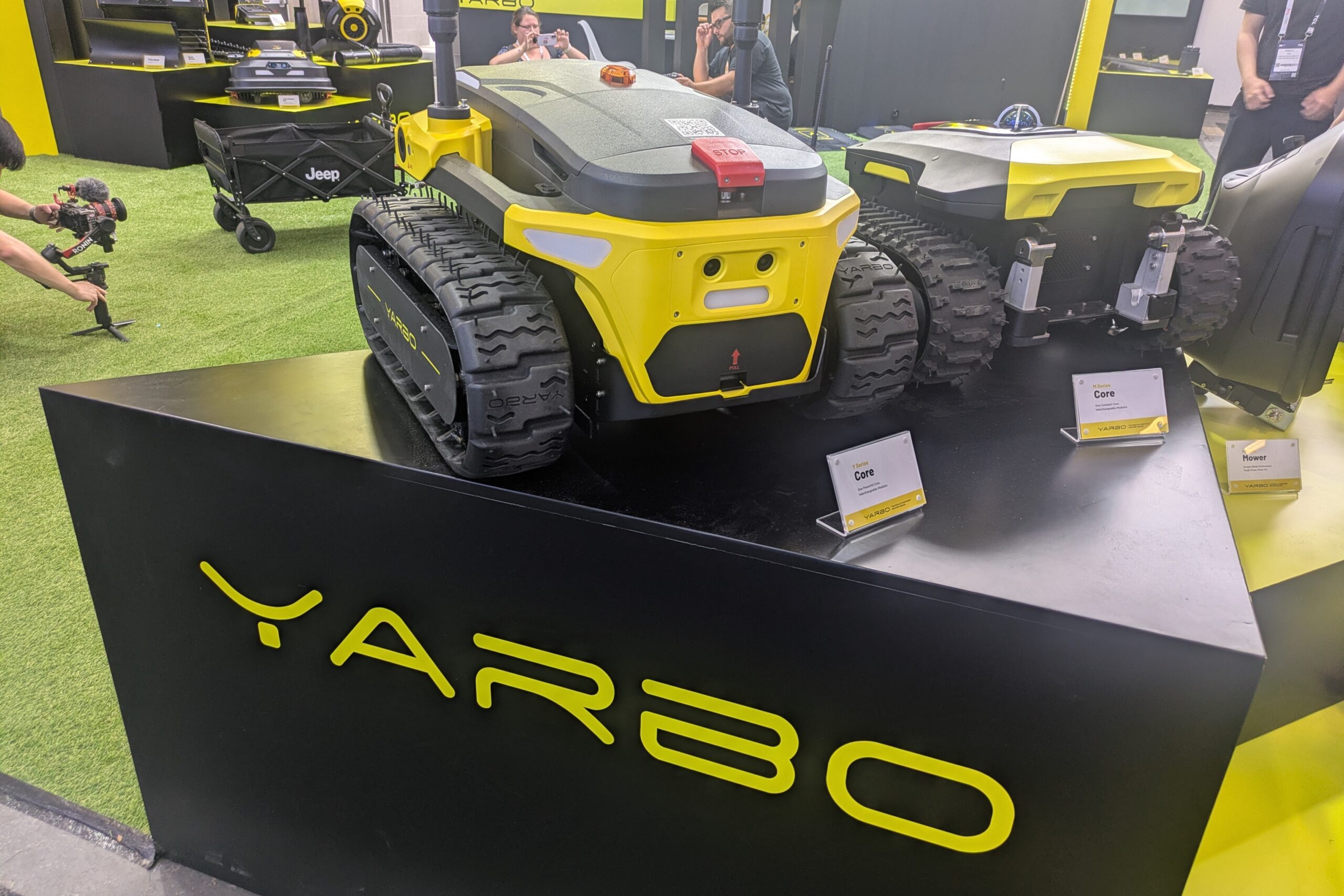
Yarbo addressed this operational bottleneck at IFA Berlin by displaying its established Y-series yard robots and debuting the more compact M-series, specifically engineered for properties spanning up to a few acres.
Rather than requiring massive machinery to accelerate labor, Yarbo’s autonomous approach relies on continuous, low-impact operation. By running multiple times throughout the week without human supervision, a relatively compact robotic unit can easily maintain properties up to six acres. The smaller M-series can autonomously mow 1.5-acre zones per day, compounding its coverage across multiple weekly cycles.
The mechanical ecosystem is fully modular, allowing a single chassis to swap attachments for seasonal tasks such as leaf cleanup and heavy snow removal. Integrated tracks ensure traction in adverse weather conditions, preventing the operational entrapment common among wheeled robotic mowers. High-speed wireless charging stations capable of replenishing batteries from 10% to 90% in just 65 minutes minimize operational downtime, while newly integrated LiDAR arrays elevate navigation safety standards.
Valentin Combines Urban Sanitation with Household Nutrient Recovery
While visible emissions capture most climate discourse, subterranean urban infrastructure faces an escalating crisis driven by household waste disposal. Kitchen sink workflows regularly introduce cooking oils and organic refuse into municipal sewer systems. Fats, oils, and greases (FOGs) combine with other debris to form massive blockages known as "fatbergs," which frequently trigger sewage overflows and contaminate local watersheds. Chemical drain cleaners deployed to combat these clogs erode piping infrastructure, while residual organic matter directed to sewage treatment plants generates substantial methane emissions.
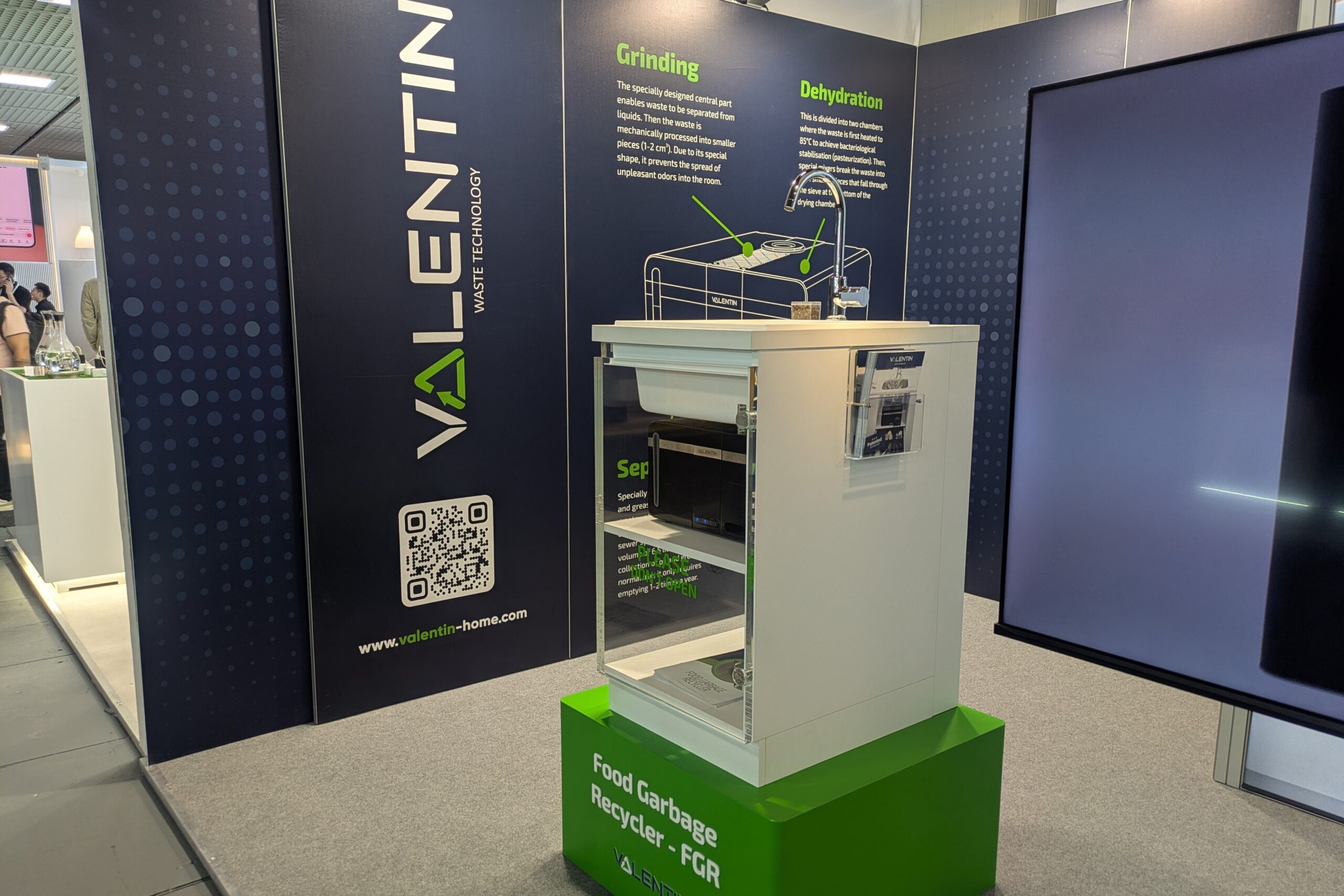
Slovenian startup Valentin presented a decentralized engineering solution designed to intercept this waste at the point of origin: a compact unit that mounts directly beneath the kitchen sink.

The Valentin system separates fats and organic matter from wastewater streams before they enter public infrastructure. The intercepted organic material is desiccated within the unit, transforming into a stable fertilizer suitable for domestic use every few weeks. Exhaust gases generated during the drying cycle are safely vented through existing residential plumbing stacks, completely eliminating localized odors. Meanwhile, accumulated oils are consolidated into easily removable cartridges for routine solid waste disposal.
This closed-loop approach protects multi-story residential buildings from catastrophic plumbing failures, eliminates the need for loud mechanical garbage disposals or manual sink strainers, and significantly lightens the biochemical load on municipal wastewater facilities.
Jackery Expands Portable and Residential Energy Storage Solutions
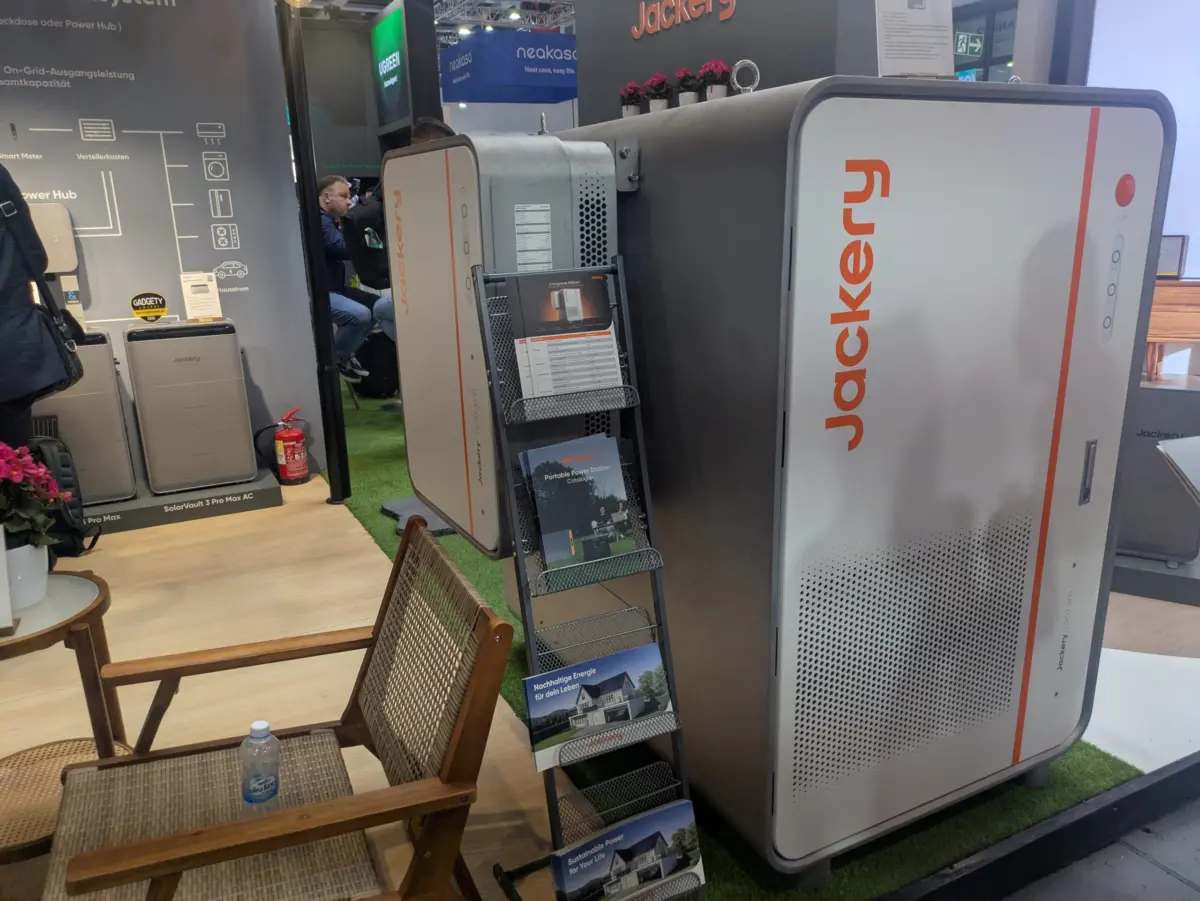
As the world’s leading solar generator brand by volume and revenue—according to recent Frost & Sullivan market research—Jackery anchored its IFA Berlin presence with a comprehensive display of consumer-centric energy resilience technologies, produced within the industry’s inaugural carbon-neutral manufacturing facility.
A core focus of the company’s exhibition was consumer safety, highlighted by the debut of the FortiShield Safety System. Jackery describes this framework as the industry’s first comprehensive, seven-layer security architecture tailored to the operational demands of diverse device categories, ensuring reliable home and field deployments.
[Jackery Energy Storage Portfolio]
 ├── Portable Power     -> Explorer 2000 Plus V2 / Explorer 1000 Plus (Lighter, Smaller)
 ├── Balcony Solar      -> Modular Solar Vault 3 & SunBooster Vertical Integration
 ├── Residential Backup -> Energycore 100kWh Liquid-Cooled ESS (100kW, 10ms UPS Switchover)
 └── Emergency Response -> American Red Cross Explorer 2000 Plus V2 (Automated Storm Warning)
Jackery’s hardware lineup demonstrated significant engineering refinements across multiple scales:
- Portable Power Stations: The Explorer 2000 Plus V2 increases power output while reducing physical volume by 12.6% and weight by 22.1%. Simultaneously, the Explorer 1000 Plus achieves a 25% size reduction and a 9% weight reduction.
- Residential & Balcony Integration: The modular Solar Vault 3 optimizes urban balcony solar generation. This is amplified by a strategic partnership with SunBooster Vertical, introducing flexible solar strips that weave seamlessly into perimeter wire fences, utilizing bifacial panels to maximize winter energy capture.
- Whole-Home and Commercial-Scale Storage: The new Energycore 100kWh liquid-cooled energy storage system bridges the gap between residential battery backups and commercial ESS units. Delivering 100 kW of power alongside a 10-millisecond UPS-grade switchover speed, it provides seamless power stability for large rural homesteads and agricultural operations.
- Crisis Resilience: The American Red Cross Explorer 2000 Plus V2, displayed ahead of its official U.S. launch, features an integrated automated Storm Warning Function and Emergency Reserve Mode designed to mitigate growing climate-related grid instability.
Supporting Context & Metrics
The innovations showcased at IFA Berlin do not exist in a vacuum; they reflect urgent macroeconomic and environmental trends:
- Automotive Market Shift: The impending European rollout of Xiaomi’s intelligent vehicle ecosystem underscores the rapid globalization of Chinese electric vehicle engineering, which leverages consumer electronics supply chains to compress development timelines and enhance in-car artificial intelligence.
- Agricultural Circularity: According to global agricultural waste assessments, tropical nations generate millions of tons of fibrous biomass annually. Startups like Lesstics demonstrate that converting this waste stream can substitute for carbon-intensive timber and synthetic binders, reducing deforestation pressures.
- Autonomous Efficiency Metrics: Yarbo’s field data indicates that automated property maintenance systems can replace heavy, combustion-engine landscaping fleets on multi-acre properties, dropping operational emissions while scaling up work capacity through continuous, unattended execution.
- Urban Sanitation Economics: Municipal infrastructure studies show that clearing fatbergs and repairing chemical-damaged sewer lines cost cities billions annually. Decentralized interventions like Valentin’s under-sink separation units reduce municipal wastewater treatment energy consumption and associated methane leakage.
Official Statements & Industry Vision
The overarching philosophy of the 2026 exhibition was articulated clearly during executive strategy sessions. Discussing the future of sustainable consumer technology, Jackery Founder and CEO Jack Sun emphasized that corporate innovation must begin by mapping consumer friction points rather than pushing speculative green engineering.
"True sustainability is achieved not by demanding that consumers change their lifestyles to fit our technology, but by engineering total solutions that make sustainable choices the most comfortable, affordable, and intuitive option available," Sun noted during executive briefings at the event.
This sentiment captures the modern paradox of clean technology design. While early-adopter consumer segments frequently exhibit high friction tolerance—willing to navigate complex charging protocols, expensive structural retrofits, or tedious waste management routines—the broader global consumer base demands absolute simplicity and uncompromised comfort.
Industry analysts at IFA Berlin echoed this perspective, noting that the fastest-growing clean tech sectors are those that hide their environmental complexity behind sleek, consumer-grade interfaces. Whether it is an automated robotic mower handling acreage quietly, a smartphone ecosystem coordinating home energy flows, or an under-sink sanitation unit neutralizing organic waste invisibly, market success hinges on invisible engineering paired with visible lifestyle enhancement.
Future Outlook
The innovations presented on the opening day of IFA Berlin 2026 point toward a clear trajectory for the remainder of the decade. The era of sustainability as an aesthetic or moral sacrifice is giving way to an era of performance-driven efficiency.
As regulatory pressures tighten across Europe and North America, technology manufacturers are discovering that circular supply chains, localized waste upcycling, and decentralized energy storage are no longer merely ethical add-ons—they are core competitive advantages.
In the immediate future, market watchers should anticipate:
- Accelerated Cross-Industry Convergence: The blurring lines between consumer electronics, automotive ecosystems, and domestic energy management, as exemplified by Xiaomi and Jackery.
- Mainstream Adoption of Circular Materials: Greater commercialization of agricultural waste products (such as Lesstics’ coconut-based boards) as traditional lumber supply chains face increasing ecological and regulatory constraints.
- Pervasive Automation in Property and Waste Management: The widespread deployment of AI-driven robotics and decentralized domestic sanitation systems that transform baseline chores into hands-free, low-emission background processes.
Ultimately, the 2026 exhibition demonstrated that when green technology aligns with human convenience, environmental stewardship ceases to be an uphill battle. By addressing the practical needs of everyday life, sustainable innovation becomes not only possible, but irresistible.