










Executive Overview
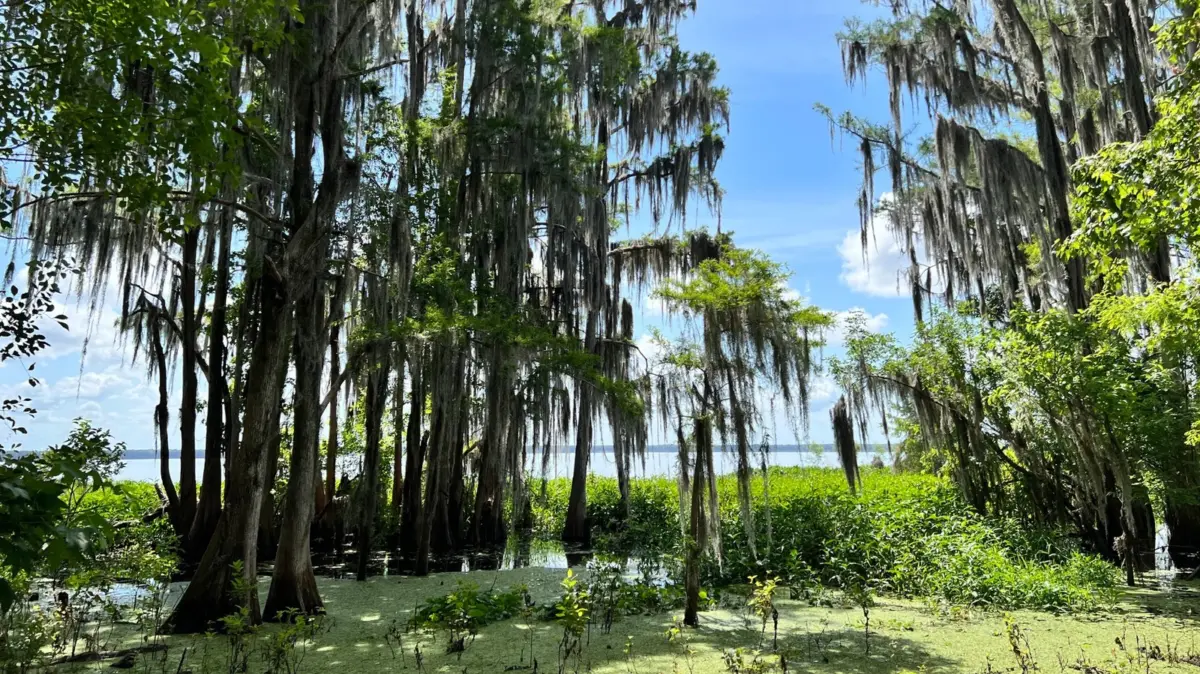
Nestled just beyond the eastern edge of Gainesville, Florida, lies a pristine ecological oasis that has quietly transformed from protected state timberland into a beloved recreational haven. Newnans Lake State Forest, sprawling across more than 1,100 acres of diverse, vibrant terrain, represents one of North Florida’s most compelling yet under-the-radar outdoor destinations. Featuring a rich tapestry of wetland and upland plant communities—ranging from towering pine flatwoods and ancient cypress swamps to dense oak hammocks—the forest offers an immersive escape for hikers, mountain bikers, birdwatchers, and nature photographers alike.
Though the land has remained under state ownership since the early 20th century, it spent decades largely shielded from public access. Its official opening in 2015 marked a monumental shift, inviting residents and travelers to step off the asphalt and into a thriving basin ecosystem. Directly connected to the sprawling, 6,000-acre Newnans Lake, the state forest serves as a vital biological corridor. It protects crucial watersheds while providing a sanctuary for a dizzying array of native flora and fauna.
Positioned merely a 10-minute drive from downtown Gainesville and the Gainesville Regional Airport (GNV), the property bridges the gap between urban convenience and deep wilderness immersion. As travelers increasingly seek out sustainable, low-impact local excursions, Newnans Lake State Forest stands out as a prime example of Florida’s commitment to preserving its natural heritage. This report provides an in-depth examination of the forest’s history, its meticulously maintained trail systems, its rich biodiversity, and its growing significance within Alachua County’s ecotourism landscape.
Detailed Chronology of Newnans Lake State Forest
To understand the modern ecological and recreational significance of Newnans Lake State Forest, one must trace its journey through time—a trajectory defined by nineteenth-century development, twentieth-century state stewardship, and twenty-first-century public access.
1921: Securing the Land
The foundational history of the property began in 1921, when the land was officially designated as state property. Initially acquired for forestry management, conservation, and timber oversight, the acreage surrounding the eastern and northwestern peripheries of the Newnans Lake basin was managed primarily by state forestry agencies. For nearly a century, the parcel functioned behind closed gates, serving ecological and silvicultural purposes while remaining entirely off-limits to recreational visitors, hikers, and local naturalists.
The Decades of Conservation and Basin Integration
Throughout the late 20th century, the ecological value of the Newnans Lake basin came into sharper focus. Environmental scientists and regional planners recognized that the forested wetlands buffering the lake were crucial for filtering runoff, preventing erosion, and maintaining water quality in the massive 6,000-acre water body. The Florida Forest Service, operating under the Florida Department of Agriculture and Consumer Services (FDACS), integrated the parcel into its broader portfolio of nearly 40 state forests, managing the land not just for timber resources, but increasingly for wildlife habitat preservation and watershed protection.
April 2015: A Watershed Moment for Public Access
After decades of restricted entry, a major milestone was achieved in April 2015. Agriculture Commissioner Adam Putnam and state forestry officials officially celebrated the grand opening of Newnans Lake State Forest to the general public. This designation transformed the 1,100-acre tract into Florida’s 36th state forest. The grand opening introduced a network of multi-use trails, informational signage, and clearly defined boundaries, inviting the public to explore an ecosystem that had been hidden in plain sight for almost a century.

Supporting Context & Metrics
The ecological and geographical footprint of Newnans Lake State Forest is defined by precise topographical and environmental metrics that contribute to its high biodiversity and recreational appeal.
Geographic and Ecological Metrics
- Total Acreage: Spans over 1,100 acres of protected public land.
- Proximity to Urban Hubs: Located roughly a 10-minute drive east of downtown Gainesville and an equivalent distance from the Gainesville Regional Airport (GNV).
- Adjacent Aquatic Ecosystem: Borders parts of the 6,000-acre Newnans Lake, incorporating significant portions of the lake’s surrounding floodplain, gum swamps, and cypress wetlands.
- System Designation: Operates under the umbrella of Florida’s state forest system, which currently features nearly 40 distinct state forests managed by FDACS.
Trail System Metrics
The forest provides a trio of primary routes tailored to various outdoor pursuits, all of which are dog-friendly provided pets remain securely leashed:
- West Hiking Trail: A short, effortless 0.8-mile loop marked in blue, guiding visitors through open flatwood pines, native wildflowers, and open grassy fields. It can be extended by connecting with the Sparrow Trail.
- Pithlachocco Lake Sparrow Trail: A 2.6-mile loop traversing the peaceful woods near the northwest shore of Newnans Lake, culminating at a scenic lakeside area complete with picnic tables and a replica of a historic dugout canoe.
- Newnans Lake Mountain Bike Trail: A 5.7-mile single-track loop designed for mountain bikers, navigating the wet flatwoods, floodplain margins, and rich wetland flora surrounding the lake basin.
Official Statements and Conservation Perspectives
The opening and ongoing management of Newnans Lake State Forest reflect a cooperative vision between state agricultural authorities, local environmental advocates, and outdoor recreationists.
When celebrating the formal opening of the forest, state agricultural leaders emphasized the dual mandate of Florida’s public lands: resource protection balanced with public engagement. State officials noted that opening the forest to the public was not merely about adding another recreational site to the map, but about fostering a deeper public appreciation for the delicate watershed ecosystems that define Alachua County.
Environmental scientists and forestry managers have long stressed that the integration of the pine flatwoods and cypress swamps into a publicly accessible state forest aids significantly in conservation education. By allowing visitors to traverse the single-track trails and observe the natural transition from upland dry pines to saturated lakeside basins, the Florida Forest Service promotes grassroots environmental stewardship.
Visitors frequently echo these conservation sentiments. Previous explorers have described the area as "a beautiful area and a fun excursion for anyone in Gainesville," highlighting the profound acoustic and visual serenity found along the trails. Another traveler noted the experience of hearing "lovely bird sounds everywhere," describing the atmosphere as "so peaceful and relaxing"—a testament to the forest’s efficacy as an urban-adjacent psychological and ecological retreat.
Future Outlook and Ecotourism Expansion
As Gainesville continues to grow and expand eastward, the long-term outlook for Newnans Lake State Forest centers on balancing increased recreational demand with rigorous habitat preservation.
Sustainable Recreation and Infrastructure
Currently operating primarily as a day-use destination, Newnans Lake State Forest has avoided the heavy footprint of overnight camping infrastructure, preserving the nocturnal peace of local wildlife species such as gopher tortoises, wild turkeys, white-tailed deer, and migratory raptors. Future management projections focus on maintaining the integrity of the existing trail networks—particularly mitigating seasonal flooding along the mountain bike and hiking paths during North Florida’s heavy rainy periods.
Expanding the Regional Green Corridor
Newnans Lake State Forest does not exist in a vacuum; it is part of an expanding network of natural oases and public lands across North-Central Florida. Outdoor enthusiasts utilizing the forest often look outward to neighboring regional gems, creating an interconnected ecotourism economy. Visitors frequently pair a morning hike at Newnans Lake with a canoe trip launched from Earl P. Powers Park on the south side of the lake or Owens-Illinois Park on the eastern shore.
Furthermore, the region serves as a gateway to broader wilderness networks. Adventurers seeking more expansive or rugged terrain frequently travel onward to destinations like the Mallory Swamp Wildlife Management Area—known for its sprawling wetlands and exceptional fishing—or venture deeper into the state forest system toward properties like Seminole State Forest for off-the-grid camping and extended backcountry excursions.
Conclusion
Newnans Lake State Forest stands as a triumph of modern conservation policy. By successfully transitioning a century-old state-owned parcel into an accessible, 1,100-acre public sanctuary, Florida has ensured that the delicate balance between urban development and natural preservation remains intact. Whether a traveler is seeking a swift 0.8-mile nature walk through vibrant pine flatwoods, a challenging 5.7-mile mountain bike ride through the lake’s floodplain, or a quiet afternoon of birdwatching beneath the canopy of ancient cypress swamps, this Gainesville-adjacent wilderness delivers an unmatched ecological experience poised to inspire generations of outdoor enthusiasts to come.