









By Global Travel and Tourism Desk
Published exclusive report following the Arabian Travel Market
Executive Overview
Sri Lanka’s tourism industry is undergoing a profound philosophical transformation. For decades, the island nation—affectionately dubbed the "Pearl of the Indian Ocean"—measured its success by the sheer volume of arriving international passports. Government briefings, tourism board press releases, and national economic strategies traditionally focused heavily on year-over-year visitor arrival growth.
However, speaking exclusively to Skift at the recent Arabian Travel Market in Dubai, Alexi Gunasekera, Consul General of Sri Lanka to Dubai, signaled a definitive departure from this volume-driven paradigm. The nation’s new benchmark is not simply about how many travelers disembark at Bandaranaike International Airport, but rather how much capital they inject directly into the local economy during their stay.

The numbers framing this transition are ambitious yet calculated. Sri Lanka has formally announced a target of attracting 3 million international tourists over the next twelve months. Crucially, however, the government is coupling this arrival goal with a staggering financial target: more than $5 billion in total tourism earnings.
This policy pivot from quantity to quality represents a necessary maturation of Sri Lanka’s tourism sector. Having weathered monumental political and economic turbulence over recent years, the island is re-evaluating its carrying capacity, environmental footprint, and socioeconomic impact. By shifting focus toward high-spending travelers, Sri Lanka aims to protect its fragile ecosystems, preserve its rich cultural heritage, and ensure that tourism serves as a sustainable engine for long-term national prosperity rather than a source of overtourism and resource depletion.
Detailed Chronology: From Economic Crisis to Strategic Reimagination
To understand the weight of Sri Lanka’s current tourism strategy, one must examine the chronological arc of the nation’s modern travel economy, marked by resilience, recovery, and visionary adaptation.
The Pre-Crisis Peak and Fragile Growth (2018–2019)
Before the devastating Easter Sunday bombings in April 2019, Sri Lanka’s tourism sector was experiencing an unprecedented boom. Recognized globally by major travel publications as a top destination, the island welcomed over 2.3 million visitors in 2018. However, this growth was largely unstructured. The rush for numbers led to rapid, unmonitored hotel development in coastal zones, competitive discounting by tour operators, and a heavy reliance on low-budget, mass-market tourism. The economic yield per tourist remained stubbornly low, leaving local communities with the environmental and infrastructural burdens of mass tourism while capturing minimal financial value.

The Confluence of Crises (2020–2022)
The fragile recovery following the 2019 security incidents was abruptly cut short by the global COVID-19 pandemic, which brought international travel to a complete standstill. Just as the world began to reopen, Sri Lanka descended into an unprecedented macroeconomic and political crisis in 2022. Fuel shortages, rolling blackouts, social unrest, and severe inflation decimated the hospitality sector. International media broadcasts of endless queues for fuel and medicine effectively paralyzed inbound bookings. For nearly two years, the industry’s primary objective was mere survival rather than strategic development.
The Green Shoots of Recovery (2023–2024)
As political stability returned and emergency economic reforms took hold under international financial oversight, tourism proved to be one of Sri Lanka’s fastest-reacting economic lifelines. By the end of 2023, visitor arrivals began a steady upward trajectory. Recognizing the need to capitalize on this renewed momentum without repeating past mistakes, tourism authorities began drafting a comprehensive master plan. Instead of throwing open the floodgates to any and all inbound traffic, policymakers started asking critical questions about destination management, yield optimization, and infrastructure readiness.
The Paradigm Shift at the Arabian Travel Market (2024–Present)
The announcement made at the Arabian Travel Market crystallizes this multi-year evolution. By formally establishing the $5 billion earnings target against a 3 million visitor goal, Sri Lanka has transitioned from reactive crisis management to proactive destination engineering. The strategy involves targeted global marketing campaigns, public-private partnerships to upgrade luxury hospitality infrastructure, and a deliberate pivot toward lucrative source markets in the Middle East, Europe, and East Asia.
Supporting Context & Metrics: Analyzing the Yield Gap
To appreciate the arithmetic behind Sri Lanka’s new strategy, one must analyze the hard data regarding tourist spending patterns, comparative regional benchmarks, and the structural adjustments required to bridge the yield gap.
Deconstructing the 2025 Performance Baseline
According to official tourism data, Sri Lanka generated approximately $3.2 billion from 2.36 million visitors. Simple division reveals a baseline average spend of roughly $1,360 per visitor.
Under the newly declared targets for the upcoming period—aiming for $5 billion in revenue from 3 million visitors—the required average spend per visitor must increase to approximately $1,667.
While this represents an encouraging upward adjustment of roughly 22.5% in per-capita yield, context is vital. When benchmarked against regional competitors, Sri Lanka still has significant room for growth.
+------------------------+-------------------+---------------------+-------------------------+
| Destination            | Annual Visitors   | Total Tourism Rev.  | Average Spend / Visitor |
+------------------------+-------------------+---------------------+-------------------------+
| Sri Lanka (Current)    | 2.36 Million      | $3.2 Billion        | ~$1,360                 |
| Sri Lanka (Target)     | 3.0 Million       | $5.0 Billion        | ~$1,667                 |
| Maldives (Benchmark)   | ~1.8 Million      | ~$4.5+ Billion      | ~$2,480                 |
+------------------------+-------------------+---------------------+-------------------------+
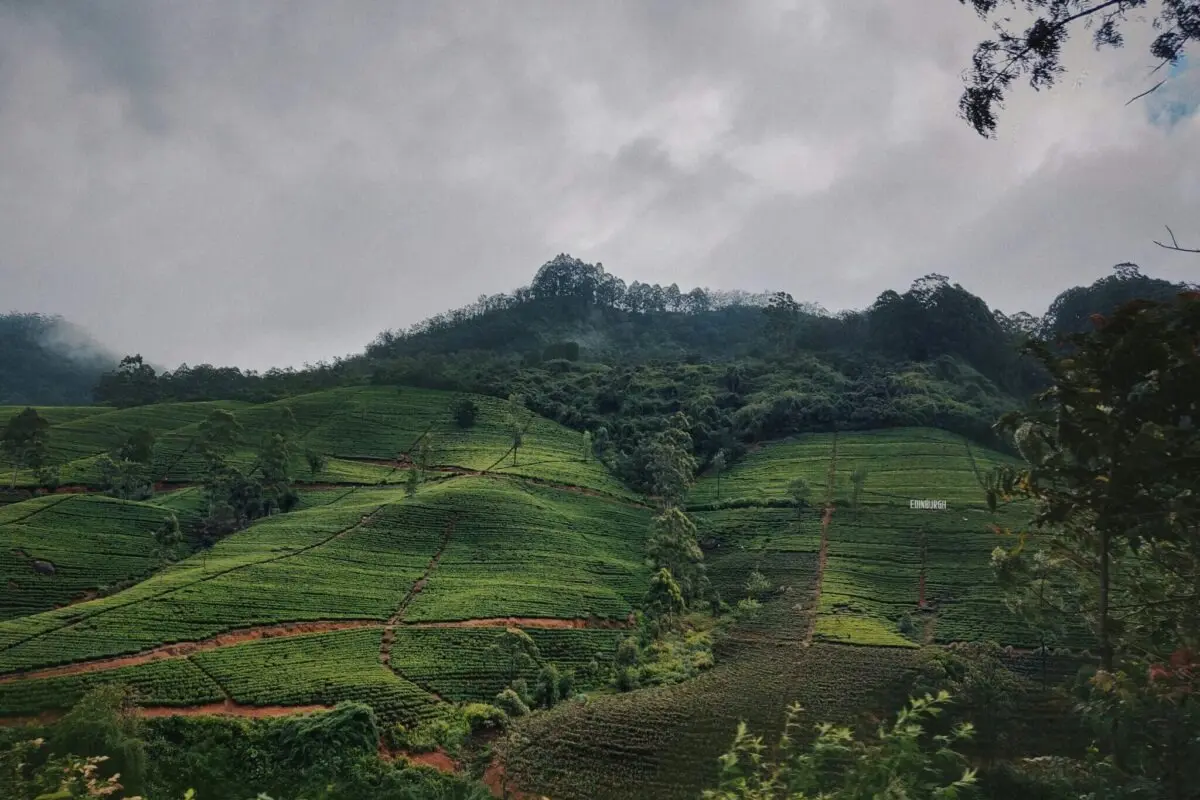
As illustrated above, ultra-luxury destinations like the Maldives routinely extract upward of $2,480 per visitor by restricting volume and catering almost exclusively to high-net-worth individuals through private island resorts, high-end excursions, and premium culinary experiences. While Sri Lanka’s diverse topography—spanning ancient cultural ruins, tea plantations, wildlife safaris, and surf beaches—prevents it from adopting a purely exclusive resort model like the Maldives, it possesses ample luxury assets that have historically been underpriced and undermarketed.
The Hidden Costs of Low-End Mass Tourism
Why is the Sri Lankan government actively turning away from the "normal spending, low-end tourists"? The answer lies in the hidden externalities of volume-based tourism:
- Infrastructure Strain: Low-budget travelers often utilize public transport, local utilities, and waste management systems that are already operating near capacity, placing an undue burden on municipal budgets.
- Environmental Degradation: Uncontrolled foot traffic in sensitive ecological zones—such as Yala National Park, Horton Plains, and fragile coastal coral reefs—threatens the very natural wonders that draw visitors to the island.
- Diminishing Returns for Local Communities: Mass-market package tours often operate on closed-loop systems (all-inclusive resorts, foreign-owned tour buses, pre-booked international itineraries) where the majority of capital leaks out of the host country, leaving local artisans, independent restaurateurs, and small-scale guides with meager earnings.
By re-engineering the value proposition toward quality, Sri Lanka aims to ensure that every tourist dollar works harder, stays longer within the local economy, and supports sustainable, community-led enterprises.
Official Statements and Strategic Vision
The policy shift was articulated with striking clarity by Alexi Gunasekera during his exclusive engagement with industry media at the Arabian Travel Market.
"If we try to attract the normal spending, low-end tourists, we may achieve the numbers, but not tourism earnings," Gunasekera stated plainly. "We are going for quality rather than quantity."
This sentiment reflects a broader consensus emerging among Sri Lankan diplomats, tourism officials, and private sector leaders. The objective is no longer about filling airline seats at rock-bottom promotional fares or packing heritage sites with budget backpackers who contribute minimally to the national treasury. Instead, the focus is shifting toward attracting travelers who seek experiential luxury, wellness retreats, bespoke wildlife safaris, and cultural immersion.
Re-Targeting Key Source Markets
To achieve this elevated yield, Sri Lanka’s diplomatic missions and tourism promotion bureaus are recalibrating their outreach in high-net-worth regions. The Gulf Cooperation Council (GCC) countries—represented prominently at the Arabian Travel Market—are a prime focal point. GCC travelers are globally recognized for high per-capita daily spending, a preference for luxury accommodations, and a propensity for multi-generational family travel.
By showcasing Sri Lanka’s burgeoning collection of ultra-luxury boutique hotels, private wilderness villas, and world-class wellness sanctuaries, the nation is positioning itself as a premier destination for affluent travelers seeking authentic, undiscovered luxury away from overcrowded traditional hotspots.
Future Outlook: Challenges, Opportunities, and the Road Ahead
As Sri Lanka charts its course toward the $5 billion earnings milestone, the journey will require rigorous execution, cross-sector collaboration, and a steadfast commitment to structural reform.
1. Infrastructure Upgrades and Upskilling
Attracting high-spending travelers requires uncompromised service standards. Sri Lanka’s hospitality sector must continue investing in workforce training, culinary arts, digital infrastructure, and transportation networks. Upgrading domestic aviation—such as expanding scenic seaplane routes and domestic air taxi services—will be essential for seamlessly connecting high-net-worth visitors from international hubs to remote cultural and ecological treasures without grueling multi-hour road journeys.
2. Balancing Accessibility with Exclusivity
While the strategic pivot focuses on high yield, Sri Lanka must carefully manage the risk of pricing out middle-tier travelers entirely. The ideal future state is a diversified tourism portfolio where boutique luxury, eco-lodges, cultural heritage tourism, and sustainable community-based initiatives coexist harmoniously, elevating the baseline spend across all categories without creating exclusionary enclaves that alienate local populations.
3. Sustainability as a Competitive Advantage
Modern affluent travelers increasingly demand verified sustainability credentials. Sri Lanka’s lush landscapes, rich biodiversity, and wildlife conservation efforts provide a natural foundation for eco-luxury. By integrating rigorous environmental standards, supporting carbon-neutral hospitality operations, and empowering local communities as active stakeholders in tourism management, Sri Lanka can cement its reputation as a conscious, high-value destination.
Conclusion
Sri Lanka’s bold declaration at the Arabian Travel Market marks a watershed moment for the nation’s travel industry. By looking beyond raw arrival statistics and anchoring its vision to economic yield and sustainable growth, the Pearl of the Indian Ocean is redefining what it means to be a successful tourism destination in the 21st century. If executed with precision and resolve, the transition from counting heads to counting value will secure Sri Lanka’s position not just as a heavily visited tropical stopover, but as one of the world’s most coveted, high-yield luxury and experiential travel sanctuaries.