






Executive Overview
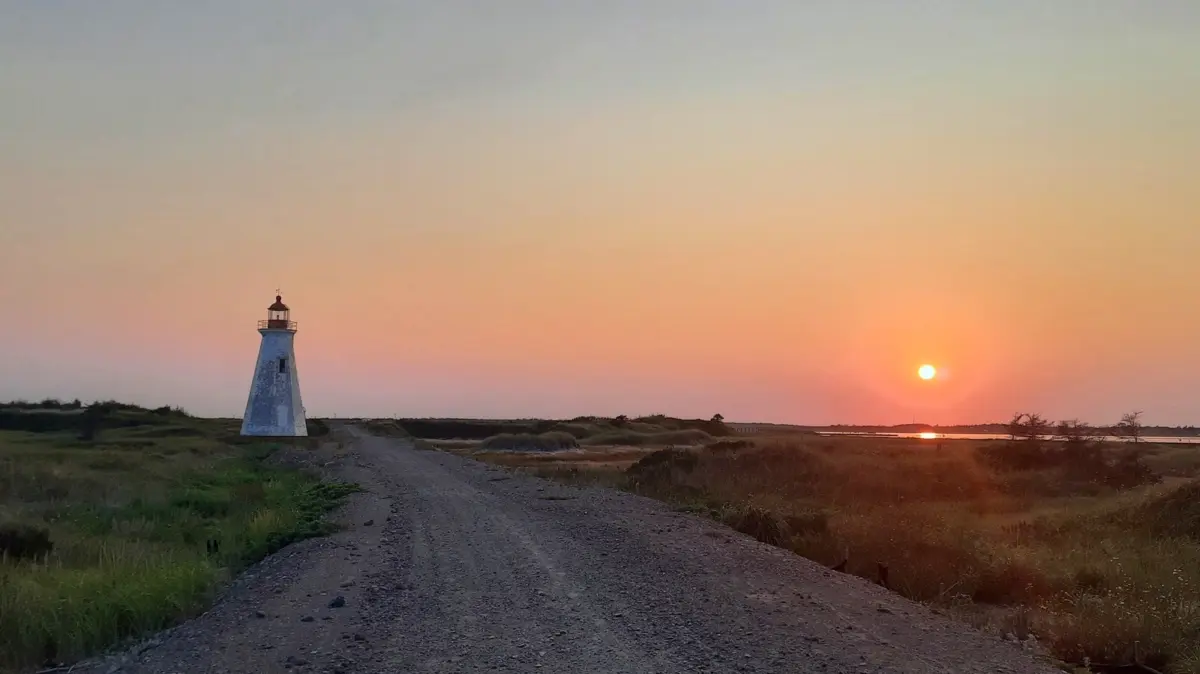
Nestled within the rugged northeastern shoreline of New Brunswick, Canada, Lamèque Island represents one of North America’s most compelling yet overlooked coastal retreats. Flanked by the expansive Gulf of Saint Lawrence to the east and the sheltered waters of Chaleur Bay to the west, this French-speaking enclave—along with its sister island, Miscou—forms the terminal crown of the Acadian Peninsula. While Canada is internationally celebrated for its monumental mountain ranges and bustling cosmopolitan centers, destinations like Lamèque offer a vital counter-narrative: an authentic, slow-paced maritime escape defined by historic fishing hamlets, pristine and largely undeveloped coastlines, and a rich Acadian cultural heritage.
Far removed from the high-density tourist circuits of southern Canada or New England, Lamèque Island functions as a self-contained ecosystem of tranquility and outdoor recreation. The region’s geography encourages a distinct style of travel centered around sustainable tourism, wildlife observation, and immersion in local Acadian traditions. For travelers, regional planners, and tourism economists alike, Lamèque provides an instructive case study in how remote communities balance the preservation of pristine natural assets with the controlled integration of modern hospitality infrastructure.
Detailed Chronology & Historical Context
To truly understand Lamèque Island, one must examine the socio-historical fabric of the Acadian Peninsula, a landscape shaped by centuries of resilience, maritime industry, and cultural persistence.
The Acadian Roots and Maritime Heritage
The history of Lamèque is inextricably linked to the broader narrative of the Acadian people. Following the expulsion of the Acadians in the mid-18th century, resilient families gradually returned to the isolated coasts and islands of northern New Brunswick, establishing a subsistence economy built on commercial fishing, forestry, and small-scale agriculture.
For generations, communities like the town of Lamèque and the surrounding fishing hamlets operated in relative isolation, accessible primarily by boat or winter ice bridges. The introduction of permanent road links and bridges in the 20th century integrated the island more fully with the New Brunswick mainland, yet the area has remarkably retained its distinct linguistic identity, architectural traditions, and community-centric rhythm of life. French remains the predominant language, and the local economy continues to draw its heartbeat from the daily rhythms of the sea.
Architectural Landmarks: The "Candy Church"
Beyond its natural geography, the island’s chronology is punctuated by unique cultural touchstones. Among the most celebrated is the Church of Saint Cecilia (Église Sainte-Cécile), located in the nearby village of Petite-Rivière-de-l’Île. Built in 1913 and affectionately nicknamed "the candy church" due to its remarkably colorful, multi-hued interior and pastel exterior palette, this architectural marvel stands as a testament to the community’s artistic expression and deep-rooted faith. Serving both as a functioning parish and a protected historical site, it bridges the gap between early 20th-century craftsmanship and modern cultural tourism.
Supporting Context & Metrics: Logistics, Geography, and Infrastructure
Navigating to a remote coastal destination requires careful logistical planning. Despite its secluded feel, Lamèque Island is surprisingly accessible by modern transportation networks, positioning it as an achievable weekend or extended escape for travelers originating from Atlantic Canada, Quebec, and the northeastern United States.
Accessibility and Transportation Metrics
- Regional Air Connectivity: The closest regional aviation hub is Bathurst Airport (ZBF), situated approximately a 90-minute drive southwest of the island. For international travelers, Greater Moncton Roméo LeBlanc International Airport (YQM) serves as the primary gateway, requiring a scenic 3.5-hour drive north through New Brunswick’s forested interior.
- Proximity to Major Metropolitan Centers:
- From Quebec City (the provincial capital of New Brunswick’s northern neighbor), the drive spans approximately 7 hours, cutting through the scenic Appalachian foothills and the Matapédia Valley.
- From the United States Maine border, travelers can expect a 4-to-5-hour transit by vehicle, making it a viable cross-border road trip destination.
- Internal Transit: Once on the island, the infrastructure transitions to flat, low-traffic coastal routes ideal for automotive touring and recreational cycling.
Natural Topography and Ecological Metrics
Lamèque Island’s geography is characterized by low-lying maritime terrain, expansive beaches, peat bogs, and tidal estuaries.
- The Ecological Park of the Acadian Peninsula: Situated just outside the main town of Lamèque where the freshwater Jean-Marie Brook meets the saltwater bay, this protected sanctuary encompasses over 150 identified plant species and serves as a vital staging ground for more than 115 species of birds. The park features a 1.24-mile interpretive hiking loop built upon elevated boardwalks that traverse fragile wetlands without disturbing local flora and fauna.
- Coastal Geomorphology: The island’s eastern flank features extensive sandspits and dune systems, most notably visible along the corridor connecting Sainte-Marie-Saint-Raphaël toward Pigeon Hill and onward to Miscou Island. These dynamic coastal environments are shaped continuously by Gulf of St. Lawrence wind and tidal action.
Outdoor Recreation and Coastal Exploration
Lamèque Island’s primary draw is its unscripted, outdoor-centric itinerary. Without the pressure of congested tourist traps, visitors are encouraged to engage with the landscape directly.
Beachcombing and Coastal Access
The eastern shore of the island offers miles of uninterrupted, sandy beaches facing the Gulf of St. Lawrence.
- Sainte-Marie-Saint-Raphaël Municipal Beach: Located just a 7-minute drive from the town of Lamèque, this family-friendly coastal zone provides well-maintained picnic sites, open green spaces, and children’s playgrounds directly adjacent to the surf.
- Pigeon Hill and Miscou Corridors: Twelve minutes north of Sainte-Marie-Saint-Raphaël lies Plage de Pigeon Hill, situated at the base of a narrow sandspit pointing toward Miscou Island. A further 20-minute journey north brings visitors to Miscou Island’s public beach, renowned for dramatic shifting dunes, peat moss barrens, and wooden boardwalks designed for meditative coastal walks.
Cycling and Advanced Water Sports
The Acadian Peninsula is widely recognized by cycling enthusiasts for its topography. Because the terrain is predominantly flat, riders can easily cruise long distances while absorbing panoramic vistas of the Gulf.
- The Veloroute network: Suggested itineraries, such as the 15-mile circuit around Lamèque Island maintained by veloroutepa.ca, allow cyclists to safely navigate coastal roadways while passing historic lighthouses and working fishing wharves.
- Kitesurfing: For travelers seeking higher-octane adventure, the open winds and shallow coastal shelves of the region support specialized instructional facilities like the René Jobin Kite Academy, which offers kitesurfing certification and training in dynamic marine conditions.
Accommodation and Culinary Landscape
Hospitality on Lamèque Island mirrors its geography: intimate, unpretentious, and deeply connected to the local environment.
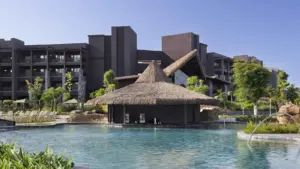
- Lodging Options: Traditional campgrounds such as Camping Arc-En-Ciel sit directly on the northern coastline, offering a hybrid of rustic tent sites, modern cabins, and tiny houses within walking distance of the tide. For travelers seeking traditional hospitality, properties like the Malia Spa and Resort provide upscale accommodations, wellness facilities, and localized dining.
- Culinary Offerings: The local food scene is a masterclass in Acadian comfort food and fresh marine harvest.
- Aloha Café-Boutique anchors the downtown café scene, offering artisanal coffee, fresh sandwiches, and salads backed by consistently high regional reviews.
- Au P’tit Mousse serves as the island’s culinary epicentre, offering classic Canadian poutine, fresh seafood platters, and inventive regional specialties such as seafood-topped pizza.
- Entreprises Desylva-Rodeo Taco Bar bridges the gap between rural convenience store infrastructure and eclectic local dining, offering reliable travel provisions alongside freshly prepared tacos.
Future Outlook: Sustainable Tourism and Regional Expansion
As modern travelers increasingly prioritize off-the-beaten-path destinations over overcrowded mainstream resorts, Lamèque Island stands at a critical juncture in its economic and tourism evolution.
Balancing Preservation and Growth
Local tourism authorities and municipal leaders face the ongoing challenge of scaling infrastructure without compromising the very isolation and ecological integrity that make the island attractive. Investments in eco-friendly lodging, expanded cycling networks, and protected wildlife corridors indicate a proactive commitment to sustainable tourism. By emphasizing low-impact activities—such as birdwatching in the ecological park, non-motorized water sports, and cultural heritage preservation—Lamèque is well-positioned to attract a discerning demographic of eco-conscious travelers.
Expanding the Regional Itinerary
Furthermore, Lamèque does not exist in a vacuum; it serves as the northern anchor for an extended regional itinerary that encourages deeper exploration of New Brunswick’s coastline. Travelers extending their journey southward can traverse the Acadian Peninsula to visit historic inland parishes, before eventually connecting to major maritime hubs such as Saint John—Canada’s oldest incorporated city—and the dramatic tidal phenomena of the Bay of Fundy and St. Martins.
Ultimately, Lamèque Island offers a blueprint for modern exploratory travel: a destination that rewards the curious traveler with quiet majesty, cultural authenticity, and an enduring connection to Canada’s eastern maritime soul.