






Executive Overview
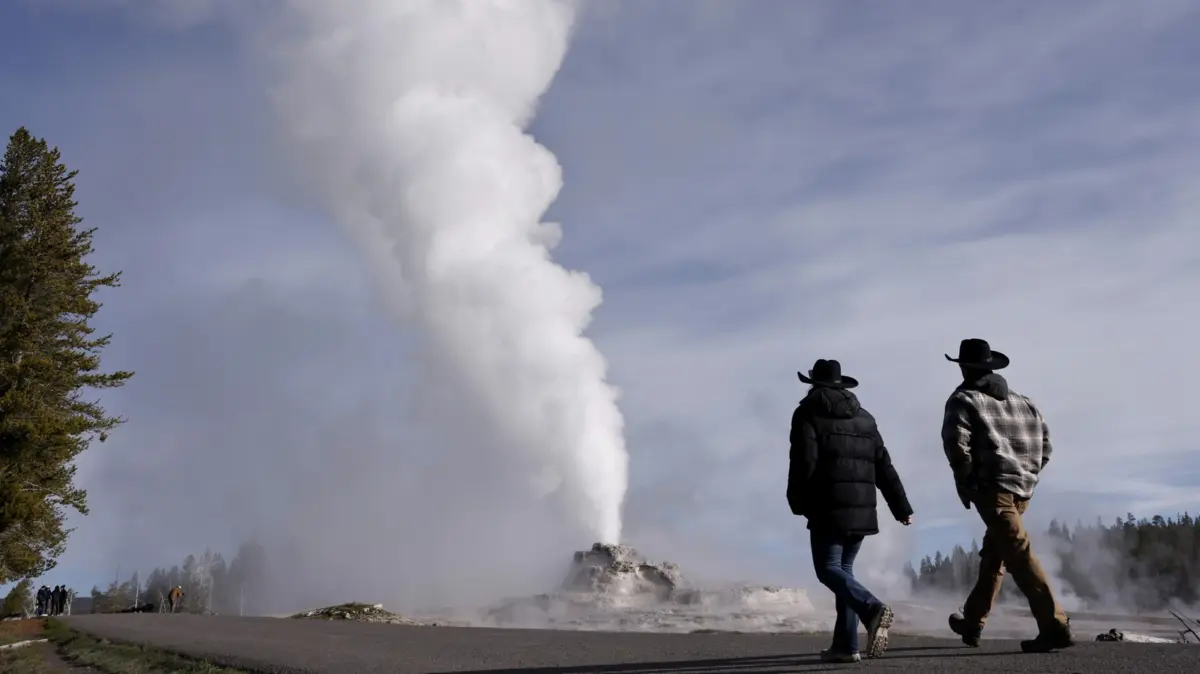
Yellowstone National Park remains the undisputed crown jewel of America’s geothermal landscape, holding more than 500 geysers—accounting for over half of all active geysers on Earth. To the average traveler, the park is synonymous with marquee spectacles: the reliable crowds packed tightly around Old Faithful, the bustling boardwalks of the Upper Geyser Basin, and the constant flurry of smartphones documenting predictable thermal bursts.
Yet, beyond these accessible tourist hubs lies a wilder, more remote Yellowstone. This hidden dimension is defined by backcountry trails, elusive spouters, vapor-dominated calderas, and thermal features that few human eyes ever witness. Reaching these hidden marvels often demands strenuous day-long hikes, overnight backpacking permits, or canoe journeys across frigid alpine lakes.
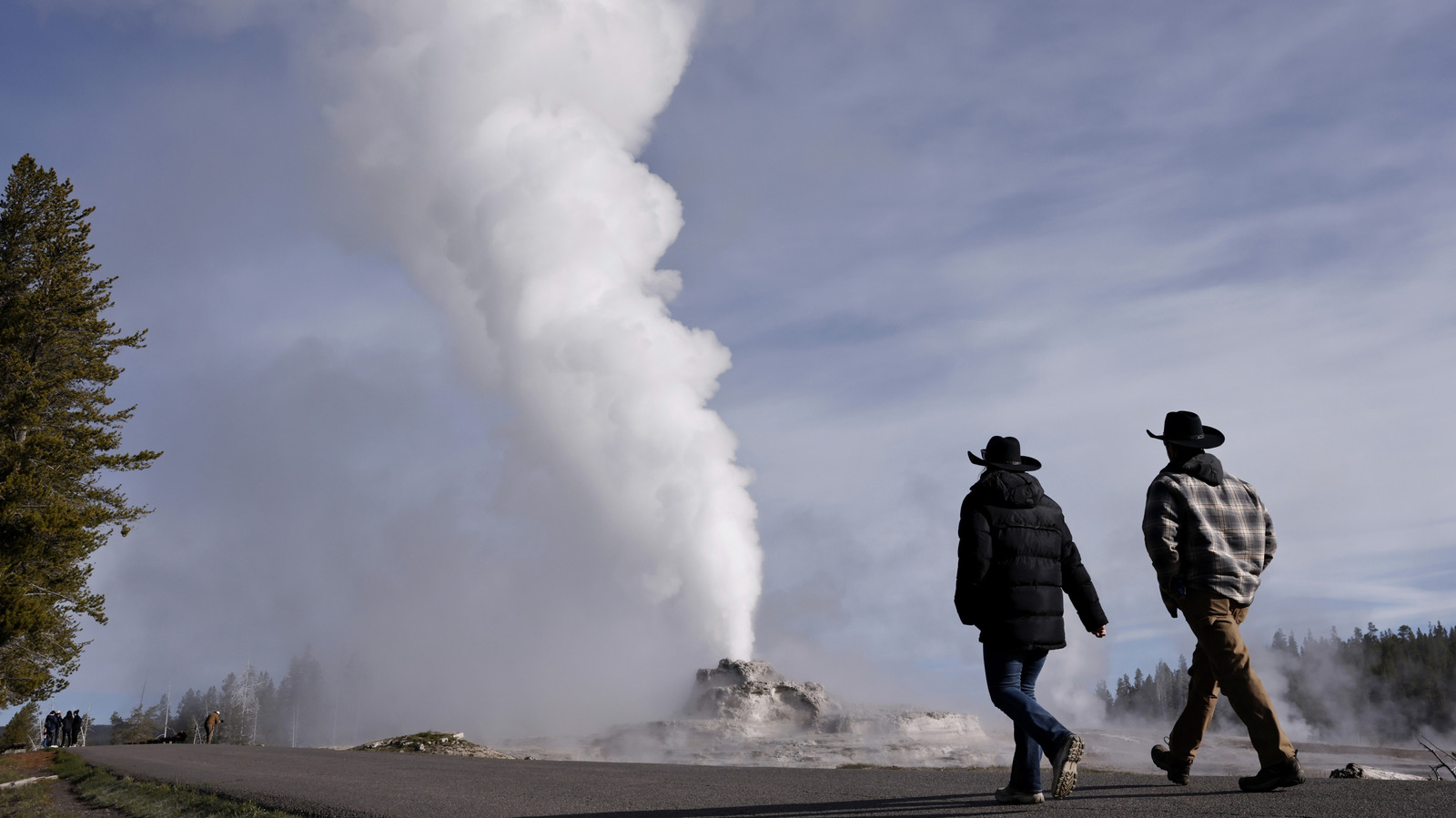
However, America’s geothermal wonders do not stop at Yellowstone’s borders. Across the broader American West, lesser-known natural geysers bubble and erupt far from the traditional tourist itineraries, hidden away in tranquil national forests and rolling valley wine country. Sourced from deep underground seismic activity, expert observations, and crowdsourced "geyser gazer" networks, this investigative look explores 10 of America’s best-kept geothermal secrets—ranging from isolated backcountry basins to unexpected valley anomalies.
Detailed Chronology: The Evolution and Discovery of America’s Hidden Geysers
The history of these lesser-known geothermal features spans centuries of natural shifts, accidental industrial discoveries, and dedicated scientific observation.
- Late 19th Century (The Bathhouse Era): In the Upper Geyser Basin of Yellowstone, bathhouse operator Henry J. Brothers secures permission in 1914 to pipe hot water from a thermal spring nearly half a mile away to a commercial swimming pool. The resulting drop in the underground water table permanently alters the spring, inadvertently sparking the creation of Solitary Geyser, which has erupted continuously ever since.
- The 1880s to Modern Day (Lone Star Consistency): Lone Star Geyser in Yellowstone establishes a remarkable track record of consistency. Discovered and monitored by early explorers, its precise three-to-four-hour eruption cycle has been meticulously tracked via trailside logbooks since the late 19th century, remaining remarkably stable through generations of seismic shifts.
- 1927–1966 (The Imperial Transformation): Imperial Geyser makes its first official recorded appearance in 1927, erupting continuously for over a year before abruptly going dormant in 1929. Decades later, in 1966, a new vent violently tears open on the edge of the old pool, reviving the geyser’s activity to this day.
- Late 19th Century (California’s Accidental Well): Just north of Calistoga in Napa Valley, a settler drilling for a water well accidentally punctures a high-pressure steam vent, unleashing California’s Old Faithful. The site is later acquired by Olga Kolbeck, who transforms it into a tourist attraction while pioneering early earthquake-monitoring observations based on the geyser’s behavioral shifts.
The Undiscovered Backcountry and Basin Deep Dives
1. Shoshone Geyser Basin, Yellowstone National Park
Hidden deep within the Yellowstone Backcountry, the Shoshone Geyser Basin is the undisputed crown jewel of remote geothermal features. Situated on the rugged shores of Shoshone Lake, this basin features no boardwalks, vehicles, or gift shops. According to National Park Service estimates, more than 80 geysers are packed into a tight 1,600-by-800-foot area, making it one of the most concentrated geyser fields on Earth.
Reaching Shoshone requires either an 8.5-mile one-way hike or a challenging kayaking excursion across Lewis or Shoshone Lake. Because a 17-mile round-trip day hike is grueling for most, overnight backpacking is the practical route, keeping visitor numbers extraordinarily low. The star attraction is Minute Man, which erupts every few minutes over a two-to-four-hour span before falling silent for seven hours. Meanwhile, Union Geyser—dormant since its last major activity in 1977—remains the basin’s potential giant, with historical eruption heights exceeding 100 feet.
2. Solitary Geyser, Yellowstone National Park
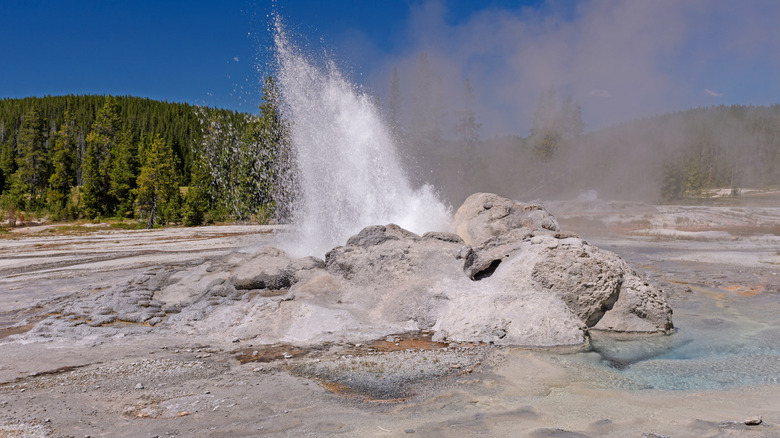
Located just a short hike off the beaten path near the heavily trafficked Old Faithful area, Solitary Geyser features a clear blue pool encircled by cream-colored sinter deposits. Boasting an eruption cycle of four to eight minutes, it is one of the most frequently active features in the Upper Geyser Basin. Its accidental origins as a 19th-century hot-water source for a commercial swimming pool make it a fascinating historical anomaly that has continued to erupt steadily for over a century after the bathhouse closed.
3. Artemisia Geyser, Yellowstone National Park
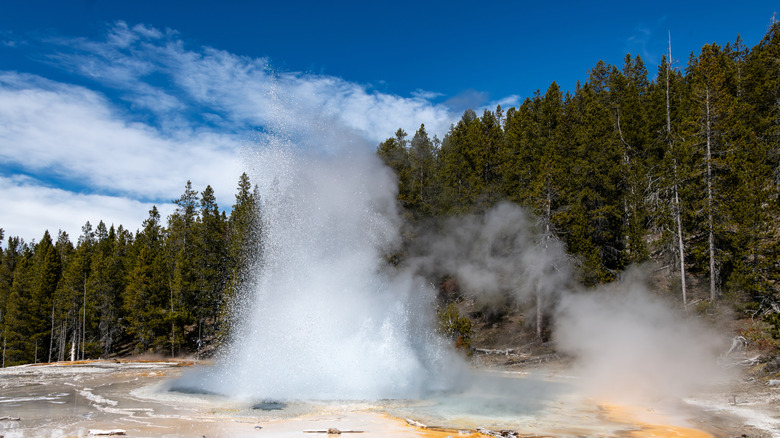
Named for the dull green mineral crusts surrounding its perimeter that resemble desert sagebrush, Artemisia Geyser is one of the largest pools in Yellowstone. Rather than shooting a dramatic jet of water skyward, Artemisia engages in a massive, rolling boil where the entire surface of its electric-blue pool churns violently. Operating on an unpredictable schedule ranging from 19 to 40 hours apart, catching an eruption requires patience and a detour along the quiet side trails branching off from Morning Glory Pool toward Biscuit Basin.
4. Norris Geyser Basin, Yellowstone National Park
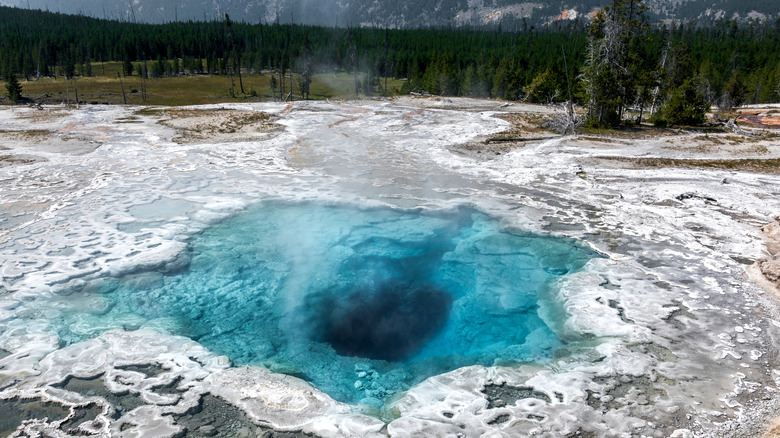
As the hottest and oldest thermal area in Yellowstone, the Norris Geyser Basin sits directly atop the intersection of two major tectonic faults. Temperatures just 1,000 feet below the surface have been recorded at a staggering 459 degrees Fahrenheit—the highest subsurface temperature ever documented in the park. Split into the stark, treeless Porcelain Basin and the forested Back Basin, Norris is famous for its volatile water chemistry, acid-geysers (such as Echinus, whose pH matches vinegar), and the towering Steamboat Geyser, the world’s tallest active geyser, which routinely exceeds 300 feet.
5. Monument Geyser Basin, Yellowstone National Park
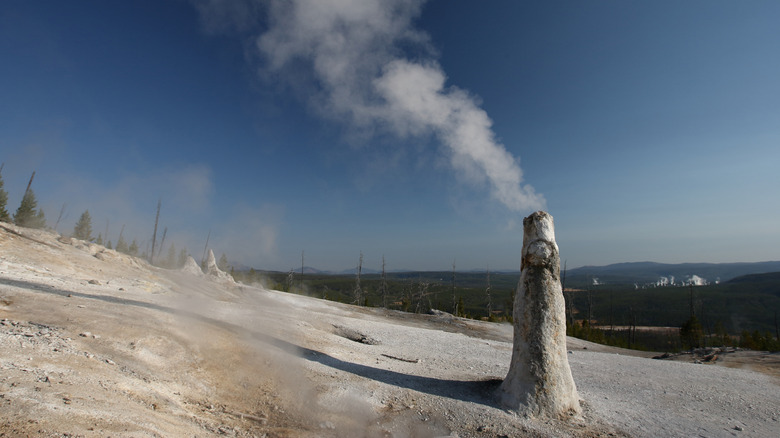
Reaching the Monument Geyser Basin requires a punishing 2-mile round-trip trek featuring an 800-foot elevation gain. This steep climb deters 99% of Yellowstone tourists, leaving the basin remarkably pristine. The centerpiece is Monument Geyser, an 8-foot sinter cone nicknamed the "Thermos Bottle Geyser" in the 1920s. Today, it primarily releases high-pressure steam. Unlike water-driven basins, Monument is a vapor-dominated, acid-steam hydrothermal system peppered with unusual 10-foot-tall stone spires and chimney-like formations venting gases as hot as 700 degrees Fahrenheit.
6. Lone Star Geyser, Yellowstone National Park
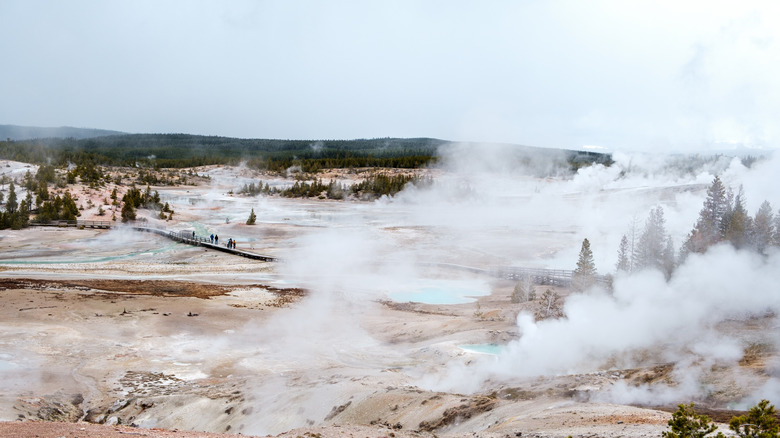
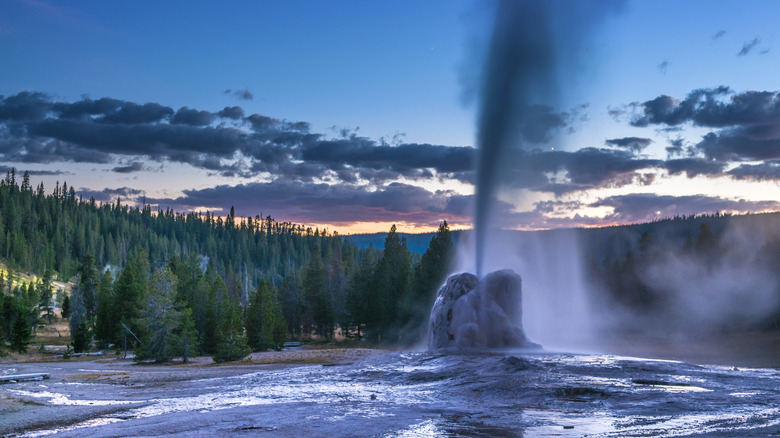
Positioned 3.5 miles south of Old Faithful along a flat, scenic service road beside the Firehole River, Lone Star Geyser is a classic cone-type geyser built over centuries into a 12-foot silica mound. It erupts with remarkable predictability every three to four hours, building up with preliminary steam bursts before launching a 50-foot column of water for roughly 30 minutes. A trailside logbook allows hikers to document eruption times, fostering a communal spirit of field science among visitors.
7. Lion Geyser Complex, Yellowstone National Park
The Lion Geyser Complex consists of a cluster of seven interconnected hydrothermal features in the Upper Geyser Basin. The primary vent, Lion Geyser, sits atop the largest cone and produces a series of powerful bursts reaching heights of up to 50 feet. Its name derives from the deep, rumbling, "lionesque" roar the system emits as steam escapes after an eruption cycle. Neighboring vents within the complex—including Little Cub, Lioness, and Big Cub—exhibit erratic schedules ranging from hourly bursts to multi-day dormancy.
8. Imperial Geyser, Yellowstone National Park
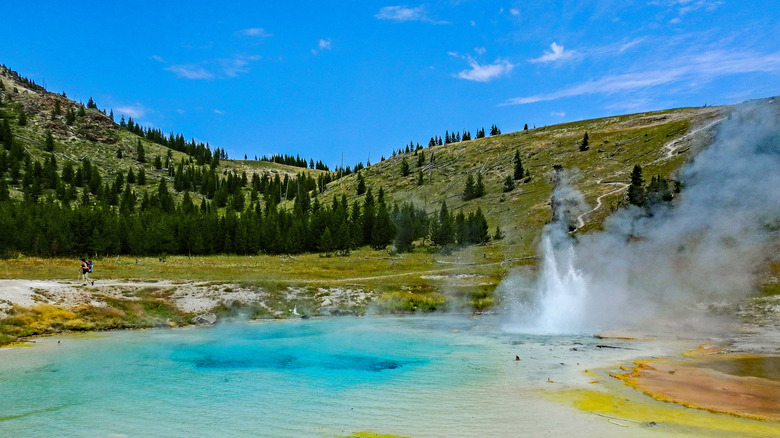
Tucked quietly past the Fairy Falls trail near the Grand Prismatic Spring, Imperial Geyser was first recorded in 1927. After going completely dormant in 1929, a new vent violently ruptured in 1966. Today, it cycles between activity and dormancy, erupting every 10 seconds to blast water several yards high. Geophysicist Michael Poland has praised the journey to Imperial as "quintessentially Yellowstone," rewarding adventurous hikers with a tranquil backcountry escape devoid of modern infrastructure and safety boardwalks.
9. Geyser Spring Trail, Colorado
Venture far outside of Yellowstone into the pine and aspen forests of Colorado’s San Juan National Forest, and you will find the state’s only natural geyser. Tucked along a 2.6-mile round-trip trail about an hour’s drive from Dolores, this azure pool is frequently described as a "witch’s cauldron." Every 30 to 40 minutes, the pool rumbles to life, bubbling aggressively and spilling mineral-rich water over into an adjacent creek for roughly 15 minutes. Heavy emissions of hydrogen sulfide gas render the pool strictly off-limits for physical contact, preserving its wild, untouched mystique.
10. Old Faithful, California
Located in Napa Valley just north of Calistoga, California’s homegrown Old Faithful was discovered by accident in the late 19th century when a well-drilling operation punctured an underground steam chamber. Later championed by preservationist Olga Kolbeck—affectionately known as the "Geyser Lady"—the site features a museum, picnic grounds, and rescue animal exhibits. Erupting reliably every 30 minutes to heights of 60 feet, California’s Old Faithful has fascinated seismologists due to its documented tendency to alter its eruption frequency prior to regional earthquakes.
Supporting Context & Metrics
To fully grasp the scale and distribution of America’s geothermal assets, consider the following comparative metrics:
| Geyser / Basin | Location | Eruption Interval / Cycle | Maximum Height | Primary Geological Feature |
|---|---|---|---|---|
| Shoshone Basin | Yellowstone, WY | Variable (Minute Man: minutes) | 100+ feet (Union Geyser) | Dense backcountry cluster |
| Solitary Geyser | Yellowstone, WY | 4–8 minutes | ~3 feet | Artificial pipeline origin |
| Artemisia Geyser | Yellowstone, WY | 19–40 hours | Rolling boil (No column) | Large silica shelf pool |
| Norris Basin | Yellowstone, WY | Highly volatile / Continuous | 300+ feet (Steamboat) | Highest subsurface temps (459°F) |
| Monument Basin | Yellowstone, WY | Dormant / Steam venting | Hissing / Vapor-driven | Stone chimneys & spires |
| Lone Star Geyser | Yellowstone, WY | 3–4 hours | ~50 feet | 12-foot silica cone |
| Lion Geyser | Yellowstone, WY | Periodic multi-burst series | ~50 feet | Deep lionesque roar |
| Imperial Geyser | Yellowstone, WY | Every 10 seconds (Active cycles) | Several yards | Backcountry mud pots & vents |
| Geyser Spring | San Juan N.F., CO | 30–40 minutes | Boiling overflow | Sulfur-rich cauldron pool |
| Old Faithful (CA) | Calistoga, CA | ~30 minutes | ~60 feet | Seismic indicator well |
Official Statements and Expert Perspectives
Geological authorities and park researchers emphasize the fragile and dynamic nature of these hidden geothermal landscapes.
According to ongoing updates from the United States Geological Survey (USGS) and the Yellowstone Volcano Observatory (YVO), basins like Norris and Monument are driven by complex tectonic fault mechanics and vapor-dominated fluid systems. These underground plumbing networks are constantly altered by micro-earthquakes—seismic events frequently too small for humans to feel, yet powerful enough to shift subsurface rock channels, instantly waking dormant vents or silencing long-standing spouters.
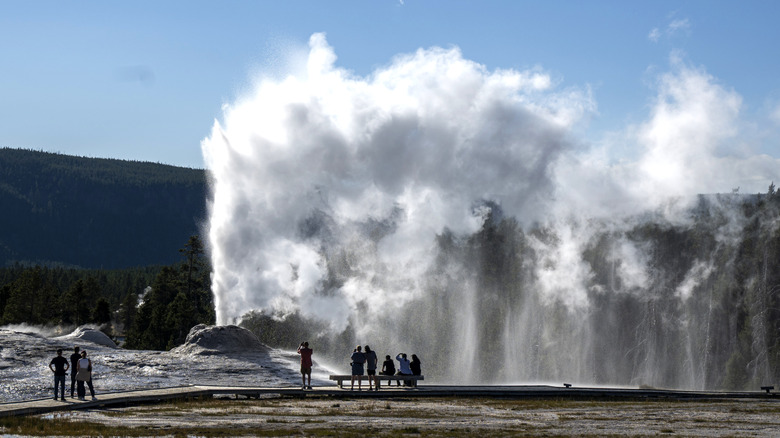
Furthermore, university researchers such as Professor Robert Pahre have repeatedly highlighted the stark contrast between heavily touristed hubs and isolated fields, noting that backcountry basins like Shoshone would easily rank among the world’s premier tourist attractions if not for their remote geographic isolation. Similarly, geophysicists like Michael Poland emphasize that traversing these lesser-known trails offers a purer, more authentic connection to the primordial forces shaping the American landscape.
Future Outlook
As national parks and public lands face record-breaking visitation numbers, the preservation of fragile geothermal ecosystems becomes increasingly critical. The National Park Service continues to urge extreme caution and strict adherence to trail boundaries, particularly in unboardwalked backcountry zones like Shoshone, Monument, and Imperial. Thin sinter crusts hiding boiling water pose severe safety hazards to straying hikers, while human foot traffic can irreversibly damage delicate mineral formations that take centuries to grow.
At the same time, interest in off-the-beaten-path ecotourism is surging. Travelers are increasingly willing to trade paved walkways and gift shops for rugged backpacks, topographic maps, and quiet hours spent waiting beside remote steam vents. Whether monitoring the precise schedule of Lone Star Geyser, smelling the sulfurous cauldron of Colorado’s San Juan forest, or studying the seismic warning rhythms of California’s Napa Valley, exploring America’s hidden geysers offers a profound reminder of the restless, fiery energy burning just beneath our feet.