








Executive Overview
In an unprecedented escalation of maritime warfare in the Middle East, United States military forces have executed a series of high-precision kinetic strikes, destroying five Iranian crude oil tankers in the Gulf of Oman and near the strategic oil hub of Kharg Island. According to statements released by U.S. Central Command (CENTCOM), the strikes—carried out on Tuesday, September 8, 2026—were launched in direct retaliation for back-to-back ballistic missile attacks directed by the Islamic Revolutionary Guard Corps (IRGC) against an unidentified U.S. Navy warship operating in the region.
This dramatic development marks a critical shift in Washington’s regional strategy. For years, the U.S. and its allies relied on economic sanctions, boarding operations, and diplomatic pressure to curb Iran’s illicit oil trade. The physical destruction of these vessels indicates that the Pentagon has transitioned to a policy of active kinetic interdiction, directly targeting the physical infrastructure of Iran’s multibillion-dollar "shadow fleet." This shadow network of aging, flag-of-convenience tankers is widely recognized by Western intelligence as the financial lifeblood of the IRGC and its network of regional proxies, including Yemen’s Houthi rebels, Lebanese Hezbollah, and various paramilitary groups in Iraq and Syria.
The exchange has sent shockwaves through global energy markets and maritime trade corridors. It comes amid explicit threats from Tehran to expand the theater of conflict by targeting commercial shipping and port facilities in neighboring Gulf states—specifically Bahrain and Kuwait—that host American military installations. As the Strait of Hormuz teeters on the edge of a wider blockade, the international community faces the prospect of a prolonged, high-intensity naval conflict in the world’s most critical energy chokepoint.
Detailed Chronology of the Escalation
The kinetic engagements of early September 2026 represent the most volatile naval confrontation in the Persian Gulf since the "Tanker War" of the 1980s. The timeline below details the rapid cycle of attack and retaliation that culminated in the destruction of the five vessels on Tuesday.
[Sept 5] US strikes Downy & Stark 1; sinks Kylo/Noxen
   │
   ▼ (Response)
[Sept 6-7] IRGC launches two ballistic missile attacks on US Warship
   │
   ▼ (Response)
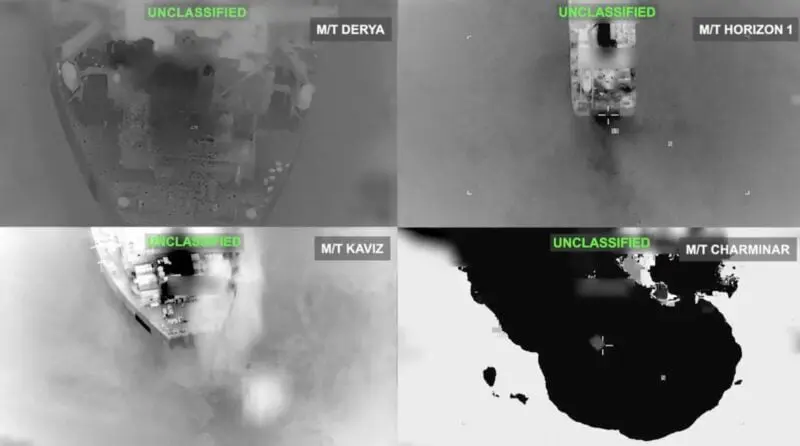
[Sept 8] US destroys 5 tankers (Kaviz, Charminar, Horizon 1, Riesco, Derya)
Phase I: The Opening Salvos (Saturday, September 5)
The current cycle of violence began in earnest on Saturday, September 5, following intelligence reports of imminent threats to coalition shipping. U.S. forces targeted three vessels linked to the IRGC’s illicit smuggling network.
- The Downy: Struck by U.S. assets while operating in the northern Persian Gulf, off the coast of Iran’s primary export terminal at Kharg Island.
- The Stark 1: Targeted and disabled near the port of Jask, a strategic coastal city located just east of the Strait of Hormuz.
- The Kylo (also operating under the alias Noxen): Struck and subsequently sunk in the deep waters of the Gulf of Oman.
According to defense officials, these initial operations were conducted in response to preceding Iranian ballistic missile attacks that targeted a U.S. Navy aircraft carrier strike group and an escorting guided-missile destroyer. While those Iranian missiles failed to find their targets, the audacity of the strikes prompted a swift, punitive response against Tehran’s maritime assets.
Phase II: The Mid-Week Ballistic Missile Attacks (September 6–7)
Refusing to back down, the IRGC escalated its operations over the next 48 hours. Between Sunday, September 6, and Monday, September 7, Iranian coastal defense units and IRGC naval vessels targeted a U.S. Navy warship patrolling the international waters of the Gulf of Oman.
The IRGC launched anti-ship ballistic missiles (ASBMs) in two distinct waves over the two-day period. Utilizing advanced shipboard Aegis combat systems, electronic counter-measures, and tactical evasive maneuvers, the targeted American warship successfully neutralized or evaded all incoming ordnance. CENTCOM confirmed that the vessel sustained no damage, and no American personnel were injured during the engagements. The warship maintained its operational posture and continued its patrol.
Phase III: The Tuesday Retaliation (Tuesday, September 8)
In direct response to the repeated missile attacks on its naval assets, the Pentagon authorized a massive, coordinated strike against five active vessels within Iran’s shadow fleet.
In the Gulf of Oman, U.S. Navy aircraft and surface vessels targeted four crude oil carriers:
- Kaviz
- Charminar
- Horizon 1
- Riesco
Simultaneously, a fifth tanker, the Derya, was targeted and struck in the northern Persian Gulf near the heavily fortified waters surrounding Kharg Island.
+------------------+-----------------------+------------------------+
| Vessel Name      | Location of Strike    | Operational Status     |
+------------------+-----------------------+------------------------+
| Downy            | Off Kharg Island      | Disabled (Sept 5)      |
| Stark 1          | Near Jask             | Disabled (Sept 5)      |
| Kylo (Noxen)     | Gulf of Oman          | Sunk (Sept 5)          |
| Kaviz            | Gulf of Oman          | Rendered Inoperable    |
| Charminar        | Gulf of Oman          | Rendered Inoperable    |
| Horizon 1        | Gulf of Oman          | Rendered Inoperable    |
| Riesco           | Gulf of Oman          | Rendered Inoperable    |
| Derya            | Near Kharg Island     | Rendered Inoperable    |
+------------------+-----------------------+------------------------+
To minimize loss of life and prevent a humanitarian disaster that could complicate international diplomatic support, U.S. forces utilized open maritime hailing frequencies and electronic warning broadcasts to order the crews of all five vessels to abandon ship. Only after the crews had safely evacuated into lifeboats did U.S. forces deploy precision-guided munitions to strike the tankers, rendering them completely inoperable and effectively removing them from the global maritime trade network.
Supporting Context & Metrics
The Anatomy of Iran’s Shadow Fleet
The eight tankers targeted since September 5 are not standard commercial vessels; they are part of a highly sophisticated, multi-billion-dollar maritime network designed to bypass international sanctions. Often referred to as the "Ghost Fleet" or "Shadow Fleet," these vessels typically exhibit several defining operational characteristics:
- Flags of Convenience (FoC): Many operate under the registries of nations with lax maritime oversight (e.g., Panama, Liberia, or Gabon), frequently changing names, flags, and ownership structures to evade detection.
- AIS Spoofing and "Going Dark": These vessels routinely disable their Automatic Identification Systems (AIS) or broadcast falsified GPS coordinates to mask their visits to Iranian oil terminals.
- Ship-to-Ship (STS) Transfers: To obscure the origin of the crude, shadow tankers often conduct risky mid-ocean oil transfers to other compliant vessels in international waters, blending Iranian crude with other oil types before delivery to foreign markets, primarily in East Asia.
By targeting these specific hulls, the U.S. is striking at the core of the IRGC’s off-book financial infrastructure. The revenue generated from these illicit sales directly funds regional operations, including the procurement of advanced drone and missile technology used by proxy forces to attack commercial shipping in the Red Sea and Bab el-Mandeb Strait.
Strategic Geography of the Conflict
                         [ IRAQ ]             [ IRAN ]
                            │                    │
                            ▼                    ▼
                    [ Kharg Island ] ───► (Derya & Downy Struck)
                            │
                     (Persian Gulf)
                            │
                            ▼
                    [Strait of Hormuz]
                            │
                            ▼
                     (Gulf of Oman) ────► (Kaviz, Charminar, Horizon 1,
                            │              Riesco & Kylo Struck)
                            ▼
                    [ Arabian Sea ]
The geographical distribution of the strikes reveals a calculated effort by the U.S. military to demonstrate total situational awareness and operational reach. By striking vessels both near Kharg Island—deep within the Persian Gulf—and in the Gulf of Oman, the U.S. has signaled that Iran’s geographic advantages in the Strait of Hormuz will not shield its illicit trade from precision interdiction.
Official Statements and Regional Reactions
United States Central Command (CENTCOM)
In a statement released on social media and official military communication channels, CENTCOM framed the strikes as a defensive necessity to protect international shipping and military personnel:
"CENTCOM forces destroyed five Iranian crude oil carriers, Sept. 8, after the Islamic Revolutionary Guard Corps (IRGC) targeted a U.S. Navy warship with ballistic missiles twice over the past two days. The U.S. warship successfully evaded the attempted Iranian attacks… These actions represent a direct response to unlawful, destabilizing attacks on coalition forces and demonstrate our unwavering commitment to maintaining the free flow of commerce and protecting our personnel in the region."
Tehran and the Islamic Revolutionary Guard Corps
Iranian state media, representing the voice of the IRGC and the clerical leadership in Tehran, immediately condemned the U.S. actions, labeling them as "acts of blatant piracy" and "unprovoked aggression."
In a menacing development, the IRGC issued explicit threats targeting regional third-party nations. According to Iranian state-run television, the IRGC warned that any ports or logistics facilities in neighboring Gulf countries—specifically naming Bahrain and Kuwait—that host or support U.S. military assets would be treated as legitimate military targets.
The IRGC issued an ultimatum warning commercial shipping crews to immediately evacuate ports and anchorages in these nations:
"Any vessel cooperating with the Zionist-American aggressors, or utilizing ports in Bahrain and Kuwait that sustain the American military presence, will find themselves within the crosshairs of our defensive forces. We advise all maritime workers to stay clear of these facilities for their own safety."
International Maritime Watchdogs and Industry Reaction
The United Kingdom Maritime Trade Operations (UKMTO), which monitors security incidents in global shipping lanes, issued an emergency advisory on Tuesday following reports of an incident involving a commercial vessel in the Strait of Hormuz.
The advisory noted that a merchant ship had been "subject to interaction as part of ongoing military activity in the region." While the UKMTO did not release the name of the vessel or detail the exact nature of the interaction, the incident underscores the extreme risk currently facing all commercial shipping traversing the chokepoint.
Global maritime insurance syndicates, including the Lloyd’s Joint War Committee, are reportedly preparing to dramatically expand the designated "High Risk Area" in the Persian Gulf. Shipowners are bracing for astronomical increases in War Risk premiums, which could render transit through the Strait of Hormuz economically non-viable for non-state-backed shipping companies.
Future Outlook
The transition from economic sanctions to kinetic destruction of oil tankers represents a critical turning point in the geopolitical landscape of the Middle East. Several key factors will dictate the trajectory of this conflict in the coming weeks:
1. The Threat of Regional Contagion
By threatening Kuwait and Bahrain, Iran is attempting to leverage the economic security of its neighbors to force a U.S. de-escalation. Bahrain hosts the headquarters of the U.S. Fifth Fleet (Naval Support Activity Bahrain), while Kuwait serves as a massive logistical hub for U.S. Army Central (ARCENT). If Iran executes strikes against ports or logistics hubs in these sovereign Arab states, it would likely trigger bilateral defense pacts, drawing the broader Gulf Cooperation Council (GCC) into a direct military confrontation with Tehran.
2. Environmental and Economic Fallout
While U.S. forces ensured that the crews of the targeted tankers evacuated before the strikes, the physical destruction of multiple fully or partially laden crude carriers poses severe environmental risks to the fragile marine ecosystem of the Gulf of Oman and the Persian Gulf. Large-scale oil spills could contaminate desalination plants along the coastlines of the UAE, Oman, and Saudi Arabia, threatening the primary drinking water supplies of millions of residents.
Furthermore, if the conflict continues to escalate, energy analysts warn that global crude prices, which have remained highly sensitive to Middle Eastern instability, could spike significantly, threatening global economic stability.
3. Tactical Adaptations at Sea
As Iran’s conventional shadow fleet is systematically hunted and disabled, the IRGC may pivot to asymmetric tactics. This could include the deployment of swarming fast-attack craft, the covert laying of naval mines in the shipping lanes of the Strait of Hormuz, and the increased use of low-cost, long-range one-way attack drones. The U.S. Navy and its coalition partners must prepare for a prolonged campaign of maritime security operations, requiring a sustained presence of air defense destroyers, minesweepers, and aerial surveillance assets to keep the world’s most vital energy corridor open.