




Executive Overview
Cleveland, Ohio, has long embraced its fitting moniker, the "Forest City"—a tribute to the dense, sprawling canopies and abundant green spaces that punctuate its urban landscape. Among the city’s crown jewels is the "Emerald Necklace," an expansive, interconnected chain of more than a dozen sprawling metropolitan reservations that encircle the municipality, offering residents and visitors an effortless transition from concrete jungles to tranquil natural retreats. While many of these nature preserves stretch deep into the surrounding counties, some of the most ecologically rich and historically layered parks sit just moments from downtown.
Located a mere 10 miles outside the city center in Garfield Heights, the Garfield Park Reservation stands as a premier testament to urban conservation. Spanning over a century of transformation, this urban wildlife sanctuary masterfully blends historic preservation with modern recreational design. Featuring miles of scenic walking paths, a fully restored two-acre watershed, historic New Deal-era stonework, and the county’s tallest cascading waterfall nearby, the park serves as both a treasured neighborhood backyard and an authoritative case study in successful metropolitan ecological restoration.
As urban centers across the United States increasingly grapple with the dual challenges of infrastructure decay and the loss of accessible green spaces, Garfield Park Reservation offers a compelling blueprint for revitalization. Bolstered by recent capital investments—most notably the grand opening of the Garfield Park Program Center—the reservation continues to redefine what an urban park can offer. This comprehensive report examines the deep history, environmental evolution, architectural milestones, community programming, and future outlook of one of Northeast Ohio’s most beloved natural treasures.
Detailed Chronology: From Rural Farmland to Metropolitan Sanctuary
The history of Garfield Park Reservation is a mirror of Cleveland’s own industrial, demographic, and environmental evolution. The land upon which the park sits has transitioned from indigenous hunting grounds to agricultural plots, industrial-adjacent open space, and, ultimately, a protected public sanctuary.
The Late 19th Century: Birth of Newburgh Park
The origins of the park date back to 1894, an era when the surrounding municipality of Newburgh was rapidly transforming from a quiet farming community into a bustling industrial suburb connected to Cleveland’s booming manufacturing economy. Recognizing the urgent need to preserve breathing room amidst encroaching industrialization, local civic leaders secured several tracts of rural farmland situated along a picturesque creek bed.
Initially christened "Newburgh Park," the early iteration of the grounds was modest, capitalizing on the natural topography of the winding waterways and dense pockets of native timber. In 1908, in a patriotic nod to the twentieth President of the United States—James A. Garfield, an Ohio native whose legacy loomed large across the state—the park was officially renamed the Garfield Park Reservation. During its early decades, the park served as a pastoral escape for working-class families seeking respite from the soot and noise of nearby mills and factories.
The 1930s: The New Deal Era and Monumental Infrastructure
The most significant early development phase occurred during the Great Depression. Through federal work-relief initiatives of the New Deal era, the Garfield Park Reservation received a sweeping, structural modernization. Federal work programs injected vital labor and capital into the park, resulting in the construction of sophisticated stone architecture, retaining walls, paths, and bridges designed to harmonize with the rugged natural environment.
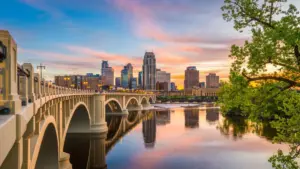
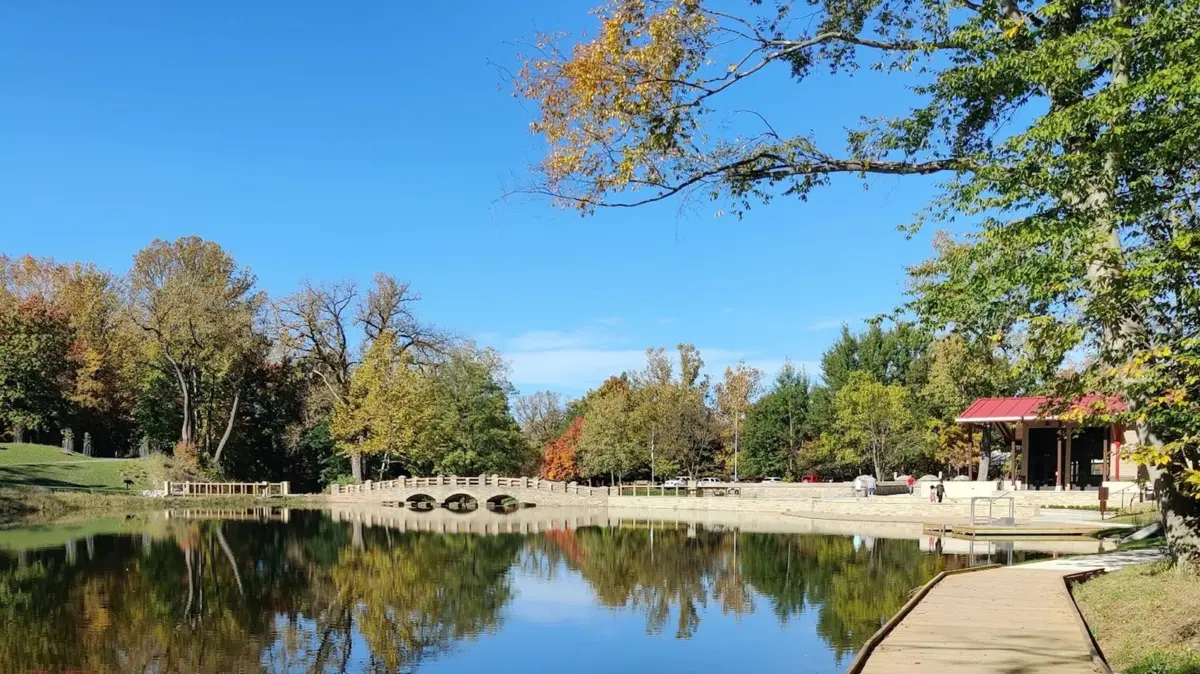
Among the most enduring legacies of this era is the park’s historic stone arch bridge. Crafted by skilled masons using native quarried stone, the bridge was engineered to span the reservation’s creeks, providing functional pedestrian and carriage pathways while serving as an aesthetic focal point. Unfortunately, the rapid industrial expansion and suburban sprawl of the mid-20th century soon introduced severe environmental stressors to the region.
Mid-to-Late 20th Century: Environmental Degradation and Metroparks Integration
As suburban development accelerated following World War II, increased stormwater runoff, soil compaction, and industrial pressures severely impacted the reservation’s delicate ecosystems. By the latter half of the century, the park faced acute environmental challenges: severe erosion threatened the integrity of the creeks, and the park’s historic ponds began to silt up, dry out, and lose their biological vitality.
The turning point for the reservation arrived in 1986, when management and stewardship of the property were officially transferred to the Cleveland Metroparks system. This integration marked the beginning of a coordinated, region-wide effort to reverse decades of ecological decline. Under the guidance of professional park planners, hydrologists, and conservationists, Garfield Park Reservation was slated for a comprehensive, multi-phase environmental rescue mission.
The 21st Century: Ecological Renaissance and Modern Expansion
Entering the 2020s, the reservation underwent its most ambitious transformation to date. Backed by sustained capital funding and ecological engineering, Cleveland Metroparks executed major restoration projects targeting the park’s hydrological systems. The lower pond was completely dredged, lined, and revitalized to support robust aquatic life, while the adjacent creek beds were stabilized using bioengineering techniques designed to prevent future erosion.
The crowning achievement of this modern renaissance occurred in late 2024 with the unveiling of major park enhancements, most notably the construction of a state-of-the-art program center built directly over the historic footprint of the park’s original boathouse. Today, Garfield Park Reservation stands fully restored, serving as a dynamic, living link between Cuyahoga County’s industrial past and its sustainable ecological future.
Supporting Context & Metrics
Understanding the true value of Garfield Park Reservation requires examining the physical, ecological, and infrastructural metrics that define the space.
Geographical Proximity and Layout
- Distance from Downtown Cleveland: Less than 10 miles south-southeast, making it easily accessible via major transit corridors such as Interstate 77 and Interstate 480.
- Total Acreage and Watershed: Situated within the Mill Creek watershed, an essential tributary system feeding directly into the mighty Cuyahoga River.
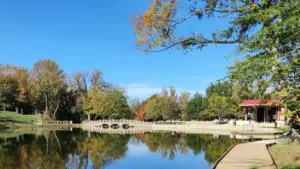
- The Ponds: The reservation features a central, two-acre restored pond fed by Wolf Creek, serving as a critical aquatic ecosystem for local and migratory fauna.
Trail Networks and Infrastructure
The reservation boasts a diverse network of paved and unpaved pathways catering to casual walkers, dedicated hikers, and fitness enthusiasts alike:
- The All Purpose Trail: Spanning approximately 2 miles, this paved pathway forms a continuous loop around the park’s perimeter, seamlessly connecting multiple shaded picnic areas and scenic overlooks. A major spur of this trail extends southward toward Mill Creek Falls, Cuyahoga County’s tallest natural waterfall, which plunges a dramatic 50 feet over a dramatic rock shelf.
- The Redbud Loop: Measuring roughly 0.5 miles, this shorter loop is celebrated for its elevated boardwalk segments that wind directly past the restored pond and the historic 1930s stone arch bridge.
- The Wolf Creek Trail: Branching directly off the primary trail network for just over 0.25 miles, this intimate woodland path offers secluded views of the tributary and deep-woods flora.
Biodiversity and Wildlife Metrics
Despite its urban surroundings, Garfield Park Reservation functions as a high-density biodiversity hotspot. Ornithologists and casual birdwatchers have documented a vast array of resident and migratory avian species utilizing the park as a vital stopover along the Mississippi and Atlantic flyways. Key species regularly observed include:
- Northern Parulas (Setophaga americana)
- Red-breasted Nuthatches (Sitta canadensis)
- Yellow-bellied Sapsuckers (Sphyrapicus varius)
- Barred Owls (Strix varia)
- Numerous species of waterfowl, hummingbirds, amphibians (including native frogs), and mammals such as white-tailed deer and eastern cottontail rabbits.
Official Statements and Stakeholder Perspectives
The successful transformation of Garfield Park Reservation has generated widespread acclaim from municipal leaders, environmental scientists, and park visitors alike.
In public statements accompanying the grand opening of the new facilities, Cleveland Metroparks Chief Executive Officer Brian M. Zimmerman emphasized the broader mission of the park system:
"Our goal across the entire Emerald Necklace has always been twofold: to fiercely protect the native ecological integrity of our landscapes while ensuring that every resident, regardless of their zip code, has direct, barrier-free access to the profound health benefits of nature. The restoration of Garfield Park Reservation and the addition of the new Program Center represent a monumental leap forward in connecting urban communities with world-class outdoor amenities."
Local conservationists have similarly praised the meticulous balancing act of preserving historical architecture while introducing modern, sustainable infrastructure. Dr. Elena Vance, a regional urban ecologist specializing in Midwestern watershed recovery, noted:
"What we witnessed at Garfield Park was a classic case of urban stream degradation. By daylighting sections, stabilizing banks with native vegetation, and re-engineering the hydrological flow into the Mill Creek tributary, the Metroparks didn’t just fix a park—they repaired a crucial ecological filter for the entire Cuyahoga River basin. The return of apex woodland birds and sensitive amphibian species confirms that nature will rebound if given the proper engineering support."
Visitors frequently echo these sentiments on public forums and park review platforms. One recent visitor characterized the reservation as "Cleveland’s ultimate best-kept secret," writing:
"You can walk out of your office in the morning, drive ten minutes, and suddenly find yourself surrounded by barred owls, cascading waterfalls, and the sound of wind through a hundred-year-old canopy. It is profoundly inviting and entirely recalibrates your connection to the outdoors."
Community Programming, Education, and Recreation
Beyond passive recreation and scenic strolls, Garfield Park Reservation has established itself as an active hub for community education, wellness, and environmental stewardship, largely anchored by the recently opened Garfield Park Program Center.
The Garfield Park Program Center
Constructed and unveiled in late 2024, the brand-new 3,000-square-foot facility is an architectural triumph in its own right. Built precisely upon the historical foundation of the park’s original, long-gone boathouse, the center exudes a warm, rustic cabin aesthetic. Featuring exposed heavy timber wooden beams, soaring ceilings, and a massive native stone fireplace, the building serves as a year-round indoor classroom and community gathering space.
Structured Outdoor and Wellness Offerings
The programming schedule at Garfield Park Reservation is designed to engage participants of all ages and physical ability levels. Popular recurring programs include:
- Weekly Guided Walking Clubs: Designed to foster community cohesion and cardiovascular health, these excursions guide participants along both paved and unpaved paths while highlighting seasonal ecological changes.
- Mindfulness and Grounding Hikes: Tapping into the Japanese concept of Shinrin-yoku (forest bathing), these specialized walks utilize meditative breathing and sensory grounding techniques to alleviate urban stress within the woodland canopy.
- Backyard and Wilderness Survival Skills: Educational workshops tailored for families and youth groups, teaching fundamental outdoor competencies such as shelter building, map reading, and native plant identification.
- Adaptive Water Recreation: Demonstrating a profound commitment to inclusivity, the park regularly hosts adaptive kayaking courses on its restored waterways. These programs feature specialized watercraft and trained instructors, ensuring that individuals with physical disabilities can safely experience the aquatic environment.
Future Outlook: The Emerald Necklace in the 21st Century
As Garfield Park Reservation looks toward the coming decades, its trajectory offers an optimistic vision for the future of urban conservation in the American Rust Belt. The convergence of rigorous hydrological engineering, historic preservation, and community-centric programming has established a sustainable template that Cleveland Metroparks plans to replicate across other urban reservations.
Future municipal planning initiatives will likely focus on enhancing multi-modal transit connections, ensuring that bicyclists, pedestrians, and public transit users can access the reservation without relying heavily on personal automobiles. Furthermore, ongoing citizen-science initiatives—such as coordinated avian monitoring and water quality testing programs managed in partnership with local universities—will empower the community to take active ownership of their local ecosystem.
For travelers and residents seeking to expand their exploration of the region’s natural wonders, Garfield Park Reservation serves as an ideal launchpad. Visitors looking to experience other facets of the "Emerald Necklace" can easily journey 12 miles east to the South Chagrin Reservation to witness dramatic river gorges and historic double-decker waterfalls, or venture 20 miles to the serene, idyllic wetlands of the Beartown Lakes Reservation.
Ultimately, Garfield Park Reservation proves that nature is not merely something found in remote wilderness areas; it can be cultivated, protected, and deeply integrated into the heartbeat of a major American city. Through persistent stewardship and community engagement, Cleveland’s historic forest city heritage remains vibrant, resilient, and accessible to all.