



Executive Overview
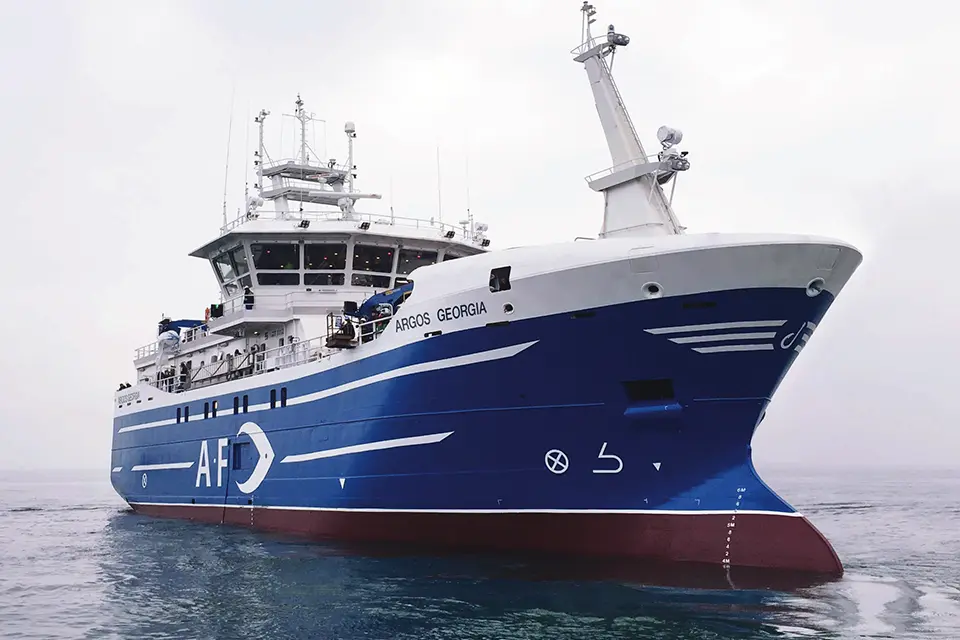
In the unforgiving, storm-lashed waters of the South Atlantic, approximately 190 nautical miles east of Port Stanley in the Falkland Islands, the St Helena-registered longliner Argos Georgia met a devastating end. On July 22, 2024, the commercial fishing vessel succumbed to the elements, plunging beneath the surface and taking the lives of 13 crew members. The catastrophe stands as one of the most severe maritime commercial fishing disasters in recent memory to impact UK-associated flag registries, sending shockwaves through the global fishing community and igniting fierce scrutiny over vessel safety, operational protocols, and emergency readiness in extreme environments.
Months after the tragedy, the United Kingdom’s Marine Accident Investigation Branch (MAIB) published its comprehensive accident investigation report. Conducted on behalf of the St Helena Government under the framework of the Category 2 Red Ensign Group Memorandum of Understanding, the report lays bare a sequence of critical vulnerabilities that turned a marine emergency into a mass casualty event.
The findings emphasize a chilling reality of modern high-seas commerce: fishing in the planet’s remotest and most hostile waters leaves zero margin for error. The Argos Georgia disaster was not merely a consequence of the brutal weather conditions characteristic of the sub-Antarctic latitudes; it was compounded by systemic failures in maintaining watertight integrity, managing shipboard stability, and executing rapid, cohesive emergency responses.
As maritime authorities, vessel operators, and international regulators digest the MAIB’s findings, the tragedy serves as a grim cautionary tale. It forces an urgent re-examination of how safety cultures are implemented aboard distant-water fishing fleets, where economic pressures can sometimes overshadow the uncompromising demands of survival at sea.
Detailed Chronology: The Final Hours of the Argos Georgia
To fully grasp how a modern, well-equipped fishing vessel can founder with such catastrophic loss of life, investigators reconstructed the final hours of the Argos Georgia with meticulous precision. While the formal report outlines the step-by-step deterioration of the vessel’s stability and structural integrity, the chronology of July 22, 2024, is a narrative of escalating crisis, valiant struggle against insurmountable odds, and the ultimate breakdown of survival systems.
Dawn on the Fishing Grounds
The Argos Georgia was operating in a notoriously hazardous sector of the South Atlantic, a region prized for its rich fishing grounds but feared for its volatile weather patterns. On the morning of the incident, the vessel was plying its trade east of Port Stanley. The crew, a multinational assembly of experienced fishermen, were engaged in routine operations when environmental conditions began to deteriorate rapidly. Gale-force winds and towering, confused seas battered the hull, testing the vessel’s limits.
The Critical Breach
As the storm intensified, the Argos Georgia encountered structural stress that compromised its watertight envelope. In heavy seas, maintaining the integrity of a vessel’s exterior barriers—ranging from weather deck hatches and ventilation intakes to air pipes and stern doors—is paramount. According to the MAIB investigation, water began to ingress into spaces critical to the vessel’s buoyancy and stability.
Distant-water fishing vessels of this type are complex industrial platforms. When un-cleared water is allowed to accumulate on deck or enter internal compartments, it creates a "free surface effect," drastically destabilizing the vessel. As the ship rolled violently in the heavy swells, the trapped water shifted unpredictably, robbing the Argos Georgia of its natural righting moments. The bridge team and engineers faced a compounding nightmare: compounding flooding matched by worsening list and sluggish recovery from rolls.
The Call to Abandon Ship
By the time the realization dawned that the vessel could no longer be saved, the situation had deteriorated past the point of damage control. The Master and senior officers faced the ultimate maritime dilemma: coordinating an evacuation in freezing temperatures, amid mountainous seas, and in near-zero visibility.
Executing a quick, clear, and efficient emergency plan is the baseline requirement for survival in such extreme scenarios. However, the rapidity with which the Argos Georgia lost stability compressed the timeline available for coherent evacuation procedures. Crew members scrambled to don immersion suits and deploy life-raft systems under conditions that made standard deployment protocols nearly impossible.
The order to abandon ship was given, but the environment proved almost impossibly hostile. Survivors and rescue coordinators would later recount the sheer brutality of the transition from the sinking hull to the freezing South Atlantic waters. While search and rescue (SAR) assets were mobilized, the hostile distance from land and the ferocious sea state meant that precious minutes ticked away before professional assistance could physically arrive on the scene. Of the souls aboard, 13 were unable to survive the ordeal, succumbing to the icy embrace of the ocean or the traumatic capsize of the vessel.
Supporting Context & Metrics: The Anatomy of a High-Risk Industry
The sinking of the Argos Georgia cannot be viewed in isolation. It is part of a broader, troubling global context concerning the safety of commercial fishing—widely recognized by the International Labour Organization (ILO) and the International Maritime Organization (IMO) as one of the most hazardous occupations in the world.
The Sub-Antarctic Operating Environment
Operating in the waters surrounding the Falkland Islands and the sub-Antarctic puts crews at the mercy of some of the most unforgiving weather systems on Earth. Low-pressure systems sweep across the southern oceans uninterrupted by major landmasses, generating colossal swells, hurricane-force winds, and plummeting air and water temperatures.
In these latitudes, hypothermia can set in within minutes if a crew member enters the water without adequate thermal protection. Consequently, the margin for error regarding vessel design, loading, and watertight integrity is razor-thin. A minor oversight—such as a poorly secured hatch seal, a jammed ventilation damper, or an unmonitored bilge alarm—can quickly cascade into a fatal capsizing event.
Vessel Profile: The Argos Georgia
Owned by Argos Froyanes Limited and registered in St Helena (operating as a Category 2 Red Ensign Group registry), the Argos Georgia was a specialized fishing platform. Modern longliners and trawlers are packed with specialized hydraulic machinery, freezing holds, and processing decks. These features inherently alter a vessel’s center of gravity compared to traditional cargo or passenger ships.
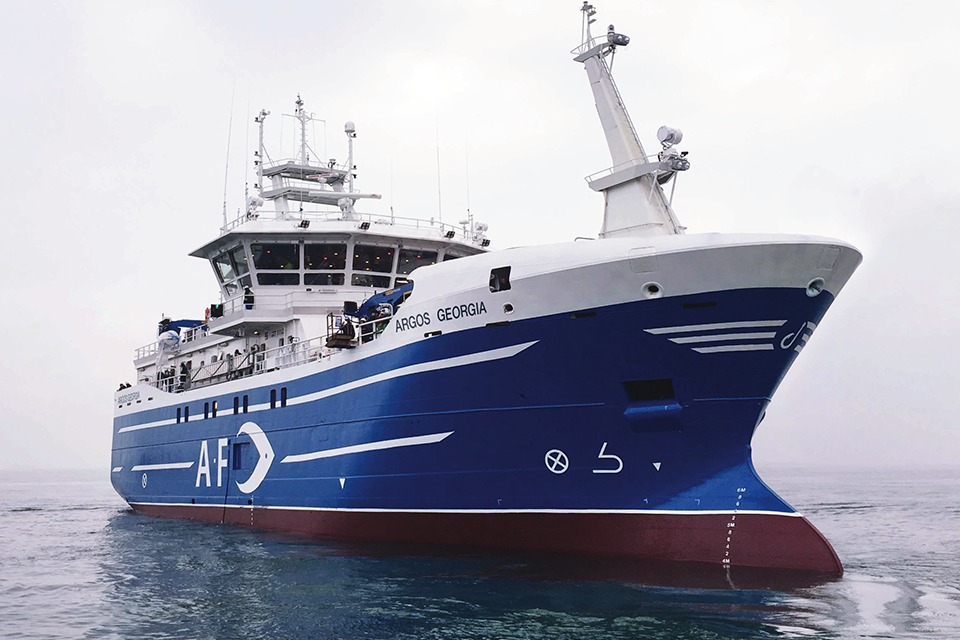
When processing catch or storing gear, masters and mates must continuously monitor deadweight distribution. The MAIB’s analysis highlights that when a vessel of this design takes on unwanted water, the combination of high-density machinery spaces, cargo loads, and free surface liquid creates an extremely volatile stability profile.
Global Fishing Safety Statistics
According to historical data from maritime safety agencies, commercial fishing accounts for a disproportionate number of occupational fatalities globally. Despite regulatory frameworks such as the Torremolinos Protocol and the Cape Town Agreement (which aims to set safety standards for fishing vessels of 24 meters in length and over), implementation and ratification across flag states remain inconsistent.
The Argos Georgia incident brings these systemic shortcomings back into sharp focus. It forces maritime administrations to ask uncomfortable questions: Are regulatory oversight bodies adequately equipped to audit distant-water fleets? Are the statutory surveys of structural watertight integrity robust enough to catch latent vulnerabilities before a vessel departs for remote grounds? And, crucially, are commercial operators prioritizing safety culture over the relentless pursuit of catch quotas?
Official Statements and Investigation Findings
The publication of the MAIB accident report marks a critical juncture in understanding the precise mechanical and operational failures that culminated in the disaster. The investigation was exhaustive, utilizing digital evidence, survivor testimonies, and naval architecture modeling to piece together the final moments of the vessel.
The Chief Inspector’s Assessment
Rob Loder, Chief Inspector of Marine Accidents at the MAIB, did not mince words when releasing the report. His official statement serves as both an indictment of current risk management in the sector and a foundational roadmap for preventing future catastrophes:
"This was a tragic accident resulting in the loss of 13 lives. Fishing in the remotest and most hostile parts of our oceans requires strict adherence to the maintenance of a vessel’s watertight integrity. Should a problem arise a quick, clear and efficient emergency plan should be executed. Training and safety drills provide the best chance of survival in such extreme circumstances."
Loder’s assessment zeroes in on the two pillars of maritime survival: prevention (watertight integrity) and mitigation (emergency response execution). When the watertight envelope failed, the defenses protecting the Argos Georgia collapsed. Furthermore, the statement underscores that emergency plans on paper are worthless unless they are internalized by the crew through relentless, realistic safety drills. In the chaos of an emergency, muscle memory and rehearsed protocols are often the only things standing between life and death.
Scope and Jurisdiction of the Investigation
Because the Argos Georgia was registered in St Helena—a British Overseas Territory—the formal investigation was spearheaded by the UK’s MAIB. This was executed on behalf of the St Helena Government, operating under the formal guidelines of the Category 2 Red Ensign Group Memorandum of Understanding.
This cooperative framework ensures that even remote island registries have access to world-class maritime investigative expertise. The MAIB’s findings carry significant international weight, often prompting amendments to classification society rules, flag state policies, and international safety recommendations. The report meticulously details the sequence of flooding, the response of the onboard safety systems, and the performance of life-saving appliances during the abandonment phase.
Future Outlook: Lessons Learned and the Path to Reform
The ultimate measure of any marine accident investigation report is its capacity to effect change. As the maritime community processes the grief of the Argos Georgia disaster, attention must turn to how the lessons learned from this tragedy can be translated into concrete reforms across the global fishing industry.
1. Elevating Standards of Watertight Integrity
The primary technical takeaway from the MAIB report is the absolute necessity of maintaining a vessel’s watertight envelope, especially in heavy weather. Vessel operators must implement more rigorous maintenance schedules and pre-departure checklists. Crew members must be trained to recognize the earliest signs of structural compromise or downflooding risks. Classification societies and flag state surveyors must adopt a zero-tolerance approach to deferred maintenance on critical hull penetrations, air pipes, and weather deck closures.
2. Reinforcing Emergency Preparedness and Realistic Drills
As Chief Inspector Loder noted, training and safety drills provide the best chance of survival in extreme circumstances. Too often, onboard safety drills are treated as a bureaucratic tick-box exercise rather than a life-saving rehearsal. Fleet operators must foster an uncompromising safety culture where drills simulate worst-case scenarios—including rapid list, power failure, and abandonment under adverse weather conditions. Crews must be thoroughly familiar with the operation of life-rafts, hydrostatic release units, and personal thermal protection gear under duress.
3. Regulatory Harmonization and Accountability
The tragedy of the Argos Georgia highlights the urgent need for international consensus on fishing vessel safety. While major merchant shipping enjoys tightly harmonized global standards under SOLAS (International Convention for the Safety of Life at Sea), the fishing sector remains fragmented by disparate national regulations and voluntary agreements. Governments must accelerate the ratification and domestic implementation of the Cape Town Agreement to establish mandatory international safety standards for commercial fishing vessels.
4. Honoring the Fallen Through Vigilance
Thirteen lives were extinguished in the freezing depths of the South Atlantic, leaving behind grieving families, shattered communities, and a profound debt of remembrance. The most enduring tribute that the maritime industry can offer to the crew of the Argos Georgia is an unwavering commitment to systemic reform.
By heeding the warnings issued by the MAIB, upgrading operational protocols, and treating safety not as a cost of doing business but as the fundamental core of maritime enterprise, regulators and operators can work to ensure that no other crew faces such a preventable tragedy at the ends of the earth. The waters of the sub-Antarctic will always remain inherently hostile; it is up to human ingenuity and regulatory resolve to ensure that those who sail upon them are given every possible chance to return home safely.