










Executive Overview
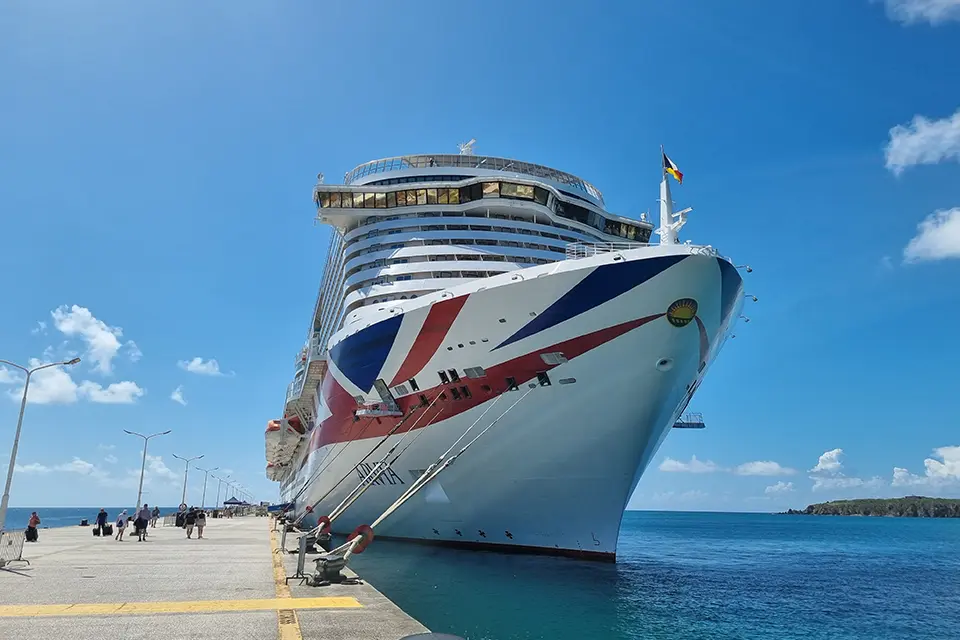
The United Kingdom’s Marine Accident Investigation Branch (MAIB) has officially published its comprehensive accident investigation report detailing the tragic death of a crew member aboard the Bermuda-flagged passenger cruise vessel Arvia. The fatal incident occurred on October 26, 2025, while the massive cruise liner was on the high seas, navigating from its port of departure in Southampton, England, toward its scheduled port of call in Santa Cruz de Tenerife in the Canary Islands, Spain.
The investigation was conducted by the MAIB acting on behalf of the Bermuda Ship Registry. Because Bermuda is a proud member of the Red Ensign Group (REG)—a network of British shipping registers—the formal probe was executed in strict accordance with a specialized memorandum of understanding (MoU) established between the MAIB and various REG member administrations. This framework allows specialized accident investigators from the UK to apply their world-class maritime safety expertise to vessels flying Red Ensign flags across the globe.
The publication of this report sheds light on the hazardous realities of maritime labor, serving as a solemn reminder of the inherent risks faced by frontline seafarers who maintain the smooth operations of the global leisure cruise industry. While modern passenger vessels are frequently celebrated for their architectural marvels, onboard luxury, and technological sophistication, the hidden engine rooms, technical spaces, and operational decks remain potentially dangerous industrial workspaces. This investigative report dissects the underlying factors that contributed to the loss of life, offering critical safety recommendations designed to prevent similar tragedies from recurring across international fleets.

Detailed Chronology of Events
The Departure from Southampton
On the morning of October 26, 2025, the Arvia—one of the crown jewels of modern passenger shipping—cast off its moorings in Southampton. The atmosphere on board was typical of a major transatlantic or repositioning voyage: passengers were settling into their staterooms, exploring the ship’s sprawling public areas, and anticipating a warm-weather getaway to the Canary Islands. Behind the scenes, however, the ship’s crew was locked into a rigorous operational schedule, executing routine maintenance, navigational duties, and hospitality preparations.
The vessel cleared the Solent and entered the open waters of the English Channel, setting a southerly course past the western approaches of the United Kingdom. Sea conditions at the time, while variable, dictated the standard operational tempo of a large cruise liner maintaining a steady service speed.
The Critical Incident
As the Arvia made its way southward across the Bay of Biscay toward the Iberian Peninsula, an operationally critical task on board went catastrophically wrong. While the specific mechanical, deck, or internal service operations are meticulously detailed in the full MAIB report, the incident culminated in a severe workplace accident involving a crew member.
Immediate emergency protocols were triggered. The ship’s internal medical team responded rapidly to the scene, administering advanced trauma care and emergency resuscitation procedures. Concurrently, bridge officers coordinated internal communications and prepared contingency plans for potential emergency medical evacuations, should the vessel’s proximity to land permit helicopter intervention.

Despite the swift and concerted efforts of the ship’s medical personnel and fellow crew members, the injured individual succumbed to their injuries. The shipboard management formally logged the time and nature of the casualty, notifying both corporate headquarters and the relevant flag state authorities in accordance with mandatory international maritime reporting standards.
Post-Incident Response and Diversion Coordination
Following the confirmation of the fatality, the master of the Arvia liaised closely with maritime rescue coordination centers and the Bermuda Ship Registry. Considerations were weighed regarding whether to alter course to the nearest European port for disembarkation or to continue the voyage under modified operational conditions while preserving the scene for arriving investigators. Ultimately, arrangements were made to handle the situation in a manner that respected maritime protocol, allowed for a thorough forensic preservation of the incident site, and provided necessary support to the grieving crew.
Upon arrival at subsequent ports and upon the vessel’s return to operational oversight, the MAIB deployed a team of seasoned inspectors to board the Arvia. These investigators secured logs, examined digital sensor data, reviewed closed-circuit television (CCTV) footage where available, and conducted exhaustive interviews with surviving crew members, supervisory personnel, and shipboard management.
Supporting Context & Metrics: The Reality of Cruise Industry Safety
The Scale of the Arvia and Modern Cruise Operations
To understand the complexity of managing safety aboard a vessel like the Arvia, one must examine the sheer scale of modern mega-cruise ships. Spanning well over 300 meters in length and capable of accommodating thousands of passengers alongside a massive international crew, these ships function essentially as floating, self-sustaining cities.
Operationally, a cruise ship combines:
- Heavy Industrial Machinery: Massive diesel-electric propulsion systems, water treatment plants, HVAC networks, and high-capacity provision cranes.
- Complex Hospitality Infrastructure: Industrial kitchens, laundries, waste management systems, and extensive passenger entertainment venues.
- Dynamic Maritime Environments: Constant motion, wind loads, rolling seas, and tight operational turnarounds.
Maintaining safety across such a diverse array of working environments requires uncompromising adherence to safety management systems (SMS), continuous risk assessments, and robust regulatory oversight.
Regulatory Framework: The Red Ensign Group and Flag State Responsibilities
The Bermuda Ship Registry, as part of the Red Ensign Group, operates under high standards derived from UK maritime legislation and international conventions set by the International Maritime Organization (IMO). These include:
- The International Safety Management (ISM) Code: Which requires shipping companies to establish safety policies, define lines of authority, and ensure safe practices in ship operation.
- The Maritime Labour Convention (MLC, 2006): Which mandates decent working and living conditions for seafarers, including occupational safety and health protection.
When an accident occurs on a Red Ensign vessel, the flag state delegates investigative duties to specialized independent bodies like the UK’s MAIB. This institutional arrangement ensures that investigations are free from commercial or political interference, focusing entirely on discovering the root causes of maritime accidents to enhance global safety standards.

Statistical Context of Maritime Occupational Safety
While passenger safety on cruise ships receives intense public and media scrutiny, maritime occupational safety—specifically concerning crew members—often operates in the background. According to international maritime labor data, seafarers face significantly higher occupational fatality rates compared to land-based industrial workers.
Common high-risk activities on board cargo and passenger vessels include:
- Working at Height: Rigging, painting, maintenance of exterior bulkheads, and accessing high structural spaces.
- Enclosed Space Entry: Working in ballast tanks, fuel tanks, sewage systems, or cargo holds where oxygen depletion or toxic gas accumulation poses a lethal threat.
- Lifting and Heavy Machinery Operations: Handling provisions, mooring lines, heavy equipment, and tender boats.
- Slip, Trip, and Fall Hazards: Navigating wet decks, steep industrial stairways, and engine room plating while the vessel is pitching or rolling.
The MAIB report into the Arvia incident adds crucial data to the ongoing global effort to understand how standard operating procedures (SOPs) break down in real-world conditions, emphasizing that even well-regulated ships with advanced safety cultures remain vulnerable to human error, procedural drift, and mechanical hazards.
Official Statements and Institutional Responses
The Marine Accident Investigation Branch (MAIB)
In its official release accompanying the report, the MAIB underscored its core mission: determining the circumstances and causes of marine accidents with the sole objective of preventing future casualties, rather than apportioning blame or liability.
A senior MAIB spokesperson noted:
"Our investigation into the fatality on board the Arvia has been thorough, independent, and uncompromising. Maritime work is inherently demanding, and when safety margins fail, the consequences can be irreversible. We extend our deepest condolences to the family, friends, and colleagues of the crew member who lost their life. It is our expectation that ship operators, flag administrations, and the wider maritime community carefully review the safety lessons highlighted in this report and implement the necessary changes to protect those who work at sea."
The Bermuda Ship Registry and Management Response
Representatives of the Bermuda Ship Registry acknowledged the publication of the report, emphasizing their commitment to upholding the highest safety standards across all vessels flying the Red Ensign. The registry confirmed that it is working closely with the vessel’s operators to ensure that all safety recommendations issued by the MAIB are fully addressed, integrated into the company’s Safety Management System (SMS), and communicated across the wider fleet.
Corporate management responsible for the operation of the Arvia released a separate statement expressing profound grief over the incident. The company highlighted that crew welfare and safety remain its paramount concerns.
Management stated:
"We are deeply saddened by the tragic loss of our crew member on October 26, 2025. Our thoughts and deepest sympathies remain with their family and loved ones during this difficult time. We have cooperated fully with the MAIB and the Bermuda Ship Registry throughout this investigation. We are actively reviewing all findings and recommendations contained within the report to reinforce our existing safety protocols, enhance onboard training, and ensure that every measure is taken to prevent such a heartbreaking accident from ever happening again."
Future Outlook: Lessons Learned and the Path Forward
Translating Tragedy into Systemic Reform
The ultimate value of any maritime accident investigation lies not in the documentation of past failure, but in its power to catalyze future safety improvements. The MAIB report on the Arvia incident provides a granular breakdown of the chain of events that led to the fatality, offering vital takeaways for the cruise industry at large.
Key areas targeted for review across the industry in light of such incidents include:
- Enhancing Task-Level Risk Assessments (TLRAs): Ensuring that crew members do not rely solely on generalized safety manuals, but actively evaluate the dynamic, site-specific hazards of every non-routine task before work commences.
- Strengthening Supervisory Oversight: Ensuring that officers and senior ratings maintain active, vigilant supervision over high-risk deck and technical operations, bridging the gap between shore-side corporate policy and practical execution on the shop floor.
- Improving Safety Communication and Crew Training: Addressing language barriers, fatigue management, and cultural factors common in multinational seafaring crews to ensure that stop-work authority is clearly understood and exercised without fear of reprisal.
The Ongoing Evolution of Cruise Safety Culture
As the cruise industry continues to expand, introducing larger vessels with increasingly complex onboard systems, the human element remains the most critical variable in maritime safety. Technology, automation, and regulatory frameworks can mitigate risk, but they cannot entirely eliminate the need for vigilant human judgment.
The tragic incident aboard the Arvia serves as a sobering milestone for the maritime sector. By examining the MAIB’s findings with clinical objectivity and implementing its recommendations with corporate urgency, shipowners, flag states, and international maritime organizations can honor the memory of the fallen seafarer. Ensuring that every crew member returns home safely at the end of a contract must remain the absolute cornerstone of modern maritime operations across the globe.


