









Executive Overview
London, England, is globally recognized as an epicenter of commerce, culture, and high-stakes tourism. As the third most visited city on earth, its historic streets hum with an unrelenting energy. Black cabs navigate congested thoroughfares, double-decker buses tower over rushing pedestrians, and the world-class museums and high-end department stores draw millions of annual visitors. Yet, beneath the veneer of urban dynamism lies a surprisingly verdant metropolis.
Far from being a concrete jungle, the United Kingdom’s capital houses a sophisticated, centuries-old network of green spaces, walled sanctuaries, and expansive royal parks. For travelers seeking an idyllic retreat, there is no need to journey out to the picturesque rolling hills of the Cotswolds or the tranquil expanses of the Chilterns. Instead, world-class nature thrives right within city limits.
This report examines London’s six premier botanical destinations—curated through synthesized visitor ratings, Tripadvisor and Google metrics, and insights from urban conservationists and local insiders. From historic medicinal plots dating back to the late 17th century to romantic Edwardian pergolas and sprawling royal estates, these six gardens offer an essential lens into London’s ecological and horticultural heritage.
Detailed Chronology & Historical Evolution of London’s Green Spaces
To understand London’s modern green spaces, one must trace their evolution from royal hunting grounds, private apothecary plots, and Victorian pleasure grounds into publicly accessible urban ecosystems.
1673: The Roots of Botany at the Chelsea Physic Garden
The historical trajectory of London’s gardens stretches back centuries. Founded in 1673 by the Worshipful Society of Apothecaries, the Chelsea Physic Garden stands as the oldest botanical garden in London. Situated quietly along the banks of the River Thames, this four-acre sanctuary was originally established to train apprentices in identifying medicinal plants. Over the centuries, it evolved from an educational facility into a critical scientific institution, serving as a vital exchange point for global flora and pioneering early greenhouse horticulture.
The 19th Century: The Rise of Public Parks and Royal Landscapes
As industrialization reshaped London in the 1800s, the Crown and city planners recognized the urgent public health and aesthetic need to preserve open landscapes.
- Kensington Gardens, once the private hyper-manicured grounds of Kensington Palace, gradually opened to the public, blending formal European garden design with sprawling naturalistic water features like the Round Pond.
- The Regent’s Park, designed masterfully by John Nash as part of an ambitious urban master plan for the Prince Regent in the early 19th century, transformed royal hunting lands into a masterpiece of neoclassical park architecture, eventually giving rise to interior jewels like Queen Mary’s Rose Garden in the 1930s.
The Early 20th Century: Architectural Marvels and Hidden Landscapes
The Edwardian era brought a penchant for romantic, structural garden design. The Hill Garden and Pergola in Hampstead Heath, constructed by industrialist Lord Leverhulme in the early 1900s, represents this architectural golden age. It combined high-society leisure with raised, vine-draped walkways designed to mimic Italianate terraces.
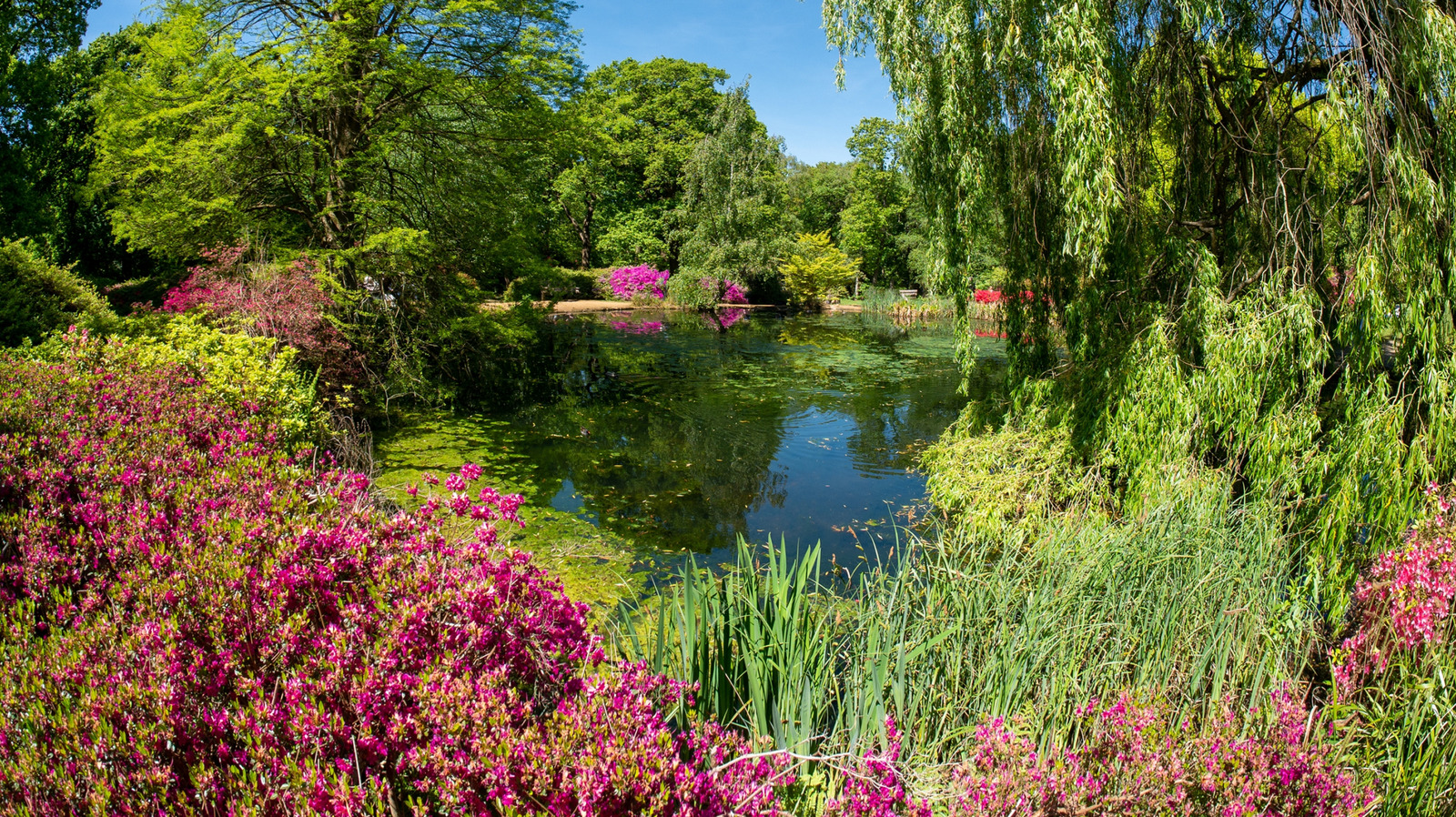
Meanwhile, wilder landscapes were systematically incorporated into London’s administrative borders. Isabella Plantation, tucked deep inside the ancient royal hunting grounds of Richmond Park, was established in the 1830s but transformed into a woodland garden in the mid-20th century. Similarly, the Horniman Museum and Gardens, opened in Forest Hill in the late Victorian era by tea magnate Frederick John Horniman, redefined the museum experience by integrating natural history collections with expansive, terraced family-oriented parklands overlooking the city skyline.
The Six Premier Gardens: An In-Depth Exploration
1. Queen Mary’s Rose Garden (The Regent’s Park)
- Location: Camden, Central-North London
- Scale: Spanning nearly 500 acres of broader parkland
- Metrics: 4.8/5 stars on Google (based on over 5,800 reviews)
Just a short walk from the bustling, eclectic stalls of Camden Market lies The Regent’s Park, an oasis of neoclassical design and horticultural mastery. Within its vast acreage rests Queen Mary’s Garden, a sensory powerhouse dedicated almost entirely to the rose.
The garden features tens of thousands of individual rose bushes, creating an olfactory and visual spectacle that peaks annually in June. Adorned with classical sculptures and tranquil fountains, the atmosphere within the garden is frequently described by visitors as deeply soothing and therapeutic. Even during off-peak months when the roses are dormant, the layout offers a peaceful architectural retreat from the surrounding city noise.
2. Chelsea Physic Garden
- Location: Chelsea, along the River Thames
- Scale: 4 intimate acres
- Metrics: Highly rated "Hidden Oasis" on Tripadvisor and Google
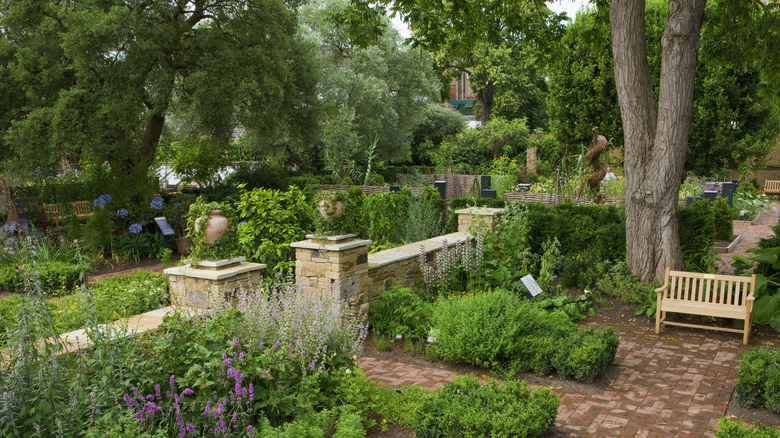
Tucked securely behind high brick walls along the Chelsea embankment, the Chelsea Physic Garden offers an immediate psychological shift upon entry. Visitors frequently remark on the profound silence that overtakes the space the moment they step through the gates.
Home to a collection of approximately 5,000 different medicinal, edible, and rare plants—including some of the oldest fruiting olive trees in Britain growing outdoors—this site functions as a living museum. Admission fees directly support its educational and conservation missions and include access to expert-led guided tours. Horticultural analysts consistently rate these tours as critical for unlocking the deep historical and scientific context of the flora on display.
3. Isabella Plantation (Richmond Park)
- Location: Richmond, Southwest London
- Scale: 40 immersive woodland acres within a 2,500-acre national nature reserve
- Metrics: Widely celebrated by London local bloggers and photography enthusiasts
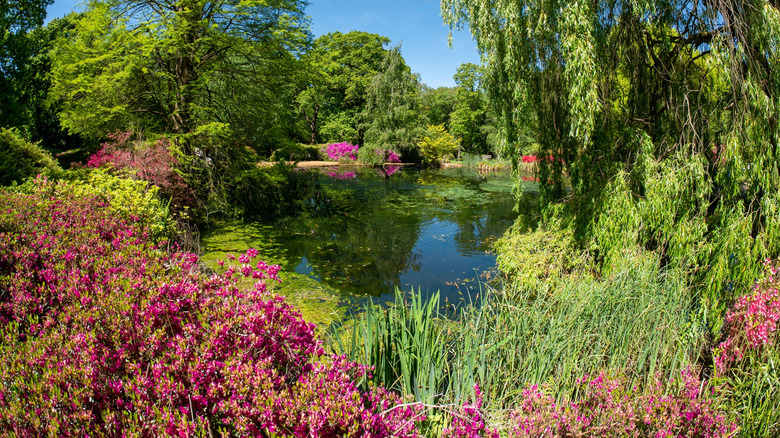
For those willing to venture slightly southwest of the central core, Richmond Park offers an unmatched wild-nature experience, complete with roaming herds of red and fallow deer. Deep within this ancient park sits the Isabella Plantation, a 40-acre woodland garden bursting with vibrant, non-native and native flora.
Peak bloom occurs between mid-April and May, during which time the plantation erupts into a sea of brilliant pinks, purples, and reds from thousands of azaleas, rhododendrons, and camellias. Winding streams, quiet ponds, and towering oak trees create an ethereal, fairytale-like atmosphere. Despite its popularity during peak spring, the plantation’s sprawling layout ensures that visitors can easily find a secluded path to enjoy uninterrupted tranquility.
4. The Hill Garden and Pergola (Hampstead Heath)
- Location: Hampstead, North London
- Scale: Tucked inside the 790-acre Hampstead Heath
- Metrics: Acclaimed as "the most romantic garden you can find in London" via Google user consensus
Perched high on the northern ridges of the city, Hampstead Heath is a rugged, sprawling escape. Hidden within its boundaries is The Hill Garden and Pergola—an Edwardian architectural marvel that blends structural grandeur with wild overgrowths of climbing wisteria, ivy, and roses.
The elevated wooden and stone walkway offers sweeping views over West Heath. Its moss-covered stone pillars, arched trellises, and secluded viewing benches make it a favored destination for landscape photographers, romantic strolls, and quiet contemplation. Visitors exploring the Heath can easily pair a walk through the Pergola with a refreshing swim in the historic, centuries-old swimming ponds nearby.
5. Kensington Gardens
- Location: West London (bordering Hyde Park)
- Scale: 265 pristine acres
- Metrics: Travelers’ Choice Award Winner; consistently ranked as London’s premier garden on Tripadvisor
Flanking Kensington Palace, Kensington Gardens represents the height of royal landscape design. Winning top accolades from global travel platforms, the gardens are celebrated for their immaculate maintenance, royal history, and sweeping floral beds.
Key highlights include the ornate, marble-heavy Italian Gardens—featuring stone urns, lily ponds, and intricate stonework—as well as the Round Pond, which is frequently populated by elegant swans and migratory waterfowl. Because Kensington Gardens seamlessly merges with Hyde Park, visitors gain access to a continuous corridor of green space that stretches from Notting Hill down to Knightsbridge, bridging some of London’s most famous cultural and retail landmarks.
6. Horniman Museum and Gardens
- Location: Forest Hill, Southeast London
- Scale: 16 terraced acres overlooking the London skyline
- Metrics: Top-tier rating for family-friendly cultural and natural attractions
Located approximately 30 minutes south of Central London, the Horniman Museum and Gardens offers a unique synthesis of cultural anthropology, natural history, and outdoor recreation. The 16-acre grounds are completely free to the public and feature an array of specialized environments, including a formal sunken garden, a dedicated prehistoric garden, and a leafy nature trail.
The terraces offer panoramic, unobstructed views of the London skyline, making it an ideal spot for afternoon picnics. Additionally, the grounds house family-oriented attractions such as the Animal Walk—home to alpacas and small farm animals—and the Kusuma Nature Play Area. These features cement the Horniman’s status as a cornerstone of family-oriented tourism in the UK.
Supporting Context & Metrics
To objectively evaluate the significance of London’s urban green spaces, consider the following metrics and urban planning data:
- Urban Canopy Density: Greater London is one of the greenest cities of its size globally, with public parks, private gardens, and street trees accounting for roughly 47% of the total urban area.
- Biodiversity Hotspots: Sites like Richmond Park and Hampstead Heath are designated Sites of Special Scientific Interest (SSSI), protecting ancient trees that date back over 500 years.
- Tourism Impact: Botanical and park tourism contributes significantly to London’s visitor economy. Gardens such as Kensington Gardens and Regent’s Park draw upwards of 10 million combined visitors annually.
- Accessibility: Unlike many metropolitan green spaces globally, the vast majority of London’s royal parks and historic gardens maintain free public admission, ensuring equitable access to nature for both residents and international travelers.
Official Statements & Expert Perspectives
Horticultural preservationists and urban analysts have long championed the preservation of these historic landscapes amidst intense real estate development pressures.
"London’s historic gardens are not merely decorative spaces; they are living archives of botanical history and critical psychological valves for a high-density urban population," notes Dr. Aris Thorne, urban ecologist and historical landscape consultant. "When you walk through a 17th-century institutional space like the Chelsea Physic Garden or lose yourself in the woodland paths of Isabella Plantation, you are participating in a continuous cultural tradition that values biodiversity as highly as architectural heritage."
Local community advocates emphasize the therapeutic role these spaces play in modern daily life.
"In a city that moves at the speed of London, having free, open access to places like Hampstead Heath’s Pergola or Queen Mary’s Rose Garden is a public health necessity," explains Clara Vance, author of urban nature guides. "These gardens provide an immediate sensory reset, proving that urban density and profound natural beauty can coexist harmoniously."
Future Outlook
As London continues to face the pressures of urban densification, population growth, and climate change, the protection and expansion of its botanical heritage remain paramount. City planners, environmental agencies, and historic preservation groups are increasingly collaborating to ensure that these six sanctuary spaces—and the broader urban canopy—are safeguarded for future generations.
Future initiatives focus heavily on climate resilience: introducing drought-resistant flora, expanding pollinator pathways to support declining bee and butterfly populations, and improving sustainable transit links to make remote green spaces like the Horniman Museum and Isabella Plantation easily accessible without reliance on private motor vehicles.
For the modern traveler, London’s gardens offer an invitation to pause. Whether seeking the historical pedigree of Chelsea, the romantic architecture of Hampstead, or the vibrant spring explosions of Richmond Park, stepping off the asphalt and into these living sanctuaries reveals an enduring, timeless side of the British capital.